Castles in Poland Worth a Trip From a City Break
The castles in Poland most worth reaching from a city break, from Malbork and Książ to Moszna and Warsaw's Royal Castle, with what each is like inside.
On this page
Pick one castle per city break rather than chasing a national list. From Gdańsk the obvious target is Malbork Castle; from Wrocław, Książ Castle and Moszna Castle in Lower Silesia; from Warsaw, the Royal Castle in the Old Town and Wilanów further south; from Poznań, Gołuchów and Kórnik. The pages below set out what each one is like inside, whether the interiors are original or reconstructed, and how to slot it into one to four days.
The trade-offs matter. Malbork is enormous and rewards a day; Warsaw's Royal Castle fits a morning between the Old Town and the river; ruined sites such as Krzyżtopór are an hour or two of atmosphere rather than a museum visit. Opening days, ticket prices in złoty and free-entry days differ by castle, so check the castle's own website for your date rather than relying on a fixed set of details.
Which castles in Poland are worth a detour from a city break
Two kinds of castle fill Polish itineraries. The first is a national monument so large it becomes the day out: Malbork is the paradigm, and it stands in for the whole Teutonic legacy in the north. The second is a country house or palace within reach of a city, where the appeal is interiors, parkland and a manageable half-day; Książ, Moszna and Gołuchów belong here.
A third category tests patience: romantic ruins. Krzyżtopór, near Ujazd, is a huge, unrestored shell, and the pleasure is the scale and the legends rather than furnished rooms. Knowing which category a castle falls into before you buy a train ticket is the single most useful planning decision on this page, because it sets expectations for time, cost and how much walking you will do indoors.
The rough geography, west to east: Książ, Czocha and Moszna in Lower Silesia and the Opole region, Gołuchów and Kórnik near Poznań, Malbork in Pomerania, Łańcut and Nowy Wiśnicz in the south-east, and the Warsaw and Kraków castles in their respective cities. A city break of one to four days fits exactly one major castle, two if you are based for several days in Wrocław or Warsaw.
Malbork: the castle most people should see
Malbork is known officially as the Castle of the Teutonic Order, built by the knights of that order, and is one of the largest medieval castles in Europe; a travel blog also calls it the largest castle in the world by land mass, though that superlative is not drawn from a heritage-body source. Either way the scale is a planning constraint as much as a boast: the complex is large enough that a single visit covers a lot of ground, with the outer and inner wards and the Grand Masters' Palace among what you cross.
This is the castle to see if you see only one. The story is the Teutonic Order's rise and fall, and the architecture is Brick Gothic on a scale no Polish palace matches; the interiors are more austere than a royal residence's, with armour and refectory rooms rather than gilded apartments. See the Malbork castle guide for what fills the day.
From Gdańsk, Malbork is a straightforward day out by rail, and it is the natural second day of a Gdańsk break after the Główne Miasto. Allow the better part of a day for the castle and its grounds; winter light fades early, and the long courtyards are exposed. Eating before you go back is easier in Gdańsk, so plan the return leg with that in mind.
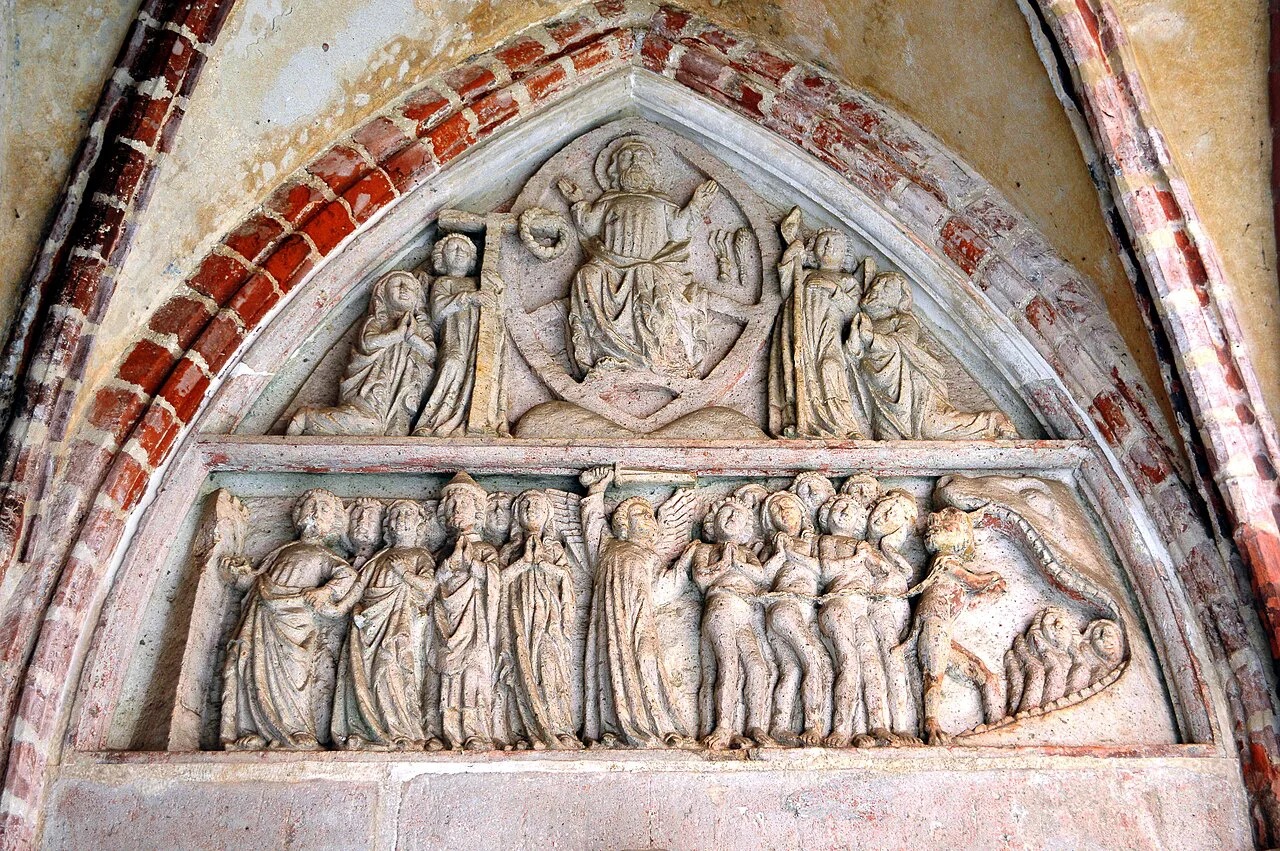
Getting to Malbork from Gdańsk and how much of a day it takes
Treat Malbork as a full day rather than a morning. The castle is a long walking circuit, and the grounds alone take time before you enter a single hall. Train times and ticketing change with the season, so check the operator's own timetable for the day you travel, and buy the castle ticket at the entrance or through the castle's official booking channel.
The practical sequence: leave Gdańsk in the morning, allow at least a few hours inside the castle and its grounds, and keep an hour spare for the walk to and from Malbork station. Check the last services before a winter visit, and note that Malbork pairs naturally with a night in Gdańsk's Old Town rather than a return to Warsaw, which suits a three-night northern break.
Książ Castle: the Pearl of Lower Silesia
Książ Castle, near Wałbrzych, is nicknamed the Pearl of Lower Silesia and sits inside Książ Landscape Park close to the Czech border. It belonged to the Hochberg family for more than 400 years and, according to Sunshine Seeker, was seized by the German Nazis in 1941, who planned to turn it into a residence for Hitler. That history gives the visit its weight: the state rooms, the terraces and the park are all legible against it.
Książ is a palace rather than a fortress, so expect terraces, gardens and grand rooms in a forest setting. It is a full day from Wrocław rather than an add-on; the surrounding landscape park is worth an hour of walking, and the famous view back to the castle is from a viewpoint up the road. For the interiors, ticket types and what is open in a given week, check with the castle directly.
The Hochberg story is the reason to prioritise Książ over a prettier, less layered castle. If your break is built around Wrocław's Rynek and Ostrów Tumski, Książ and Moszna can be paired only if you stay three or four nights; otherwise choose one and leave the other for a return.
Getting to Książ from Wrocław
Książ is reached from Wrocław by rail to Wałbrzych and then by local transport or taxi to the castle gate. Check the current Wałbrzych connection and the castle's own opening times for your date before committing, because a castle day that starts late leaves no time for the landscape park. With a tight timetable, a taxi from Wałbrzych may be simpler than waiting for the local bus.
Moszna Castle: the 99 spires and 365 rooms
Moszna Castle looks like a fairytale confection, with 99 turrets and spires on a building of around 7,000 sq m and, by the same account, some 365 rooms. The numbers are part of the appeal, and visitors come for the silhouette as much as the interiors; locals have told stories linking its origins to a monastery run by the Knights Templar, though the structure grew over many owners and rebuilds.
It is a half-day palace visit from a Wrocław or Katowice base rather than a full day like Malbork. If fairytale architecture is the point of your trip, Moszna is the one to choose over Książ; the trade-off is that the interior is smaller than the exterior suggests. It also works as a hotel, which is a separate decision from a day visit.
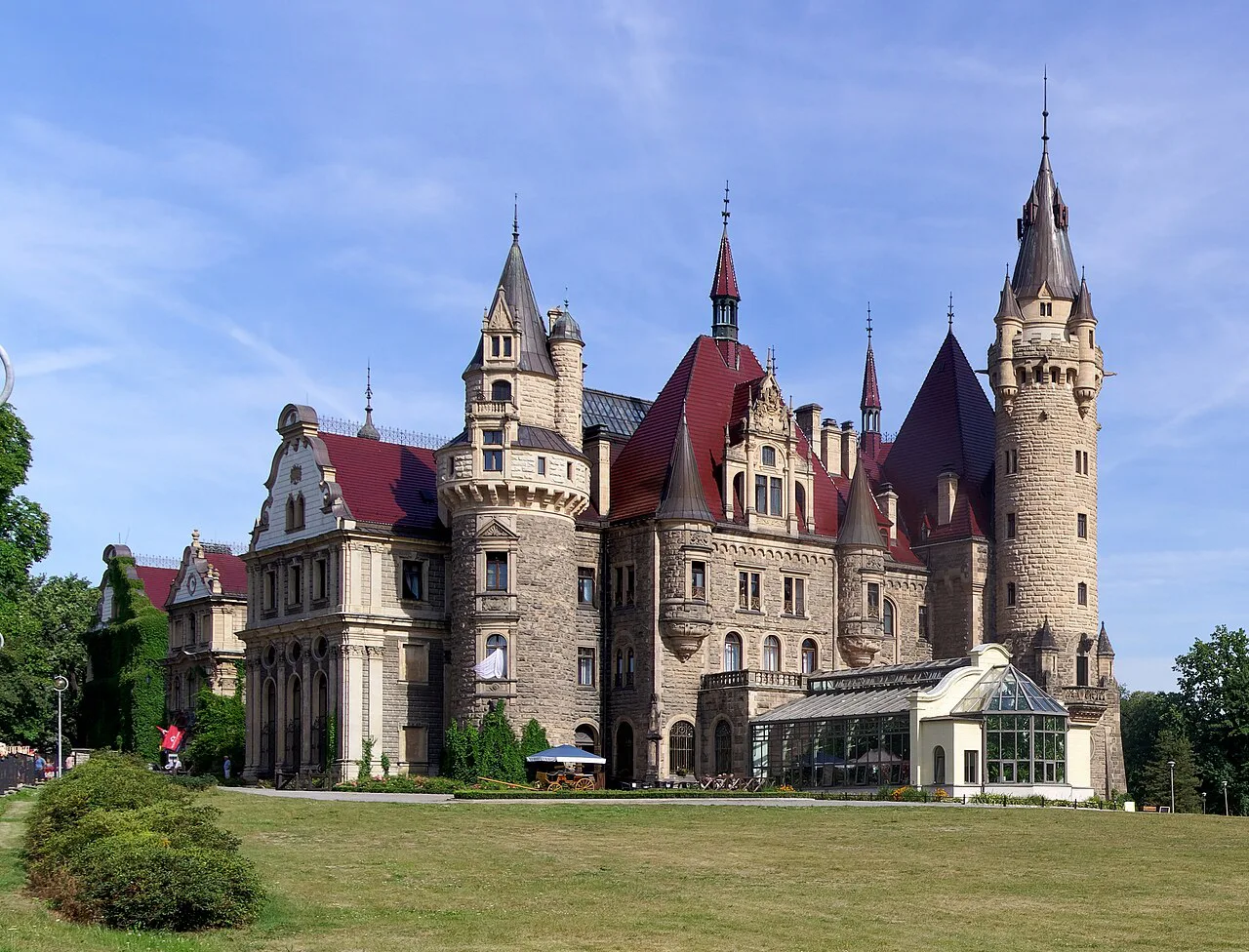
Czocha Castle: the Polish Hogwarts
Czocha is a 13th-century castle on a granite hill in Lower Silesia, nicknamed the Polish Hogwarts. It is a castle you can stay in, which makes it different in kind from a museum: the atmosphere comes from the halls and the wooded setting as much as from display cases. Pairing a Czocha stop with Książ gives more than treating either as a quick photo opportunity.
Czocha lies further west and north than Książ, so a day combining both needs a car or careful train planning. Check the castle's own site for which days it is open before you build an itinerary around it, since a castle that operates as a hotel can close its public rooms for private events.
Warsaw Royal Castle: what survived and what was rebuilt
The Royal Castle in Warsaw was used by Polish royalty up until the 18th century and is known for its collection of royal portraits. It was badly bombed during the Second World War, and much of what visitors see today is a careful reconstruction rather than the original fabric. That makes the interior a lesson in the city's rebuilding as much as in monarchy.
Because it stands in Warsaw's Old Town, it is the easiest of all these castles to fit into a city break: an hour or two inside, then the Old Town, the Barbican and the river. Come early on a museum day, or late on a day when the rooms have cleared. For opening days, ticket prices in złoty and any free-entry day, the castle's official site is the only reliable source.
Wilanów Palace: one of Warsaw's grand palace complexes
Wilanów Palace, south of central Warsaw, is one of the country's grand palace complexes and is often named among the finest. It is the counterpoint to the rebuilt Royal Castle: the same city, a different experience of a palace interior, with period rooms that reward slower looking.
Give Wilanów a half-day including the park, and take the bus rather than walking from the centre. Check its current opening days and ticket prices directly with the palace before you go, and remember that Polish museums commonly close one day a week, often the Monday.
Wawel Royal Castle in Kraków
Wawel Castle, a UNESCO World Heritage Site, was home to Polish kings until the 18th century and now houses a museum; the travel blog Hand Luggage Only says the national crown jewels are on display there. It is the natural comparison for any other royal castle on this list, and the one castle in Poland most visitors already have on their radar.
Treat Kraków's Old Town as the starting point. If your break is based elsewhere, Wawel is worth seeing mainly as a stop on the way through, since Malbork offers more castle for the time.
Łańcut Castle: interiors east of Kraków
Łańcut Castle is a residence dating from the 17th century with interiors widely described as among the finest in Poland, plus period horse-drawn carriages, antiques and historical paintings. It is the castle to choose if your interest is furniture and interiors rather than military history, and its grounds add another hour.
Łańcut suits a Rzeszów or south-eastern base better than a quick add-on from Kraków. Check the castle's own site for the opening calendar and ticket prices, and note that Łańcut is a palace with formal gardens rather than a fortified castle, which keeps expectations right.
Nowy Wiśnicz and Krzyżtopór: a noble seat and a vast ruin
Nowy Wiśnicz Castle was home to generations of Polish nobility, heavily fortified with moats and gateways, and today you also see a gallery depicting the castle through the ages. Krzyżtopór, near Ujazd, is the opposite experience: a huge, unrestored ruin that has not been rebuilt, known for myths and legends about black magic.
Both work as a stop rather than a day in themselves, and Krzyżtopór is one for walkers and photographers who enjoy reading a ruin's footprint. Check whether each site is open and what ticket applies on the day before you travel to either.
Gołuchów and Kórnik near Poznań
Gołuchów Castle is built in a French style and is among the most visited castles in Poland, with interiors much as they were in the 19th century when its last owners moved out, including period antiques and furnishings. Kórnik Castle, medieval in origin, is now a Historic Monument of Poland with lush grounds and a preserved coach house. For a related guide, see Rogalin Palace.
These two are a natural pairing from Poznań, though doing both in one day needs an early start. Choose Gołuchów for interiors and Kórnik for grounds and parkland if you must pick one, and check the Poznań connection and each castle's own opening days before you go.
Pieskowa Skała, Bobolice and Ogrodzieniec: stops rather than days out
Pieskowa Skała is part of the Trail of the Eagle's Nests, a chain of some 25 medieval castles and ruins on hilltops. It is the best-preserved of them and a fine half-day from Kraków, with a fine view from the valley below and the rock known as Hercules' Club.
Bobolice and Ogrodzieniec belong to the same chain and are best treated as viewpoints and picnic stops on a drive rather than as museum visits, with walls and ruins that are atmospheric rather than informative.
What a castle visit costs and which days to go
Ticket prices in złoty, opening hours, weekly closed days and free-entry days differ for every castle here, and the figures change from season to season. Check the castle's official website for the day you plan to visit, or telephone the ticket office if the site is sparse. At busy weekends, palace castles may sell timed tickets.
Polish museums commonly close one day a week, often the Monday, and some offer a free-entry day, but confirm it per site rather than assuming. Several castles also operate as hotels or event venues, so public rooms can close for private functions. If your break is built around a specific castle, check before you book; midweek is generally calmer than weekends in summer, and the best time to visit Poland for a city break changes what is open.
Which castle suits which city break
Gdańsk pairs with Malbork. Wrocław pairs with Książ or Moszna. Warsaw pairs with the Royal Castle and Wilanów. Poznań pairs with Gołuchów and Kórnik. Kraków gives you Wawel and, if you have a car, Pieskowa Skała and the Eagle's Nests trail. For a Polish castle right in a city's heart, Warsaw's Royal Castle is the easiest of the lot.
Two nights is enough for one castle day. Three or four nights in Wrocław or Warsaw lets you add a second. The least efficient plan is a coach tour of several castles in one day: you see gates and car parks rather than interiors, and Polish roads make the distances longer than they look on a map.
Castle hotels in Poland if you want to sleep in one
Several castles and palaces take guests. A selection published by Celtic Castles includes Zamek Czocha, Hotel Książ and Palac Bedlewo, all offered as castle stays, with Moszna Castle also letting rooms. Rates on that site are quoted in euros, and you should check them and the room types with the hotel itself rather than treating a listing rate as current.
Staying inside a castle is a different visit from a day ticket: you get the building in the evening and the morning, but public rooms can be curtained off for hotel guests. Book direct and check what is included, then let that decide whether you choose Czocha for atmosphere or a palace hotel for comfort.
Which castle to book first
If you take one castle from this list, take Malbork: it is one of the largest medieval castles in Europe, the most complete medieval fortress in the country, and the one that justifies both the train and the day. If your break is in Wrocław, choose Książ for the interiors and the Hochberg story, or Moszna if the fairytale silhouette matters more than furnished rooms.
If you are in Warsaw, the Royal Castle and Wilanów together give you one rebuilt interior and one grand palace interior, which is a better use of a day than a single visit. Whichever you choose, check the castle's own opening days and ticket details for your date before booking anything else.
Explore more Poland guides
Sources
Notes for your next Polish city break
Optional updates to our Poland guides.
You might also like



Continue reading
More guides you'll find useful