Kórnik Castle: Neo-Gothic Island Residence Near Poznań
Plan a visit to Kórnik Castle near Poznań: the neo-Gothic rooms, museum collections, the White Lady legend and the arboretum next door.
On this page
Kórnik Castle is worth a half-day from Poznań if you want a compact aristocratic residence with real collections rather than empty state rooms. The neo-Gothic building stands beside Lake Kórnik in the town of Kórnik, roughly 20 km southeast of Poznań, and houses a museum of paintings, coins, military accessories and Pacific ethnography. This guide covers what you actually see inside, how the 19th-century remodelling sits on 14th-century foundations, the White Lady legend, and how to pair the castle with the arboretum next door.
Where Kórnik Castle stands
Kórnik is a small town in Greater Poland, south-east of Poznań, and the castle stands beside Lake Kórnik. The address is ul. Zamkowa 5 in Kórnik, which is the reference point to give any driver or to search for on a map. The arboretum is a short walk from the castle, so you can see both on foot without moving the car.
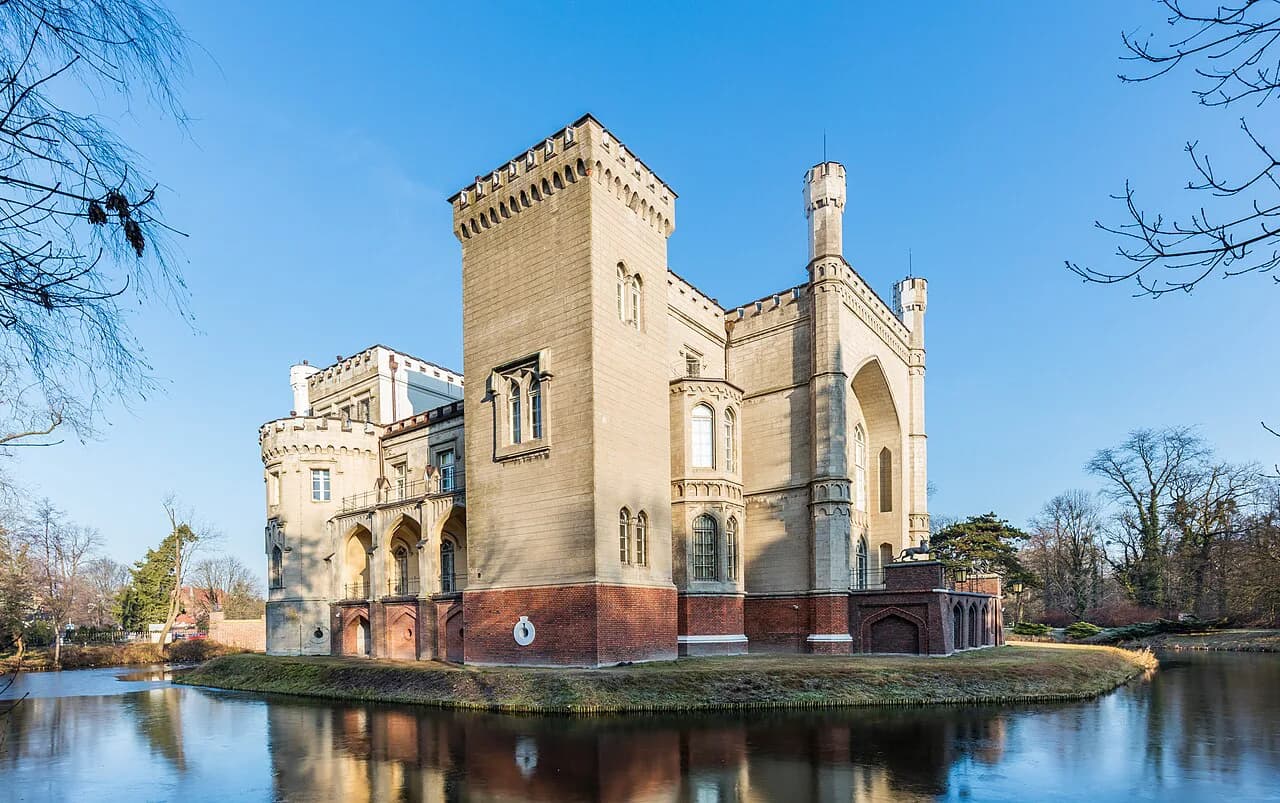
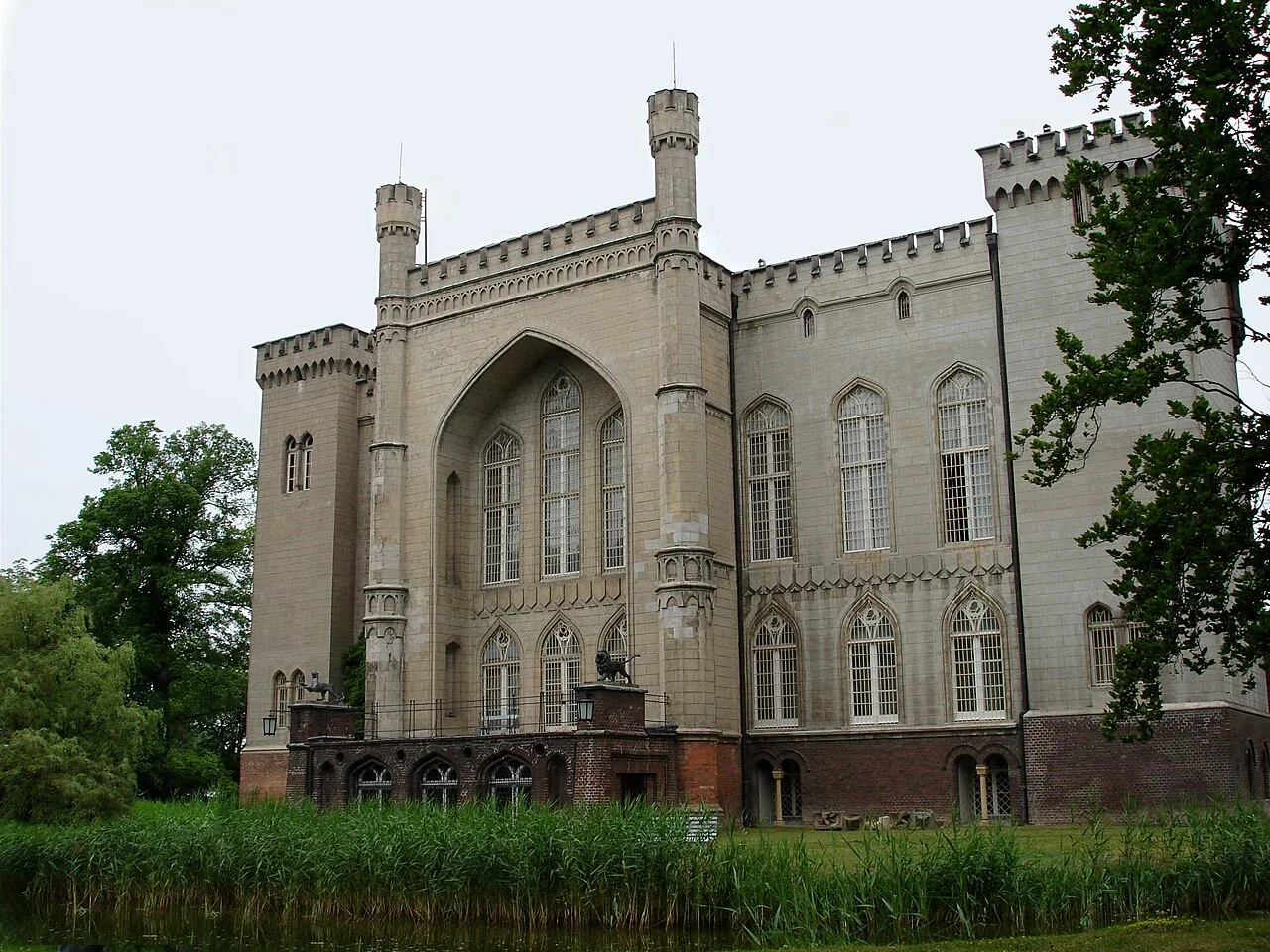
The lakeside position is what gives Kórnik its island-residence character: the building reads as a defensive structure from across the water even though it is a 19th-century remodelling. If you are choosing between Greater Poland's country houses, this one offers the strongest combination of architecture and a genuine museum collection in a single stop. Rogalin palace, with its Raczyński family associations, is the other obvious candidate from Poznań, and the two work best as separate outings rather than one rushed day.
A 14th-century castle in 19th-century clothes
The castle was constructed in the 14th century, and the neo-Gothic design and remodelling you see today date from the 19th century. That distinction matters when you walk round: the plan and setting are medieval, while the towers, crenellations and Gothic detailing are a Romantic-era reimagining of what a castle should look like. Knowing this stops you reading the whole building as genuine medieval fabric.
Visit Poznań describes the 19th-century Neo-Gothic castle as having the appearance and character of a defensive structure, which is the honest way to read it. You are looking at a deliberate piece of architectural theatre wrapped around an older core, and the reward is the setting beside the lake rather than military engineering. If you enjoy that layered history, Łańcut Castle in the south-east of Poland takes the same idea of an aristocratic residence built for show and carries it further.
Inside the museum: paintings, coins and military pieces
The museum holds paintings by Polish and European masters, numismatic collections, and Polish and Eastern military accessories. That mix is broader than a single-family portrait gallery, so allow time for more than the state rooms. The coin collection in particular rewards slow looking rather than a quick pass through the cabinets.
Because the collections span art, currency and weaponry, the castle suits travellers who want variety in one ticket rather than a single themed display. Set your expectations accordingly: this is a residence museum with several distinct strands, not a monolithic art gallery, and the military material is displayed as part of an aristocratic collection rather than as a campaign narrative.
The Australia and Oceania collections
Alongside the European material, Kórnik holds ethnographic and natural collections from Australia and Oceania. These are the unexpected part of a visit and the reason the castle stands out from the region's other country houses. If you have already seen the polished interiors of several Polish palaces, this room gives you something genuinely different to talk about afterwards.
The Pacific material also explains the curiosity-driven collecting habits of 19th-century aristocratic owners, who assembled the world in their houses. Treat these displays as a period document about how Europeans collected, not as a neutral survey of the region. Palace collections across Poland vary hugely in character, and a circuit of them shows how differently each family spent its money.
The White Lady legend
The castle's many rooms are said to be haunted by the ghost of the White Lady, a story attached to the residence rather than a documented event. Treat it as part of the house's folklore and enjoy it as atmosphere, particularly if you visit on a grey day when the neo-Gothic towers do the work for you. It is a good hook for children who are otherwise unimpressed by coins and portraits.
Ghost stories of this kind recur in Polish country houses, usually tied to a specific room or portrait. The castle's own accounts present the White Lady as a legend attached to the many rooms, so look for it as part of the atmosphere rather than as a recreated exhibit. It is a small part of the visit, so build your day around the collections and the grounds instead.
Pairing the castle with the Kórnik Arboretum
The Kórnik Arboretum is listed 0.2 km from the castle, which makes it an easy second stop on the same half-day. Two hundred metres is a couple of minutes on foot, so there is no transport logistics to solve between the two. Plan the castle first, while your attention is fresh, then walk over to the trees.
Combining a museum interior with an arboretum works because the two halves use different energy: one is concentrated looking, the other is walking and open air. If you are travelling with someone who tolerates museums but does not love them, the grounds give the day a second shape. Other Greater Poland residences, such as Pszczyna castle with its Kaiser Wilhelm II apartment, argue for a similar mix of interiors and parkland.
Practical points: tickets, card and checking ahead
Visit Poznań notes that a Poznań City Card price applies, and the castle lists its reservation email, rezerwacja@bk.pan.pl, and telephone numbers +48 531 990 142 and +48 533 982 273. Prices in złoty, opening days and any booking requirement are not published here, so contact the castle directly or use its own website before you travel.
How Kórnik fits a Poznań city break
Kórnik works as a half-day out from Poznań within a one- to four-day city break, leaving the rest of the day for the Old Market Square and the centre. Because the castle, the arboretum and the town sit together, the trip needs no internal planning beyond getting there and back. Most travellers combine the two sights in a single morning or afternoon rather than stretching it into a full day.
If your interests run to decorated interiors, the comparison with Łańcut Castle is useful: Łańcut is a larger, more formal aristocratic residence, while Kórnik is smaller and more idiosyncratic. Nieborów Palace, associated with the National Museum in Warsaw, offers a third point of comparison for anyone building a palace itinerary. Choose according to how much travel time you have around Poznań rather than trying to see all of them.
For travellers who like a coherent architectural story, Kozłówka Palace is another Polish residence where the interiors and the family history carry the visit. Kórnik's advantage is its proximity to Poznań: you can see a neo-Gothic castle and an arboretum without committing a full day to travel. That efficiency is the main reason to put it near the top of a Poznań itinerary.
Is Kórnik Castle worth the trip from Poznań?
Yes, if you want a neo-Gothic residence with real collections and an arboretum next door, all within easy reach of Poznań. The combination of paintings, coins, military pieces and Pacific ethnography gives the castle more substance than its size suggests. Skip it only if you have already committed your Poznań days to the city centre and cannot spare a half-day.
Frequently Asked Questions
How far is Kórnik Castle from Poznań?
Kórnik Castle stands in the town of Kórnik, about 20 km southeast of Poznań, beside Lake Kórnik. That makes it a half-day outing rather than a full-day excursion, and the arboretum is a short walk from the castle.
Do you need to book Kórnik Castle in advance?
The castle publishes a reservation email and telephone numbers, so contact them directly if you want to confirm entry arrangements before travelling. Individual visitors should check the castle's own website for current opening days and prices.
Is Kórnik Castle worth visiting?
It is worth a half-day if you want a neo-Gothic residence with genuine museum collections rather than empty rooms. The paintings, numismatic collections, military accessories and Pacific ethnography give it more range than most country houses near Poznań.
Sources
Notes for your next Polish city break
Optional updates to our Poland guides.
You might also like

Continue reading
More guides you'll find useful