Palaces in Poland Worth Visiting: A Practical Shortlist
Poland's palaces range from Warsaw's Wilanów and Łazienki to aristocratic country seats. Here is what each is like and how to pick the ones worth your time.
On this page
Start with Warsaw if you want palaces without leaving the city. The Royal Castle in the Old Town, Wilanów and the Łazienki residences sit in three different parts of the capital, so a short break can cover royal interiors and a landscaped park without a single regional train. This guide sorts Poland's palace visits by what you actually get inside, then shows how to add one to a one-to-four-day trip.
Readers who base themselves outside Warsaw should look at Białystok and Lublin instead. Each has a palace or castle complex within reach of the centre, and both cities are quieter and cheaper than the capital. The trade-off is that the grandest aristocratic estates sit in the countryside, where a visit eats most of a day.
What counts as a palace in Poland
The word covers three different things, and mixing them up wrecks a plan. Royal residences were built or rebuilt for kings and princes, aristocratic country houses belonged to magnate families, and palace-and-garden estates bundle a house with formal grounds, an orangery or a park. A castle, meanwhile, is a fortified structure, which is why Malbork belongs on a castle list and not on this one.
Decide first what you want to look at. Interiors suit rainy days and museum lovers, gardens suit anyone who wants to walk, and architecture suits photographers who care more about a facade than a furnished ballroom. Most Polish palace estates give you all three, but rarely at equal strength, so pick the element that matters most and let the rest follow.
Warsaw's two big ones: the Royal Castle, then Wilanów
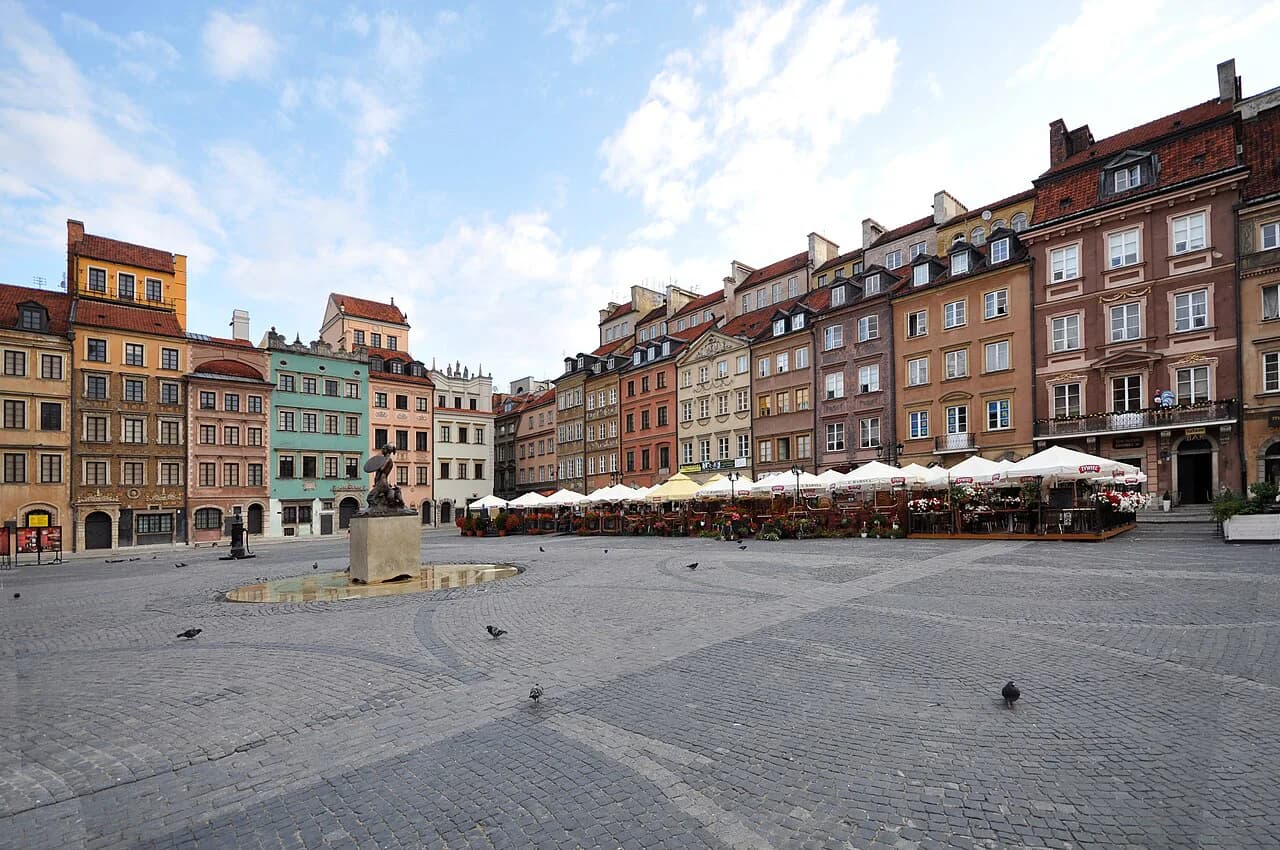
The Royal Castle sits on the edge of the Old Town and served as a royal residence from the 16th to the 18th century. It was destroyed during the Second World War and rebuilt afterwards as a state museum, and some original ornament survives in the restored interiors. The location makes it the easiest palace visit in Poland to slot into a city break, since you can walk there from the Old Town square.
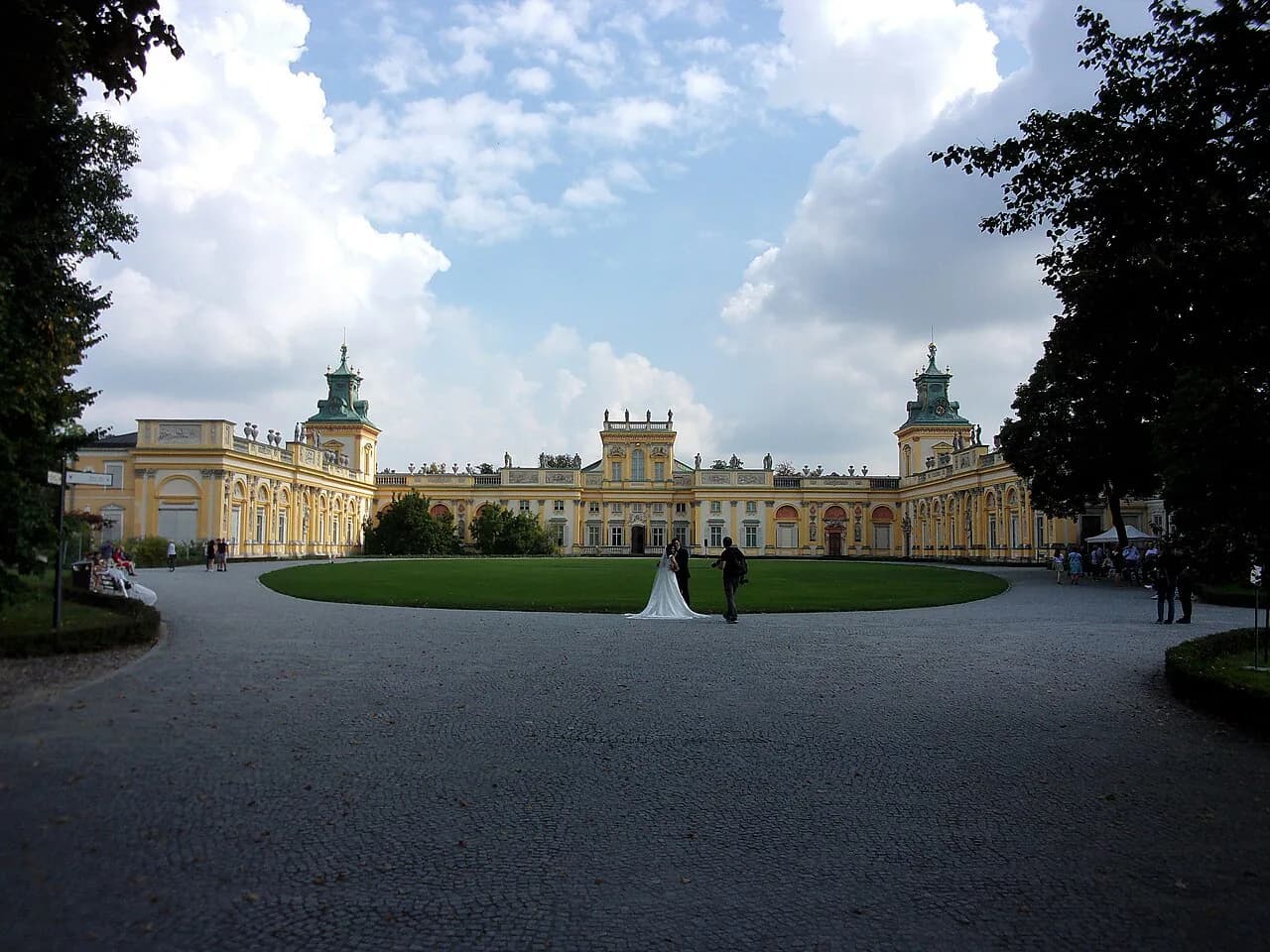
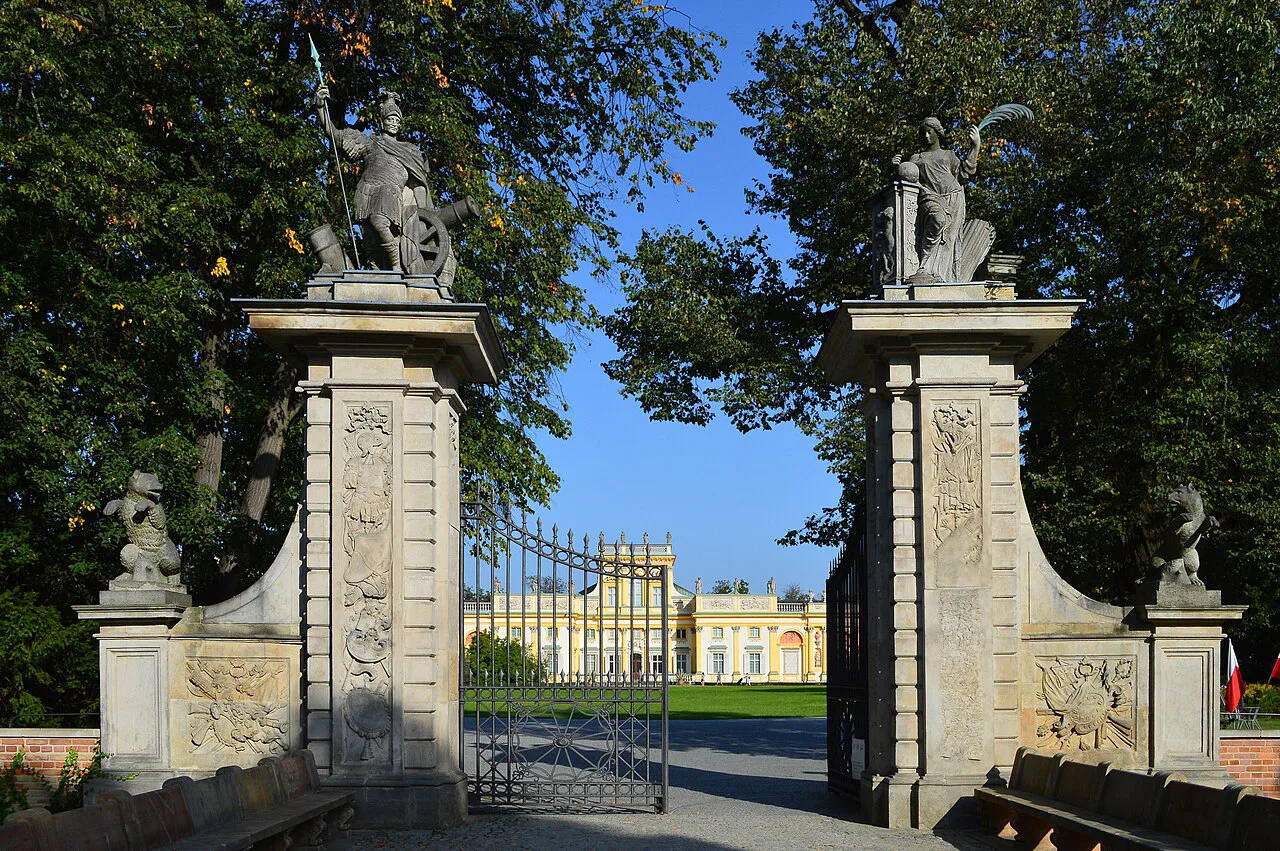
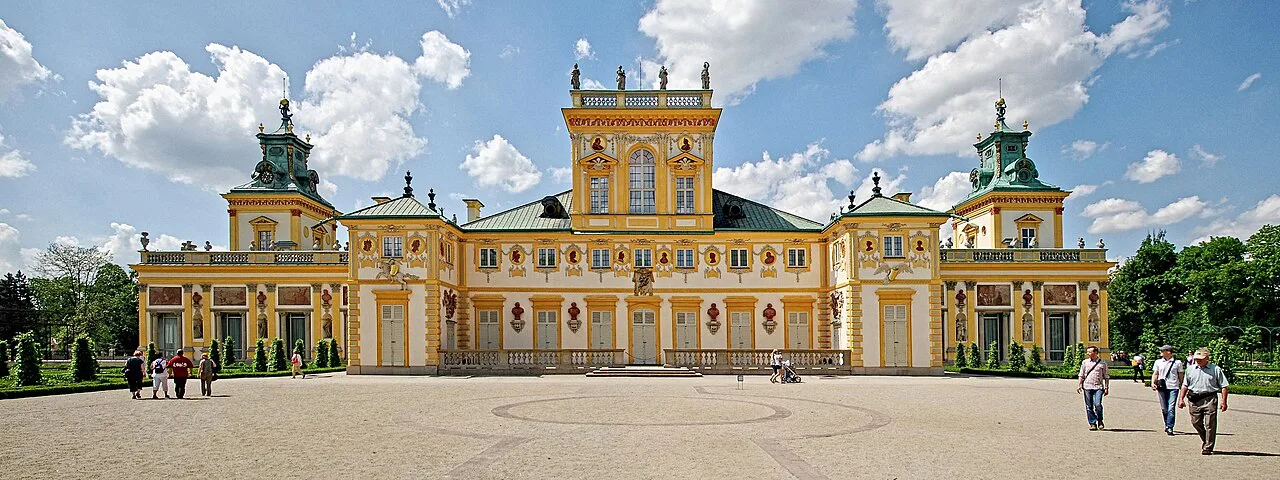
Wilanów is a Baroque palace built in the last quarter of the 17th century for King John III Sobieski and later extended by his successors. It stands on Warsaw's southern edge, between a wide forecourt and gardens with a lake behind, and it survived both world wars. Allow roughly forty minutes by bus from the centre, which makes it a half-day rather than a lunchtime stop.
Inside Wilanów you get throne halls, paintings, clocks and ornamental furnishings spread across several floors, plus temporary exhibitions that can close off sections while conservation work runs. The gardens are the reason many people rate it above the Royal Castle: they are formal, floral and full of fountains, and you can walk them without buying an interior ticket.
Łazienki Park: the Palace on the Isle and the Prince's Residence
Łazienki, also called the Royal Baths Park, is the largest park in Warsaw at 74 hectares and sits close to the city centre. It began in the 17th century as a nobleman's park with a bathing pavilion, then became a palace complex under King Stanisław August in the 18th century. Treat it as one visit rather than several: the park, the water and the buildings work together.
The centrepiece is the Palace on the Isle, ringed by a lake and home to a royal picture gallery. A short walk away, the Prince's Residence built for Prince Józef Poniatowski is a smaller house that rewards a look if you have already bought into the park. The Chopin monument with its small lake in front is the obvious meeting point and the easiest landmark to navigate by.
Pace Łazienki by treating the park as the main event. You can spend an hour on the alleys and lakes without entering a single interior, or add an hour or two for the two residences. Because the buildings sit inside the grounds, arriving late in the afternoon risks finding the interiors closed while the park stays open, so do the houses first and walk afterwards.
Why so many Polish palaces sit outside the big cities
Aristocratic families built where land was cheap and hunting was good, not where the railways later ran. That is why so many of the country's finest residences are in villages and small towns rather than city centres: Mała Wieś lies about 50 km south of Warsaw near Grójec, Sanniki about 79 km west of the capital, and Radziejowice sits in the Mszczonów Heights. Each is a trip, not a stop.
The practical consequence for a short break is harsh arithmetic. A country palace typically costs you a train or bus each way plus a walk or taxi at the far end, so a single house can swallow most of a day. If you have three days in a city, give up one of them only if the palace has interiors you specifically want to see; otherwise keep the day in town.
Some estates now run as multi-purpose venues rather than pure museums. Mała Wieś hosts concerts, business meetings, gala dinners and weddings, has a restaurant, and offers guided tours, so it works as a combined lunch-and-tour outing. Check what is open to casual visitors before committing a day to it.
Residences tied to named families: Białystok and Choroszcz
Białystok's Branicki Palace is one of the best-preserved aristocratic residences from Saxon times in Poland and one of the most beautiful Baroque mansions in eastern Europe. Its design echoes French royal palaces, which earned it the nickname Versailles of Podlasie. It puts a genuine palace visit inside a city that most short-break itineraries ignore.
The same family kept a summer retreat at Choroszcz nearby. Jan Klemens Branicki, crown hetman and castellan of Kraków, built it on an artificial island surrounded by canals modelled on those at Versailles. It is smaller and quieter than the Białystok seat, and pairing the two makes a coherent day out from a Białystok base.
Lublin Castle: the oldest standing building in the city
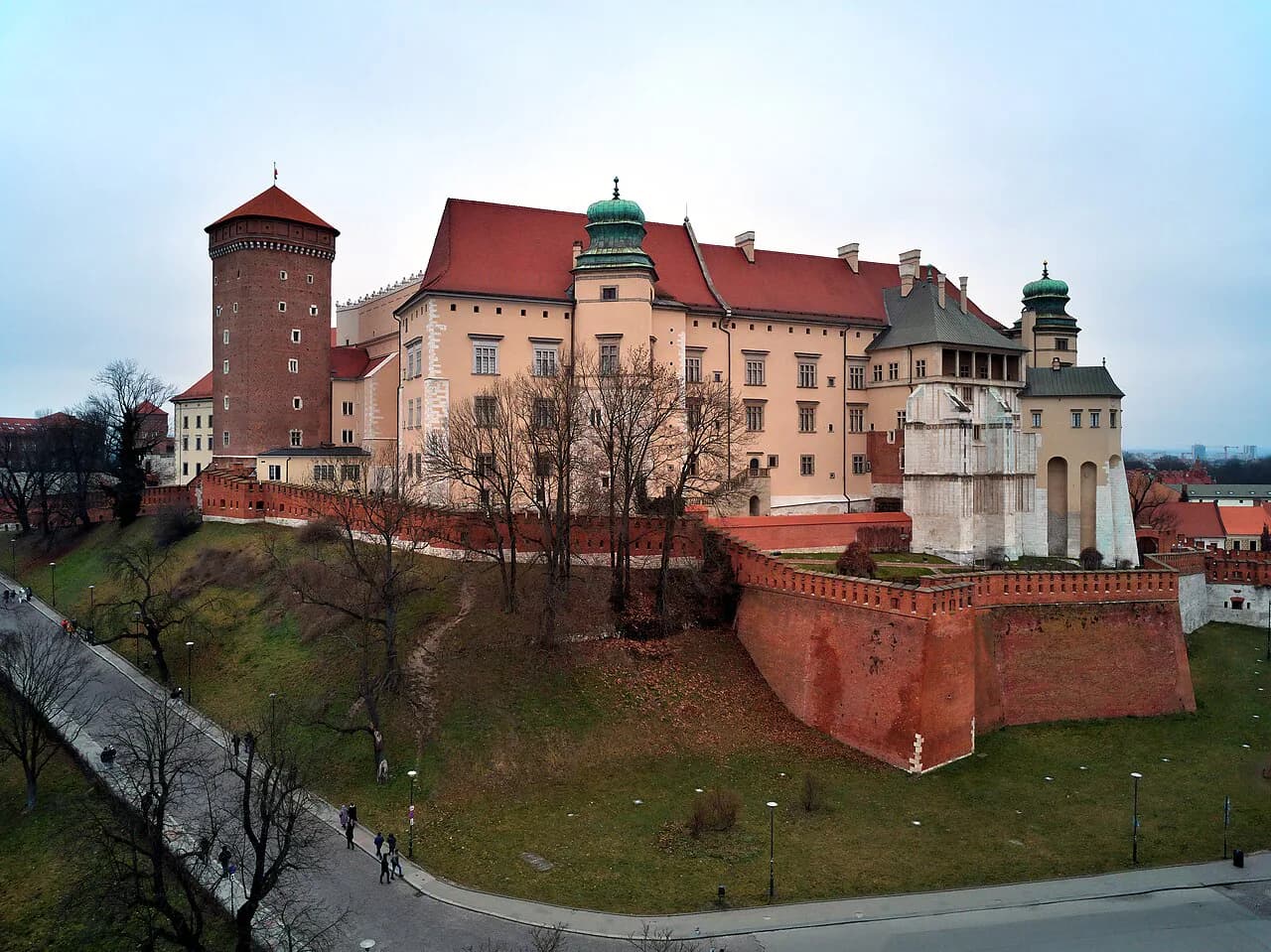
Lublin Castle is one of the oldest preserved royal residences in Poland, founded by High Duke Casimir II the Just on a hill beside the Old Town. Its oldest section dates from the first half of the 13th century, and its stone keep is the oldest standing building in the city. Casimir the Great rebuilt it with stone walls in the 14th century.
For a short break, Lublin's advantage is that the castle sits next to the Old Town, so it costs you an hour or two rather than a day. It is a fortress and royal residence rather than a furnished aristocratic palace, which makes it a different experience from Wilanów or Łazienki. Choose it if you want medieval fabric and city wandering in the same afternoon.
Malbork: the fortress that is not a palace
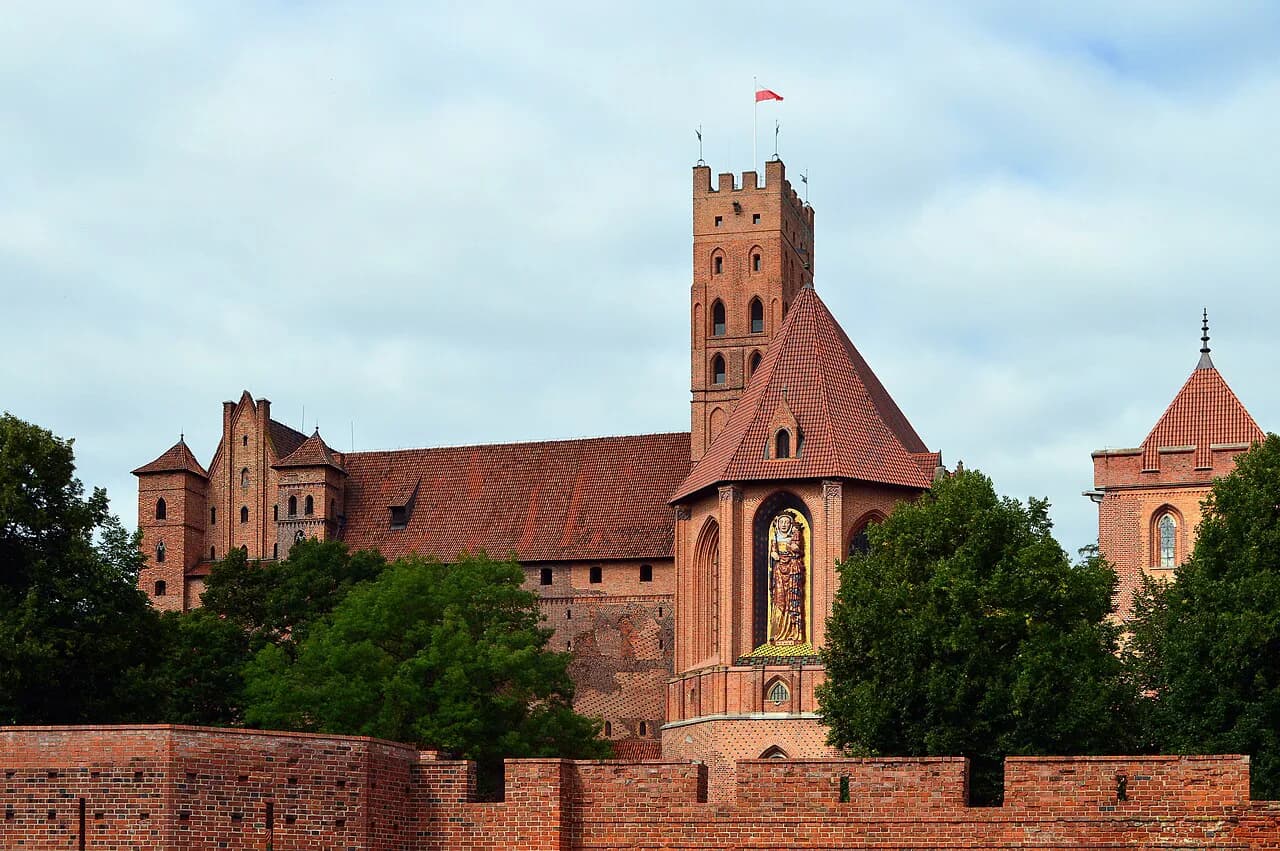
Malbork is the largest brick castle in the world, a medieval stronghold in the Żuławy region of the Vistula delta, and it deserves its reputation. It is not a palace, though, and treating it as one misleads you about what you will see: fortifications, courtyards and monastic-scale brickwork rather than gilded apartments. Go for the scale and the engineering.
If your shortlist mixes palaces and castles, keep the two categories separate in your head and in your itinerary. Malbork rewards a long visit; a Warsaw palace rewards a half-day. Our guide to castles in Poland covers the fortified sites, so this page can stay focused on residences.
Houses where the family name is the draw
Some Polish palaces are interesting because of who lived in them rather than what hangs on the walls. The Zamoyski Palace in Zwierzyniec grew from a wooden manor house built by Jan Zamoyski at the end of the 16th century, was turned into a palace in the 17th century, and stands beside an artificial lake dotted with small islands in the Roztocze region. Radziejowice passed through the Radziejowski, Prażmowski, Ossoliński and Krasiński families.
One estate has a musical claim to fame. Sanniki Palace, about 79 km west of Warsaw, carries a marble plaque recording that Fryderyk Chopin stayed in the manor house in 1828, and the building now houses the Fryderyk Chopin European Art Centre. The present palace form dates from 1910 to a design by Władysław Marconi.
Smaller aristocratic estates work best as an add-on to a regional base rather than a reason to cross the country. Radziejowice's Baroque palace complex, surrounded by spacious gardens in the Mszczonów Heights, fits a lazy half-day from Warsaw. For a Silesian base, Pszczyna Castle is the obvious residence; for the south-east, Łańcut Castle serves the same role. If you are sketching a wider Poland itinerary, place these before you book transport.
How to choose: royal interiors, gardens or architecture
Pick by appetite. If you want gilded rooms and royal portraits, the Royal Castle and Wilanów deliver in Warsaw. If you want a park you can walk for two hours, Łazienki wins on size and setting. If you want a facade and a photographed exterior, a country estate like Choroszcz or Mała Wieś is better value than another set of throne halls.
Gardens change the arithmetic of a visit. An estate with formal grounds gives you something to do if the interiors are busy, and it lets a non-museum companion wait comfortably. A palace hemmed in by roads gives you only the interior, so check whether the grounds are a genuine part of the visit before travelling for it.
Practical trade-offs: travel time, tickets and closing days
Travel time is the first filter. A palace inside the city, like Lublin Castle or the Royal Castle, costs minutes; Wilanów costs about forty minutes each way by bus; a village estate can cost half a day in each direction. Put the city-centre visits on your shortest day and the far ones only if you have three days or more.
Palace museums in Poland commonly close one day a week, and several run a free-entry day, but the day varies by property and by season. Check the venue's own site for the week you are travelling rather than assuming a Monday closure or a fixed free day. Chasing a free day on a busy date can mean queueing, which eats the saving.
Prices for palace interiors and separate garden tickets vary by property and are set locally, so confirm the current rate on the venue's site when you book. Budget for the combined ticket if you want both house and grounds, and treat the garden as the cheaper option when you are short of time.
Timing your trip around the seasons matters more than it does for a city-only break, because gardens are the point of many estates. Check the best time to visit Poland for a city break before you commit, then match the palace you choose to the month you can walk its grounds comfortably.
Fitting a palace into a one-to-four-day city break
On a one-day city break, stay inside the city. The Royal Castle in Warsaw or Lublin Castle is your palace, and both sit close enough to the Old Town that you lose nothing else from the day. Add Łazienki Park as a walk if the weather holds, since the grounds do not require an interior ticket.
With two or three days in Warsaw, give Wilanów a half-day and keep the rest of the day in the centre. With three or four days in Białystok or Lublin, use the city palace as your anchor and spend a second day on a nearby estate such as Choroszcz. Only build a day around a country palace if it is the thing you most want to see.
If your short break is based in Wrocław or Poznań, the strongest palace options on this list are a train ride away rather than a walk. Compare the travel time honestly against what else you would do that day, and remember that a park-and-palace estate gives you a half-day visit rather than a full one.
Which palace should you build your day around?
Build the day around Wilanów if you want the fullest palace-and-garden experience in Warsaw, and around Łazienki if you would rather walk than tour. Choose the Royal Castle for convenience, Lublin Castle for medieval fabric beside an Old Town, and Białystok's Branicki Palace if you want a Baroque residence without the capital's crowds.
Country estates are the better choice only when you have a spare day and a specific reason: Chopin at Sanniki, the Branicki family at Choroszcz, or the Zamoyski name at Zwierzyniec. Check the venue's own site for opening days and ticket prices for your dates, then decide whether the journey is worth it.
Explore more Poland guides
Frequently Asked Questions
Has Poland ever had a royal family?
Poland was a monarchy for centuries, and its kings and princes built the residences on this list. The Royal Castle in Warsaw served as a royal residence from the 16th to the 18th century, and Wilanów was built for King John III Sobieski in the last quarter of the 17th century. The monarchy itself ended with the partitions, after which aristocratic families rather than crowned heads kept building.
What is the most famous castle in Poland?
Malbork is the largest brick castle in the world and dominates the country's castle shortlist, a medieval stronghold in the Vistula delta region. It is a fortress rather than a palace, so if you want royal interiors instead, the Royal Castle in Warsaw or the Palace on the Isle in Łazienki Park are the better fit for a city break.
How long does a palace visit take?
A city-centre palace such as the Royal Castle or Lublin Castle takes an hour or two and leaves the rest of the day free. Wilanów needs a half-day once you count the bus journey and the gardens, and a country estate can take most of a day. Plan the far ones only when you have three days or more.
Sources
Notes for your next Polish city break
Optional updates to our Poland guides.
You might also like

Continue reading
More guides you'll find useful