Polish Food: The Dishes to Try on a City Break
Polish food explained for visitors: pierogi, Żurek, gołąbki, bigos and oscypek, plus milk bars, vodka bars and how to order without over-ordering.
On this page
Polish food is hearty, meat-and-potato cooking built around soups, dumplings and preserves, and on a one-to-four-day city break you can cover the essentials with a handful of planned meals. Start with pierogi, Żurek and a cutlet, add a cold herring starter and finish with a pączek, and you have covered the backbone of the cuisine. This guide groups the dishes by how they arrive on the menu rather than as a flat top-ten list, so you can order a coherent meal rather than a table of starters.
What Polish food actually is
Polish cooking leans on pork, potatoes, cream and cabbage, with marjoram, bay leaf and pepper doing much of the seasoning. The dishes are filling and often built for cold weather, which is why soups and dumplings loom so large. For visitors the practical consequence is portion control: two courses is usually a full meal, and three is a feast.
You will meet the same dishes across Central and Eastern Europe under different names, from dumplings to cabbage rolls, so expect familiar shapes with Polish seasoning. Many of the festive dishes come from Catholic holiday traditions, Easter and Christmas in particular, though you will find them on menus year-round. That is why goose and carp read as celebration food rather than everyday eating, a point that comes through clearly in most guides to Polish dishes.
The wider picture of the cuisine, dish by dish with regional notes, sits in our guide to traditional Polish dishes, which is the natural companion to this page.
The dishes to try first: pierogi, Żurek, gołąbki, kotlet schabowy
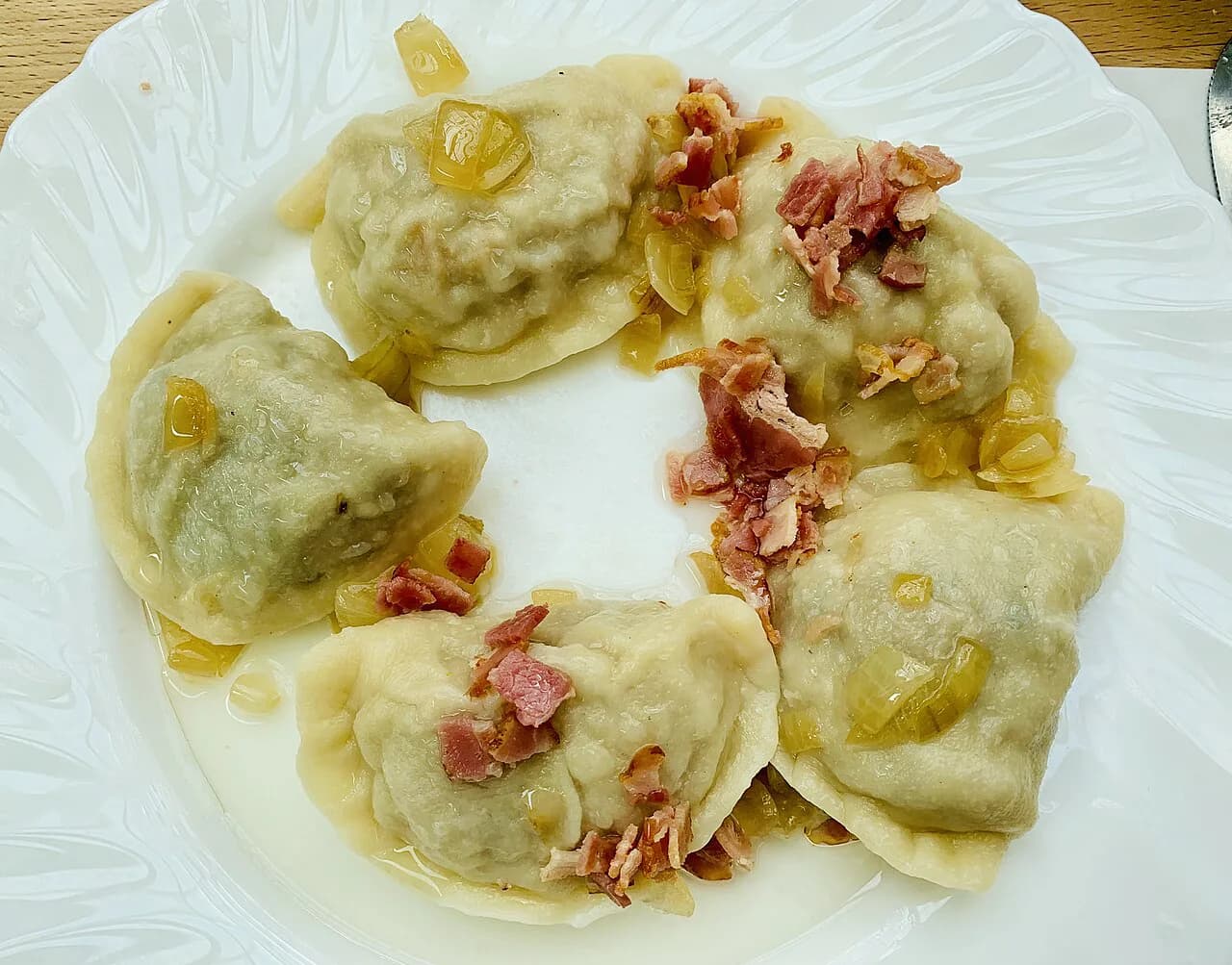
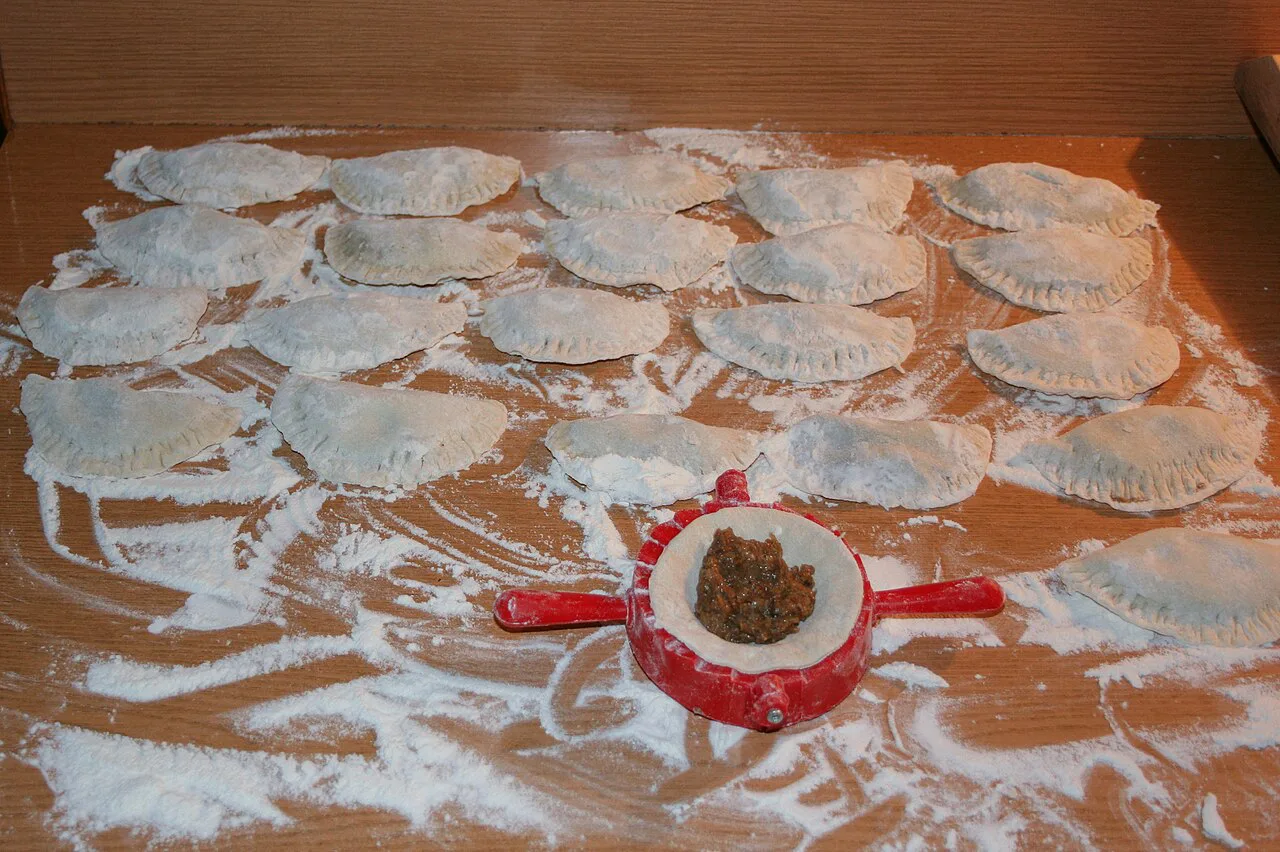
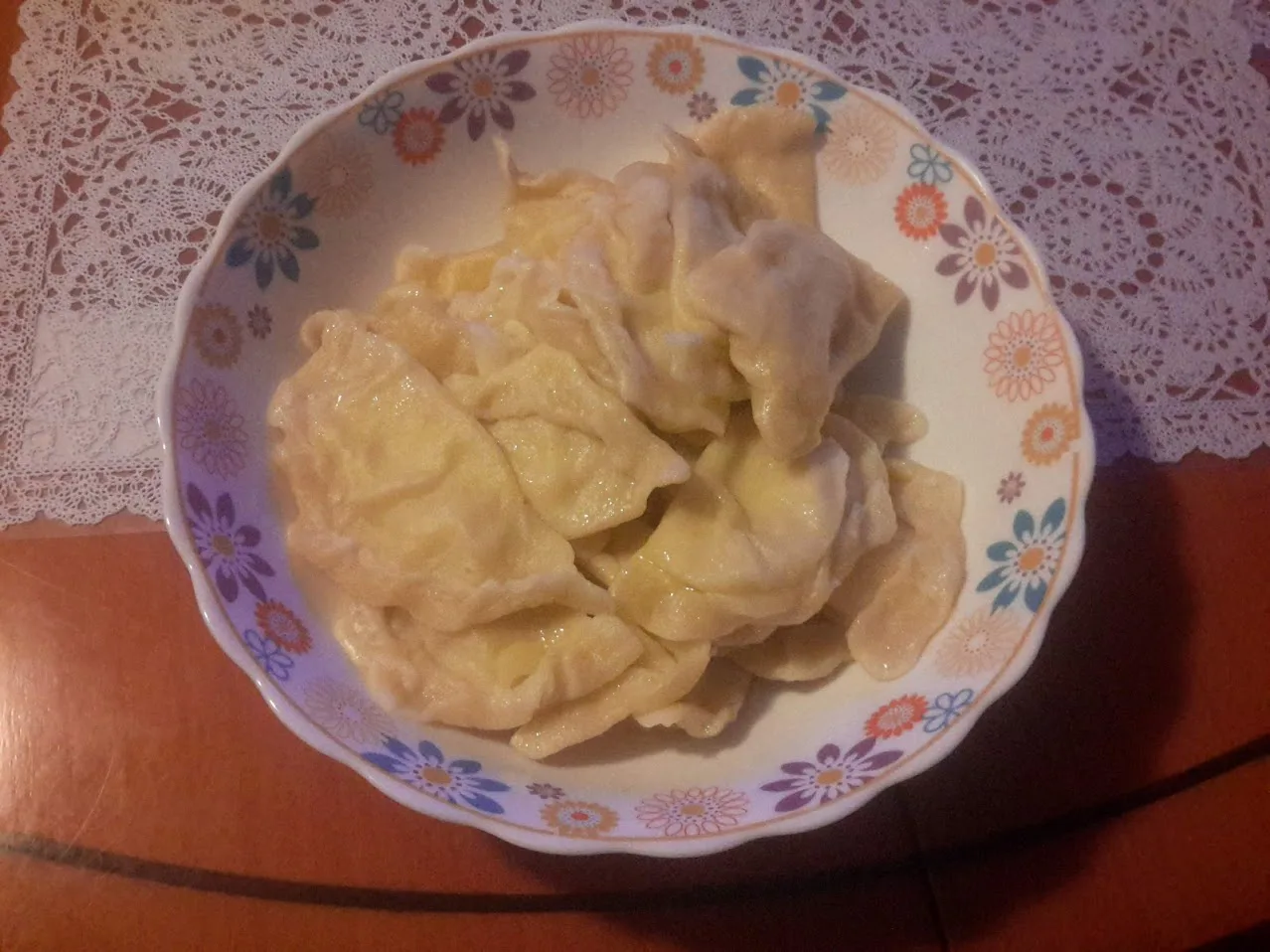
Pierogi are the entry point: dumplings with sweet or savoury fillings, boiled then often finished with fried onion or bacon. The potato-and-cheese version is the one to order first, and sauerkraut-and-mushroom runs it close. Our pierogi guide covers the fillings and how they are served in detail.
Żurek is the soup most associated with Poland, a sour rye broth made from a fermented starter called zakwas and served with sausage, egg, potato or mushrooms. Some restaurants bring it in a bread bowl, which is generous rather than gimmicky, since the soup is a meal in itself. Read more in our guide to Żurek.
Gołąbki are cabbage leaves rolled around meat and grain, baked and served under tomato sauce, and they are the most comforting thing on a winter menu. Kotlet schabowy, a breaded pork cutlet, is the everyday main, usually with potatoes and a sharp salad. Placki ziemniaczane, potato pancakes, are the meat-free alternative that appears almost everywhere.
Soups beyond Żurek
Kapuśniak is the other soup worth knowing, a sauerkraut broth that is sour, savoury and often loaded with pork. Where Żurek is sharp and rye-based, kapuśniak is softer and cabbage-led, and both turn up as a starter or a light lunch. If you only have room for one soup on a short break, make it Żurek for the rye tang you will not find at home.
The fermentation behind Żurek, zakwas, is a rye starter left to sour before it goes into the pot, which is what gives the soup its distinctive edge. Understanding that one ingredient explains a whole family of Polish flavours, from soups to the tang in a plate of pickles.
Cold starters and bar snacks
Herring is the standard cold starter, served salted, brined or in sour cream with onion and sometimes apple. The sour cream version is mild and fresh rather than aggressively fishy, which makes it a safe order if you are unsure about herring. Our notes on śledź w śmietanie cover how it is dressed and where it fits in a meal.
Mizeria, sliced cucumber in yogurt or sour cream with dill, is the cooling side that turns up next to cutlets and fried dishes. Mixed vegetable salads of shredded carrot, cabbage and beetroot do the same job. Steak tartare appears widely in bars and restaurants, served raw with egg yolk, pickles and onion, so order it where the place is busy.
Kiełbasa: smoked, white and in soups
Kiełbasa is a family of sausages rather than one product. Krakowska is a dry smoked pork sausage served cold with bread, biała is the white sausage that is boiled or grilled, and kabanosy are the long thin smoked sticks sold as snacks. The same sausage turns up inside Żurek and onto grill plates with potatoes or sauerkraut.
Regional versions matter: the Śląska sausage from Silesia is one to look for if your city break takes you to Wrocław or the industrial south. Ordering a mixed plate of sausages is a good way to compare them without committing to a whole main course.
Mountain and regional specialities: oscypek and goose
Oscypek is a smoked sheep's-milk cheese from the Tatra Mountains in the south, made by a shepherd known as a baca and usually pan-fried until golden. It is served with cranberry jam and tastes smoky and savoury, closer to meat than to a mild cheese, and it is traditionally eaten around the holiday season. Our guide to oscypek explains how it is made and eaten.
Goose is celebration food in Poland, roasted, smoked or turned into pâté, and it is the dish to order if you want one memorable meal rather than several good ones. It is rich, so share a portion or plan a lighter starter.
Sweet things: pączki, pierniczki and babka
Pączki are the everyday sweet: yeast doughnuts filled with jam or custard and dusted with sugar, and they are best eaten the day they are made. Toruń is the city associated with pierniczki, spiced gingerbread made there since the Middle Ages and now sold across Poland in denser, softer forms than the supermarket biscuit.
Babka is the cake to know, a yeast cake baked in a fluted tin and flavoured with cinnamon or chocolate. It has roots in Jewish baking in Poland and has since become an Easter staple across the country. Our Polish desserts guide covers these and the cold, fruitier options.
Where to eat cheaply: the milk bar format
The bar mleczny, or milk bar, is a cafeteria-style canteen where you choose several small plates and pay at the counter, which makes it the cheapest route into Polish cooking. Look for the sign and expect simple soups, dumplings and cutlets rather than a formal restaurant experience. Our guide to milk bars in Poland explains how the queueing and ordering work.
Milk bars are also where you can try the meat-free dishes without committing to a full restaurant meal, since the vegetable and dumpling plates sit alongside the pork. They are busy at lunch, so eating slightly off the peak hour makes for a calmer first visit.
Food halls, markets and vodka bars
Beyond restaurants, the same dishes turn up at food markets and in vodka bars, where herring, tartare and bread are served as snacks alongside the drinks. A meal built from bar snacks is a cheap and varied way to eat in Gdańsk or Wrocław without booking anything. If vodka is part of the evening, our Polish vodka guide covers what is on the shelf.
Bread, pickles, sauerkraut and smoked fish are worth buying from a market to eat later, especially on a self-catering trip. In cities with a food hall or covered market you can assemble a picnic from several stalls rather than committing to one sit-down meal.
Portions and ordering: why pierogi can derail the main course
Pierogi are often listed as a starter, but a whole portion is heavy enough to blunt your appetite for whatever follows. Share one portion between two, or order pierogi as your main and add a soup or salad rather than a second plate.
A sensible shape for dinner is soup, one shared cold starter, then a main of pierogi or a cutlet, with dessert only if you have held back. Polish meals are not paced like Italian ones, so do not assume the kitchen will bring courses slowly.
Vegetarian and meat-heavy realities
Polish cuisine is built around pork, and a lot of dishes that look vegetable-based are cooked with sausage, bacon or stock. That said, pierogi ruskie, placki ziemniaczane, mizeria and vegetable salads are reliably meat-free, so you can eat well without eating pork.
Herring and smoked trout give pescatarians more choice than they might expect, from the cold starters to a main course. Ordering a few starters is often the easiest way to eat meat-free without relying on a translated menu.
Drinks to know
Vodka is the drink that goes with the cold starters, served chilled in small glasses with herring, bread and pickles. Raise a na zdrowie as the toast, and pace yourself, since the snack plates are designed for sharing over a long evening. Our Polish vodka guide covers the styles and how a tasting usually runs.
If you would rather drink beer, Polish beer is light and lager-led and works with pierogi and cutlets. Coffee and tea are the everyday drinks, and the dessert course is where a sweet Polish dessert sits naturally.
How many meals should you plan around Polish food?
On a short city break, three properly planned meals cover the cuisine: one milk bar lunch for soups and dumplings, one sit-down dinner with a shared herring starter and a cutlet, and one snack-led evening in a vodka bar. Fill the gaps with pączki, gingerbread and market pickles rather than adding more restaurant meals. Cold-weather dishes like Żurek and bigos taste best when the weather cooperates, so check the best time to visit Poland when planning your trip.
If your break is longer, use the extra day to eat one regional speciality such as oscypek in the south or Silesian kiełbasa in Wrocław rather than repeating pierogi. That is where the food stops being a checklist and starts being a reason for the trip.
Explore more Poland guides
Frequently Asked Questions
Is Polish food spicy?
Not usually. Polish cooking seasons with marjoram, bay leaf, pepper and salt rather than chilli, so the heat you meet is mild. The sharpness comes from fermentation, as in Żurek and sauerkraut, not from spice.
Can I eat well in Poland without eating pork?
Yes, provided you order deliberately. Pierogi ruskie, placki ziemniaczane, mizeria, herring and vegetable salads are all pork-free, and a plate of mixed starters works well as a meat-free meal. Check soups, as many are built on a meat stock.
What should I eat first in Poland?
Start with pierogi and a bowl of Żurek, then move on to a cutlet or gołąbki. Sharing a herring starter alongside will give you a sense of the cold dishes before the heavier mains.
Do I need to book a table?
Not for milk bars, which are casual and take walk-ins. For a sit-down dinner in a popular restaurant on a weekend, booking earlier in the day is the safer approach.
What is a milk bar?
A bar mleczny is a canteen-style eatery where you order simple soups, dumplings and cutlets at a counter for a low price. It is the cheapest way to try everyday Polish cooking.
Sources
Notes for your next Polish city break
Optional updates to our Poland guides.
You might also like

Continue reading
More guides you'll find useful