Gdańsk Architecture: What to Look For, Street by Street
Gdańsk architecture spans Gothic churches, Renaissance townhouses and largely rebuilt old streets. See what to look for, where to walk and how to read each style.
On this page
Gdańsk architecture rewards a single unhurried loop through the compact Główne Miasto, where Gothic brick churches, Renaissance and Mannerist townhouse fronts and the riverside Crane sit within a few minutes of each other. Plan on half a day for the core and a full day if you want the later 19th-century and postwar layers as well. This guide groups the buildings by period and area, explains why so much of the old centre is a rebuild, and sets out a walking order with honest trade-offs.
The single most useful thing to know before you go is that the streets can look medieval while being largely postwar work, so read the frontages as a reconstruction rather than as untouched fabric. Knowing that stops the disappointment of finding modern brickwork inside a gabled facade and sharpens what you notice on the second pass.
What Gdańsk architecture is known for
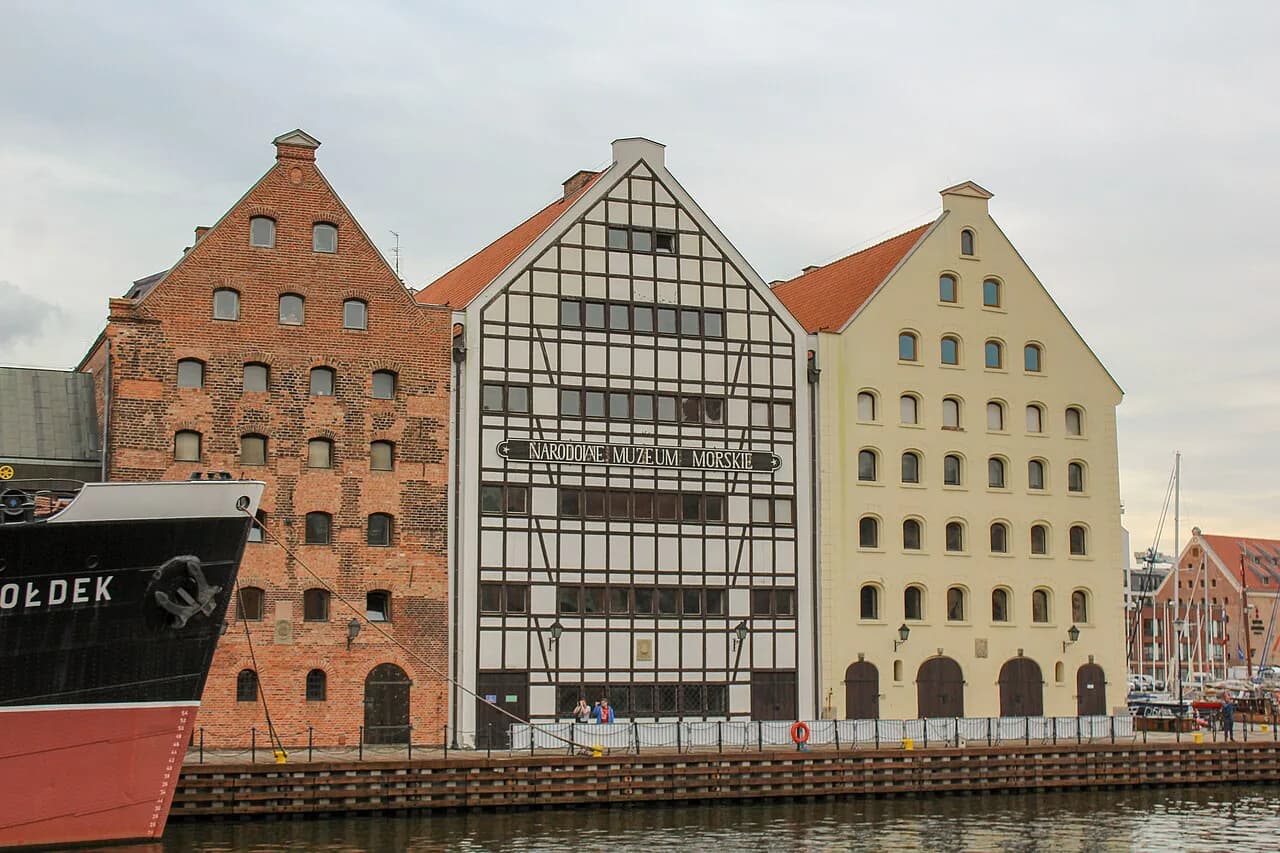
The old centre delivers a tight blend of Gothic, Renaissance and Mannerist building lines along a handful of streets, which is why the compact core works so well on foot. The dominant material is brick: churches, gates and merchant houses are built from it, and the colour gives the Main Town its warm, dense look even on a grey day.
A practical way to read the city is by layer. Start with the medieval brick churches, move to the merchant frontages of the Royal Route, then follow the waterfront to the defences, and only afterwards look at the later 19th-century and modern buildings outside the core. That order matches the geography, so you walk in one direction instead of zig-zagging.
If you want to weave interiors into the walk, the museums in Gdańsk sit inside several of the same historic buildings, so a single route can cover both. Decide in advance which interiors matter to you, because each one eats into walking time.
Why so much of the old centre is a postwar rebuild
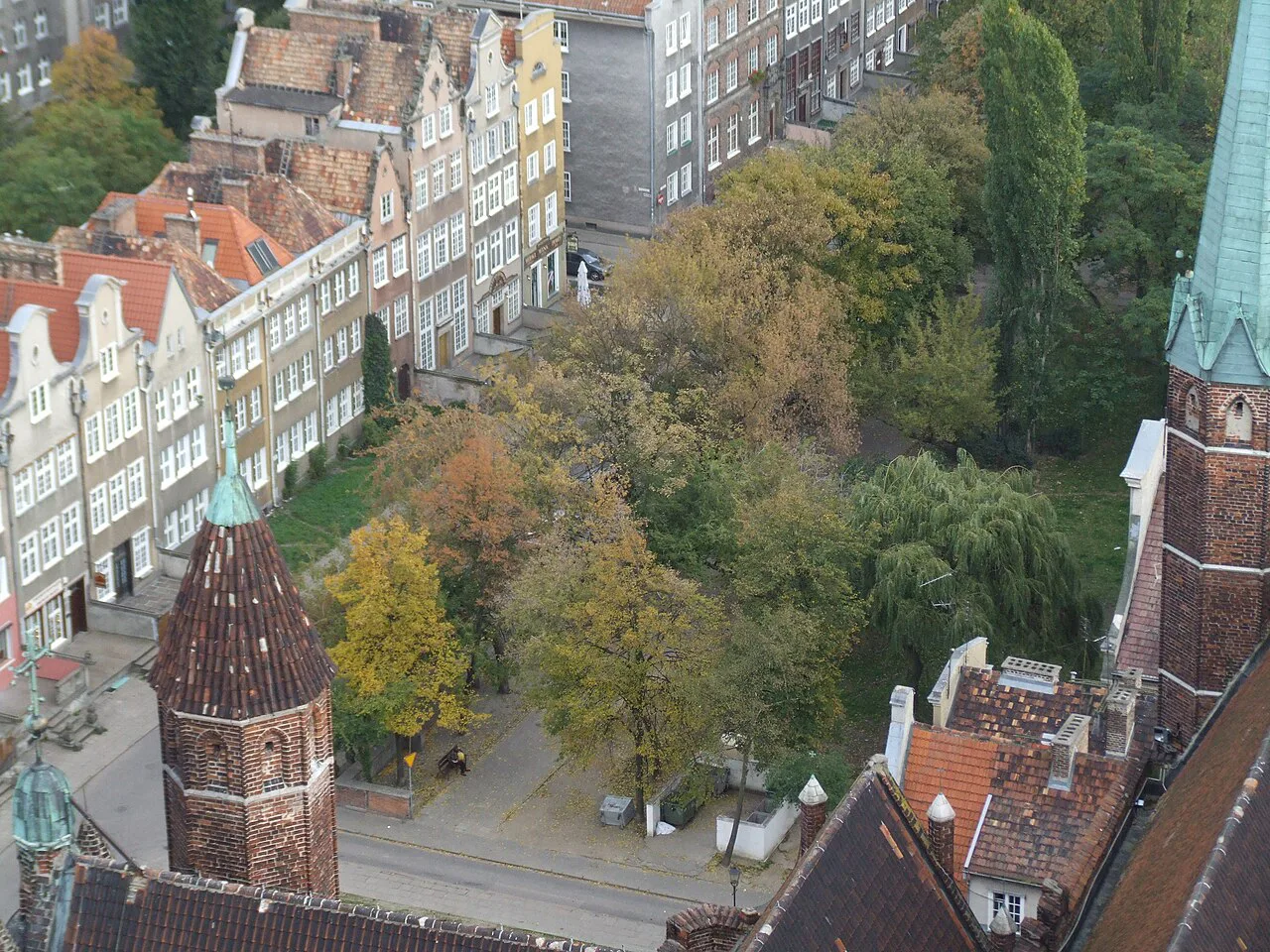
The Main Town you walk through today is, in large part, a reconstruction: Soviet bombing campaigns near the end of the Second World War reduced around 90% of the Old Town to rubble, and the historic streets were rebuilt after the Second World War. That is why some details feel too regular or too clean, and why the result approximates the past rather than preserving it intact.
The rebuilding also carried a political purpose: the postwar Polish authorities shaped the old centre to read as Polish rather than Germanic, so the reconstruction is not a neutral copy. That context changes how you look at the gables and arcades. Treat the Main Town as a postwar interpretation of an older trading city, and the modern brickwork and simplified mouldings stop being flaws and become part of the story.
For the wartime and occupation background behind the destruction, the Gdańsk WW2 Sites page covers the memorial and museum stops that explain it. Pairing that with the streets themselves makes the reconstruction easier to read.
The Gothic layer: St Mary's Church and the brick churches
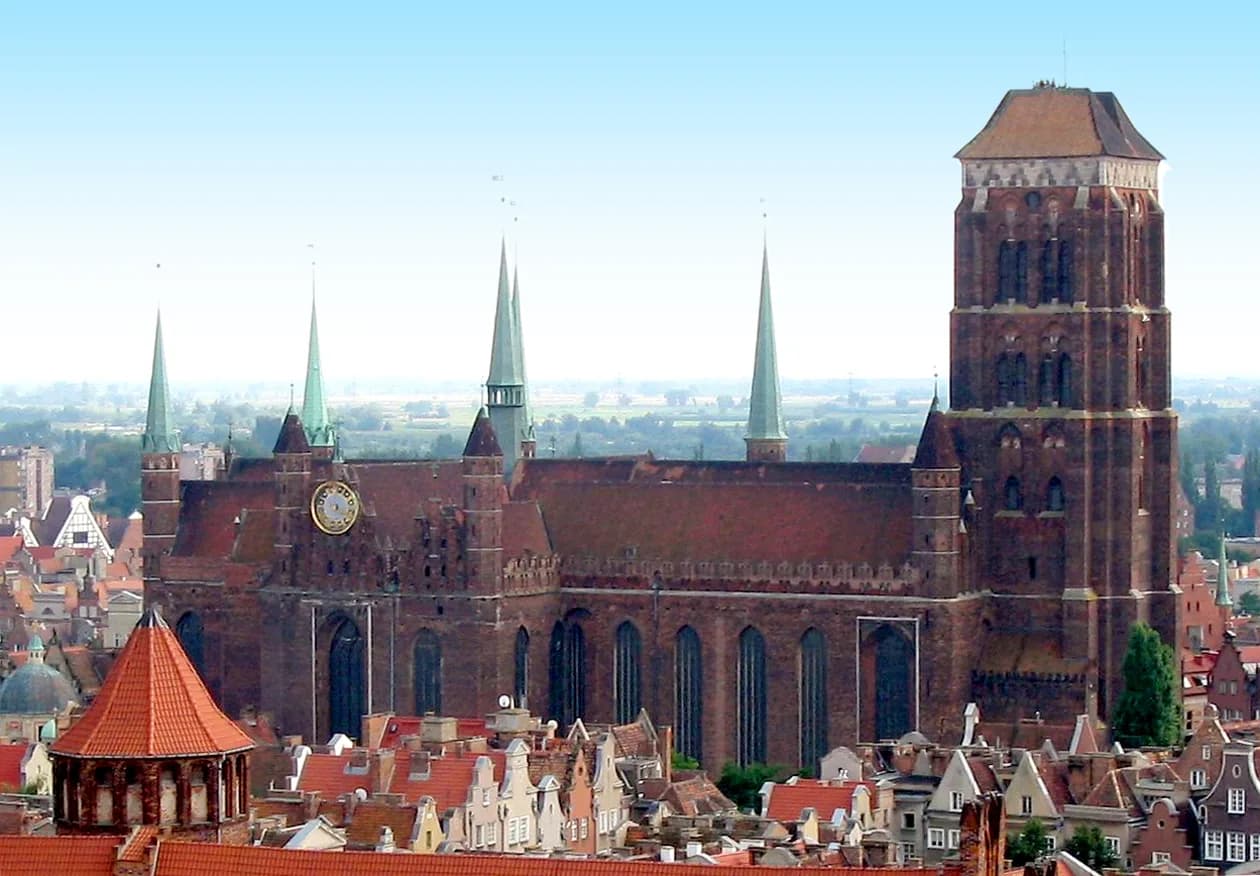
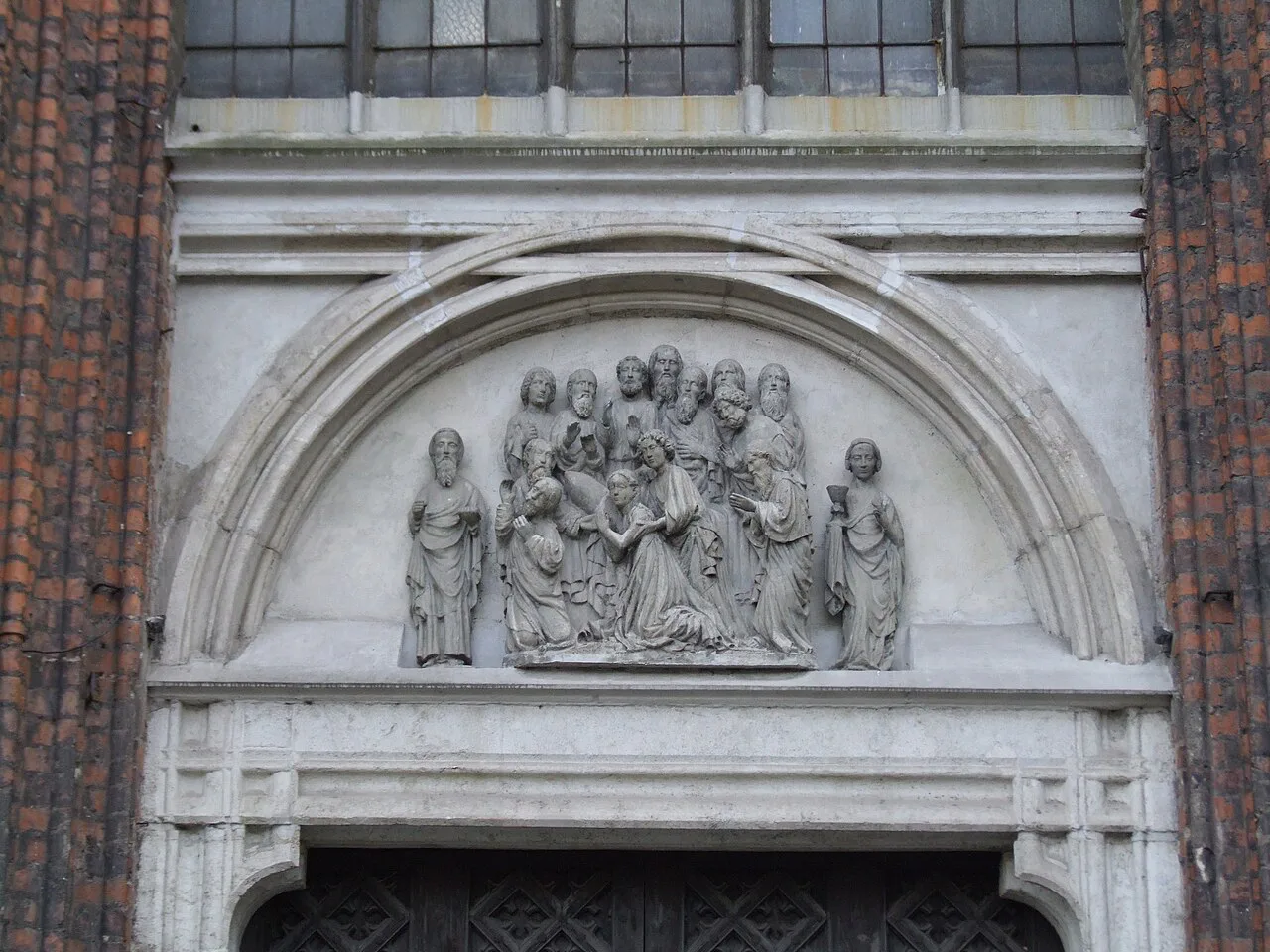
St Mary's Church is the anchor of the Gothic layer and the building most visitors remember, a vast brick hall church whose scale is best felt from the surrounding streets before you go inside. Walk the outside first: the buttresses, the tall windows and the way the roofline dominates the neighbouring houses tell you more about medieval Gdańsk than a quick interior circuit.
The brick churches of the Main Town share a family resemblance: massive walls, deep portals and a defensive solidity that comes from the same material palette as the city gates. If church interiors are your priority, the Gdańsk Cathedral and Churches Worth Visiting guide goes deeper on which are worth the entry and time.
Budget your time honestly here. Two or three Gothic interiors are enough for a short break, and the differences between the fourth and fifth are subtle unless you are specifically chasing brick detailing.
The civic and merchant heart: Długi Targ and the Royal Route
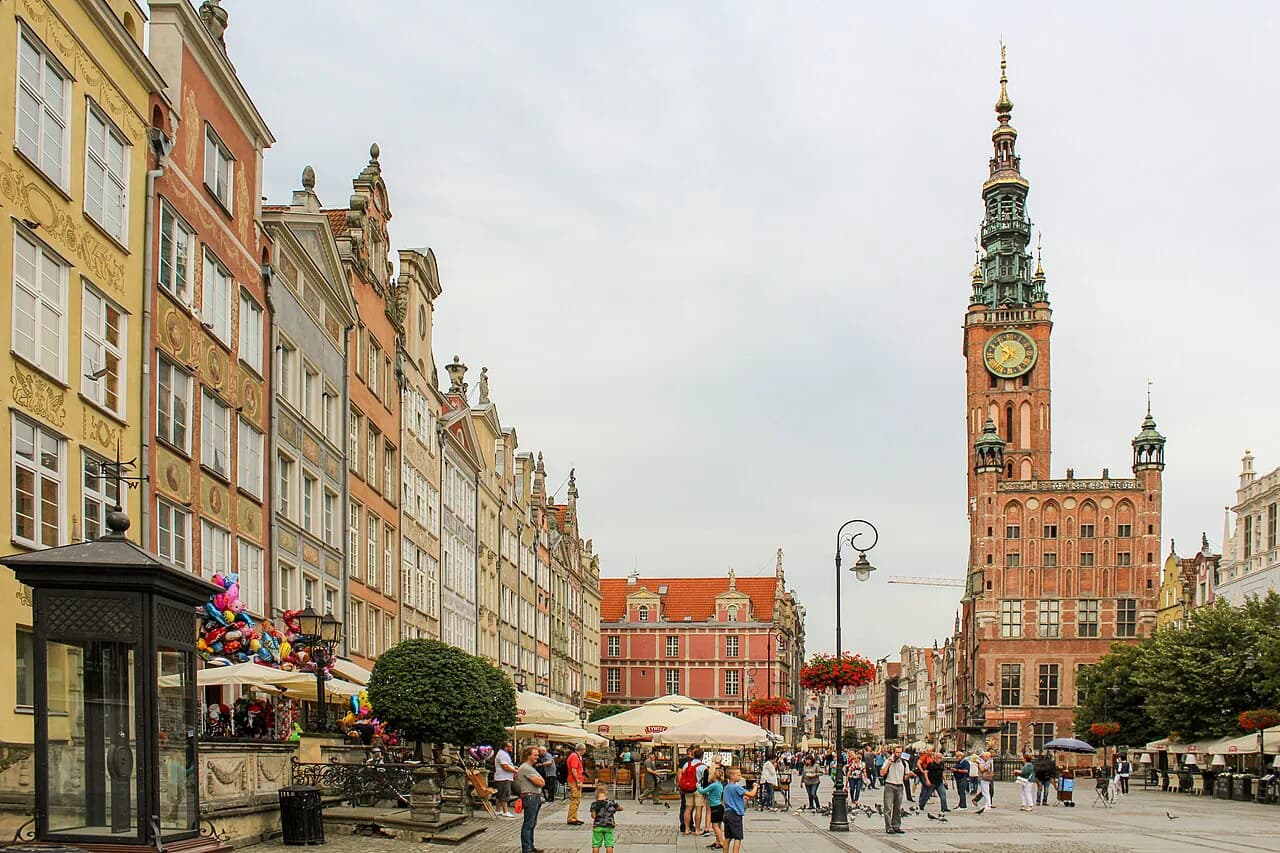
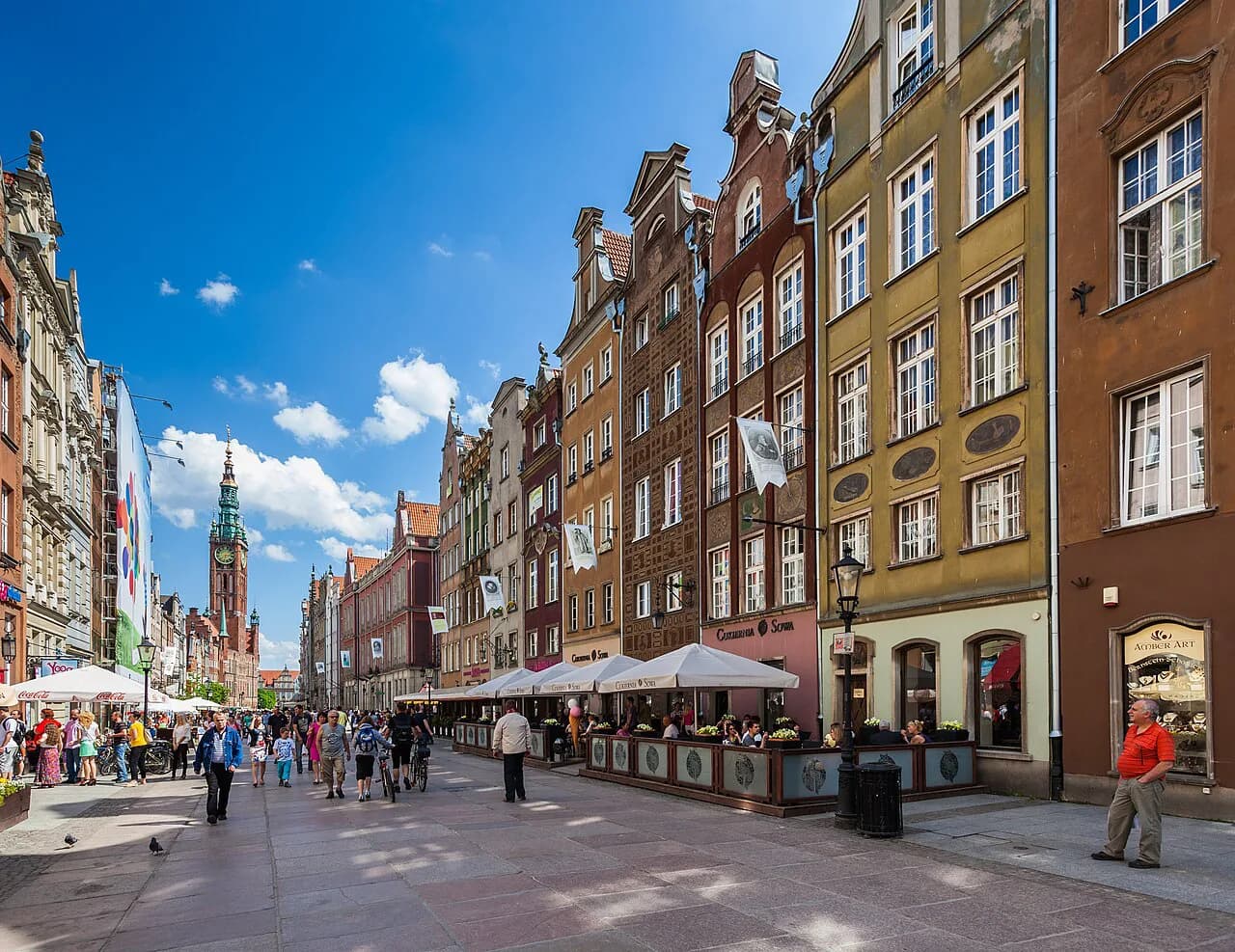
Długi Targ is the showpiece of the merchant city, a wide market square lined with tall, narrow frontages and finished by Artus Court, the historic meeting house of the merchant brotherhood. Stand back from the facades to take in the rooflines and gables together; close up, you see how each house competes for attention through ornament rather than height.
The Royal Route is the natural spine for this layer, running through the ceremonial streets where processions and merchants once passed. Walk it in one direction, from the inland gates towards the river, so the sequence builds towards the waterfront and you end where the next layer begins.
Look for the joins: a Renaissance or Mannerist front on a rebuilt shell is the signature of the Main Town, and comparing neighbouring houses shows how varied the reconstruction is. This is also the densest stretch of cafes and crowds, so an early start gives you clearer views of the upper storeys and gables.
The waterfront and its defences: Żuraw, walls and riverside gates
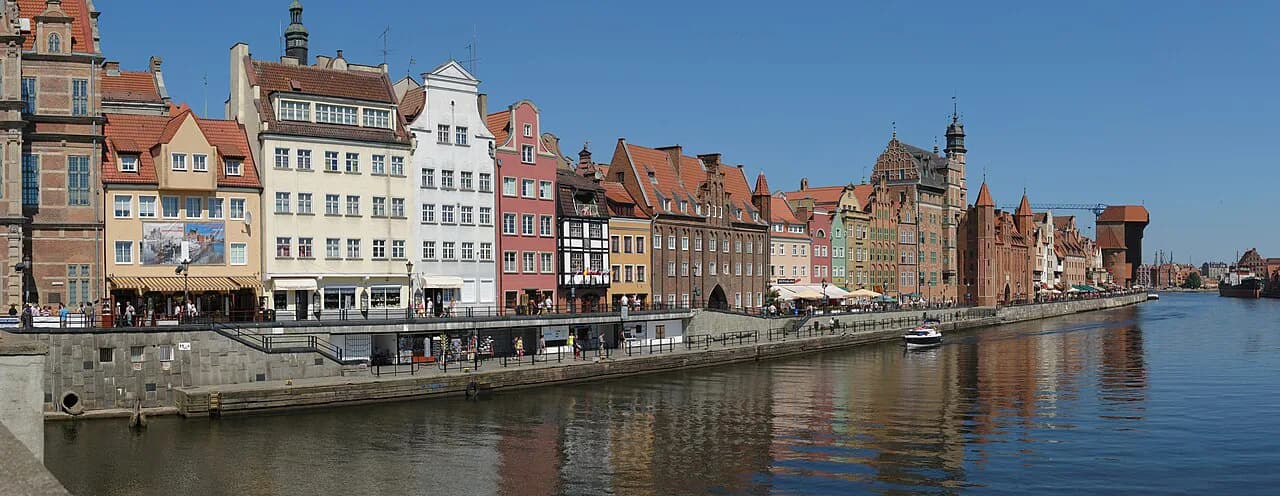
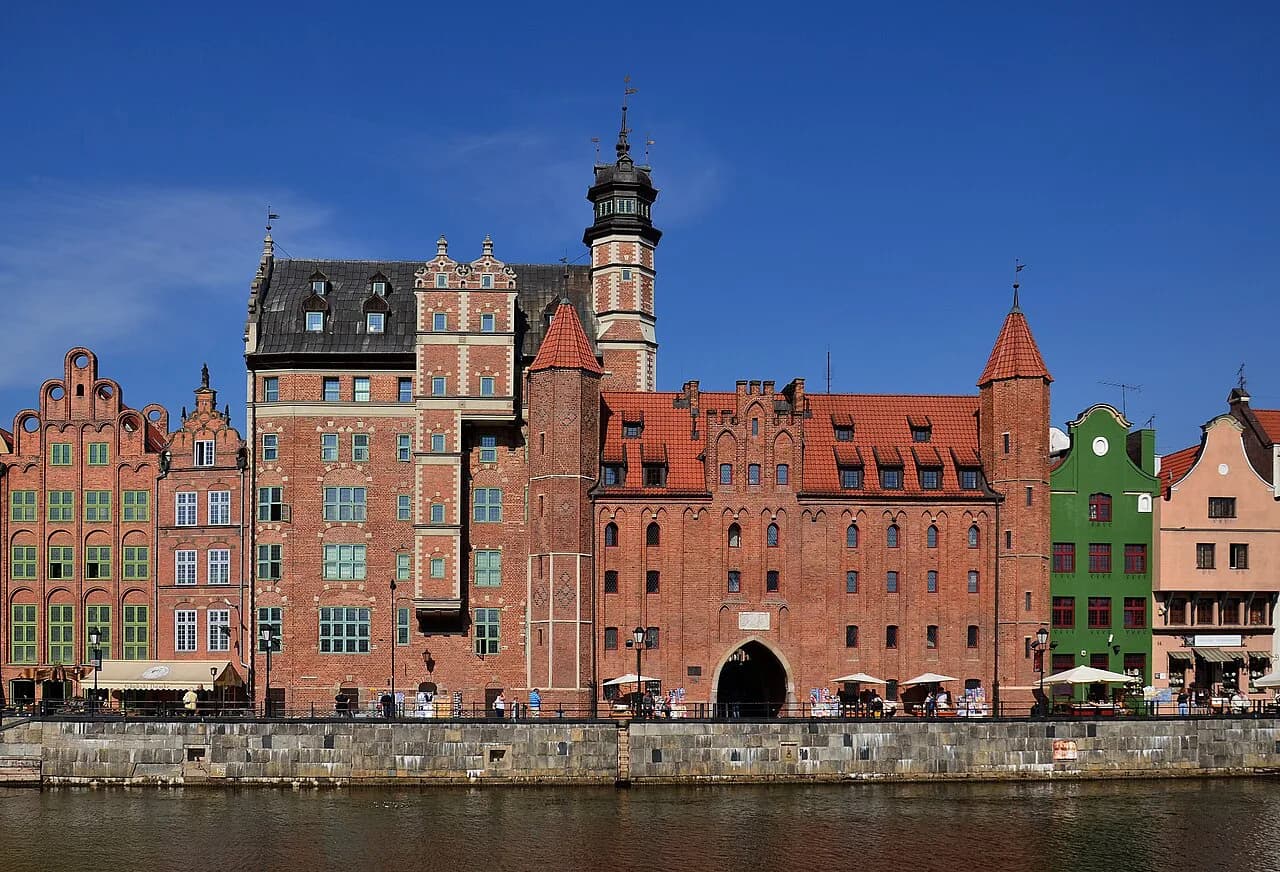
Żuraw, the Crane, is the waterfront's landmark, a medieval harbour crane built into the riverside defences and recognisable from across the Motława. See it from the opposite bank first for the full profile, then walk the near side to read how it sits in the line of the old walls and gates.
The old city walls and the surviving gates are the clearest medieval fabric in the city, and they make a natural end to the walk because they frame the river rather than sitting in a square. Trace the wall line as far as it survives, noting where later buildings have cut through it.
The waterfront is also the busiest part of the centre, so treat it as a place to look rather than to linger if you are short of time. The riverbank gives you a fine view back over the whole ensemble, and it takes only minutes to cross.
Art Nouveau and later 19th-century building
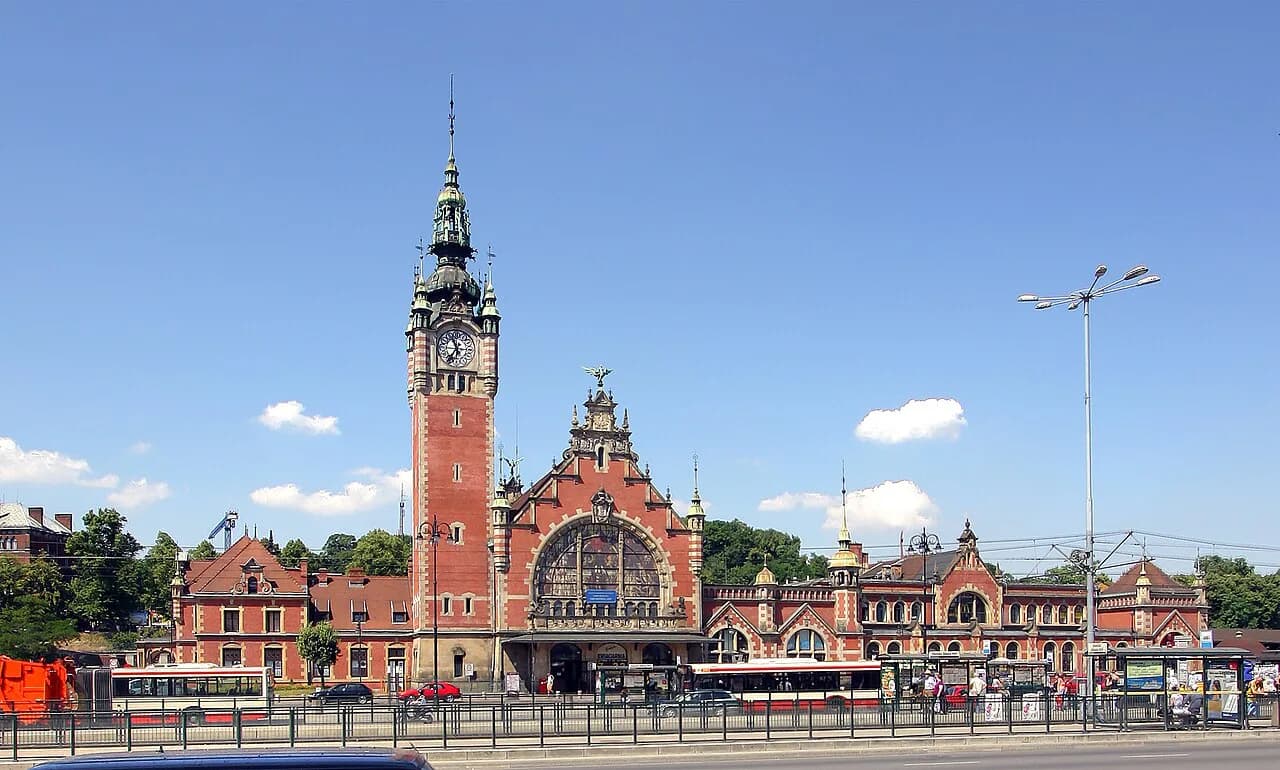
The Main Town is not the whole story: the later 19th-century city, with its tenements and Art Nouveau detail, sits outside the medieval core and shows a different Gdańsk built on industry and expansion. Look for curved floral ornament, decorative ironwork and varied window shapes on residential streets rather than on the showpiece squares.
The best approach is to pick one or two streets away from the Royal Route and walk them slowly, comparing facades house by house. This layer rewards attention to detail and is easy to skip when time is tight, so make it the flexible part of your day rather than the fixed one.
Modern and postwar building
Beyond the reconstructed old centre, Gdańsk carries the marks of later decades in its housing, civic buildings and infrastructure, and these are worth a look if you want to understand the city as a working place rather than a stage set. The contrast between the rebuilt historic core and the modern districts is itself the point.
This layer is the easiest to drop on a short break. It asks for transport and distance, and it delivers less concentrated visual reward per hour than the Main Town, so keep it for a return visit or a longer stay.
A short architectural walk through the Main Town
Start inland at the upper end of the Royal Route and follow it downhill through the ceremonial streets to Długi Targ, reading the merchant frontages as you go. Then continue to the Motława, turn along the waterfront to see Żuraw and the wall line, and finish by crossing the river for the view back at the whole ensemble. Two to three hours covers it at a steady pace.
Add St Mary's Church either at the start or the end, depending on whether you want the interior before the crowds build or as a finale. Keep the Art Nouveau and modern layers as an optional extension rather than folding them into the core loop, because they pull you away from the river and stretch the walk considerably.
If the wartime story interests you more than ornament, swap part of the walk for the Museum of the Second World War and its surrounding district, then return to the Main Town for the waterfront at the end. That combination covers both the fabric and the reason so little original fabric survives.
Practical trade-offs for a short break
With half a day, do the Royal Route, Długi Targ, the waterfront and Żuraw, and stop there. That gives you the strongest concentration of buildings per minute, and it is all walkable without planning. Add St Mary's Church only if you have a full day or a specific interest in Gothic interiors.
Skip the scattered later 19th-century and modern layers first when time is short, and treat the museum interiors as optional extras rather than fixed stops. If you have a full day, the sensible order is the walking loop in the morning and one interior in the afternoon, when the streets are busiest. Opening days and ticket prices vary by building, so check each venue's own site before you build an interior into the plan.
If you are weighing up where else to spend an afternoon, the broader Gdańsk Attractions: 5 Visitor Guides collection shows how the architecture stops fit alongside the rest of the city. Read it before committing your days, because the best routes pair buildings with the streets around them rather than treating each sight as an isolated stop.
Should you walk the Main Town first or the waterfront?
Walk the Main Town first. The Royal Route and Długi Targ set up the merchant story and the reconstruction question, and finishing at Żuraw and the river gives the walk a natural end with the best overall view. Starting at the waterfront instead spreads the crowds through your day and leaves the densest streets for the busiest hours.
If you only have half a day, keep to that loop and leave the church interiors and the outer districts for a longer stay. If you have a full day, add one Gothic interior and one museum, and check opening days and ticket prices with each venue before you go. For more, see museums in Gdańsk.
Explore more Gdańsk guides
Sources
Notes for your next Polish city break
Optional updates to our Poland guides.
You might also like
Continue reading
More guides you'll find useful