Jewish Gdańsk: What You Can Still See and Where
A practical guide to Jewish Gdańsk: the New Synagogue in Wrzeszcz, the Chełm cemetery and the Great Synagogue site, with the history behind each place.
On this page
Jewish Gdańsk is not a quarter you can stroll through: the community lived for centuries outside the main walls, and most of its buildings were destroyed in November 1938 and the war that followed. What remains is a short, spread-out list — a working synagogue in Wrzeszcz, a cemetery in Chełm and the remembered site of the Great Synagogue — plus a handful of wartime places worth pausing at. This guide covers each, the history that explains why they sit where they do, and how to fit them into one to three days.
The city's Jewish story begins with merchants arriving in the 11th century and continues through bans under the Teutonic Knights, employment as grain and timber intermediaries, emancipation under Prussian rule in the 19th century and the Great Synagogue's opening in 1887. That sequence explains the geography: five separate communities grew up just outside the city walls, with their own hospitals and schools, rather than in a single street inside the centre.
What is left of Jewish Gdańsk today
Set expectations low and specific. The New Synagogue in Wrzeszcz is the community's working address, the cemetery in Chełm holds the graves and the Sopot war memorial, and the Great Synagogue survives only as a site and a memory. Granary Island and ul. Owsiana mark wartime ghettos rather than Jewish neighbourhoods.
Two of these lie well away from Główne Miasto, so treat them as half-day detours rather than stops on a walking loop. The Wrzeszcz and Chełm trips are the reason to give Gdańsk three days instead of two if this history matters to you; the central sites can be folded into an ordinary sightseeing day.
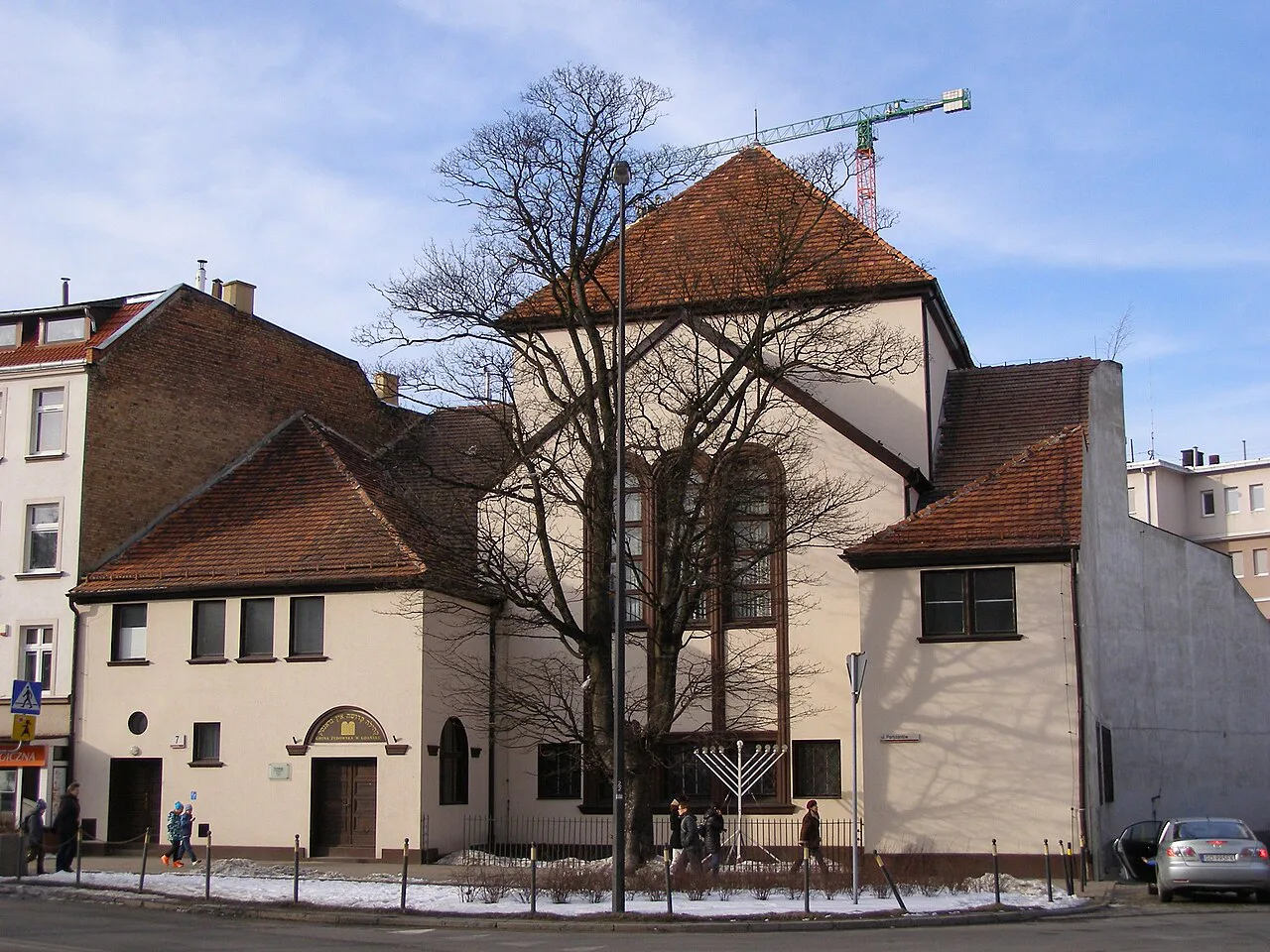
The New Synagogue in Wrzeszcz: the community's working address
The Jewish community established in the Wrzeszcz synagogue in 1990–91 is the body that keeps Jewish life going in the city today, and its New Synagogue is the place to head for if you want to see a living institution rather than a ruin. It sits in Wrzeszcz, north of the centre and reachable by the suburban rail line that runs through the district.
The community has been working to promote the few remaining Jewish sights in the city, so this is also the natural place to ask what is currently open and how to visit respectfully. Check service times and whether casual visits are possible before travelling across town, since a working synagogue is not a museum with fixed visitor hours.
The Great Synagogue: what stood there and what happened in November 1938
Completed in 1887, the Great Synagogue was the symbol of a community that had, by then, produced a professional class of doctors, lawyers, teachers and artisans. Most of the city's synagogues were destroyed during the Kristallnacht events of 12–13 November 1938, and the Great Synagogue never returned.
Visit the site as a place to read and reflect rather than to tour: there is no building to enter, and the value lies in knowing what stood there and why it was targeted. The restrictions that preceded the destruction — bans on public baths, theatres, cinemas and hotels, and on working as doctors, lawyers and notaries — are part of the same story.
For the wider wartime context of the city, including the German Nazi occupation and the camps to which Gdańsk's Jews were deported, pair this stop with a broader look at Gdańsk WW2 sites.
The Jewish cemetery in Chełm and the Sopot war memorial
The Jewish cemetery in Chełm is the main surviving physical trace of the pre-war community, and it lies south-east of the centre, well outside the tourist core. A separate memorial to Jews who died in the First World War stands in the Jewish cemetery in Sopot, a reminder that the community was integrated enough by 1914 that many fought for Germany.
Allow time for the journey and go with the right frame of mind: this is a burial ground, not an attraction, and the point of the visit is the graves themselves. If you are relying on public transport, plan the Chełm trip around daylight and check the return connections before you set out.
Granary Island and the wartime ghettos, including the granary at ul. Owsiana
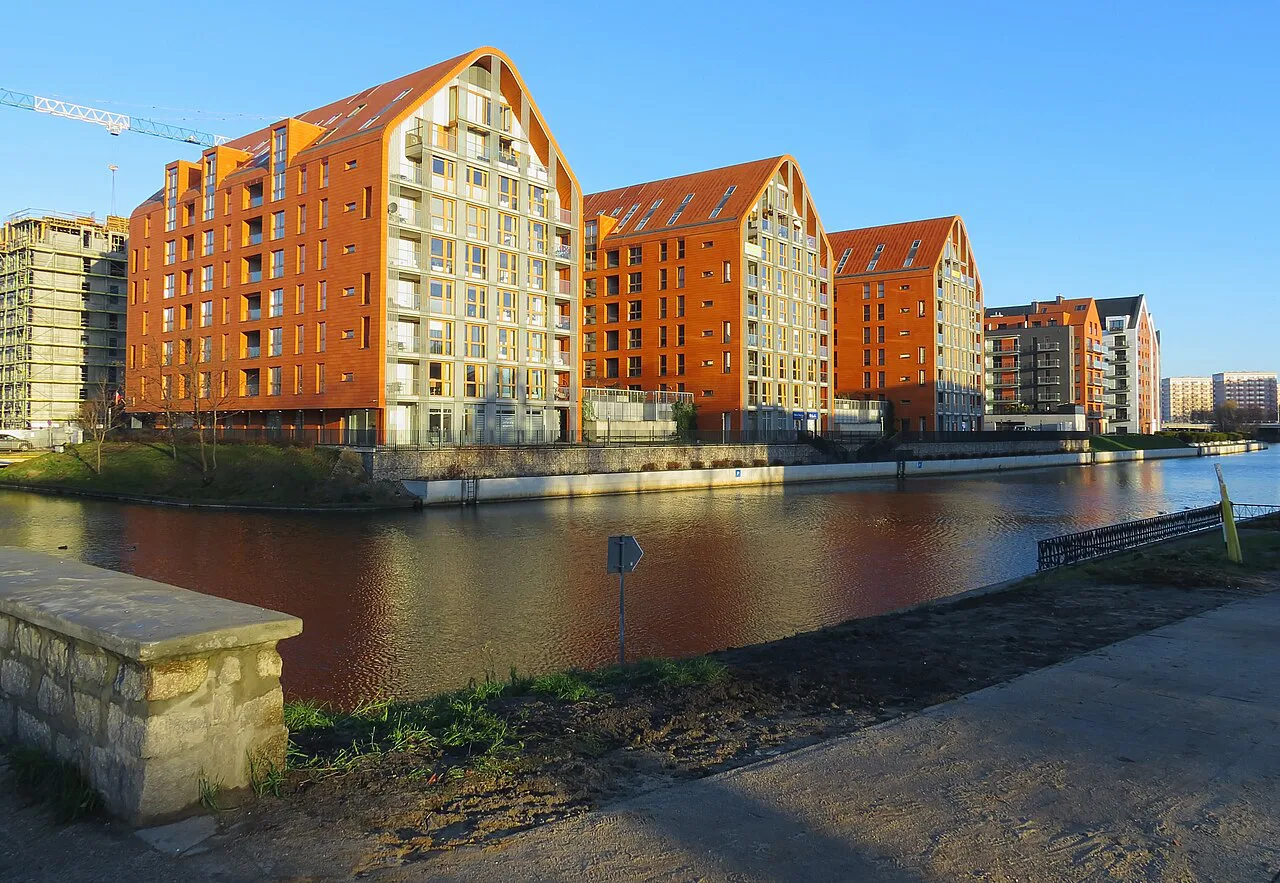
During the German Nazi occupation, small ghettos were set up around the city, including one for 600 people inside the granary at ul. Owsiana, while others were taken directly to Stutthof, to camps in Kashubia or to Auschwitz. In September 1939, 1,200 Jews were left in the city; by 1945, 350 were recorded living in the Tri-city area.
Granary Island, in the heart of the modern city, was the site of a Jewish ghetto during the war, and the Red Mouse granary is the name to look for when reading about it. Treat Granary Island and the ul. Owsiana granary as places to pause and remember on a walk through the centre rather than as stops with fixed visitor arrangements.
Reading the timeline: from medieval trade restrictions to emancipation under Prussian rule
The chronology is unusually clear and worth reading before you go, because it turns a scattered set of addresses into a coherent story. Bans under the Teutonic Knights gave way to employment in the grain trade, then to civil rights under the Prussians in exchange for assimilation, and finally to full participation in city affairs by the mid-19th century.
The scale stayed small: 500 Jews were recorded in Gdańsk in 1616, and 1,562 in 1929, just before the German pogroms began in 1937–38. That modest size is why there is no grand quarter to explore, and why the surviving sites are institutions and cemeteries rather than streetscapes.
The student of the city's wider past can trace this against the broader sweep of Gdańsk history, which covers the Free City of Danzig period that shaped the community's final decades.
How to fit these places into a one- to three-day Gdańsk trip
On a single day, keep to the centre: the Great Synagogue site and the Granary Island ghetto marker fit around Główne Miasto sightseeing without a detour. On two days, add Wrzeszcz and the New Synagogue in the morning, then return to the centre for the afternoon. On three days, give Chełm its own half-day and use the rest of the time for the Museums in Gdańsk and the riverside.
The Museum of the Second World War, on the edge of the centre, is the obvious companion visit for anyone following this thread, and it sets the occupation in its national context. Book it as a separate slot rather than trying to combine it with a Chełm trip on the same afternoon.
Is the Jewish Gdańsk trail worth the detours?
Yes, if you accept that the story is told through absence. The New Synagogue in Wrzeszcz and the cemetery in Chełm justify a half-day each, while the Great Synagogue site and the Granary Island marker cost you only a pause in the centre. Skipping Wrzeszcz and Chełm leaves you with almost nothing to see.
Build the itinerary around opening times rather than distances, since the working synagogue and the cemetery are not standard attractions with published visitor hours. Check current arrangements with the community before you travel, and keep the central stops flexible so the trip does not depend on a single institution being open.
Explore more Gdańsk guides
Sources
Notes for your next Polish city break
Optional updates to our Poland guides.
You might also like
Continue reading
More guides you'll find useful