Gdańsk Cathedral and Churches Worth Visiting
Gdańsk's cathedral is in Oliwa, while most visitors head to St Mary's in the Main Town. Here is what is inside each church and when the tower opens.
On this page
Gdańsk has no cathedral in its historic centre: the city's cathedral is in Oliwa, a northern district that is a trip in its own right. The church most visitors are actually looking for is St Mary's Basilica, the enormous Brick Gothic building a minute from Długi Targ in the Główne Miasto, or Main Town. This guide separates the two, describes what is inside St Mary's and how the tower works, and suggests where churches fit into a short city break.
What people mean by 'Gdańsk cathedral': Oliwa Cathedral versus St Mary's in the Main Town
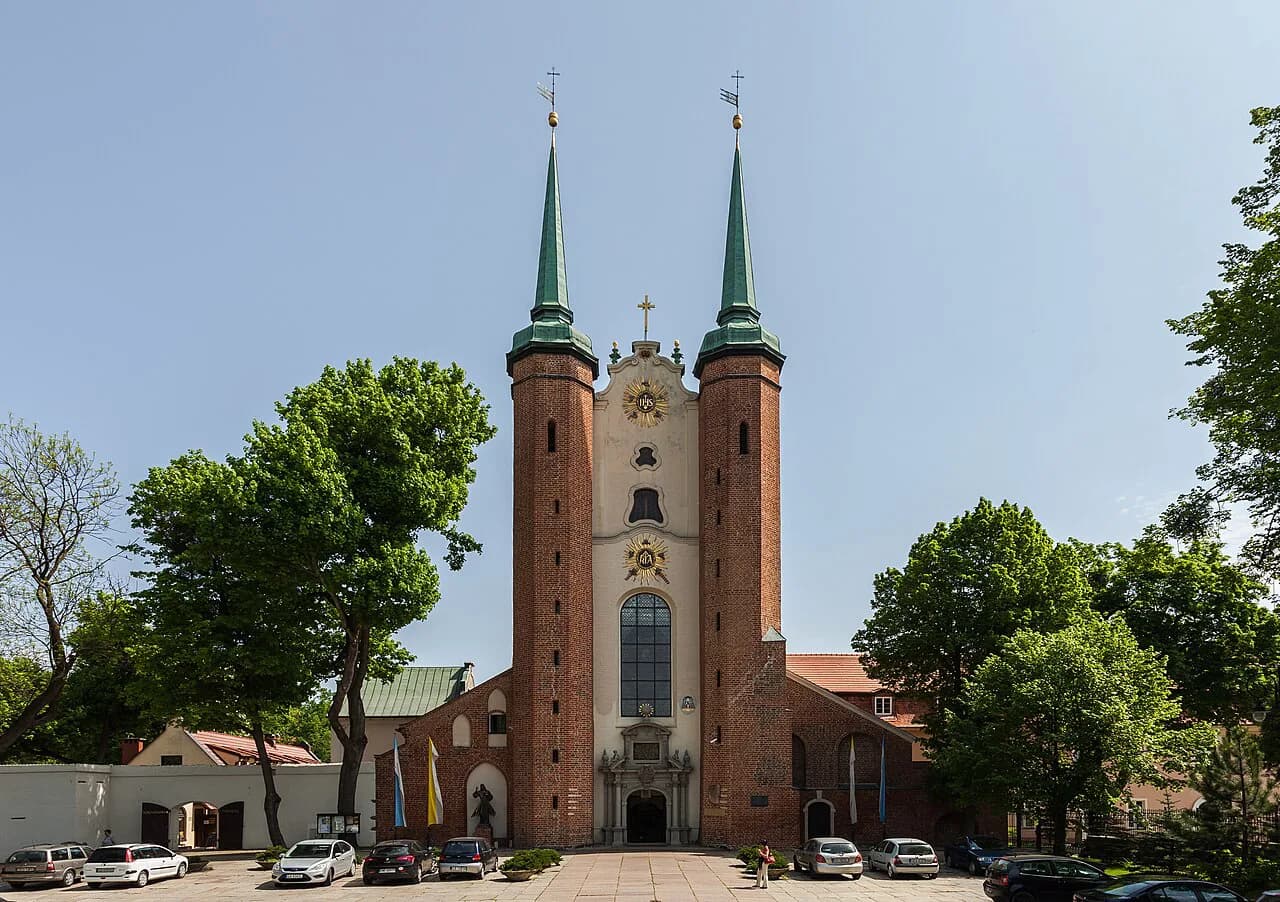
Search for a Gdańsk cathedral and you will turn up two very different buildings. Oliwa Cathedral is the seat of the archdiocese and stands in the green northern suburb of Oliwa, well outside the historic core. St Mary's, properly Bazylika Mariacka, is a basilica rather than a cathedral but dominates the Main Town and sits on the standard walking route between the station and the river.
For a one- to three-day break, St Mary's is the practical choice: it is free of any travel logistics and slots into a morning in the old streets. Oliwa rewards a half-day of its own, so treat it as a separate outing rather than a stop on the Old Town circuit. If your time is tight, pick St Mary's and leave Oliwa for a longer stay.
St Mary's was completed in 1502 and is one of the largest brick churches in the world, a Brick Gothic landmark that defines the city's skyline. Because it is built of brick rather than stone and lacks the twin towers of a classic cathedral front, visitors often assume the real cathedral must be elsewhere.
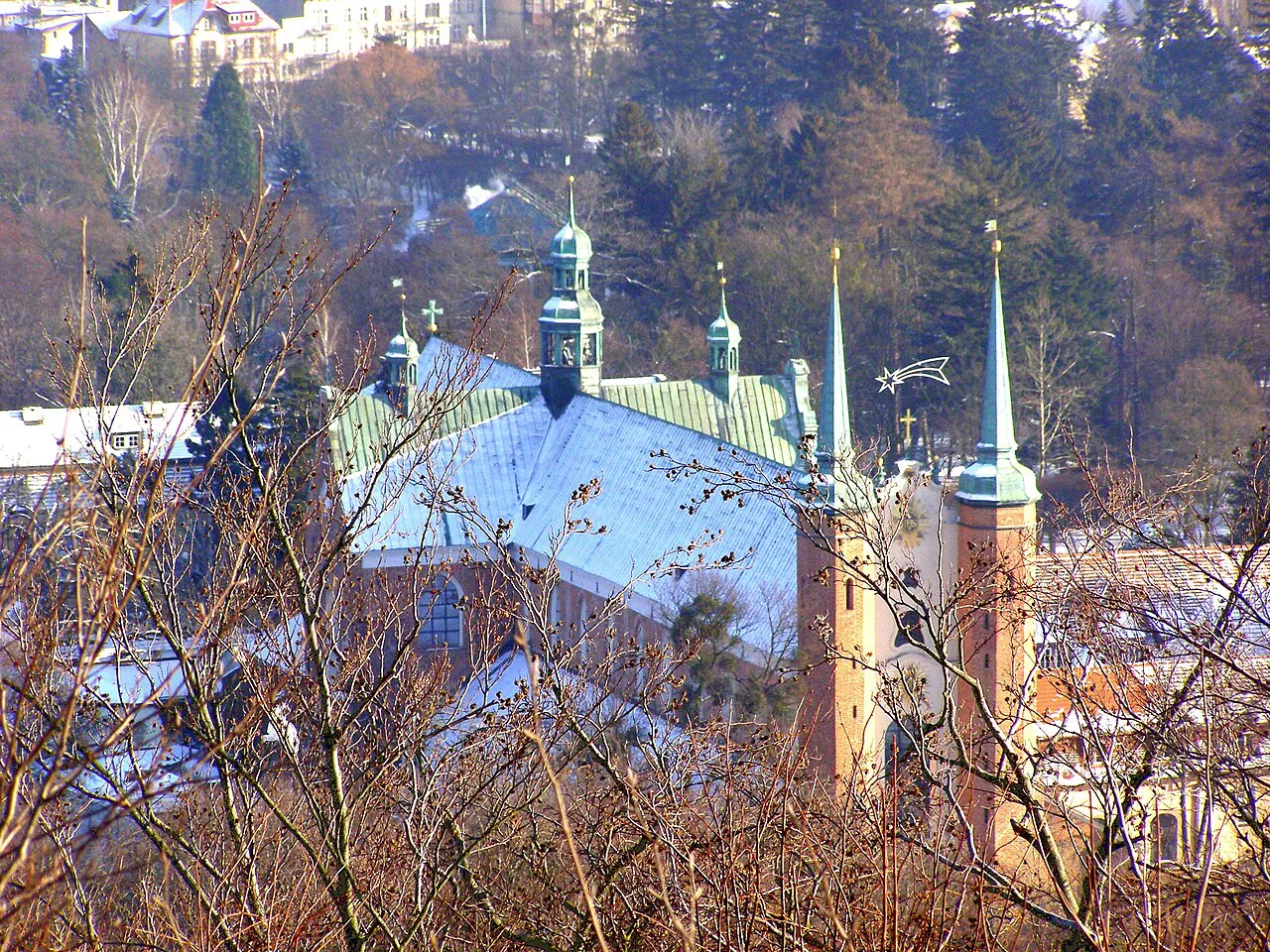
St Mary's Church (Bazylika Mariacka): the brick giant on Długi Targ's doorstep
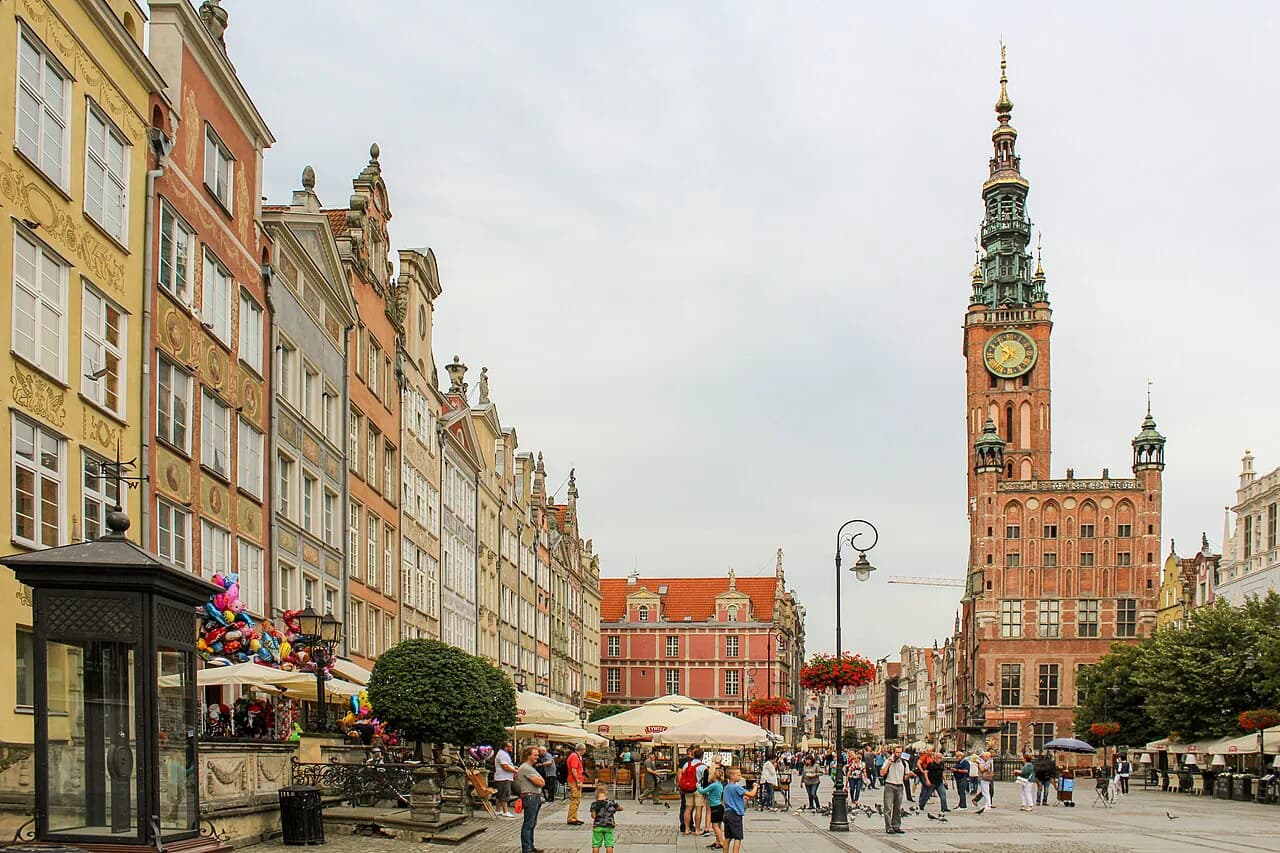
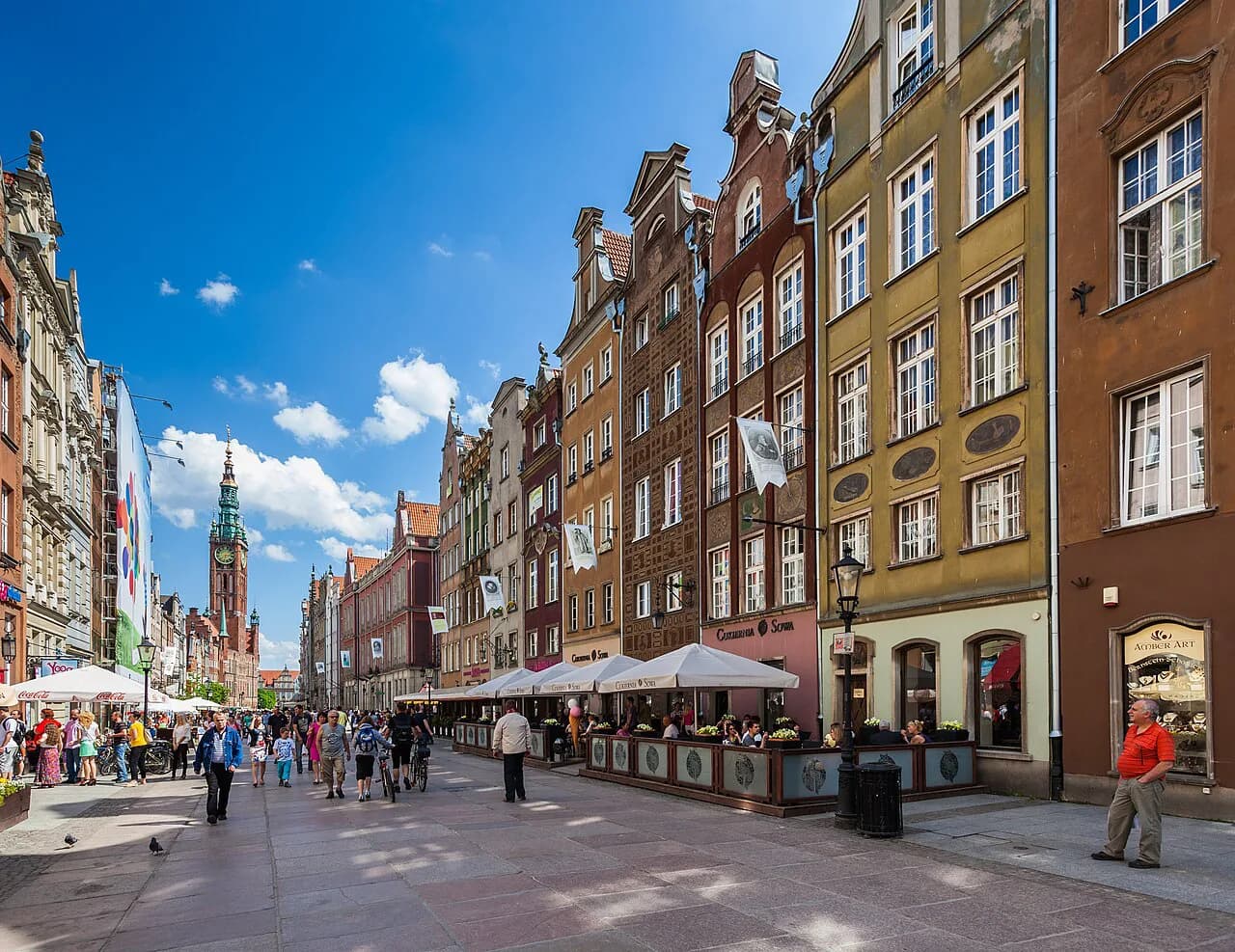
St Mary's stands just off Długi Targ, the long market square lined with reconstructed merchants' houses and the Main Town Hall. You reach it in a couple of minutes on foot from the square, which makes it the easiest major monument to fold into a walk through the centre. Come early in the day and you pass it before the coach groups arrive.
The exterior is best read from a little distance, where the buttresses, the tall windows and the sheer mass of brick become clear. Walk around the sides rather than straight to the main door: the church is embedded in a tight block of streets, and the views change with every corner. This is the building that tells you most about the medieval wealth of a Hanseatic port.
Architecturally it belongs with the wider story of the city's rebuilding, which is worth reading before you arrive so the mixture of old fabric and post-war reconstruction makes sense.
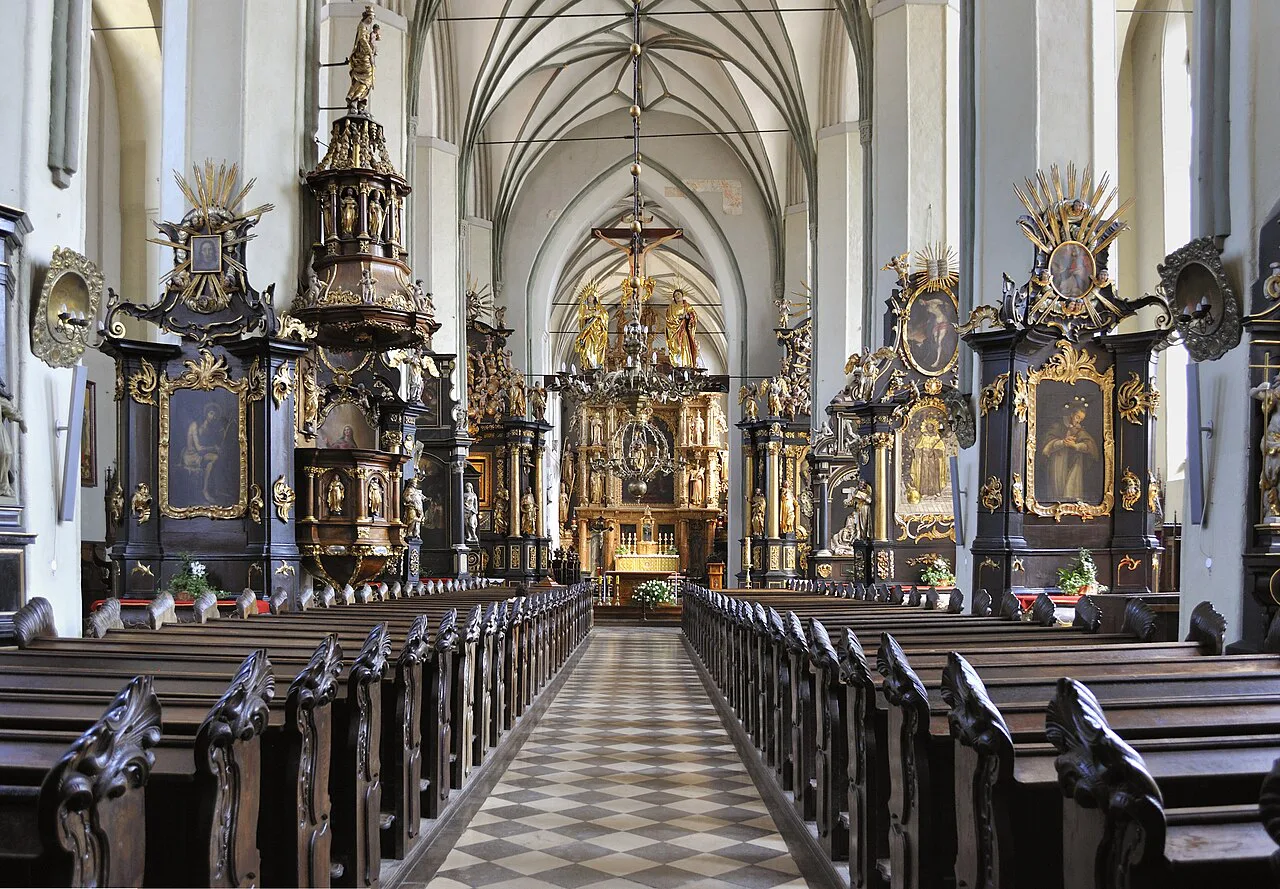
Inside St Mary's: the astronomical clock, the Pietà and the Ten Commandments panels
Inside, the nave is surprisingly light and the furnishings carry the visit. The Gdansk Astronomical Clock is the best-known object, a complex piece of medieval clockmaking with a calendar and moving figures. The 15th-century Ten Commandments panels line part of the interior, and a Gothic statue of the Virgin Mary and an expressive Pietà from around 1420 reward a slow circuit of the aisles.
You will also find a copy of Hans Memling's Last Judgment, the original of which is one of the treasures of the city's museum collections. Seeing the copy here is a useful prompt: the painting's story runs through Gdańsk's trading history and its wars. Allow roughly 45 to 60 minutes for the interior if you want to read the labels and look at the vaulting properly.
Visiting is not permitted during Holy Mass, so the church is not an all-day sight you can drop into at any moment. Plan the interior around the service timetable rather than the other way round, and treat a service in progress as a reason to come back later rather than to stand at the back.
Climbing St Mary's tower: what you get for the effort and when the tower is open
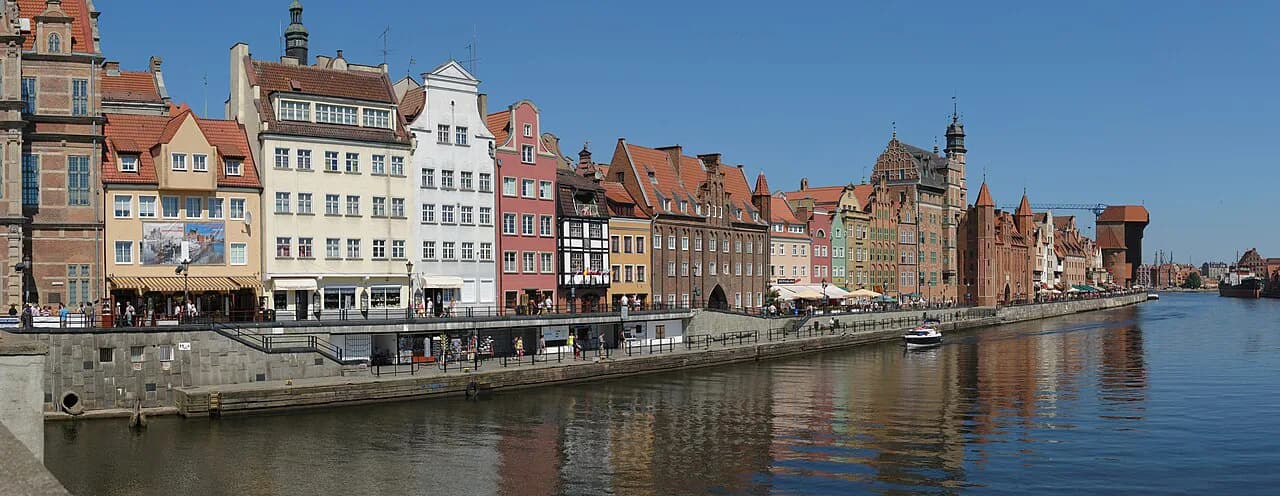
Yes, you can climb the tower at St Mary's, and the reward is a view over the Main Town's roofs, the river and the shipyard cranes beyond. On the published schedule the tower opens daily from 10:00 to 18:00, extending to 10:00 to 20:00 between July and September, with tickets bought on site. Ask at the counter for the current price when you arrive.
Treat the climb as a separate item from the church interior: the two have different hours, and the view is at its best on a clear day. Go up when the sky is open, because a grey day flattens the view over the red roofs. If the tower is busy, the interior alone still justifies the stop.
Opening hours at St Mary's and how Mass times affect a visit
On the published schedule St Mary's opens Monday to Saturday from 08:30 to 17:30, staying open until 18:30 between 1 July and 31 August. On Sundays and church holidays it opens for 11:00 to 12:00 and again from 13:00 to 17:30, with the same summer extension. Sightseeing is not allowed while Mass is being celebrated, so the Sunday midday gap is a service, not a lunch break.
The practical consequence is that a Sunday morning visit usually means waiting until early afternoon, while a midweek morning gives you the longest window. If your trip includes a Sunday, put St Mary's on another day and use Sunday for a museum or a walk along the river. Check the parish's own notice board or website before a Sunday visit, since holiday timetables can differ from the regular pattern.
Oliwa Cathedral: where it is and why it is a separate trip from the Main Town
Oliwa Cathedral lies in the northern district of Oliwa, a long way from the Main Town and not walkable from the centre for most visitors. The area is known for its parkland and the Cistercian monastery complex around the cathedral, which gives the trip a different character from the dense old town. Plan it as a half-day with travel in both directions rather than an add-on to a morning of sightseeing.
Because it sits outside the centre, Oliwa suits travellers on a second visit or anyone with a spare afternoon and an interest in church architecture beyond Brick Gothic. Services and visitor access follow the cathedral's own timetable, which is not the same as St Mary's, so confirm arrangements with the cathedral before setting out. If you only have three days, the Main Town churches will fill your church quota comfortably.
Other Gdańsk churches to know: St Nicholas and the city's church landscape
St Nicholas Church is the other name that comes up repeatedly, a Dominican church in the Main Town with a long history and an interior that contrasts with St Mary's austere brick. Add it to the same walking loop rather than making a special journey. Beyond these two, the centre holds a scattering of smaller churches and chapels that you will pass without planning.
Gdańsk's religious landscape reflects centuries of trade, migration and Reformation politics, which is why the churches differ so much in style and denomination. Reading a little of that background turns a series of interiors into a coherent story about the city.
Much of the centre was destroyed in 1945 and rebuilt, so what you see is a careful reconstruction as well as original fabric. That context makes the churches more interesting, not less: they are evidence of how the city chose to restore itself. Keep it in mind as you compare St Mary's with the smaller buildings nearby.
How to fit a church visit into a one- to three-day Gdańsk itinerary
On a one-day visit, see St Mary's interior in the morning, walk Długi Targ and the riverside, and climb the tower only if the weather is clear. On two days, add St Nicholas on the same loop and give the afternoon to a museum — see our pick of Museums in Gdańsk. With three days, Oliwa becomes realistic as a half-day outing, leaving the rest of the time for the permanent collections.
The Museum of the Second World War is the obvious companion for anyone interested in the events that shaped the rebuilt centre. Pair it with St Mary's on a wet-weather day, since the two together explain how the city was destroyed and remade, and see our Gdańsk WW2 Sites guide for the rest of that story.
Which church should you choose?
If you are in Gdańsk for a short break, St Mary's is the church to see: it is central, its interior is rich and the tower gives you the best orientation in the Main Town. Go on a weekday morning for the longest opening window, save the climb for a clear day, and buy the tower ticket on site.
Choose Oliwa Cathedral only if you have a spare half-day and want a quieter, greener side of the city. Whichever you pick, build the visit around service times rather than treating the church as a museum with fixed all-day access.
Explore more Gdańsk guides
Sources
Notes for your next Polish city break
Optional updates to our Poland guides.
You might also like
Continue reading
More guides you'll find useful