Is Gdańsk Worth Visiting? An Honest Answer for a City Break
Yes, Gdańsk is worth visiting for a one to three-day city break: a rebuilt Main Town, heavyweight WWII museums and a walkable centre that suits short trips.
On this page
Yes, Gdańsk is worth visiting, and a weekend is usually plenty of time to see the city itself. It suits travellers who want a compact, walkable Baltic city with a strong museum core rather than a sprawling capital. This guide sets out what Gdańsk does well, where it feels thinner, how it compares with Kraków and how to split one, two or three days, or plan a full weekend in Gdańsk.
The main thing to understand before booking is that the prettiest streets are largely a post-war reconstruction. The historic centre was heavily damaged in the Second World War and rebuilt afterwards, so the gabled houses you photograph are a careful recreation rather than medieval fabric. That does not make them less enjoyable, but it changes what you are looking at.
What Gdańsk does better than most Polish cities
Gdańsk packs its headline sights into a small area. Main Town, the Motława riverfront and the shipyard district sit close enough to cover on foot over a couple of days, which makes it unusually efficient for a short break. The architecture is the draw: tall, narrow merchant houses with elaborate gables and pastel façades, shaped by close trading links with Bruges, Antwerp and the northern Netherlands and a large influx of Dutch settlers in the fifteenth and sixteenth centuries.
Because the streets were rebuilt as a set piece, the effect is consistent rather than patchy. The trade-off is that it can feel stage-managed, especially on Długi Targ.
Main Town and the Royal Way: Długa, Długi Targ, Neptune's Fountain and the Green Gate
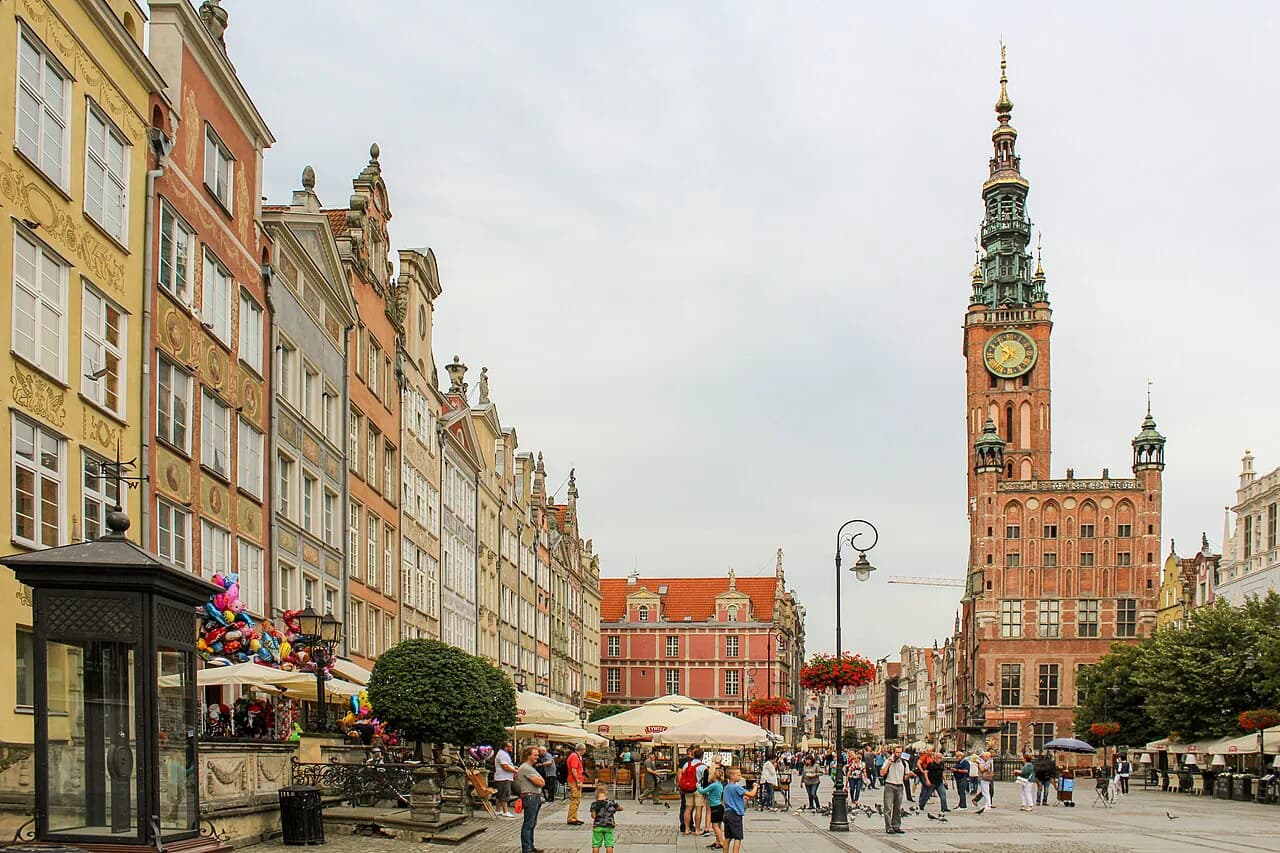
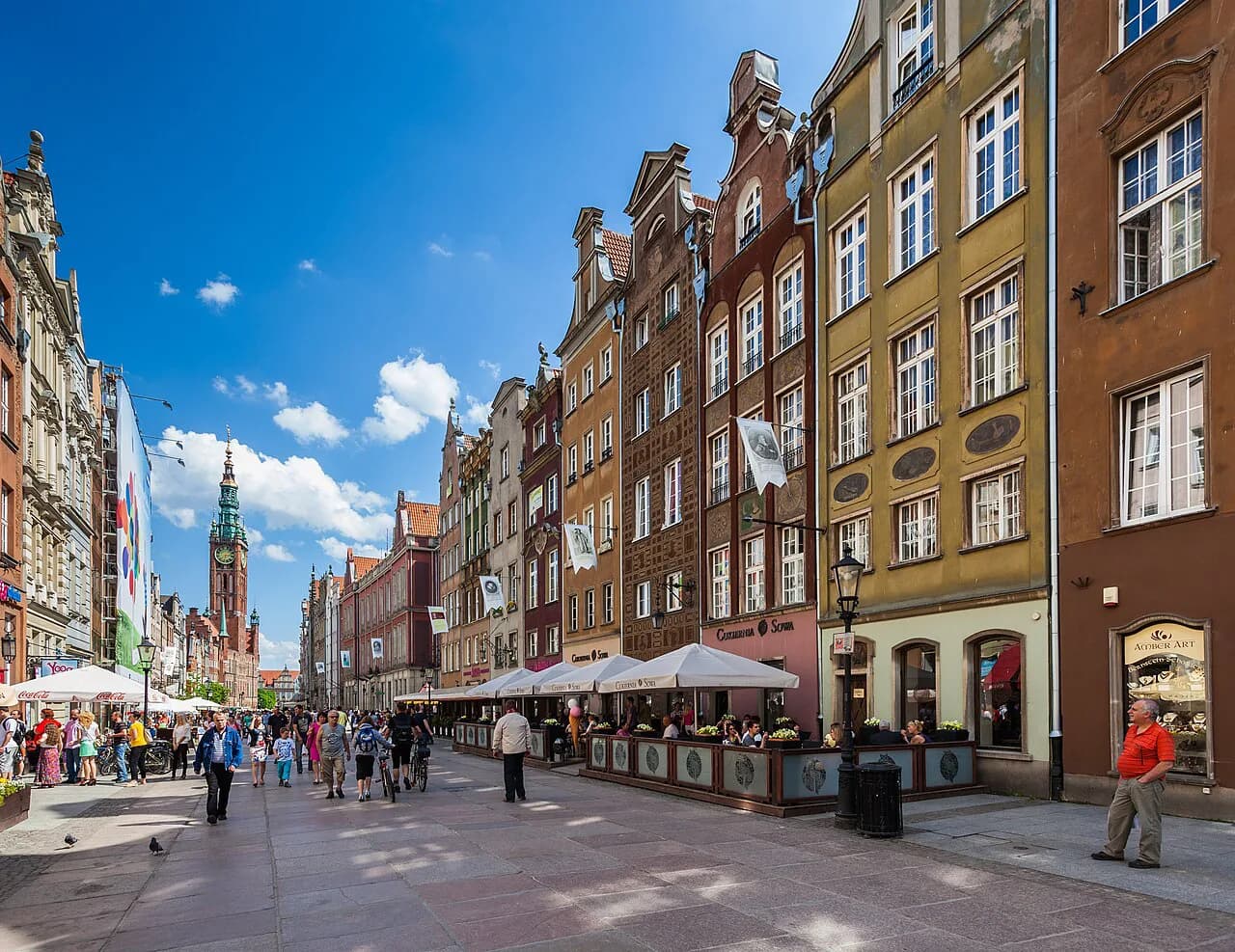
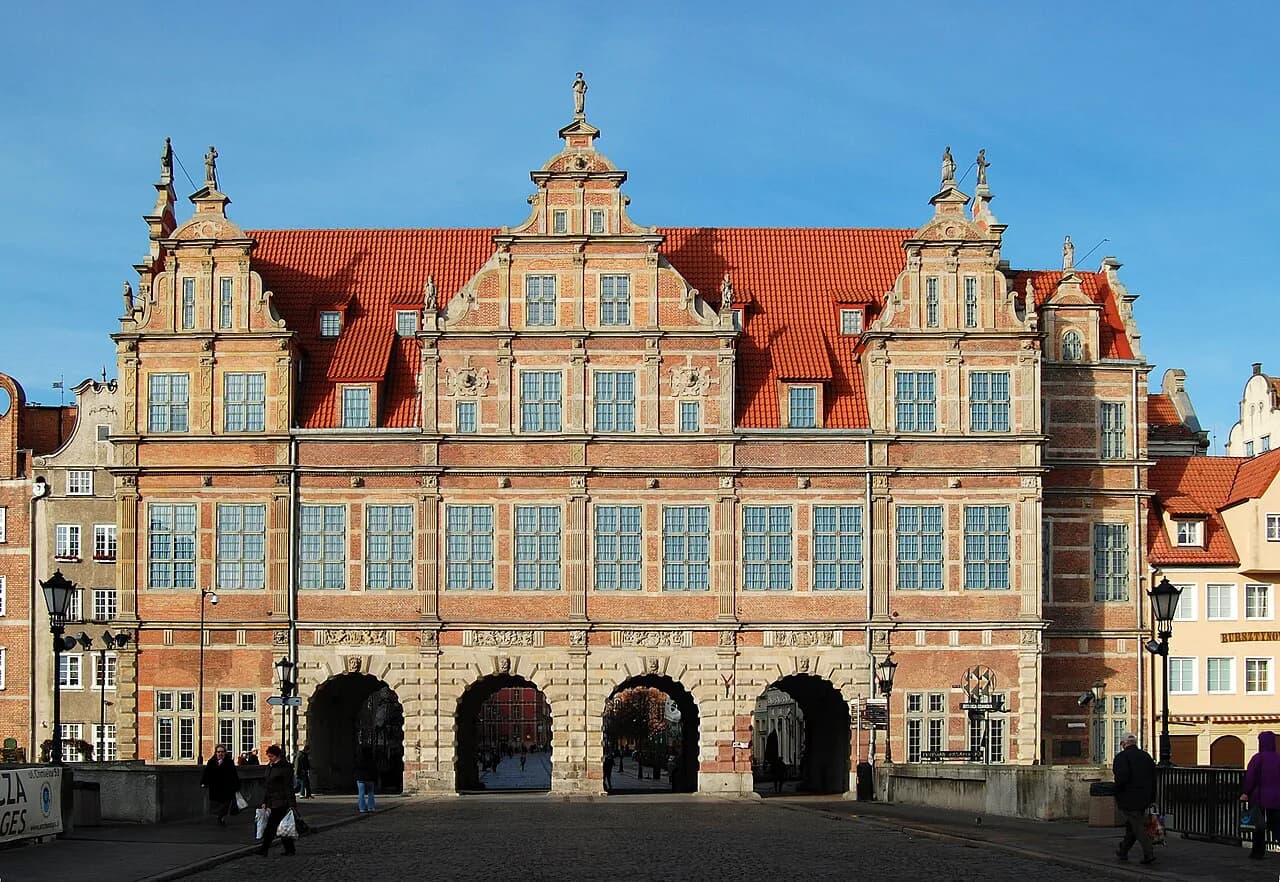
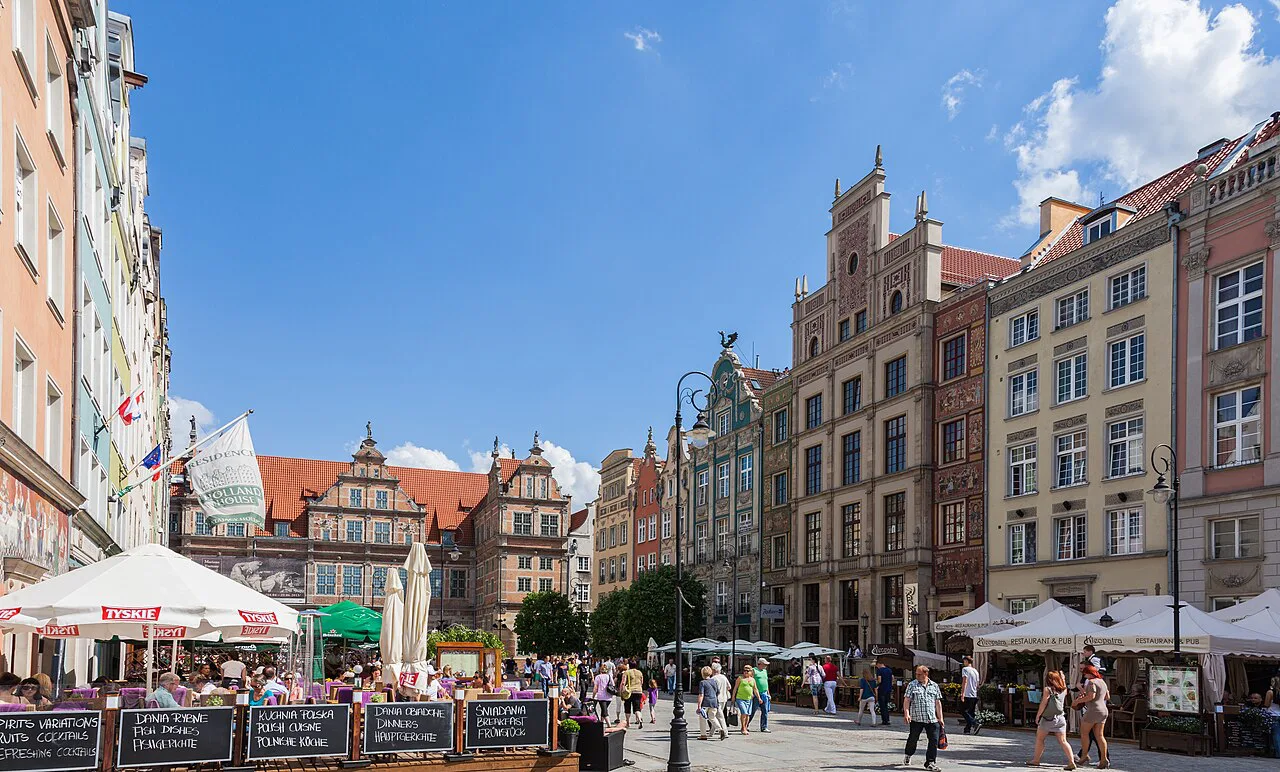
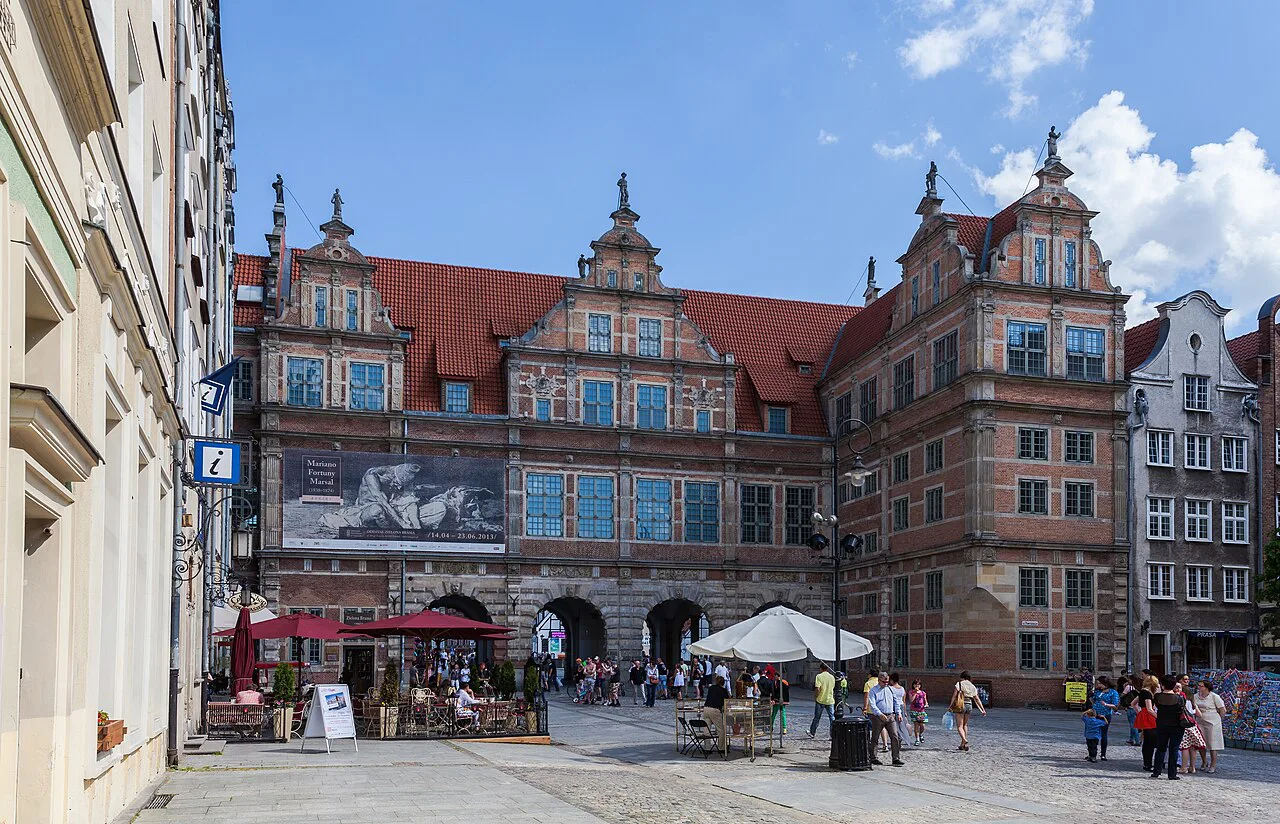
Start on the Royal Way, the route running from the Upland Gate through Długa and into Długi Targ, the ceremonial path Polish kings took into the city. The street is lined with the grandest townhouses and finishes at the Green Gate, which separates the market square from the river. It is the obvious first walk and worth doing slowly, looking up at the gables and coats of arms.
Długi Targ holds the set pieces: the Main Town Hall, Artus Court and Neptune's Fountain, cast in bronze in 1615 and altered over the centuries as the city's politics changed. The square is also where the city's main tourist office sits. Expect restaurant touts and souvenir stalls at street level, with the best of the architecture above them.
The Motława riverside and Żuraw (the Crane)
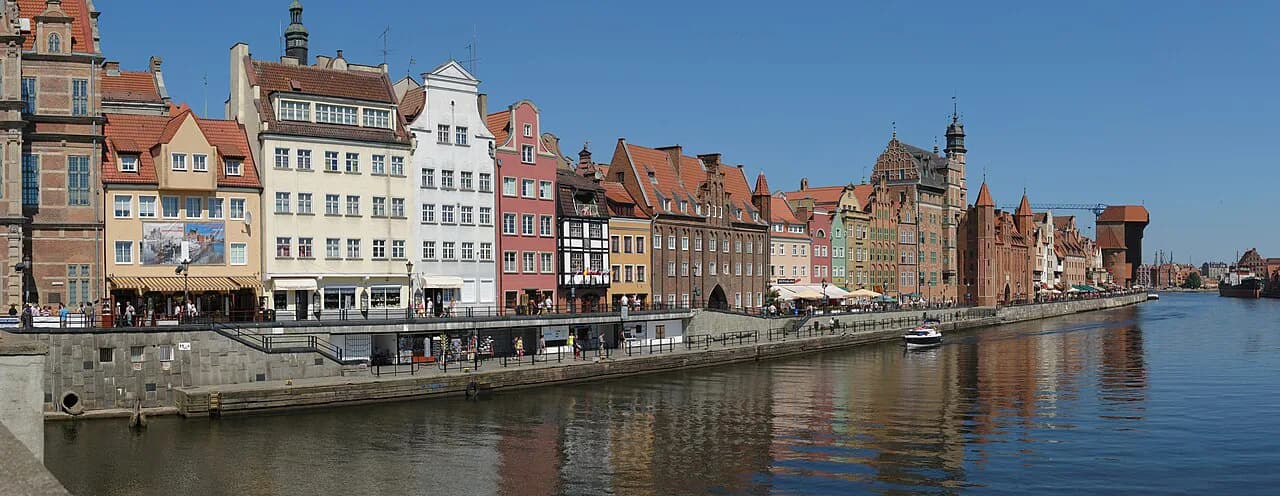
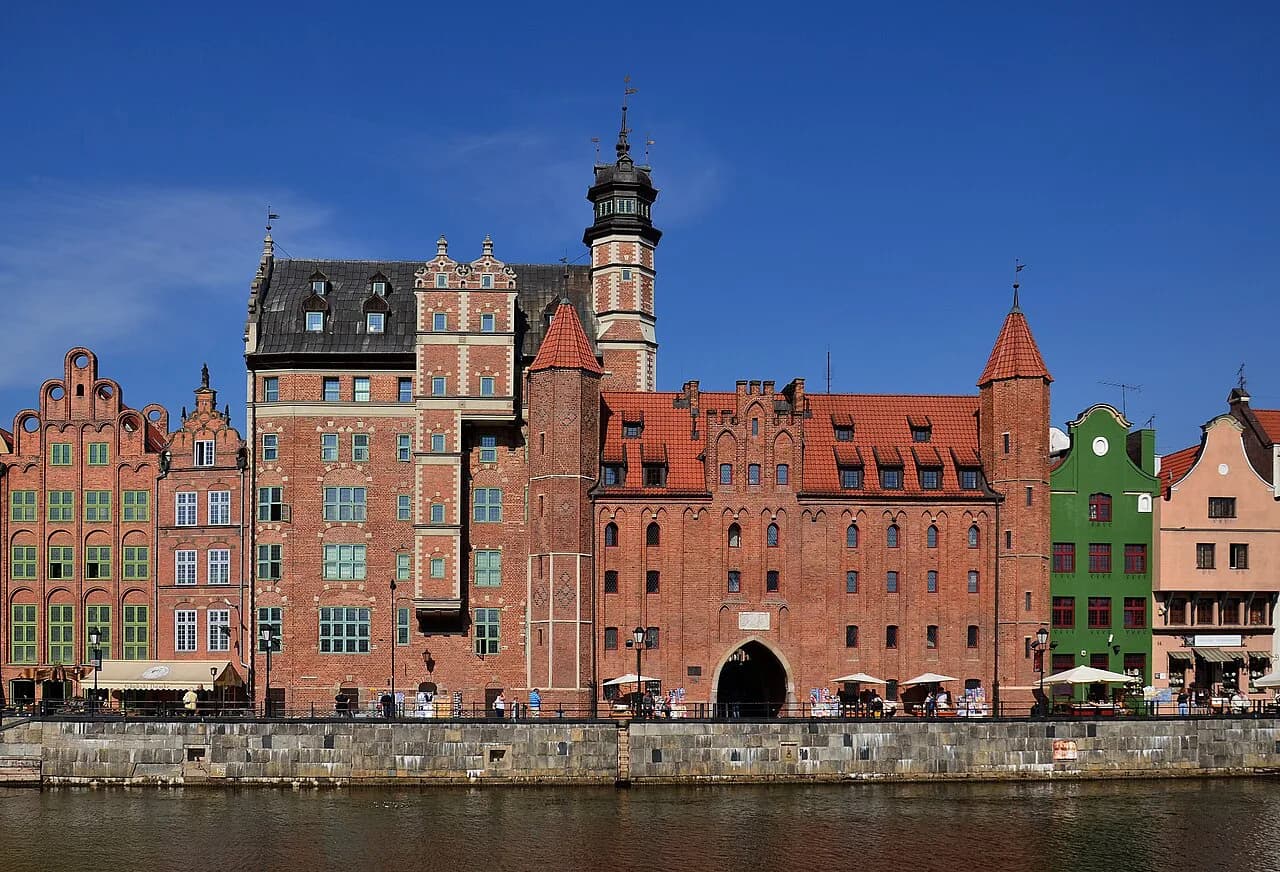
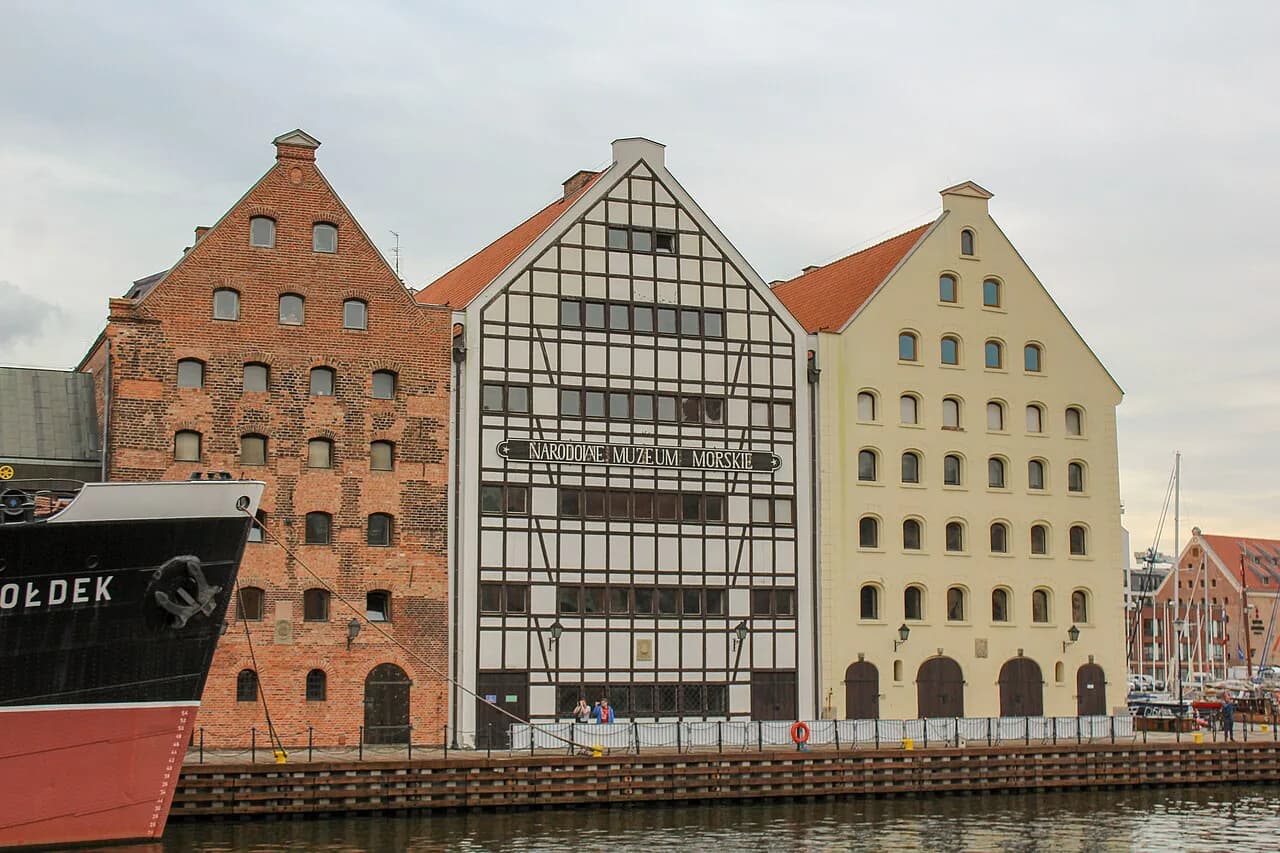
Walk through the Green Gate and you reach the Motława, where the rebuilt waterfront, moored boats and riverside terraces form the city's most photographed view. The Żuraw, or Crane, is the last physical remnant of Gdańsk's trading heyday: a medieval cargo and ship-mast lifting gear that worked until the mid-nineteenth century and was badly damaged in 1945. It now belongs to the Polish Maritime Museum.
This is a good place to slow down rather than tick off. The west bank gives you the classic postcard angle back towards the Crane and the terraces; the east bank is newer and quieter. Allow a relaxed hour for the loop rather than rushing it between museums.
St Mary's Church and climbing the tower for city views
St Mary's Church, formally the Basilica of the Assumption of the Blessed Virgin Mary, is the largest building in the city and the one you will orient yourself by all weekend. It is a Roman Catholic church begun in the fourteenth century, and its tower gives the broadest view over the rebuilt roofs. The catch is the climb: more than 400 steps to the top.
There is a small charge to go up, so treat the tower as a paid extra rather than a free viewpoint. If your legs are already tired, Gradowa Hill offers sunset views without the stairs; pick one rather than doing both in a day.
The museum case: Museum of the Second World War, European Solidarity Centre and the Polish Post Office
Gdańsk's museums are the strongest argument for visiting. The Museum of the Second World War traces the conflict from the post-First World War settlement through the Cold War, and makes clear how Poland's position between Germany and Russia shaped its wartime experience. It is a substantial, sobering visit that deserves a half-day rather than an hour squeezed between other sights.
The European Solidarity Centre tells the story of the Solidarity movement that emerged from the Gdańsk Shipyard, and the Polish Post Office Museum covers the defence of the post office at the start of the war in 1939. Westerplatte, where German shelling began the war that September, is a separate trip out of the centre. Together these sites carry the city's modern history more convincingly than any single attraction.
Where Gdańsk is weaker: rebuilt streets, crowds and the touristy middle
The honest trade-off is authenticity. Because Main Town was reconstructed, some visitors find the centre a little too polished, and Długi Targ in high season is crowded and commercial at eye level. The side streets and Mariacka Lane, with its amber shops and stoops, feel calmer within a few minutes' walk.
Gdańsk also thins out quickly at the edges, and travellers wanting a big, restless capital may find a weekend here sufficient rather than absorbing.
How Gdańsk compares with Kraków as a first Polish city break
Kraków remains the classic first Polish city break, with a larger, denser historic core and more surrounding day trips. Gdańsk is smaller, quicker to read and oriented towards the sea and modern history rather than medieval royal spectacle. If you want to wander for four days without repeating yourself, Kraków has more to fill them.
As a first visit, Gdańsk wins if you care about the Second World War and Solidarity, want a compact centre and like the idea of a Baltic city with a different architectural accent. Pick it over Kraków for a short, focused break rather than a long one.
Who will love it and who should pick somewhere else
Museum-led travellers, couples on a two or three-night break and anyone who values a walkable, manageable centre will get a lot from Gdańsk. The concentration of Second World War and Solidarity sites is the reason to choose it over prettier but thinner alternatives.
Travellers after nightlife, a big-city buzz or an unvarnished local scene should look elsewhere, and families wanting beaches should treat the coast as a short add-on rather than the main event. Sopot, a short train ride away, supplies the sand for a single afternoon.
How many days Gdańsk needs (one, two or three)
One day covers Main Town, the riverside and one museum, realistically the Museum of the Second World War or the European Solidarity Centre, not both. Two days let you add St Mary's tower, the shipyard district and a slower riverside evening. Three days give room for Westerplatte or a half-day out and a second museum without rushing.
The biggest planning trap is museum time: these are not quick-stop attractions, so build one heavyweight exhibition into each day and leave the rest for walking.
When to go and what the weather does to the trip
Gdańsk's climate is Baltic, which means a shorter, cooler summer than southern Poland and a long, grey shoulder season. Late spring and early autumn usually give the best balance of daylight and fewer crowds, while high summer brings the warmest days and the busiest centre. These are typical patterns rather than a forecast for your dates; our best-time-to-visit guide weighs the seasons in more detail.
Rain matters more here than in a museum-light city, because so much of the appeal is walking the Royal Way and the riverfront. Keep one indoor option in reserve per day so a wet morning does not derail the plan.
Getting around on foot: how the districts fit together
Plan the city as three walkable pieces: Main Town and the Royal Way, the Motława riverfront, and the shipyard district to the north. The first two connect directly; the shipyard is a fifteen to twenty-minute walk up the river or a short tram ride. Because the sightseeing core is compact, you can dispense with public transport for most of a short break, and a self-guided walking tour covers the centre well.
Wear shoes you can walk in for hours, since the rebuilt centre is almost entirely cobbled and the distances add up across a day. Sopot makes an easy add-on if you want a coastal afternoon, but it is worth a passing mention rather than a full day's plan.
Is Gdańsk worth the trip for you?
Gdańsk earns its place on a short list of Polish city breaks: it is compact, walkable and unusually strong on modern history, and two days covers the essentials comfortably. The rebuilt centre and the busy middle of Długi Targ are real limitations, so come for the museums and the riverside rather than a sense of untouched antiquity.
If that combination sounds right, plan around one heavyweight museum a day and leave the between-hours for the Royal Way, the Crane and the tower at St Mary's. If you want a longer, denser historic city, compare it honestly with Kraków before you book.
Explore more Gdańsk guides
Frequently Asked Questions
Is Gdańsk more Polish or German?
Gdańsk has a mixed history, including a long period as the largely German-speaking city of Danzig before the Second World War, and its merchant architecture reflects Flemish and Dutch influence as much as Polish traditions. Today it is a Polish city, and its museums tell the story of how those layers met, including the German occupation from 1939.
Is 2 days enough for Gdańsk?
Yes, two days is enough to see Main Town, the Motława riverfront, St Mary's Church and one or two of the major museums without feeling rushed. A third day allows for Westerplatte, a second museum or an afternoon in Sopot, but it is not essential.
Sources
Notes for your next Polish city break
Optional updates to our Poland guides.
You might also like
Continue reading
More guides you'll find useful