
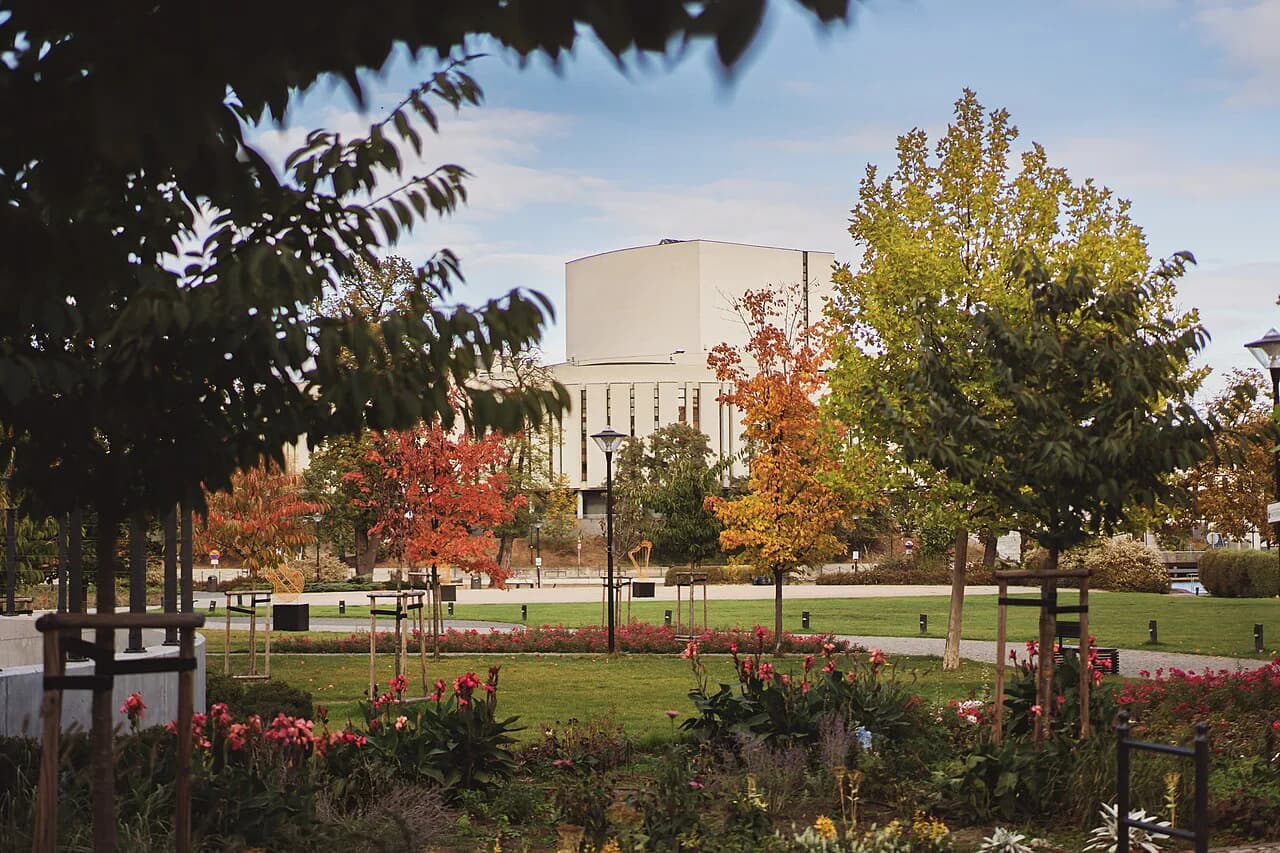
Bydgoszcz: What to See and How Long You Need
Plan a short break in Bydgoszcz with the riverfront granaries, Mill Island, the Old Market and Exploseum, plus how the city is laid out and how many days it needs.
On this page
Bydgoszcz needs one full day for its riverfront core and two days if you want the Exploseum and a slower look at the Old Market. The city sits on the Brda between Poznań and Gdańsk, and its best sights cluster within a short walk of the water. This guide covers how the centre is arranged, which sights earn their time, how the seasons change the visit, and what to drop when you only have a day.
Bydgoszcz is often treated as a footnote to Toruń, but its history is unusually layered: a stronghold guarding a crossing of the Brda, city rights from Kazimierz Wielki on 19 April 1346, near-total destruction during the Swedish invasion of 1655 to 1657, and a Prussian period from 1772 that left the Bydgoszcz Canal and much of the public architecture. That mix gives the centre a different feel from Poland's medieval showpieces, with grand nineteenth-century buildings lining the river rather than a single market square doing all the work.
What Bydgoszcz is best for
Bydgoszcz is at its best as a compact river city: granaries, bridges, a canal and a walkable old centre, all within a morning's wandering. It rewards travellers who like water, brick warehouses and nineteenth-century city-building more than castle walls. If you have already seen Kraków, Gdańsk and Wrocław, Bydgoszcz adds something different rather than repeating them.
The city makes an easy stop between Poznań and Gdańsk, and pairs neatly with a visit to Toruń. Treat it as a short break in its own right and the riverfront earns a full day; treat it as a brief pause on a longer rail journey and you will see the granaries and little else.
Where Bydgoszcz sits and how the centre is laid out
The historic core wraps around a bend of the Brda, with Mill Island and the granary quarter on the water and the Old Market a few minutes inland. Almost everything a short-break visitor wants sits inside a loop you can cross on foot in under half an hour, which makes the city far less tiring than its size suggests.
The Bydgoszcz Canal, built in 1773 and 1774 on the orders of Frederick the Great of Prussia, links the Brda with the Noteć and explains why the city grew as a trading and transport hub. It also gives the centre its long green western edge, worth following on foot if the weather holds.
For orientation, the tourist office address given for the city is Stary Rynek, and the city's own visitor site is the place to confirm local information before you travel.
The riverfront granaries and Mill Island
The granaries along the Brda are the image most travellers take home: tall brick warehouses standing directly over the water, built for a grain trade that once made Bydgoszcz one of the largest cities of the Polish-Lithuanian Commonwealth in the fifteenth and sixteenth centuries. Walk the riverbank in both directions and you see them from several angles, which is the point of the detour.
Wyspa Młyńska, Mill Island, sits in the middle of the channel and is the natural centrepiece of a half-day walk, with the water on every side and the granaries framing the view back towards town. It is a place to slow down rather than tick off: cross the bridges, follow the island paths, and leave time for the Old Market afterwards.
Use the river as your route rather than a map. Start at the granaries, follow the bank onto the island, and come back through the streets behind so you see the older town fabric as well as the water. This is the walk that justifies a night in Bydgoszcz rather than a change of trains.
Stary Rynek and the streets around it
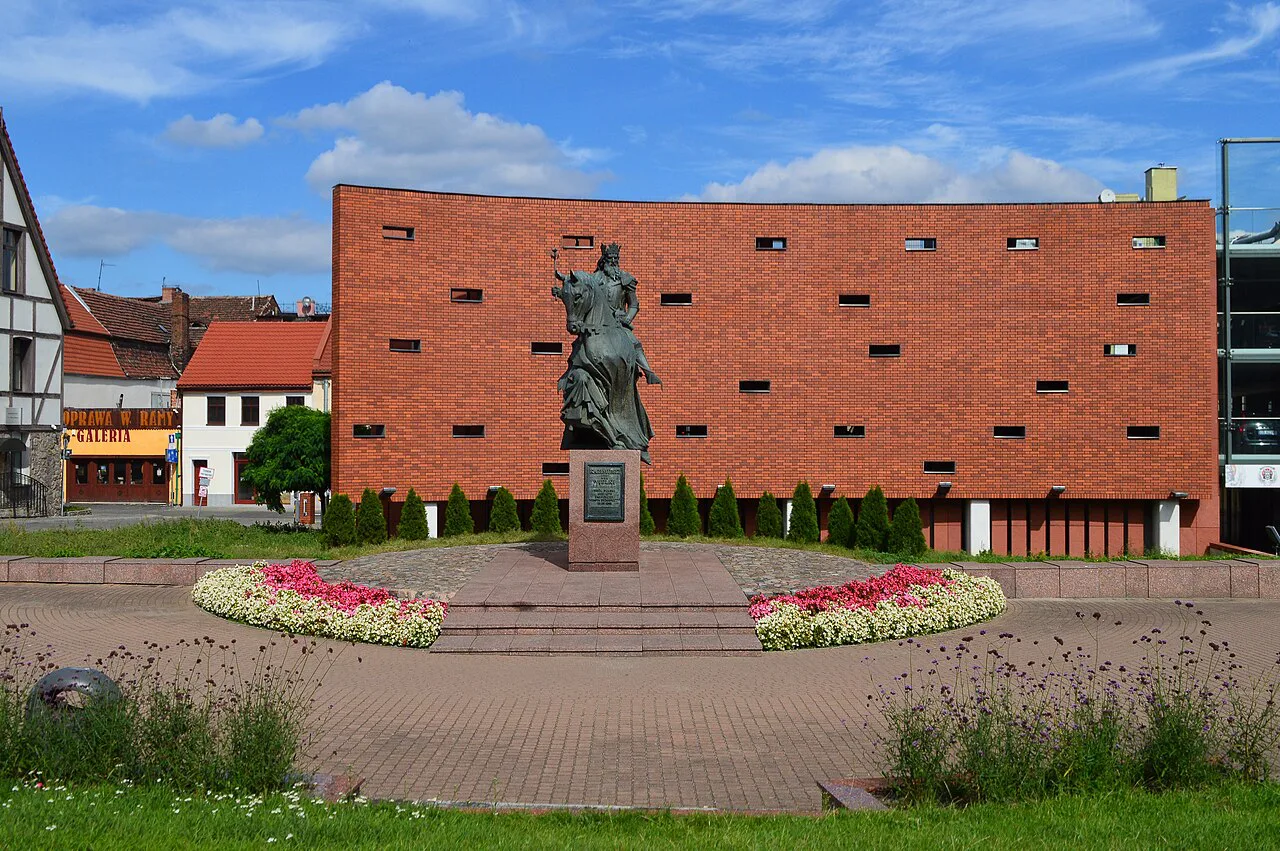
The Old Market is the civic heart, framed by rebuilt townhouses and a broad, plain square that suits a coffee stop between river walks. Plan it as a pause between river walks rather than a destination in itself.
Around the market, the streets reward aimless walking: nineteenth-century public buildings, churches and shopfronts sit close together, and the flat terrain makes an hour's wander easy. The city's Prussian-era growth, with a rail link to Berlin from 1851 and electric trams from 1896, left a solid, civic look that is quite unlike the medieval centres further south.
If your tastes run to the small-town version of the same pleasure, the most beautiful towns in Poland offer Old Markets and riverside walks on a gentler scale, and Kazimierz Dolny in particular is a good comparison for anyone weighing a longer Polish itinerary.
How many days Bydgoszcz needs
One day covers the granaries, Mill Island and the Old Market at a comfortable pace, with time for lunch and an unhurried look at the river. Two days add the Exploseum, the canal walk and a return to the water in different light. Three days is more than the centre needs unless you are using the city as a base.
A sensible one-day plan runs: granaries and riverbank in the morning, Mill Island before lunch, the Old Market and surrounding streets in the afternoon, and the canal embankment at the end of the day. It keeps you outdoors when the light is best and inside when the weather turns.
If you prefer a bigger city with more museums and a longer evening, Lublin is the obvious alternative in eastern Poland, and its old town and castle make a fuller two- or three-day break. Bydgoszcz wins on compactness and water; Lublin wins on density of sights.
Exploseum and the industrial heritage
Exploseum, the city's industrial heritage site, sits away from the walkable core, so it costs you a chunk of a day rather than an hour. It rewards travellers interested in twentieth-century industry and wartime production; if your interest is architecture and rivers, the time is better spent on the granaries and the canal.
Decide before you arrive. With two days, Exploseum fits comfortably alongside the centre; with one day, choosing it means dropping Mill Island or the Old Market, and most first-time visitors get more from the river.
The wider industrial story is visible without a ticket: the canal, the warehouse architecture and the nineteenth-century public buildings explain how Bydgoszcz became a modern city. Reading that landscape on foot is the cheapest and most flexible way to engage with it.
When to go and how the seasons change the visit
Late spring and early autumn suit Bydgoszcz best, when the river walks and island paths are comfortable and daylight lasts into the evening. Summer brings the liveliest atmosphere on the water but also the busiest weekends.
Spring and autumn give you the same sights with fewer people, and the low light on the brick granaries is arguably better for photographs. The trade-off is shorter days: plan the river and island for the middle of the day and keep the Old Market for the afternoon.
What things cost in złoty and where the free sights are
Much of a short break here comes from walking the riverbank and island paths rather than paying entry fees, which makes Bydgoszcz an inexpensive city to explore on foot. How far your budget stretches depends on which ticketed sights you add, so plan the outdoor stretches as the backbone of the day.
For ticketed sights such as Exploseum, check the current price in złoty on the operator's own site before you go, since entry charges change. Polish museums also vary in which day they close and whether they offer free entry, so confirm the day you plan to visit rather than assuming a Monday closure applies everywhere.
Rainy-day and half-day options in the centre
When it rains, the city's cultural institutions, including Opera Nova, fill an evening without a long walk. Check what is on before you travel rather than building a day around a single performance.
A half day is enough for the granaries and Mill Island if you move briskly, which makes Bydgoszcz workable as a stop between Poznań and Gdańsk. Keep the Old Market for a return visit rather than rushing both.
If you are comparing river cities, Olsztyn offers a castle and an old town on a similar scale, and makes a useful benchmark for how much Bydgoszcz packs into a walkable centre.
What to skip if you only have one day
With one day, skip Exploseum and the outer neighbourhoods, and keep everything between the granaries, Mill Island and the Old Market. The canal embankment is worth twenty minutes but not an afternoon.
Also resist the urge to add a second city to the same day. Bydgoszcz and Toruń are close, but doing both in a day leaves you with two rushed half-visits rather than one good one.
If you want a longer Polish short break with more variety, look at Świdnica and its Church of Peace, or Kłodzko with its fortress and Gothic bridge, both of which reward a full day rather than a few hours.
One day or two in Bydgoszcz?
Give Bydgoszcz one full day for the granaries, Mill Island and the Old Market, and add a second only if Exploseum and the canal genuinely interest you. The centre is compact enough that a single well-planned day feels complete rather than rushed.
Book the river walk first and build the rest around it. If you are touring more of Poland, the most beautiful towns in Poland and a longer Lublin City Break Guide make natural next stops.
Explore more Poland guides
Sources
Notes for your next Polish city break
Optional updates to our Poland guides.
You might also like



Continue reading
More guides you'll find useful





