
Churches of Peace: Jawor and Świdnica Visitor Guide
The Lutheran Churches of Peace in Jawor and Świdnica are timber-framed UNESCO sites within reach of Wrocław. Here is what each visit involves.
On this page
The Churches of Peace are two surviving Lutheran timber-framed churches in the Lower Silesian towns of Jawor and Świdnica, both inscribed on the UNESCO World Heritage List in 2001. If you only have time for one, choose Świdnica: it is the larger interior experience of the two. This guide covers what each building contains, how the two compare, and the practical shapes of a trip from Wrocław.
Both are active Lutheran parish churches rather than museums, so a visit means stepping into a working place of worship as much as seeing a monument. The architecture is the draw: painted galleries stacked in tiers, timber frames overhead and elaborate pulpits, all held inside modest brick shells that hide the scale from outside. They sit within a wider Polish World Heritage collection, which our guide to UNESCO sites Poland sets out group by group.
What the Churches of Peace are and why they exist
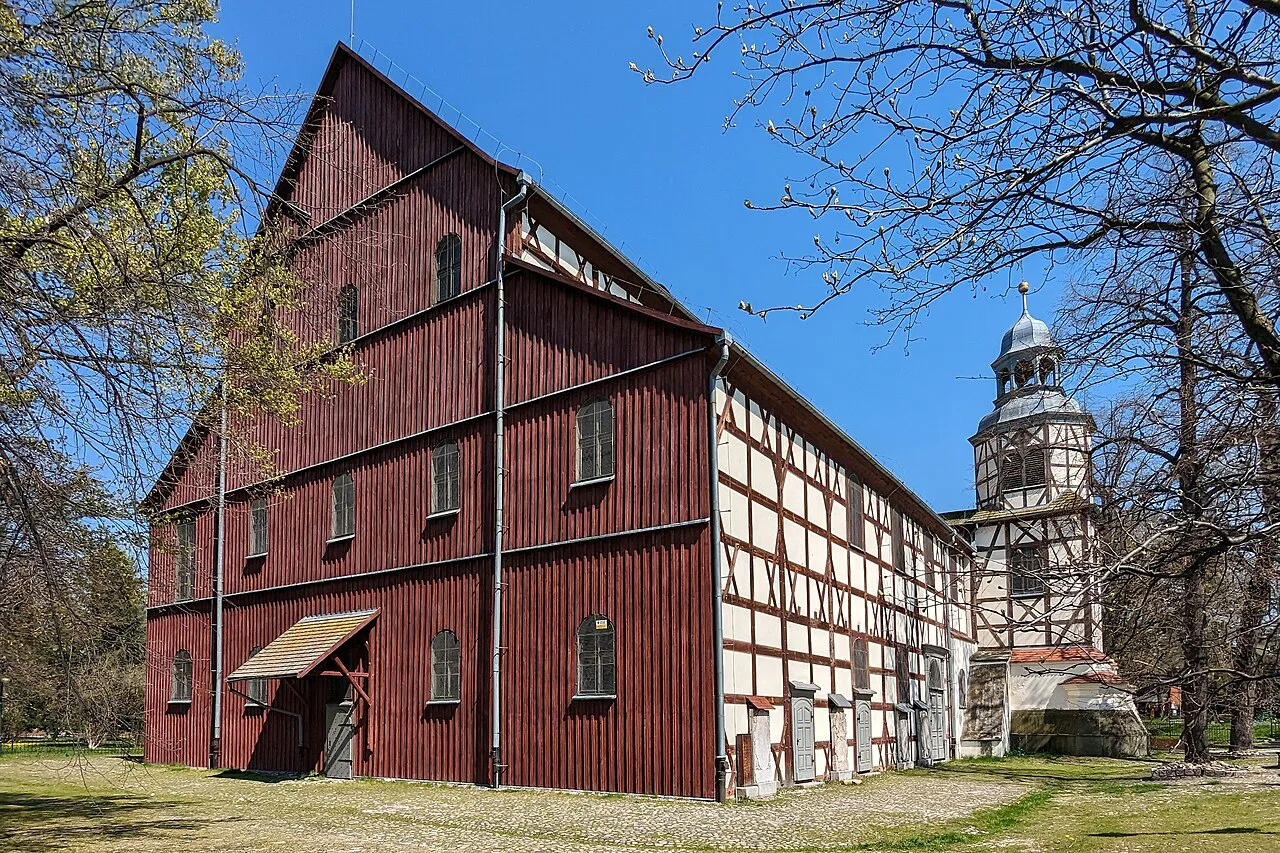
The name comes from the Peace of Westphalia, which let Protestants in the Habsburg-controlled Silesian duchies build churches of their own under restrictive conditions. Timber, clay and straw were the permitted materials, with no stone towers or masonry walls, and the sites were placed outside the town walls. The result was churches that had to be enormous inside and unassuming outside, built in a short timeframe and entirely from timber.
Several were raised in the seventeenth century; two now survive and carry the World Heritage listing. The Świdnica church was built for a congregation whose size the building had to accommodate, which explains the vast seating capacity tucked into a building that reads as a barn from the road.
Why they are UNESCO-listed and built from timber
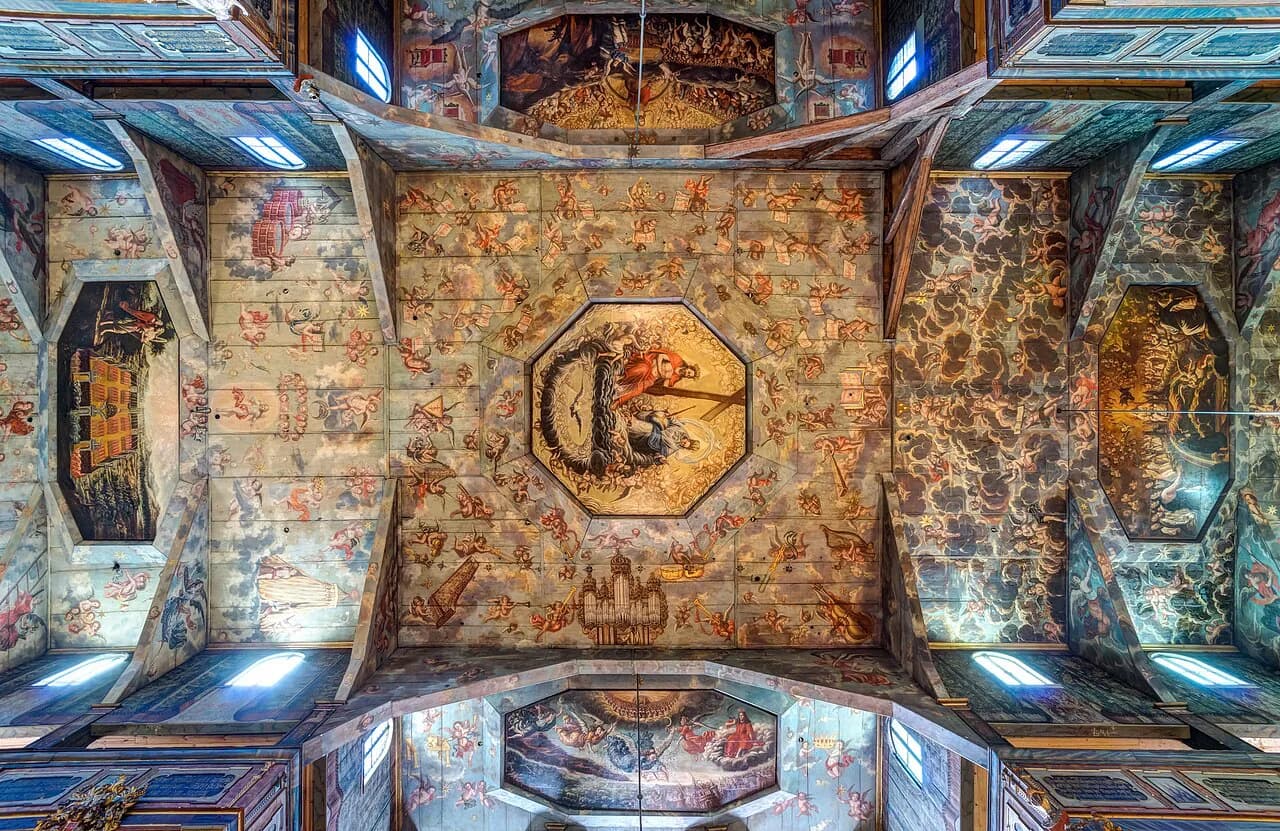
The listing rests on the craftsmanship inside: timber structures, painted decoration and woodcarving combined in a single Protestant interior that is hard to match elsewhere in Europe. Because the buildings were never meant to be stone monuments, the survival of two of them is what makes the group special rather than any single object, and they belong in any shortlist of the UNESCO World Heritage Sites in Poland outside the big-city centres.
For comparison, Poland has several other groups of historic timber church architecture, mostly Catholic and on a much smaller scale, which is why these Lutheran buildings read differently. If timber churches are your reason for travelling, our guide to Wooden Churches of Southern Poland covers the southern routes and how they compare.
Jawor or Świdnica: which one to visit if you only have time for one
Świdnica wins on scale and on the painted galleries, and it is the one to pick if a single visit has to carry the trip. Jawor is the quieter complement, smaller in impression but with its own painted schemes and a shorter visit, which suits anyone combining it with other Lower Silesian stops.
The honest trade-off is time against depth. Doing both in a day is realistic only by car, because the two towns sit far enough apart that public transport eats into the visiting time; one church plus a town walk makes a more relaxed half-day.
Visiting Świdnica's Church of Peace: what you see inside
You enter through a modest doorway into a space that opens up in every direction: galleries of painted panels climb the walls in tiers, carried on timber posts, with the pulpit as the visual centre. The pulpit is carved and painted in the same Baroque manner as the surrounding galleries, and looking up at the ceiling structure is as much the point as the decoration.
Because the building is a parish church rather than a museum, the impression is of a furnished, used interior rather than a stripped exhibit. Photography and movement around the galleries may be restrained during services, so treat the nave as the congregation's space first.
Visiting Jawor's Church of Peace: what you see inside
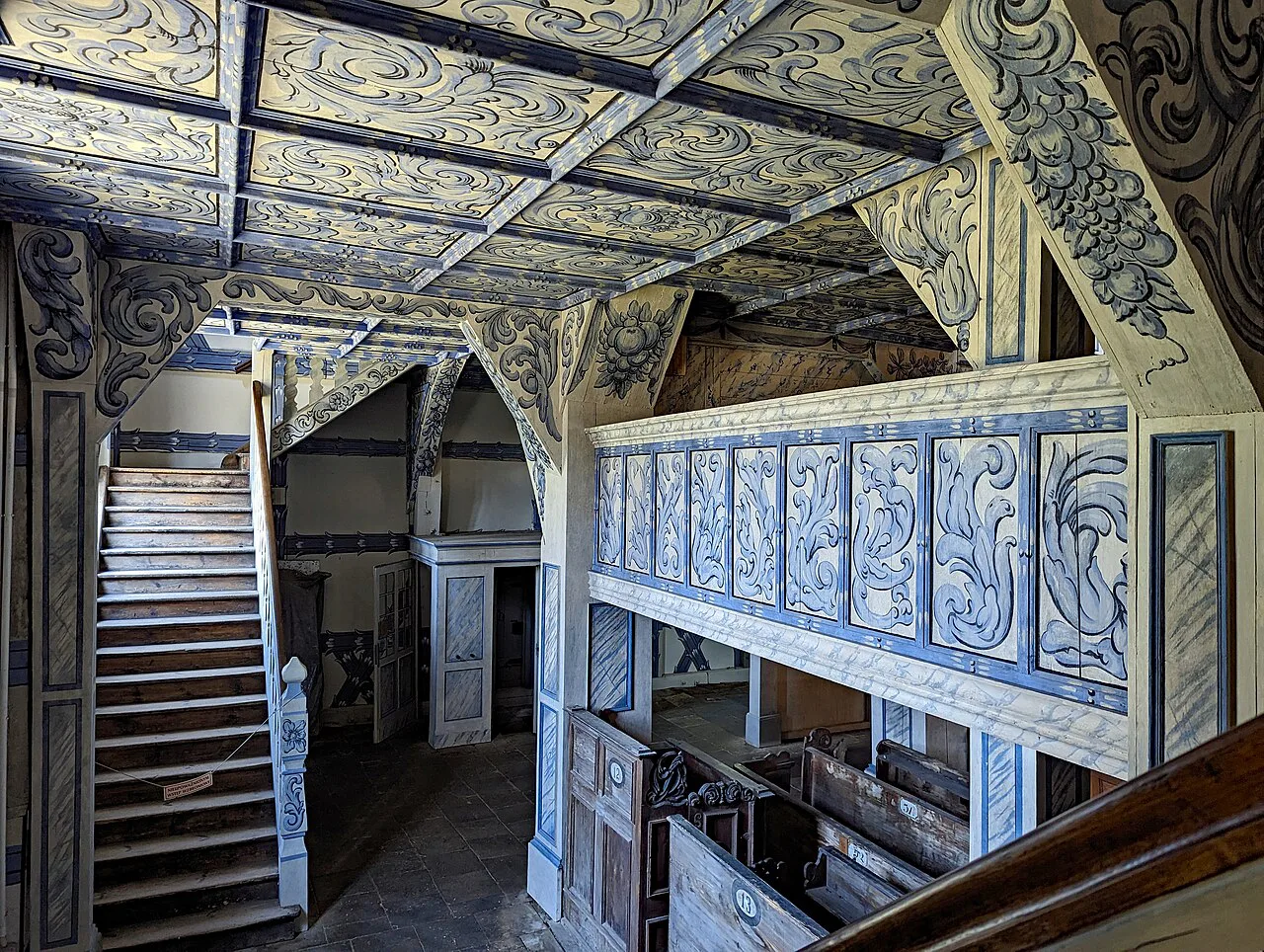
Jawor's interior follows the same formula at a slightly gentler scale: painted galleries, a decorated pulpit and an exposed timber roof structure visible from below. It rewards slow looking at the painted panels rather than wide-angle awe, and it is easier to take in without a crowd around you.
Treat Jawor as the second half of a Świdnica day rather than the headline. If your schedule only allows one, the choice in the previous section applies, and Jawor makes sense when you want a shorter stop between other Lower Silesian sights.
Ticket prices in złoty at each church
Both churches are working parishes with visitor arrangements, and entry is organised locally rather than through a national ticketing system. Because the published tariffs can change between seasons, check the current złoty price at the parish or town information point before you set out, and carry cash in case card payment is not available at the door.
Opening days and whether either closes one day a week
Opening follows worship and parish life rather than a museum rota, so neither church can be assumed open on a fixed all-week schedule. Services take priority, and Sunday mornings in particular are given over to the congregation. Confirm the current visitor hours with the parish in Jawor or Świdnica before travelling, as this is the one detail that most often catches people out.
Getting from Wrocław to Świdnica and Jawor without a car
Wrocław is the natural base: both towns sit in Lower Silesia, south-west of the city, and regional trains and buses serve them. Świdnica is the easier target by rail, while Jawor is usually reached by bus or by connecting through Świdnica. Check current timetables on the day, since regional services vary by season and weekday.
Travel times are short enough that a half-day out and back from Wrocław is realistic, which makes these churches a sensible bolt-on to a city break rather than a separate trip. Leave slack for the walk from the station to the church in each town.
Getting from Wrocław by car and visiting both in one day
With a car, the two towns link up neatly into a single loop from Wrocław, with Świdnica first and Jawor second, or the reverse. Parking in both town centres is straightforward compared with a big city, and the drive between them is short. This is the shape to choose if you want both interiors in one day.
Allow for a lunch stop in one town rather than rushing between the two. Outside the churches, both towns have small market squares worth half an hour each, which keeps the day from feeling like a pure church crawl.
How much time to allow at each church
Budget about 45 minutes to an hour inside Świdnica if you want to read the painted galleries and look properly at the pulpit and ceiling. Jawor takes less, roughly half an hour, unless you are studying the painted panels closely. Add the walk from the station or car park in each town, and the half-day shape writes itself.
Etiquette inside an active Lutheran church
These are consecrated, in-use churches, so quiet and modest behaviour applies as in any place of worship in Poland. Keep to any roped-off areas and respect signage about photography and the galleries. If a service is beginning, step back and let the congregation take the building.
When to go: seasons and light inside the churches
Poland's climate is seasonal rather than extreme: the Polish tourist board describes spring temperatures of roughly 5 to 15°C, summer around 20 to 25°C, and changeable autumn weather from September into November. For these interiors, the shoulder months of May, June, September and October are the comfortable choice, when walking between station and church is pleasant.
Interior light matters more than outdoor weather here, since the painted galleries and timber structure read best when daylight is even. Overcast days are not a disadvantage inside, and summer brings longer daylight for the town walks afterwards.
Świdnica or both?
For most people on a short Wrocław city break, Świdnica alone is the right call: one interior with the painted galleries and pulpit, a half-day out and back, and no car needed. Add Jawor only if you have a vehicle and a full day, or if timber church architecture is the reason for the trip. If your trip also takes in other historic towns such as Toruń, the Lower Silesian churches are best treated as their own half-day rather than squeezed in.
Zamość and its Renaissance streets show how much of Poland's heritage sits outside the headline cities, and Jawor and Świdnica belong in that same category of smaller places worth the detour. Book nothing in advance beyond your transport; confirm the parish's current opening arrangements and złoty ticket price before you travel. Then give the interior the time it deserves instead of treating it as a photo stop.
Sources
Notes for your next Polish city break
Optional updates to our Poland guides.
You might also like



Continue reading
More guides you'll find useful





