Wooden Churches of Southern Poland: Which to Visit
Plan a two-day loop through the UNESCO wooden churches of southern Małopolska, from Lipnica Murowana to Blizne, and learn what makes each one different.
On this page
The wooden churches of southern Małopolska are six medieval log-built Roman Catholic churches on the UNESCO World Heritage List, and the practical way to see them is a two-day drive east of Kraków rather than a series of day trips. The churches are small, often locked outside service times, and scattered across villages, so the route matters as much as the buildings. This guide explains what each church offers, how the two-day shape works, and how to handle access.
What the UNESCO wooden churches of southern Małopolska are
The UNESCO listing covers six surviving Gothic churches built in horizontal log technique across southern Little Poland, chosen as the most representative examples of that building tradition. They belong to Roman Catholic parishes, were usually funded by local nobility, and share construction methods rather than a single look. If you are working through the country's inscribed monuments, this group sits alongside the other UNESCO World Heritage Sites in Poland as one of the more rural entries.
The six are St Leonard's in Lipnica Murowana, St Michael the Archangel in Binarowa, St Philip and St James the Apostles in Sękowa, the Assumption and St Michael Church in Haczów, All Saints in Blizne, and the church at Powroźnik. Treat the group as a set of parish buildings rather than a museum circuit: each is still in active use, and visits depend on what the parish allows on the day. If you want all six, plan Powroźnik as an extension at the southern end of the trip rather than squeezing it into the Kraków-to-Blisne line.
The same log technique appears in the Orthodox and Greek Catholic wood churches of the Carpathians, but the UNESCO listing here covers the Roman Catholic Gothic group, so do not expect the onion domes of the eastern tradition. That distinction is worth holding onto when you plan stops, because only this group carries the UNESCO designation. Timber church-building traditions are found across Central Europe, and the Evangelical Churches of Peace in Jawor and Świdnica in Lower Silesia are a separate, differently built story in another region.
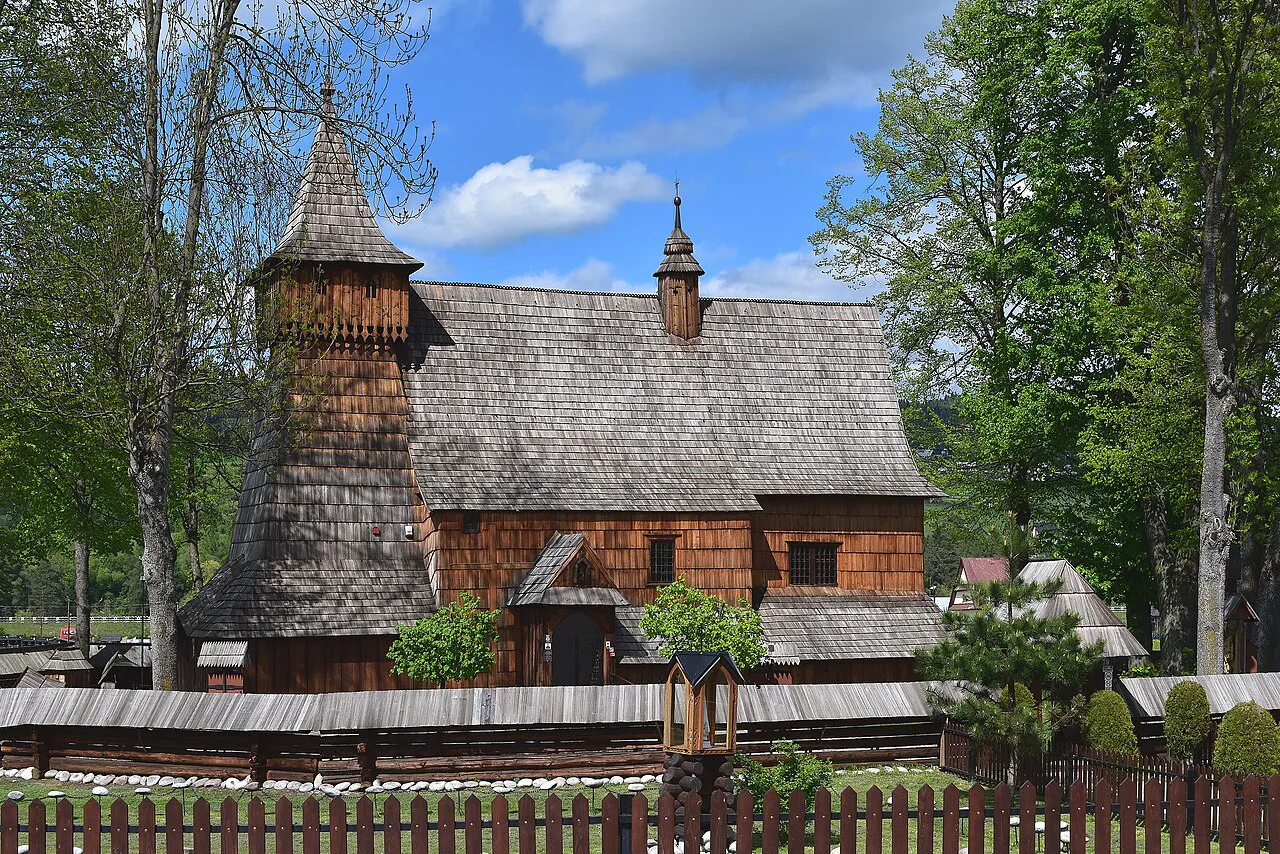
Where the churches sit relative to Kraków
The route runs east from Kraków into the Małopolska countryside, roughly 240 km in total, which is why a single day of driving and looking is tight. Kraków works as the start and end point, with Lipnica Murowana and Binarowa the first two stops before an overnight in the Biecz area and a second day through Sękowa and Haczów to Blizne. That shape keeps the driving manageable and leaves time inside the churches that reward it.
This is not a route to rush by car and photograph from the roadside. The distances between villages are short but the roads are ordinary rural ones, so each stop costs more time than the map suggests. Plan on no more than four churches a day if you want to go inside the ones that are open.
Powroźnik sits further south, closer to the Krynica area, and the source route does not include it in the standard two-day loop. If you want all six, treat Powroźnik as an extension at the southern end rather than squeezing it into the Kraków-to-Blisne line.
St Leonard's Church, Lipnica Murowana
St Leonard's is the 15th-century village church at Lipnica Murowana, and it is the natural first stop east of Kraków on the two-day route. The village around it keeps a medieval layout, which makes the approach as much a part of the visit as the building.
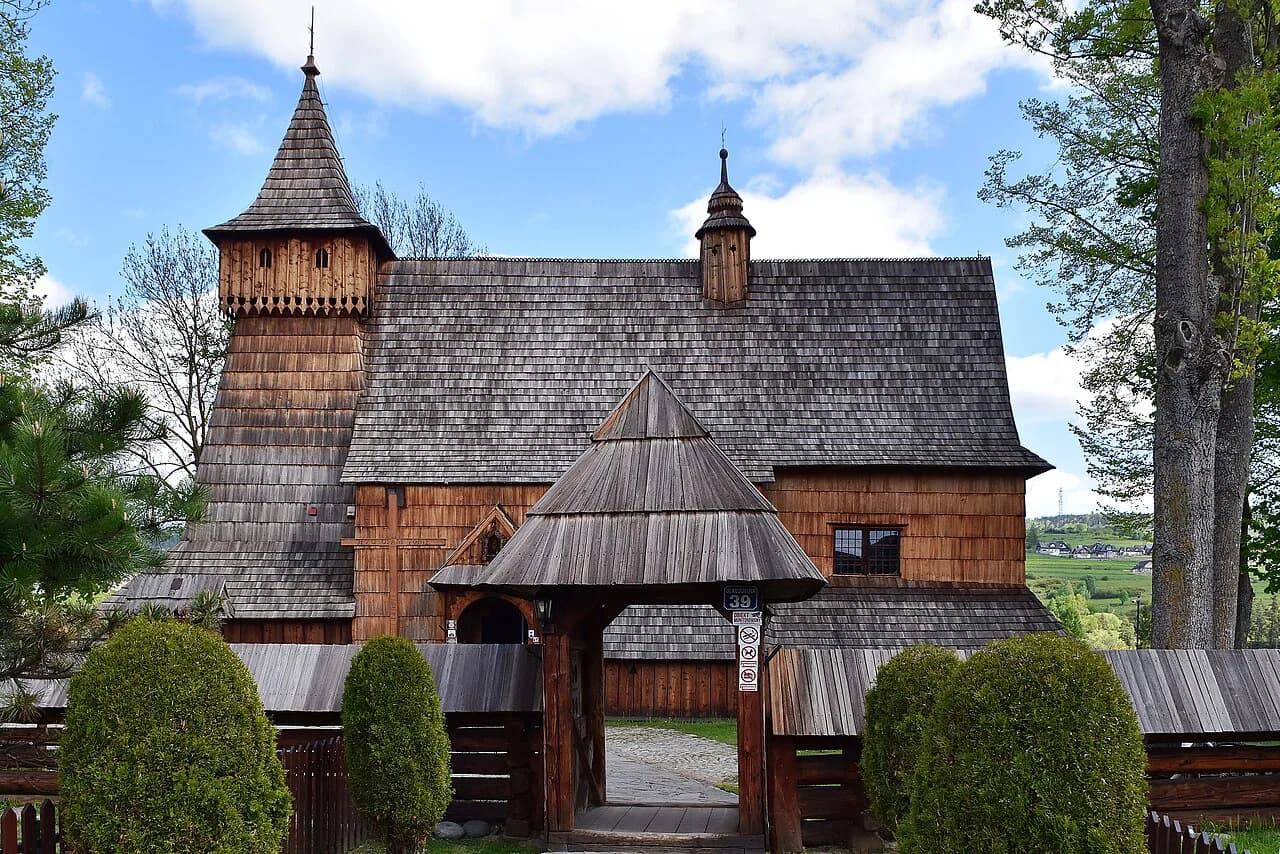
Look for the church's Gothic proportions before you look for the interior: the steep roof and shingled walls are the features that earned the group its listing. If the door is shut, walk the churchyard and the market cross, then move on; the village setting still explains how these churches relate to the settlements around them.
St Michael the Archangel, Binarowa
Binarowa's 16th-century church rewards time more than any other stop on the route because its interior is covered in polychrome painting and folk-art decoration. The painted surfaces make it one of the best-preserved Renaissance painted interiors in Polish church architecture, so enter expecting to slow down rather than tick off the nave.
The painted ceiling changes how you read the building: from the outside it looks like a simple log church, and from the inside it behaves like a picture book for people who could not read. Take the trade-off seriously and spend your interior time here rather than at every stop.
St Philip and St James the Apostles, Sękowa
Sękowa's church is the stop where wartime damage is most visible, because the building survived the First World War and bullet holes remain in the exterior planks. The steep, wide-eaved roof is the defining shape, and the carving inside is remarkable for a building that nearly did not last the 20th century.
Be careful with names here: the Sękowa church is the correct UNESCO entry, and it is not the same building as the church at Lipnica Dolna. The Lipnica Murowana stop is St Leonard's on the first day, while Sękowa belongs with Haczów on the second. Getting this right avoids a wrong turn and a wasted detour.
Assumption and St Michael Church, Haczów
Haczów holds the largest Gothic-style wooden church in Europe, dating from the 14th century, so the building announces itself before you reach the door. Its ceiling carries a Last Judgment painting that covers the whole surface, and the scale of that interior is the reason to schedule it as a proper stop rather than a quick look.
Because Haczów comes late on the second day, arriving with enough daylight is the planning constraint. Work back from your Blizne finish and consider where you want to take the longer pause, since the two stops compete for the same afternoon.
All Saints Church, Blizne
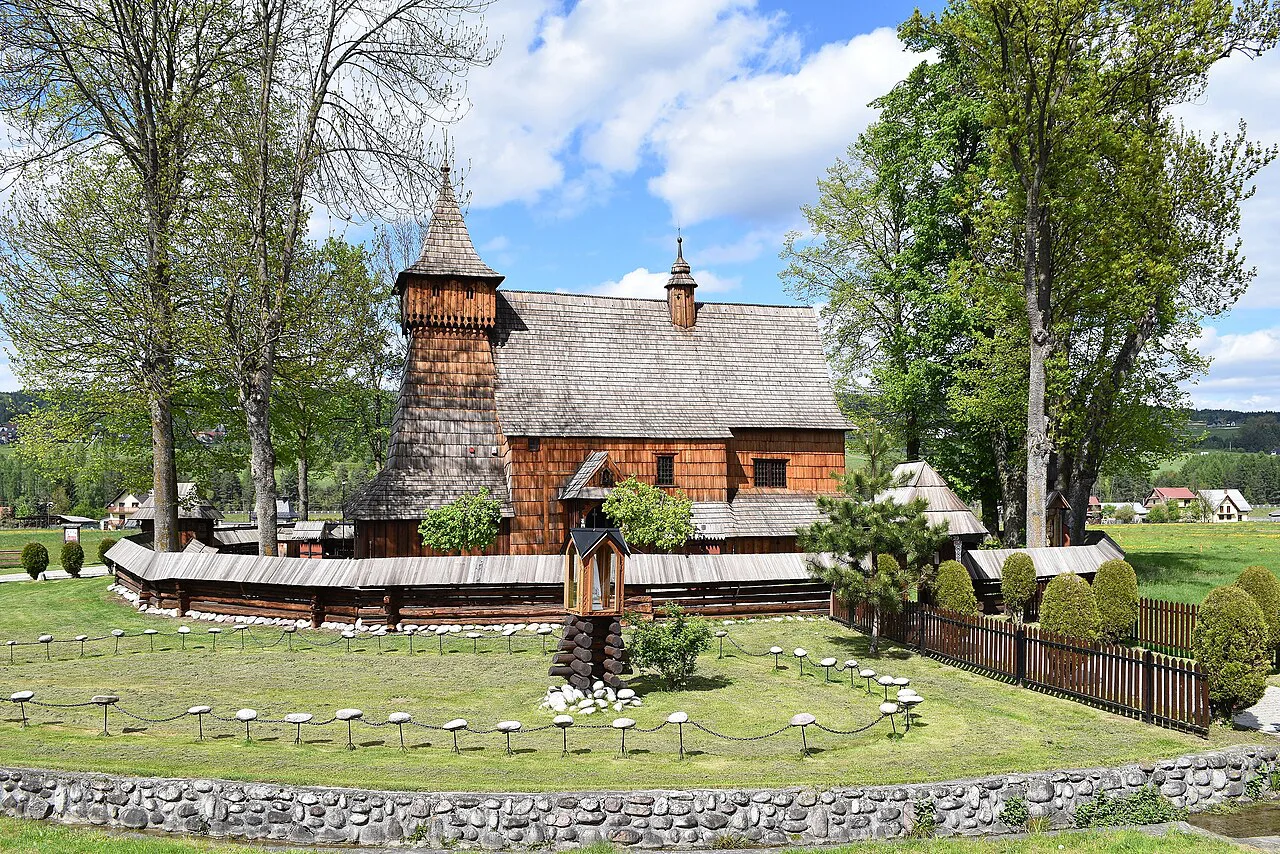
Blizne is the eastern end of the line, a log church whose exterior paintings can still be partly seen, set in a quiet Subcarpathian valley. It works as the closing stop because the building's interest is on the outside as much as the inside, which suits a late-afternoon visit before the drive back.
The village setting is genuinely rural, and that is part of the point of finishing here rather than returning to a city. Allow time for the last stretch of road to be slow, and treat Blizne as the full stop on the route rather than a sprint back to Kraków.
The two-day driving shape
The practical loop is Kraków via Lipnica Murowana and Binarowa to Biecz on day one, then Sękowa and Haczów to Blizne on day two. That split puts the two painted interiors of the first day before the long evening drive, and gives Haczów and Blizne a relaxed second day. Biecz works as the overnight stop on this shape.
Commercial operators run the same corridor differently, and a private two-day tour from Kraków can include Binarowa and Sękowa in a single itinerary with a driver. That option trades flexibility for a fixed schedule, and the price is quoted on request rather than published, so ask for a written breakdown before committing.
Without a car, the villages are not well served by public transport, and the practical alternatives are a guided tour or a driver for the two days. Kraków is only the start point here; this article does not cover the city itself. If you want a car-free UNESCO city break instead, Toruń offers a compact Gothic centre that is easy on foot.
When to go: why May to September is the sensible window
May to September is the recommended season for the wooden churches route, and the reasoning is simple: rural roads, village lanes and churchyards are easier in dry, long-daylight weather. Summer also gives you the best chance of a parish being on hand when you arrive at a locked door.
Outside that window, do not assume the interiors will be open or that village eateries will be running normal hours. The route planner's guidance is exactly that, guidance, not a published opening calendar for the churches.
Interior access: parish churches, services and the exterior-only fallback
These are working parish churches, so the rules are set locally and change with services and the season. Confirm interior access with each parish before departure, avoid arriving during a service, dress respectfully, and accept an exterior-only visit as the fallback rather than a failure.
The exterior is not a consolation prize on this route. Shingled walls, steep roofs and surviving paint on buildings such as Blizne mean a churchyard visit still shows you why the group was inscribed, and it costs nothing to build that possibility into the plan. Checking current details for a specific parish takes one phone call or email, and it is worth making the day before.
None of the sources give ticket prices or opening hours for the individual churches, so do not budget on the assumption of a paid entry or a guaranteed interior. Where access is arranged through the parish, confirm the arrangement locally when you speak to them.
Food and fuel in the small towns
Restaurant hours in the small towns along the route are variable, so confirm the business you are relying on and carry provisions for the rural stretches. The road atlas names Restauracja Stary Dworzec in Biecz and Gospoda Magurska in the Sękowa area as identifiable stops, both of which need their address, hours and booking checked directly.
Fuel the car before leaving the larger towns, because the gaps between villages are longer than they look on a route map. A cool bag with bread, cheese and water is the sensible insurance for the second day, when Haczów and Blizne come before any reliable late lunch.
Should you drive the wooden churches or join a tour?
Drive the loop yourself if you want to control time inside Binarowa and Haczów, and accept the two-day shape with Biecz as the overnight stop. Book a private tour instead if you would rather not handle rural roads and want the churches arranged for you. The UNESCO World Heritage Sites in Poland list gives you the wider context for where this route sits.
Whichever you choose, the honest trade-off is between flexibility and certainty: a car gives you the option to linger or move on, and a tour gives you a driver who knows the corridor. On a two-day route with six churches, that choice shapes the trip more than any single building.
Explore more Poland guides
Frequently Asked Questions
How many wooden churches in Poland are on the UNESCO list?
Six medieval Roman Catholic log churches in southern Małopolska are inscribed as a group: St Leonard's in Lipnica Murowana, St Michael the Archangel in Binarowa, St Philip and St James the Apostles in Sękowa, the Assumption and St Michael Church in Haczów, All Saints in Blizne, and the church at Powroźnik. Other Polish wooden churches, including the Orthodox and Greek Catholic ones in the Carpathians, are not part of this listing.
Are the wooden churches free to enter?
Entry arrangements are set by each parish and are not published as a standard price, so assume nothing either way. Where a charge is made, it is collected locally. Ask when you contact the parish, and treat an exterior-only visit as a perfectly good outcome.
Can you visit the wooden churches without a car?
Public transport to these villages is limited, and the realistic car-free options are a guided tour or a hired driver over the two days. This is a rural loop of roughly 240 km, so a rail-and-bus plan would leave too little time at the churches themselves.
Can you visit the wooden churches in winter?
The route guidance recommends May to September as the season, and winter access to parish interiors is a local decision. If you go outside that window, contact each parish before you travel and plan on shorter days and variable village opening.
Sources
Notes for your next Polish city break
Optional updates to our Poland guides.
You might also like

Continue reading
More guides you'll find useful