Zamość: Poland's Renaissance old town and how long it needs
Zamość is a UNESCO-listed Renaissance ideal town in south-east Poland, in Lublin Voivodeship. What the old town is known for and how much time to give it.
On this page
Zamość is worth a half-day rather than a weekend of its own. It is a small Renaissance town in south-east Poland, built as a planned "ideal town" and now a UNESCO World Heritage Site, and its compact old town is best taken slowly on foot. If you want to see how it sits among the country's listed sites, browse our UNESCO World Heritage Sites in Poland guide before you plan the detour.
This guide explains what the town is known for, why it repays a slow visit, what to look for in the streets, and how to treat it as a quiet stop on a wider Polish trip. It is deliberately short on big-ticket museums, because Zamość's appeal is the townscape itself rather than a checklist of sights. If you want a busier city break instead, see our guide to alternatives to Kraków.
What Zamość is known for
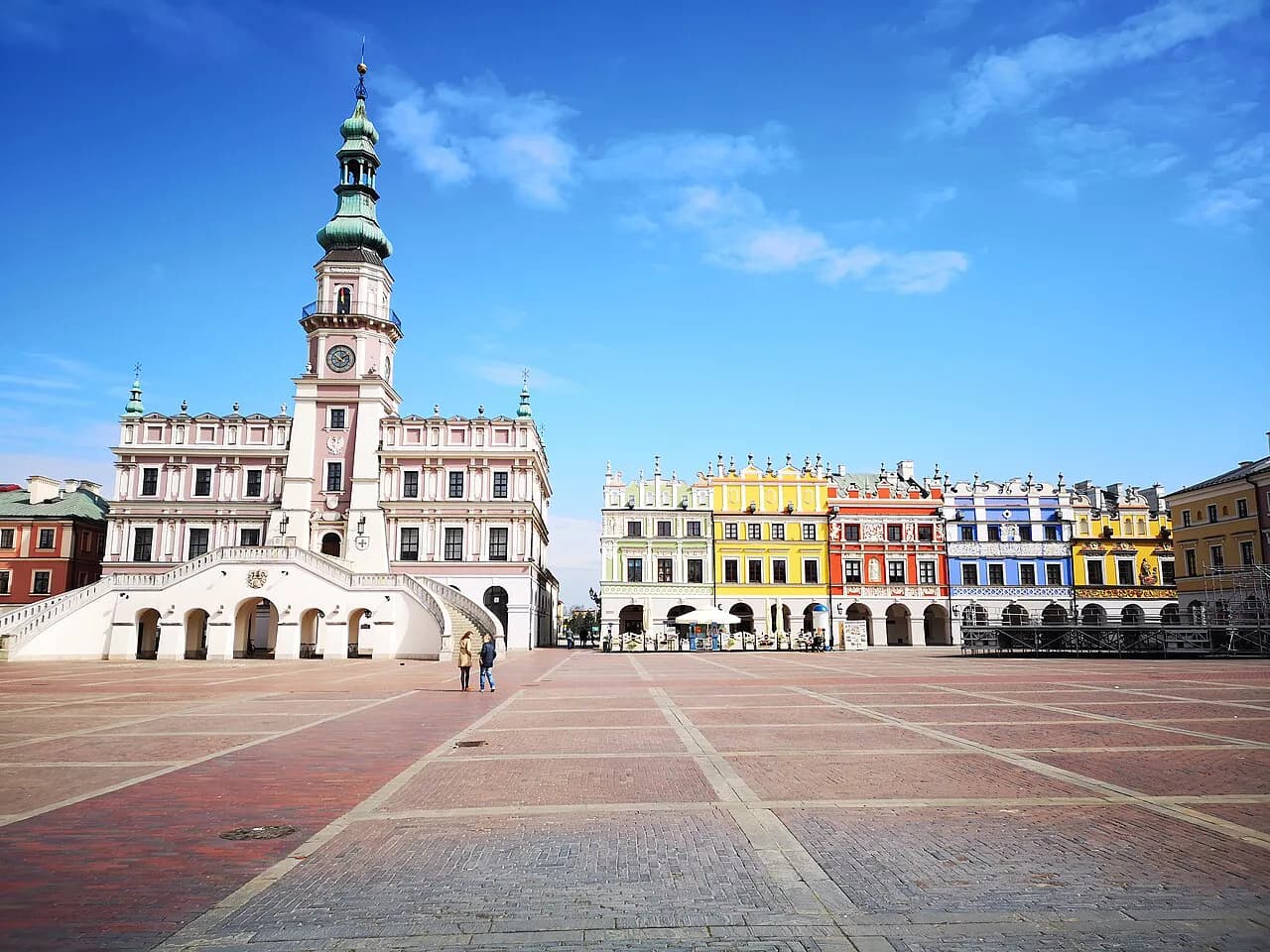
Zamość is known above all as a Renaissance "ideal town": a settlement laid out to a single design rather than growing up piecemeal. Its architecture blends Italian Renaissance form with Polish building traditions, which is why the centre reads as remarkably uniform rather than a jumble of centuries. That combination of planning and style is what earned the old town its UNESCO World Heritage listing. Those who enjoy this kind of brick and stone detail may also like the Wooden Churches of Southern Poland, a very different side of Polish building.
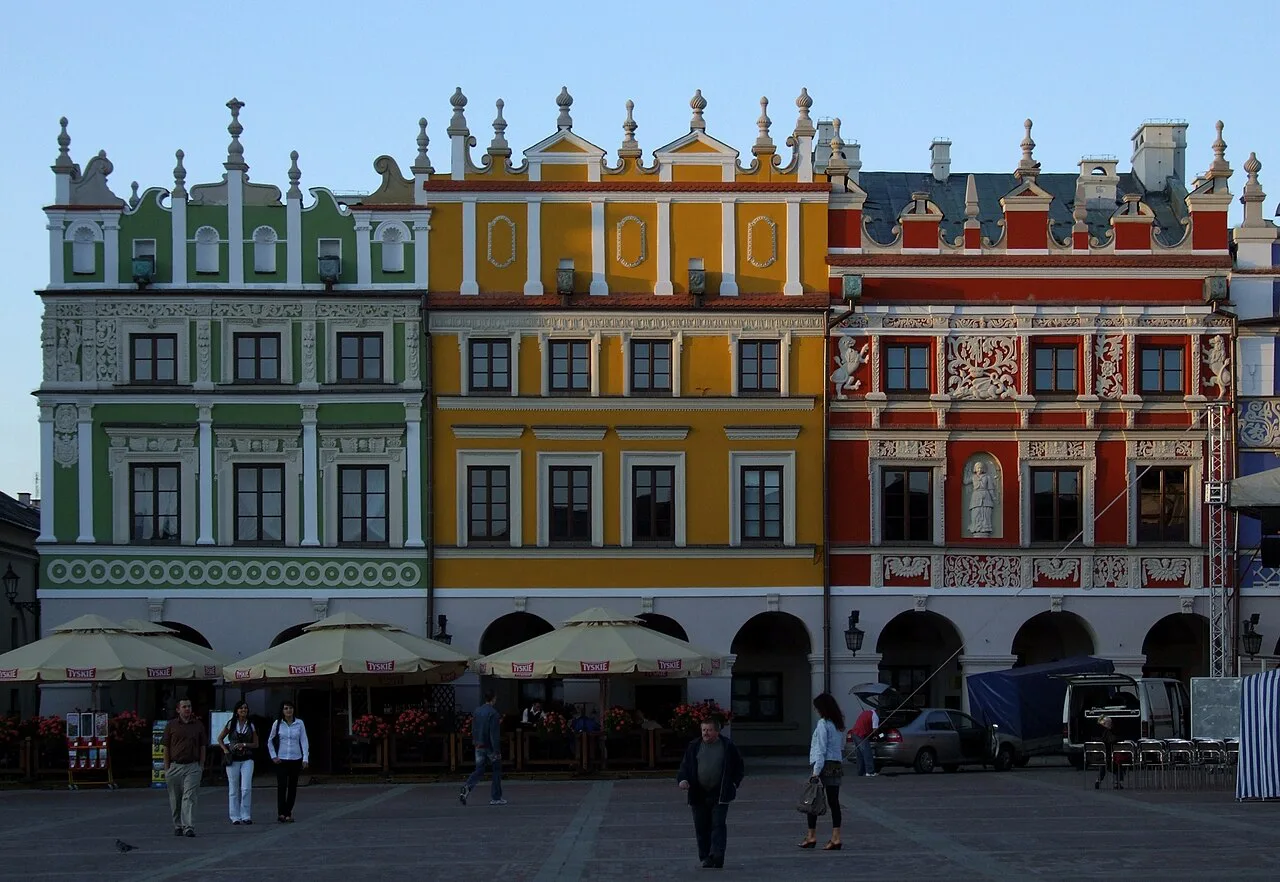
The other thing travellers notice is colour. The townhouses in the centre are painted in bright, Italian-influenced shades, and the historic core is often described as a place of small, fairy-tale houses. Synagogue buildings sit among the streets, a visible trace of the town's Jewish community and part of a wider story you can follow in our synagogues in Poland guide.
Why Zamość is worth a few hours
The case for Zamość is coherence. Because the centre was planned as a whole, you can see the Renaissance idea of a town as a single artefact rather than a collection of monuments, and you do not need to queue for hours to appreciate it. The trade-off is that it is quiet and small: the appeal is the townscape rather than blockbuster museums, and anyone expecting a Kraków-style schedule of major sights will run out of headline stops by mid-afternoon.
Treat that as the point rather than a problem. Zamość suits a slow few hours of walking the centre, looking properly at the painted fronts and the synagogue buildings, and sitting in the town for a while. If you want a packed itinerary, put the time into a larger city instead and see Zamość as a calm counterweight.
How the old town reads on foot
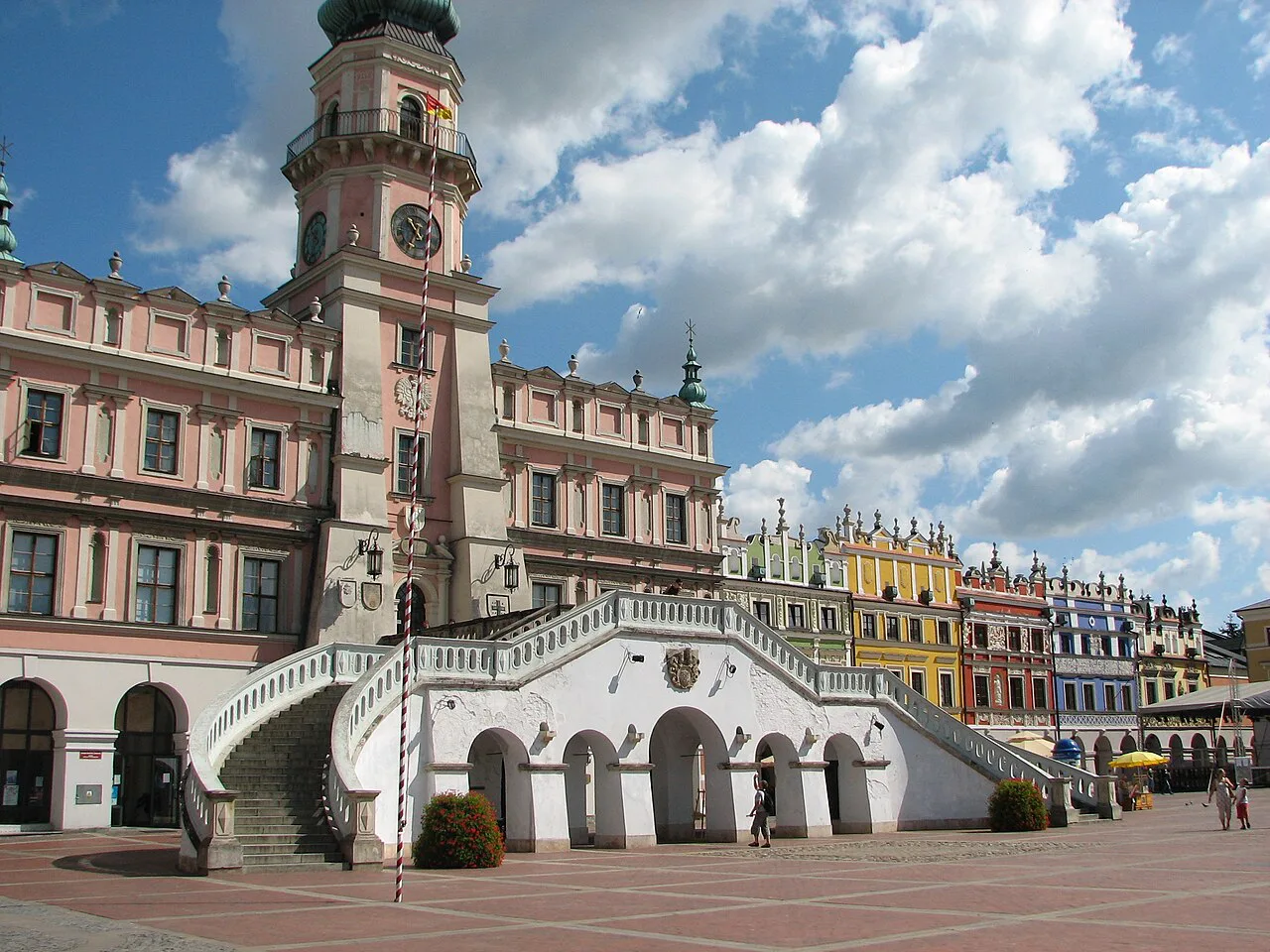
The old town is compact and its architecture unusually uniform, so reading it is mainly a matter of walking slowly and looking at the fronts of the buildings rather than working through a list of sights. Because the plan was laid down as a whole, the centre feels of a piece, and you can navigate it by picking a landmark and returning to it. Keep an eye on the upper storeys and parapets, where the Italian influence shows most clearly.
Zamość was planned as well as built, and the centre is small enough to cross in minutes. Walk a slow circuit of the historic core once and the layout makes sense immediately. Use any on-site information boards for the town's history, and treat general guidebooks as background rather than as a source of precise dates.
Walking the centre
Start in the heart of the old town. It is where the town's uniform design is most obvious at a glance: bright façades, a walkable scale, and the sense of an Italian-influenced plan realised in Poland. Look up at the attics and parapets, where the ornament shows the Italian influence most clearly, then compare it with the plainer Polish detail on the same street.
From there, walk the streets without a fixed route. The pleasure is in the repetition, the painted fronts and the quiet courtyards, and the town is small enough that getting mildly lost costs you minutes rather than an afternoon. Finish with a slow loop of the edge of the old town to get the best sense of Zamość as a designed whole.
For a second opinion on what else there is to see, traveller reviews and attraction listings can be a starting point, but confirm any specific opening hours on the day, as the town's smaller sights may keep irregular hours.
Jewish heritage in Zamość
Zamość's Jewish community left a visible mark on the townscape, and the synagogue buildings among the streets are the clearest trace of it. They are part of the ordinary fabric of the old town rather than a separate museum quarter, which is why you come across them while simply walking. Approach them as surviving buildings with a history, not as a spectacle, and keep your voice down and your camera respectful if you go inside.
The wider story of Jewish Poland belongs to the country's Holocaust museums and memorial archives, which hold the documented figures and dates. Zamość's buildings are best understood in that national context rather than as a standalone story, and they are worth a quiet half hour before you move on. Our Jewish heritage in Poland guide sets out the wider picture.
Fitting Zamość into a Polish trip
Zamość sits in Lublin Voivodeship in south-east Poland, which puts it within reach of Lublin and, on a longer trip, Warsaw. Plan it as a day out rather than a separate stop, and keep the day itself light: travel in the morning, walk the old town in the afternoon, and head back before the evening. If you are working through Poland's listed towns, see the wider selection of UNESCO World Heritage Sites in Poland before deciding which detour is worth your day.
Transport is outside this guide, so check current connections for your dates before committing. Bear in mind that opening days and any seasonal restrictions around the old town can vary, so confirm the details with any operator or venue you plan to use.
When to visit Zamość
Zamość is largely an outdoor town: the streets and squares are the visit, so a dry day matters more than a hot one. Late spring and early autumn tend to give comfortable walking temperatures and long enough daylight for a leisurely circuit of the centre.
Where you need them, use a climate source rather than a forecast for month-by-month averages, and pick a dry stretch over a warm one. Winter visits are possible, but expect cold weather in an exposed old town.
Is Zamość worth a few hours of your trip?
Yes, if you have a spare half-day and want a quiet, coherent Renaissance town rather than another museum queue. No, if your trip is short, your interests are mainly indoor sights, or you would rather spend the day in a larger city. The honest verdict is a few hours that reward walking slowly and looking up at the façades.
Build the day around the old town on foot, the painted façades and the synagogue buildings. Keep the schedule loose and confirm your transport before you set out.
Explore more Poland guides
Frequently Asked Questions
What is Zamość known for?
It is known as a Renaissance ideal town: a centre laid out to a single plan, mixing Italian Renaissance style with Polish building traditions, and now a UNESCO World Heritage Site. Its painted, Italian-influenced townhouses and the surviving synagogue buildings are the things visitors most come to see.
How much time does Zamość need?
Around half a day is enough to walk the old town, look at the buildings and take in the synagogue buildings at an unhurried pace. There are few large museums, so the visit does not stretch to a full sightseeing day. Confirm any specific opening hours on the day.
Sources
Notes for your next Polish city break
Optional updates to our Poland guides.
You might also like

Continue reading
More guides you'll find useful