Jewish Cemetery Warsaw: Okopowa Street Visitor Guide
A visitor guide to Warsaw's Jewish Cemetery on Okopowa Street, covering its scale, layout, notable graves and respectful etiquette for a short visit.
On this page
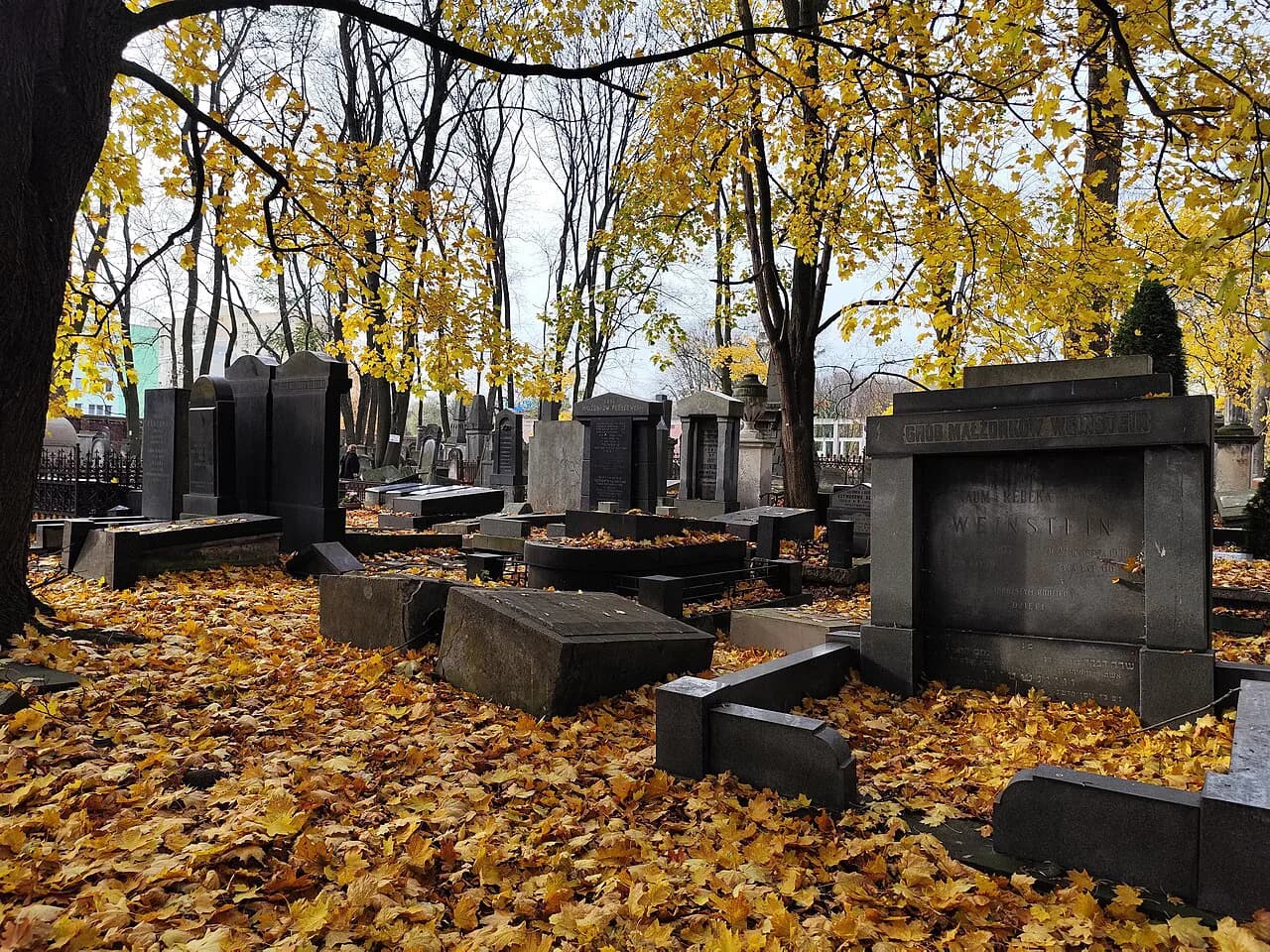
Warsaw's Jewish Cemetery runs along Okopowa Street in the city's Wola district and is one of the largest Jewish cemeteries in Europe: a wooded expanse of roughly 83 acres holding some 200,000 marked graves, as archaeological coverage of the site reports. Treat it as a working burial ground with mourners and ongoing funerals rather than as a sight, and plan your time around that. This guide covers how the grounds are arranged, the history you should carry in with you, the graves and memorials worth locating, and the practical rules for a respectful hour or two.
Two things shape any visit: the sheer scale of the place and the fact that not every section is easy to read at a glance. Some areas are dense with intact macewy, the upright Hebrew-inscribed matzevot, while others are overgrown or marked by fragments and memorials. Decide before you arrive whether you are coming for a specific grave, for the memorials, or simply to walk and absorb the whole, because an unfocused wander eats a morning without covering much ground.
What the cemetery is and how large it is
The Okopowa Street cemetery is the principal Jewish burial ground in Warsaw and one of the biggest in Europe, a wooded site of roughly 83 acres with some 200,000 marked graves, the scale recorded by archaeologists working there. Those numbers describe a landscape, not a single plot: the grounds stretch far enough that you will not see all of it in one pass. Rather than chasing a total, pick two or three areas to cover properly and accept that the rest is for another visit.
Historically the cemetery served the Jewish community of Warsaw and beyond, and the density of stones reflects a city that was a major centre of Jewish life in Europe. Walking the rows gives you a sense of that community's size and longevity in a way no museum display does. The Jewish heritage of Poland is spread across dozens of towns and cities, and this cemetery is among the most direct encounters with it.
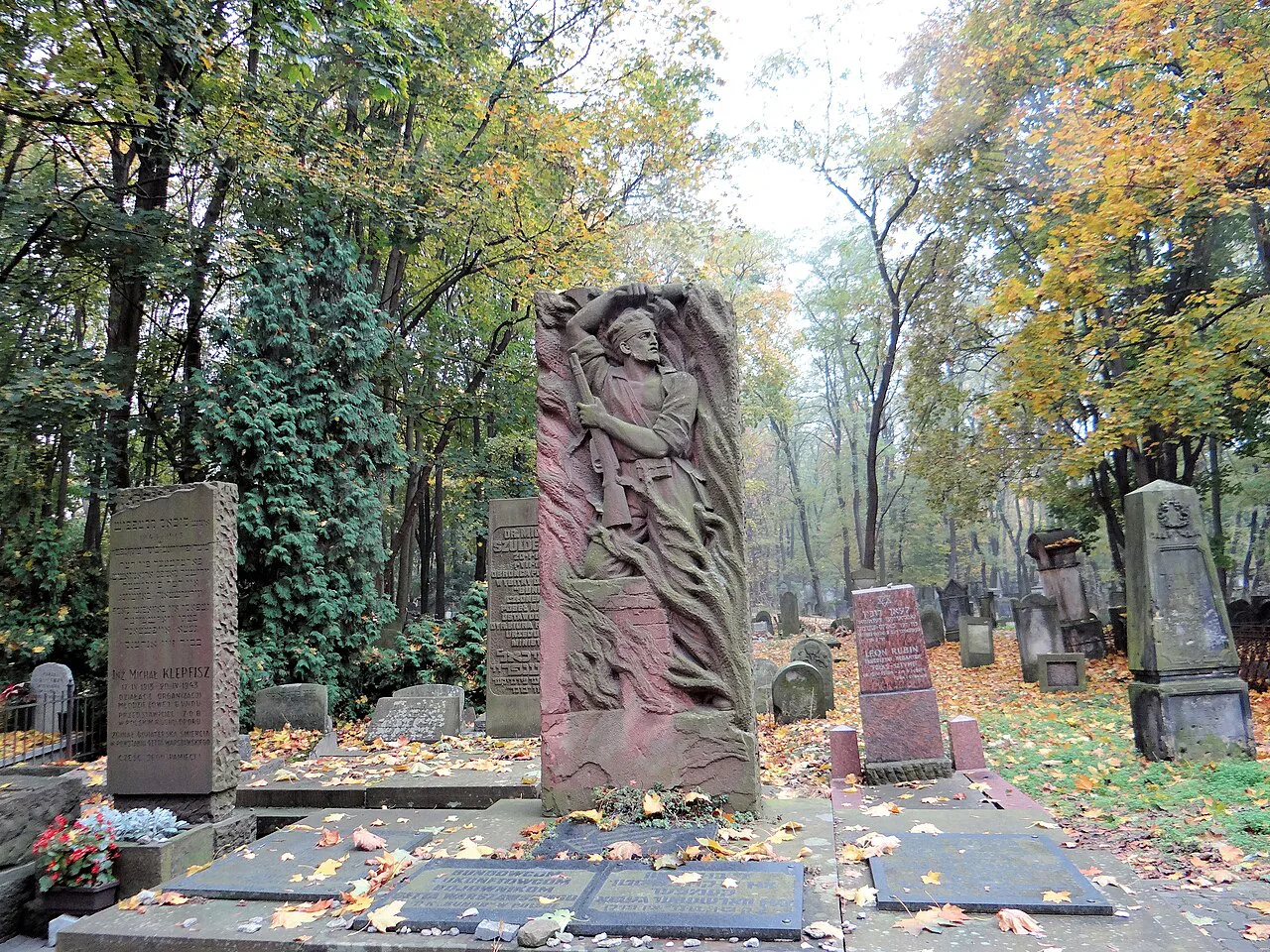
Where Okopowa Street sits and how the cemetery is laid out
Okopowa Street runs north-south through the Wola district, west of Warsaw's historic centre and within reach of the central rail corridor. The cemetery occupies a long strip along its western side, with the entrance off Okopowa itself, so it slots easily into a day that already includes the POLIN Museum and the former ghetto area further east. The grounds are divided into numbered sections and rows, and the numbering is what makes a targeted search possible.
The layout follows traditional practice, with separate burial fields and family plots clustered together rather than scattered at random. The older sections near the front hold the most elaborate carved stones, while later areas further back are plainer. The cemetery is maintained by the Warsaw Jewish community, the Gmina Wyznaniowa Żydowska w Warszawie, which handles enquiries. If you want to place the cemetery alongside the city's other Jewish sites, a broader Jewish tour of Poland helps you see how Warsaw fits the national picture.
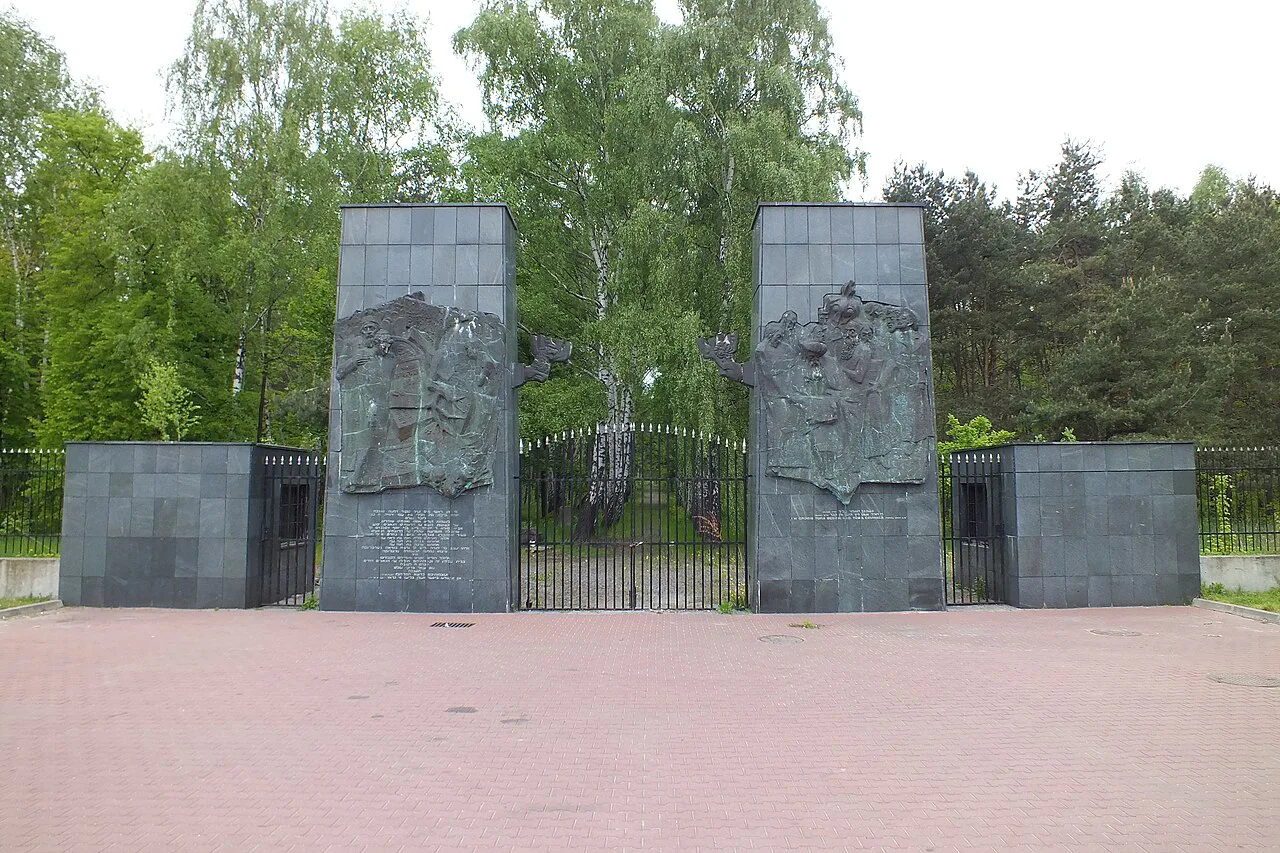
The history to know before you walk in
The cemetery opened in the early nineteenth century and expanded through the decades as Warsaw's Jewish population grew. During the German Nazi occupation, the grounds fell inside the Warsaw Ghetto and were used as a burial place and, at times, a passage and hiding space, and the destruction of the ghetto left the cemetery damaged and its records disrupted. After the war the community returned to maintain and restore it, and conservation work continues today, including archaeological study of the grounds.
The result is a place where stones from very different periods sit side by side: finely carved nineteenth-century matzevot, plain interwar markers, postwar burials and memorials to communities destroyed in the Holocaust. Read the stones as a record of a community's continuity as well as its loss, and let the dates speak for themselves rather than looking for dramatic narratives. That is the register the cemetery itself invites.
Graves and monuments worth locating
Among the graves visitors most often seek out are those of writers, rabbis and communal figures whose names appear on the better-known stones, and the cemetery's own section plans are the reliable way to find them. Monuments on the grounds commemorate groups and events from the wartime and postwar years, and these are marked rather than hidden. Ask at the entrance or check the community's published information for the specific memorials currently signposted.
Photography is part of many visits, and the cemetery's own rules govern where and how you may take pictures; follow the notices on site rather than assuming. Never touch, lean on or move a stone, and leave any small objects you find exactly where they lie. If you are tracing family, the cemetery connects to a wider set of Jewish burial sites across the country, and guides to synagogues in Poland help you plan a route through the towns your ancestors came from.
Finding a specific grave and using burial records
Before you travel, gather the Hebrew or Polish name, an approximate year of death and any section reference you can find, because searching on the day without those details is slow. Surviving burial registers are held by the Warsaw Jewish community and by archives, and some indexes are searchable online through genealogy portals. The community can advise on records that survive and on how to request a lookup.
Once you have a section and row, the numbering on the ground is what gets you to the right stone, so photograph the section marker at the entrance to each field as you go. Allow more time than you think for a single search in the older, overgrown areas. If your search grows into a wider trip, a dedicated guide to Okopowa Street Jewish Cemetery and similar sites helps you sequence several cemeteries and synagogues sensibly.
Opening days, entry and Saturday visits
The cemetery is a religious burial ground, so its opening days follow the community's arrangements rather than a tourist timetable, and they may vary around Shabbat and Jewish festivals. Confirm current days and hours with the Warsaw Jewish community before you go, and do not assume it is open simply because it appears on a map.
The grounds are maintained by the community rather than run commercially, so any donation is a contribution to upkeep rather than a ticket price. Weekday mornings are generally the calmest time to visit and the least likely to coincide with a funeral. If you are coming from further afield, remember that other Polish Jewish sites keep their own hours, and a guide to the White Stork Synagogue, Wrocław spells out what to expect there.
Visitor etiquette: dress, behaviour and photography
Dress as you would for a funeral: modestly, with shoulders and knees covered and no beachwear or sportswear. Walk on the paths rather than across graves, keep your voice low, and do not eat, drink or smoke inside the cemetery. If a funeral is in progress, stop and stand aside, and give the mourners a wide berth.
Photography is often part of a visit, but follow the cemetery's own notices on site rather than assuming; never photograph mourners or an active funeral, and ask before photographing people. Placing a small stone on a grave is a traditional mark of remembrance; flowers are also acceptable. Above all, treat the cemetery as the working burial ground it is rather than as a photo opportunity.
How long to allow and how to combine it with your Warsaw days
An hour covers the main avenue and the older front sections; two hours lets you add a memorial or a grave search; a half-day is only necessary if you are hunting records or tracing a family plot. The cemetery is outdoors and wooded, so weather shapes the visit, and the climate overview notes that waterproofing is necessary throughout the year. Pair the cemetery with the POLIN Museum and the surviving fragments of the ghetto wall, which sit within a short walk or tram ride.
If your Warsaw days are limited, see the cemetery on a weekday morning, then spend the afternoon on the city's core sights. Guides to sites such as the Tykocin synagogue in the Podlaskie Voivodeship show how far Jewish heritage reaches beyond the capital, and will help you decide whether a wider loop is worth adding to your itinerary.
Should the cemetery be on your Warsaw list?
Yes, if you want to understand Warsaw's Jewish past through its physical record rather than only through museum cases. Give it an hour on a weekday morning, dress soberly, and arrive knowing which section you want to see. Pair it with POLIN and the ghetto-wall fragments for a coherent day, and check the community's current opening arrangements before you set out.
Frequently Asked Questions
Is the Okopowa Street cemetery the same as Powązki Cemetery?
No. Powązki is the large municipal cemetery nearby, while the Okopowa Street cemetery is the Jewish burial ground maintained by Warsaw's Jewish community. They are separate sites with separate entrances and rules, so check which one you mean before you travel.
Can I visit the Jewish cemetery in Warsaw on a Saturday?
Opening days follow the community's arrangements and may vary around Shabbat and Jewish festivals, so a Saturday visit should not be assumed. Confirm current days and hours with the Warsaw Jewish community before you go.
Sources
Notes for your next Polish city break
Optional updates to our Poland guides.
You might also like

Continue reading
More guides you'll find useful