

Jewish Tour Poland: Planning a Heritage Route Beyond Kraków
How to plan a Jewish heritage tour of Poland beyond Kraków: which cities to link, how long to give each, and what to book before you travel.
On this page
Plan a Jewish heritage tour of Poland around Warsaw first, then work south-east through Lublin and the smaller towns, giving the trip five to ten days rather than a weekend. The country's Jewish story runs for roughly a thousand years, and Poland held over three and a half million Jews on the eve of the Second World War, so a route that only touches one city misses most of it. This guide covers which cities to link, how long each stop needs, how to move between them by train, and what to book in advance.
Two kinds of site sit on the same route and need different pacing. Memorial sites such as the former Warsaw ghetto and the Majdanek camp ask for quiet, unhurried time, while living heritage — cemeteries, restored synagogues, yeshiva buildings — rewards curiosity and a slower wander. Build the days so you are not moving between the two on the same afternoon.
What a Jewish heritage tour of Poland covers
A heritage route mixes three things: pre-war life, the destruction of the Holocaust, and what survives today. Pre-war life shows in cemeteries, synagogue buildings and former yeshivas; the destruction is marked at ghetto boundaries, deportation points and camps; the present appears in restored buildings and small surviving communities. JRoots, a heritage travel organisation, describes Poland as home to Jews for almost a thousand years and frames its own itineraries around both that long life and the Shoah.
Get the vocabulary right before you go, because it changes how sites read. The camps built by the German occupiers are German Nazi camps, never Polish ones; the phrase matters at every memorial you visit. The same source puts the pre-war Jewish population of Poland above three and a half million, which is the scale to hold in mind when you walk a former Jewish street that now has no Jewish residents.
Which cities to put on a Polish Jewish heritage route
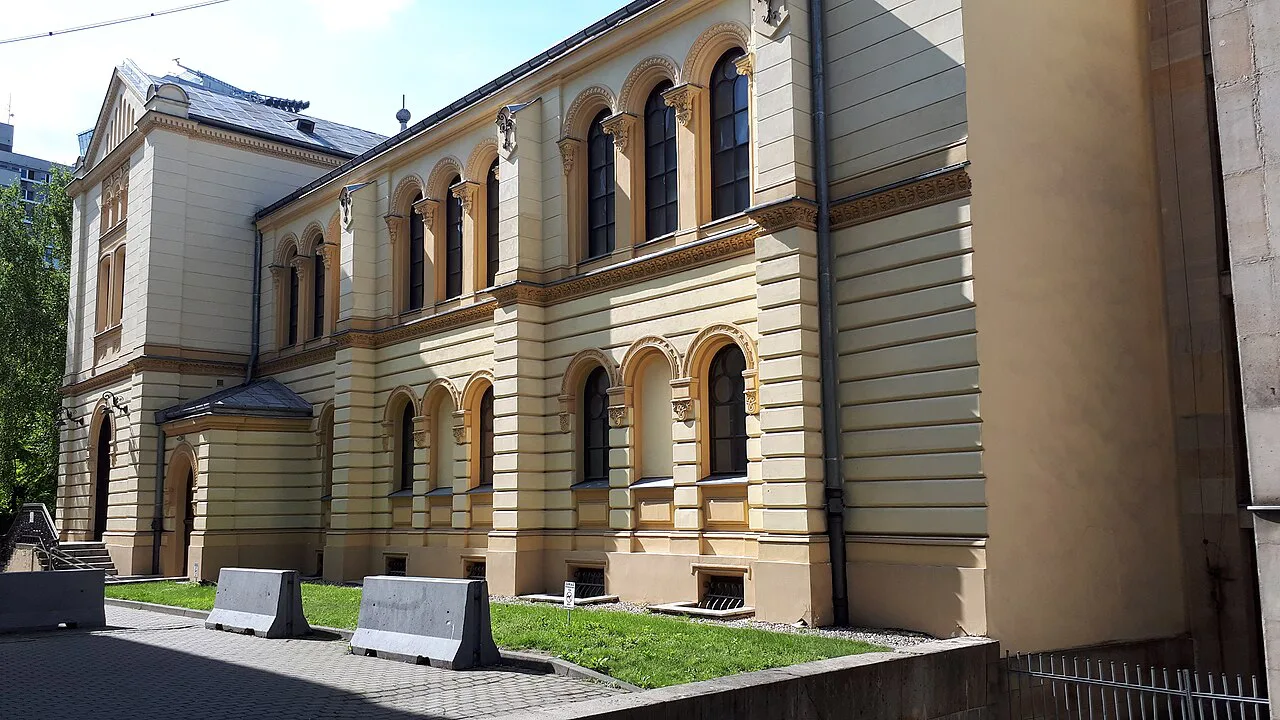
Warsaw is the natural start: the former ghetto, the Umschlagplatz monument, the Ghetto Uprising memorial and Miła 18, the memorial site of the Jewish Combat Organization, all sit within a walkable central area. The Okopowa Street Jewish Cemetery gives the pre-war picture before you reach the memorials. For the cemetery's layout and which sections to prioritise, see the guide to the Jewish cemetery Warsaw before you set out.
Warsaw repays two full days, and more if you want the museum collections. The ghetto itself is best understood on foot with a map, following the boundary markers, before or after the formal memorial sites. The Warsaw Ghetto Wall page covers the surviving fragments and how to trace the line through the modern streets.
Lublin comes next, with the former Yeshivat Chachmei Lublin, once the most important yeshiva in Poland and led by Rabbi Meir Shapiro, and the Majdanek camp three kilometres from the city centre. The camp operated from October 1941 until July 1944, and between 95,000 and 130,000 people died or were killed in the Majdanek system, between 80,000 and 92,000 of them Jews, so plan a half day there and keep the rest of the day light.
South-east of Lublin, the smaller sites carry the route: Leżajsk, where the grave of R' Elimelech attracts pilgrims from around the world, Łańcut, with its restored 1761 synagogue and 18th- and 19th-century wall decorations, and Tarnów, where about 25,000 Jews were roughly half the town's population before the war. Zbylitowska Góra, the site of mass murder of Jews from Tarnów, sits nearby. None of these needs a full day, but each needs time.
Kraków earns its place as a comparison rather than the whole trip. Kazimierz, the former Jewish quarter, holds the most intact collection of Jewish buildings in Central Europe, including seven remaining synagogues, and Podgórze across the river preserves traces of the ghetto wall. Treat it as a two-day stop at the end of a rail route, and go deeper with the broader Jewish heritage Poland guide.
How many days each stop needs
Give Warsaw two to three days, Lublin a full day plus a half day at Majdanek, and the small towns a half day each, with travel eating into the edges. A tight five-day version links Warsaw, Lublin and Kraków; a ten-day version adds Łańcut, Leżajsk and Tarnów, and slows everything down.
If synagogues are your priority, build in a day for the buildings themselves, since their visiting arrangements vary and a restored synagogue often doubles as a cultural centre. Synagogues in Poland You Can Visit sets out which buildings are open to visitors and what to expect inside.
For a single-community stop, the White Stork Synagogue, Wrocław, known in Polish as Synagoga pod Białym Bocianem, anchors a day in Wrocław and fits a western extension of the route. It works best as a deliberate detour rather than a quick stop between trains.
One rural stop repays the effort if you want a sense of the shtetl scale: the Tykocin synagogue, in Podlaskie Voivodeship, is a short journey from Białystok and gives a different picture from the big-city sites. It does not fit a short trip, so treat it as a ten-day addition.
Linking Warsaw, Łódź, Lublin and Wrocław by train
Poland's rail network makes a Warsaw–Łódź–Lublin–Kraków line practical, with Wrocław as a western spur. Warsaw to Łódź is a short hop, Łódź to Lublin is a longer ride, and Lublin to Kraków is longer again, so build travel mornings rather than trying to sightsee on arrival days. Check current timetables on the operator's own site before you fix the order.
Łódź works as a half-day stop between Warsaw and Lublin: its Jewish cemetery is one of the largest of its kind in Poland, and the city's industrial history explains much of the pre-war Jewish presence in central Poland. If your time is short, Warsaw and Lublin carry more of the story and Łódź can be skipped.
The southern towns — Leżajsk, Łańcut, Tarnów — sit off the main line, so buses or a hired car fill the gaps. Organised trips solve this by putting you on a coach; independent travellers should count the connections honestly and cut one town rather than rush three.
Warsaw: the former ghetto, Umschlagplatz and Miła 18
Start at the Umschlagplatz monument, the point from which Jews were deported from the Warsaw ghetto, then walk the boundary to Miła 18, the memorial site of the Jewish Combat Organization leadership. The Ghetto Uprising memorial and the surviving traces of the ghetto wall complete a walkable circuit. The JRoots Warsaw itinerary follows the same sequence and is a useful sanity check on the geography.
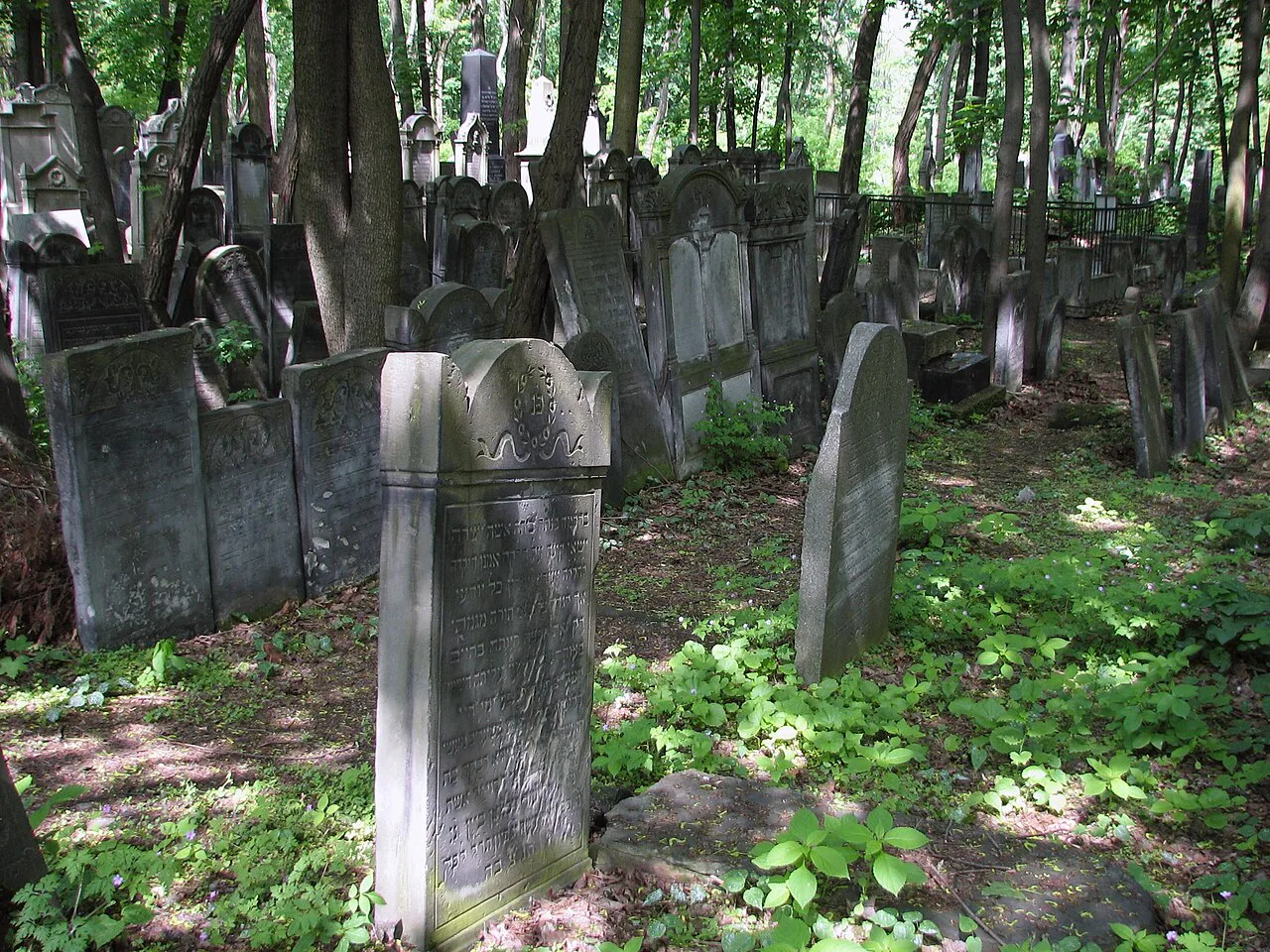
Allow half a day for the memorial circuit and a separate morning or afternoon for the Okopowa Street Cemetery. The cemetery is a working burial ground: keep to the paths, dress as you would for any cemetery, and do not photograph mourners. The full guide to The Jewish Cemetery on Okopowa Street, Warsaw explains how to find the notable graves.
Lublin and Majdanek
Lublin's Jewish history runs from the yeshiva to the ghetto to the camp. The former Yeshivat Chachmei Lublin is the place to begin, then the old town's Jewish streets, then Majdanek, three kilometres from the centre. The camp is a large, open, exposed site, so plan for weather and for a slow walk rather than a quick look.
Majdanek's scale is the point: between 95,000 and 130,000 people died or were killed there between October 1941 and July 1944, the great majority of them Jews. Keep the visit low-key, don't photograph people, and leave time afterwards without a scheduled stop. Lublin is your base for this section of the route.
Łańcut, Tarnów and the smaller sites
Łańcut's synagogue, restored with its 18th- and 19th-century wall decorations, is the standout small-town sight, and it pairs with the castle and park for a full day. Tarnów, where about 25,000 Jews made up roughly half the town before the war, has a compact old town and a memorial route through the former Jewish streets. Check opening days for museum buildings before you travel.
Zbylitowska Góra, the mass murder site of Jews from Tarnów, sits in woodland outside town and is not a casual stop; go only if you have read about it and allow quiet time. Leżajsk is a different kind of visit, an active pilgrimage site, so behave as you would in a working place of prayer and keep your voice low near the grave.
Kraków as a comparison and a transport hub
Kraków is the easiest arrival point and the easiest comparison to make at the end of the route. Kazimierz's seven remaining synagogues and Podgórze's ghetto wall traces make it a two-day stop, and the Plaszów labour camp site, built over an old Jewish cemetery, is a sobering walk from the centre. Don't treat the city as the whole trip.
The Kazimierz case shows what restoration and use do over time: synagogues that are also cultural centres, streets with a working café life and a Jewish history underneath. Pair it with the synagogues guide to see which buildings are open and which function as venues. Only Kazimierz, among Poland's Jewish quarters, survives with this concentration of buildings.
Guided tours and organised group trips: what they include
Organised heritage trips solve the logistics: they cover the ground, book site entry and handle the southern towns, but they fix your pace. JRoots runs sample itineraries through Warsaw, Lublin, Majdanek, Leżajsk, Łańcut, Tarnów and Kraków, with a guide and overnight bases. If you want the memorials plus the small towns in a week, a group format is the realistic route.
One supplier quote gives an idea of scale for a ten-day package: Jews of Poland itineraries were quoted at 7,450 US dollars per person on a double-occupancy basis, with a 1,950 US dollar single supplement, for dates in 2026 and 2027. That is one operator's own price for one package, not the general cost of a Jewish tour of Poland.
Independent travellers can replicate the core route by booking site entries, working out the small-town connections and keeping the schedule fluid. Poland Jewish Heritage Tours advertises tailored itineraries, genealogy research and meetings with local historians for travellers who want a guide without a fixed group.
Costs and what to book before you go
No reliable general figure covers a Jewish heritage tour of Poland, so build your own estimate from transport, accommodation and site entries. The main fixed cost on the independent route is the long-distance rail ticket, with site entry mostly on the low side, though prices change and some venues publish them only on their own site. Quote what you need in złoty and pay by card.
Book the guided elements first — any group trip, a private guide, and site entries you know you want — then the trains and the hotel. Weekends in Warsaw and Kraków fill earlier than weekday nights, so if your dates are fixed, work backwards from the trains. Keep one free afternoon in the plan: the memorial sites take longer than the timetable suggests.
Which route to book: five days or ten
Five days gives you Warsaw and Lublin properly, with Kraków at the end as the comparison; ten days adds Łańcut, Leżajsk and Tarnów and lets the memorial sites breathe. If a group trip is your preference, compare the fixed itinerary with your own list and check which sites are included before booking. If you are travelling independently, reserve the trains and the group guide first, and let the smaller towns fit around them.
Frequently Asked Questions
Is it better to travel this route independently or with a group?
Groups cover more ground and handle the hard-to-reach southern towns, but they fix your pace and the order of sites. Independent travel keeps flexibility and costs less in most cases, but you must book site entries and work out the small-town connections yourself. Choose the group format if the small towns are essential and you have a week or less.
Are there Jewish communities in Poland today?
Poland has small surviving Jewish communities, and several cities have active centres and festivals. On a heritage route you will see far more historic buildings than present-day community life, which is why a good guide or a visit to a community centre adds context to the stones.
Do synagogues on the route function as places of worship?
Some do, and some run as cultural centres or museums. Treat every building as a religious site unless a sign or a guide says otherwise: don't photograph worshippers, cover your head where that is customary, and ask before entering a space that is in use.
How much does a Jewish heritage tour of Poland cost?
There is no single figure: ten-day group packages from one operator are quoted in US dollars per person on a double-occupancy basis, while independent travel is priced from rail tickets, accommodation and site entries. Build your own estimate from the operator's published itinerary and the sites you plan to visit.
Sources
Notes for your next Polish city break
Optional updates to our Poland guides.
You might also like



Continue reading
More guides you'll find useful





