White Stork Synagogue, Wrocław: Visiting Guide
The White Stork Synagogue is Wrocław's Jewish community and cultural centre. Here is its history, its restored interior and how to fit a visit into your day.
On this page
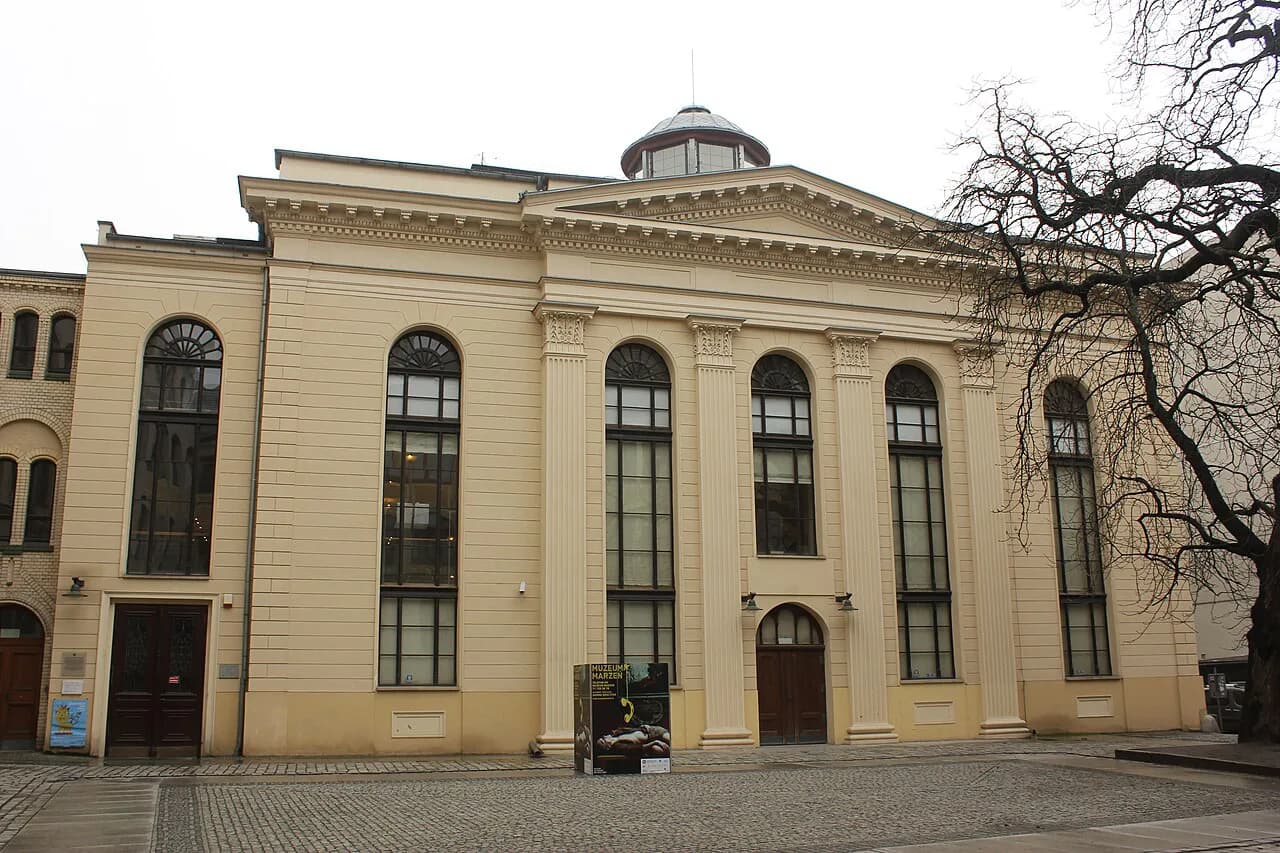
The White Stork Synagogue is the historic centre of Wrocław's Jewish community and, since its restoration, a cultural venue as much as a place of worship, so you come for the building, the small exhibition and whatever the concert calendar has on. It sits at ulica Pawła Włodkowica 7, in the old Jewish quarter just west of the Rynek. Allow 45 minutes to an hour for the interior, and rather more if you pair it with the rest of the District of Four Denominations.
The Polish name is Synagoga pod Białym Bocianem, the Synagogue under the White Stork, and locals use it far more often than the English. A quick check of the community's own programme before you go tells you whether a concert or an event has closed the main hall that day.
Where the synagogue sits on ulica Pawła Włodkowica
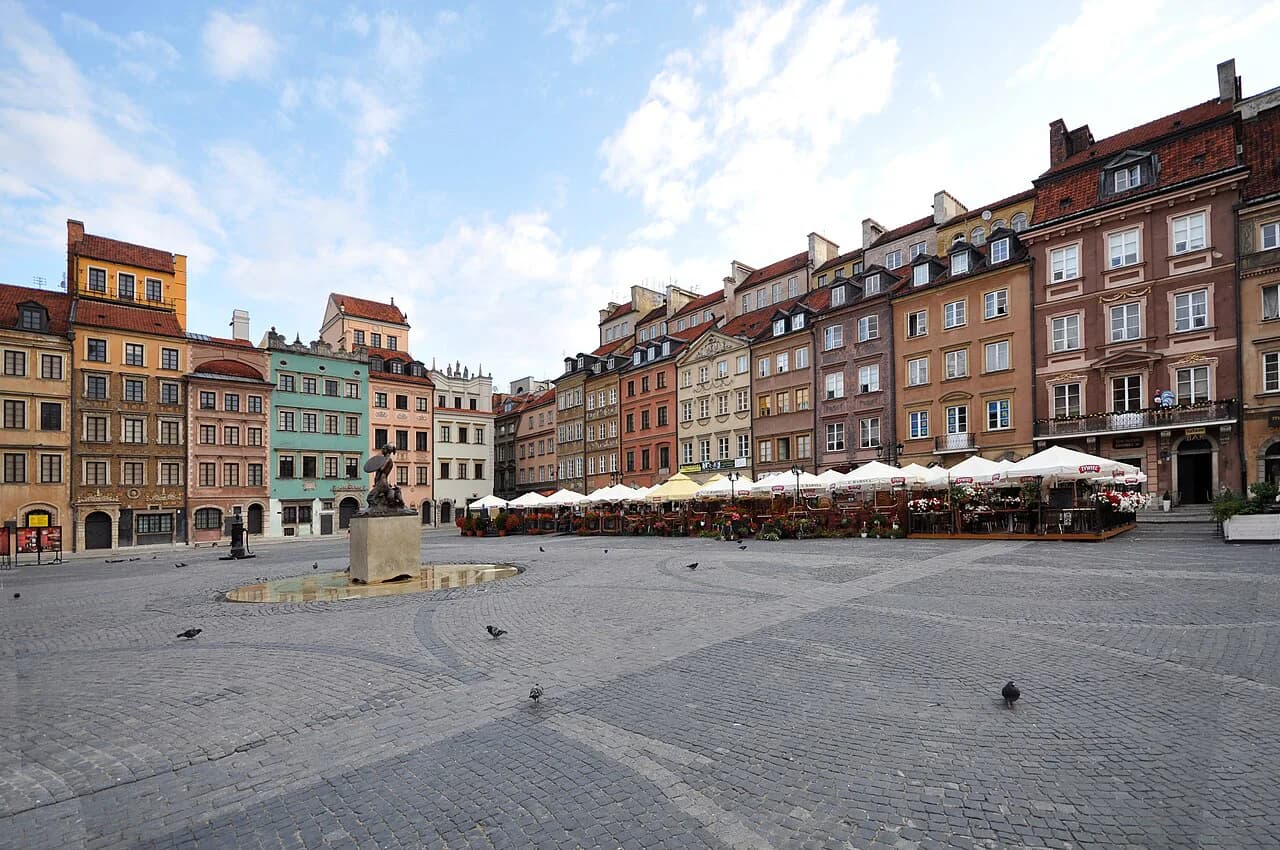
The synagogue stands on Pawła Włodkowica, a street that still carries the shape of the pre-war Jewish quarter, and the address is number 7. The Rynek is a short walk east, so it fits naturally at the start or end of a morning in the centre. Coming from the market square, you head west past the university quarter and pick up Włodkowica where the old streets narrow.
This is the anchor of the District of Four Denominations, the compact area around ulica Świętego Antoniego and Włodkowica where a Catholic church, a synagogue and other houses of worship stand within a few minutes of each other. It is small enough to walk in an hour and dense enough that you should not rush past the façades. The synagogue is the obvious starting point because the street itself takes its character from it.
If you are mapping a wider trip through the country, this is one stop among many worth planning in sequence; see Jewish Heritage in Poland for the fuller picture of what survives and where.
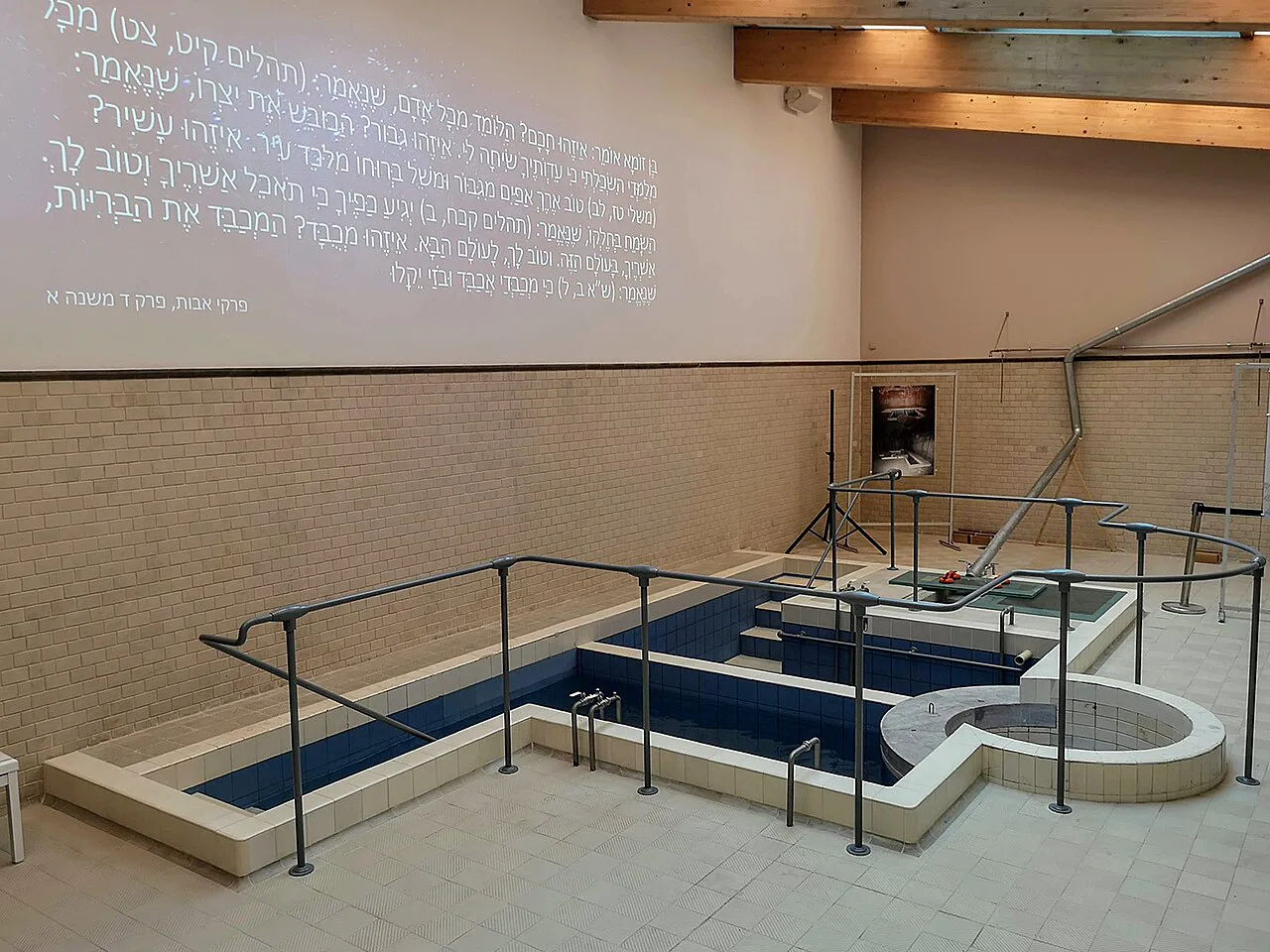
The building: Langhans's neoclassical design of 1829
The synagogue opened in 1829, designed by Carl Ferdinand Langhans, one of the leading architects in nineteenth-century Silesia and a man better known for theatres than for synagogues. The three-storey neoclassical façade was his work, and its restoration was completed in the 2000s. Knowing the date helps place the building: this is a piece of the same era that produced Wrocław's grand civic architecture, not a medieval survival.
Inside, the painter Raphael Biow and his son Hermann were responsible for the decoration, most of which has been lost. What you see today is largely a restoration, and it is honest about the fact: you are reading the volume of the room and the proportions of the galleries as much as the surviving paint. That distinction matters if you have been to older synagogues elsewhere and expect original surfaces throughout.
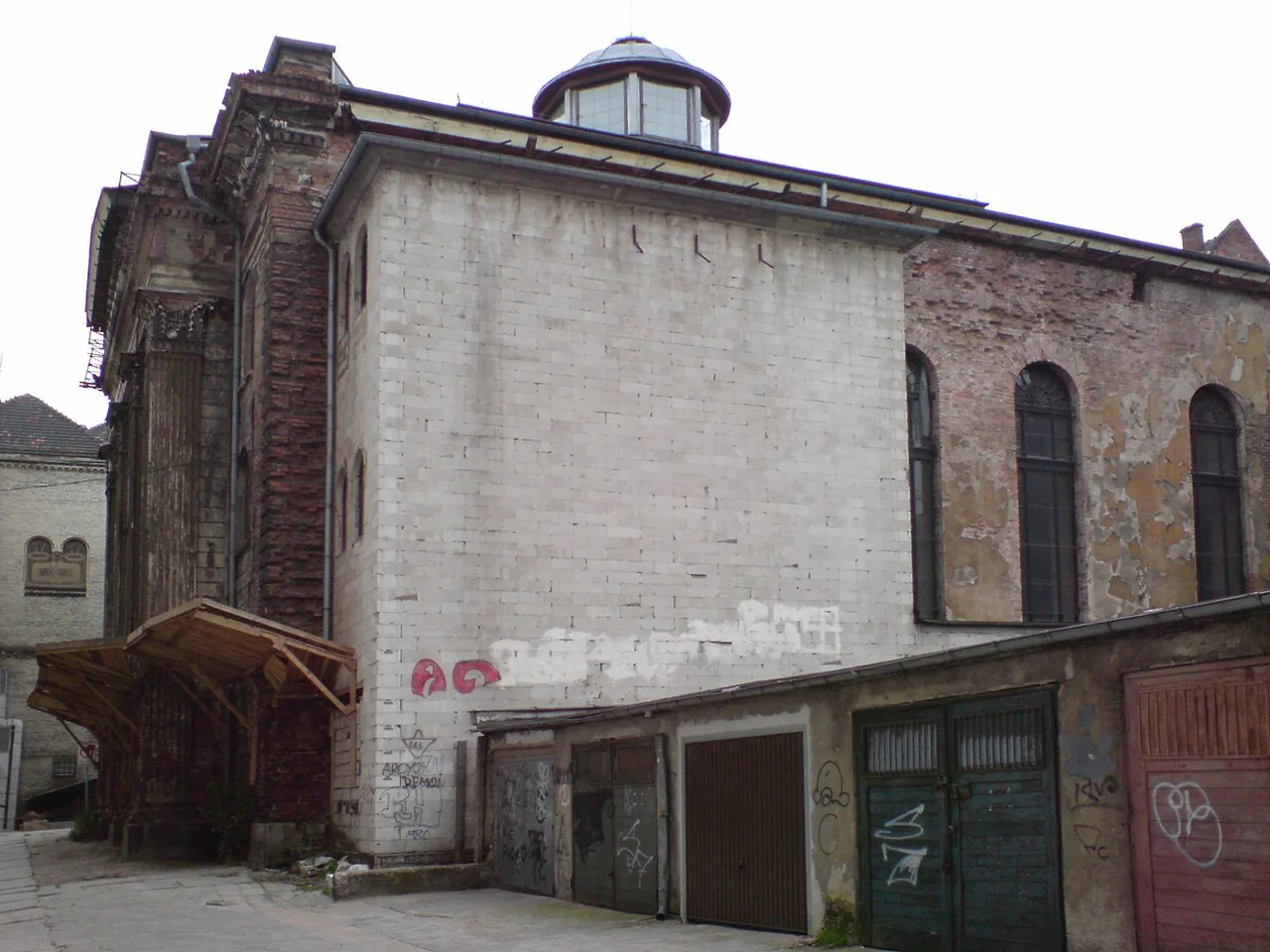
The Aron ha-Kodesh, the women's galleries and what survives
The main prayer hall is surrounded on three sides by women's galleries: two levels on the north and south walls and a single level on the east wall behind the ark. That arrangement shapes the whole interior, giving the room its height and its particular acoustic. Look up rather than straight ahead on your first circuit, because the galleries are the clearest surviving statement of how the space was used.
Almost nothing of the original fittings remains apart from the wooden frame of the Aron ha-Kodesh and the damaged tablets of the Ten Commandments above it. Those fragments are the reason to slow down at the east wall instead of treating the hall as an empty shell. Everything else you see is restoration, carried out over decades and still the subject of fundraising in the 2000s.
From prayer hall to library and back to the community
The synagogue stayed in use until 1974, when the authorities expropriated it from the community and handed it to the University of Wrocław as a library. In 1989 the university passed it to the Musical Academy, and in 1995 a private firm bought it before it was returned to the Jewish community. That sequence explains why so much of the original decoration disappeared and why the building feels both restored and rebuilt.
Restoration was on and off for years, and the turning point was the involvement of the Norwegian Jewish singer Bente Kahan and the foundation she established in 2006. The project drew substantial German funding, among the first Jewish heritage schemes in Poland to do so. By the end of the 2000s the aron ha-kodesh and the building itself were close to complete, and the synagogue reopened as a cultural centre.
The Wrocław Centre for Jewish Culture and Education
The building was restored around the Bente Kahan Foundation, which programmes concerts, lectures and educational events through the year. That is the practical difference between this site and a museum: the hall is sometimes set up for a performance or closed for a rehearsal, and the calendar decides what you can see. Check the centre's programme for the dates you are in town before committing a slot in your day.
A Jewish Museum devoted to the history of the Jews of Wrocław was planned as part of the restored building, and the Wrocław Centre for Jewish Culture and Education based here programmes cultural and educational events. Treat what you see as context for the room rather than a standalone museum visit. If you want the broader national story, the guide to synagogues in Poland covers which buildings are visitable, which are museums and which are still in congregational use.
Visiting: address, hours and whether to book
The address is Pawła Włodkowica 7, 50-072 Wrocław, and the building is open to visitors on a daytime schedule rather than a fixed all-day arrangement. Hours shift with the concert calendar and with Jewish holidays, so treat any listed time as a starting point and confirm with the centre before you travel. If you are travelling specifically for a performance, book through the centre rather than turning up on the night.
The centre can confirm current visiting terms by phone or through its own channels, so ask before you set out. Because this is a place of worship as well as a cultural venue, dress as you would for a place of worship and keep voices low in the prayer hall, and follow any signage about events in progress.
Allow 45 minutes for the hall and the exhibition at an unhurried pace. If a concert is scheduled, add the performance time and expect the building to be busier in the hour before it starts.
Fitting it into a Wrocław day
Build a two-hour loop: start at the synagogue, walk the length of Włodkowica, cut through to ulica Świętego Antoniego for the other denominational buildings, and finish at the Rynek for coffee. That route keeps the quarter as a single piece of the day rather than a detour. It works best in the morning, when the streets are quieter and the light in the hall is better.
If your interests run to cemeteries and memorials rather than buildings, the Okopowa Street Cemetery in Warsaw is the counterpart worth planning into a separate trip. And if you would rather have someone else handle the logistics, a Jewish tour Poland can string Wrocław together with other sites in one itinerary.
Should the synagogue be on your Wrocław list?
Yes, if you want one building that explains the quarter around it and gives you a reason to walk Włodkowica slowly. It is not a museum in the conventional sense, so go for the architecture, the small exhibition and, if the timing works, a concert. Skip it only if your day is already full of the Rynek and the islands, and you would rather leave the Jewish quarter for a return visit.
Explore more Poland guides
Frequently Asked Questions
Is the White Stork Synagogue a museum?
No. It is the centre of Wrocław's Jewish community and a cultural venue run by the Bente Kahan Foundation, with a small exhibition on the city's Jewish history. The prayer hall doubles as a concert space, which is why the programme affects what you can see on any given day.
When was the White Stork Synagogue built, and who designed it?
It opened in 1829, designed by Carl Ferdinand Langhans, one of the leading architects in nineteenth-century Silesia. The interior decoration was by the painter Raphael Biow and his son Hermann, most of which has since been lost.
Sources
- The White Stork Synagogue Tickets [2026] - Promos, Prices, Reviews & Opening Hours | Trip.com
- White Stork Synagogue Nineteenth-century ...
- Samuel Gruber's Jewish Art & Monuments: Poland: Wroclaw’s White Stork Synagogue Restoration Continues, Neo-Classical Façade (1829) by Carl Ferdinand Langhans now Complete
Notes for your next Polish city break
Optional updates to our Poland guides.
You might also like

Continue reading
More guides you'll find useful