Synagogues in Poland You Can Visit: Warsaw, Wrocław and More
A guide to synagogues in Poland you can visit, from Warsaw's Nożyk to Wrocław's White Stork, with what each is like and which day to avoid.
On this page
Two synagogues in Poland still work as places of worship you can step into on a city break: the Nożyk in Warsaw and the White Stork in Wrocław. The others you are most likely to meet are museum pieces, most famously the Old Synagogue in Kraków's Kazimierz district, which now belongs to the city's historical museum. This guide sorts them by what they actually are, so you know whether to expect prayer books or display cases, and it flags the one weekday that will trip up a Wrocław plan.
The synagogues that survived the war are now mostly museums and memorials, with only a few still in use. That makes the choice simpler than it looks: one working synagogue per city, plus a museum or two where you want the history set out properly. If you are building a wider itinerary, our Jewish heritage Poland guide covers the memorials, cemeteries and museums that sit alongside these buildings.
What you can see at a synagogue in Poland today
Three categories cover almost everything a visitor will encounter. A working synagogue serves a living congregation and may hold regular services, so you visit quietly around worship rather than touring it; a museum branch has displays, labels and set routes; a small exhibition space is usually a single room with modest content. Knowing which one you are walking into changes how long you need and what you should wear.
The practical upshot is that no two of these visits take the same amount of time. A working synagogue rewards fifteen quiet minutes and a look at the interior; a museum branch can absorb an hour or more if you read the panels. Plan them in that order of expectation and you will rarely be disappointed by a small space or rushed in a large one.
The Nożyk Synagogue in Warsaw: the city's only synagogue to survive the Second World War
The Nożyk is the only synagogue in Warsaw to have come through the Second World War standing. Zalman and Rywka Nożyk, wealthy Jewish philanthropists, paid for it as a gift to their community, and it was built between 1898 and 1902 to a design by the architect Leandro Marconi in Neo-Romanesque style. It was a small synagogue by the standards of the day, seating around 350, in a city that then had more than 400 synagogues.
Its survival was partly a matter of misuse. Under the German occupation it was used first as a stable and feed warehouse, which spared it from the early wave of demolition, and after it was absorbed into the so-called small ghetto it was cleaned, repaired and reopened in 1941. It was badly damaged during the Warsaw Uprising, and when the Germans demolished other synagogues in retribution afterwards, this small, damaged building was left standing.
Provisional repairs after the war made it the centre of worship for the city's small remaining Jewish community, but the Communist authorities closed it again in 1968 amid the antisemitic campaign that followed Władysław Gomułka's speech that year. Services continued in a single room nearby until a thaw in 1977 allowed extensive renovation, funded by the Ronald S. Lauder Foundation, and the synagogue reopened in 1983. A plaque in Polish and English inside sets out this history for visitors.
What a visit to the Nożyk involves
This is a working synagogue and the primary place of worship for Warsaw's Jewish community, hosting regular services including Sabbath and holiday ones, and occasionally concerts and special events. Treat it as a place of prayer first: keep voices low, do not wander while a service is running, and expect to see pews, prayer books and Hebrew inscriptions rather than museum labels.
It sits on a side street in central Warsaw, close enough to the city's other Jewish sites to pair with them in a single morning. The Jewish Cemetery on Okopowa Street, Warsaw is a much larger site a short ride away that rewards a separate hour; many travellers do both in one day and find the cemetery the more affecting of the two.
The synagogue is a short walk from the line of surviving ghetto wall fragments, which makes a natural pairing of building and memorial. Our page on the Warsaw ghetto wall explains where the remaining sections are and how to read them.
The White Stork Synagogue in Wrocław: a Neoclassical hall serving a living congregation
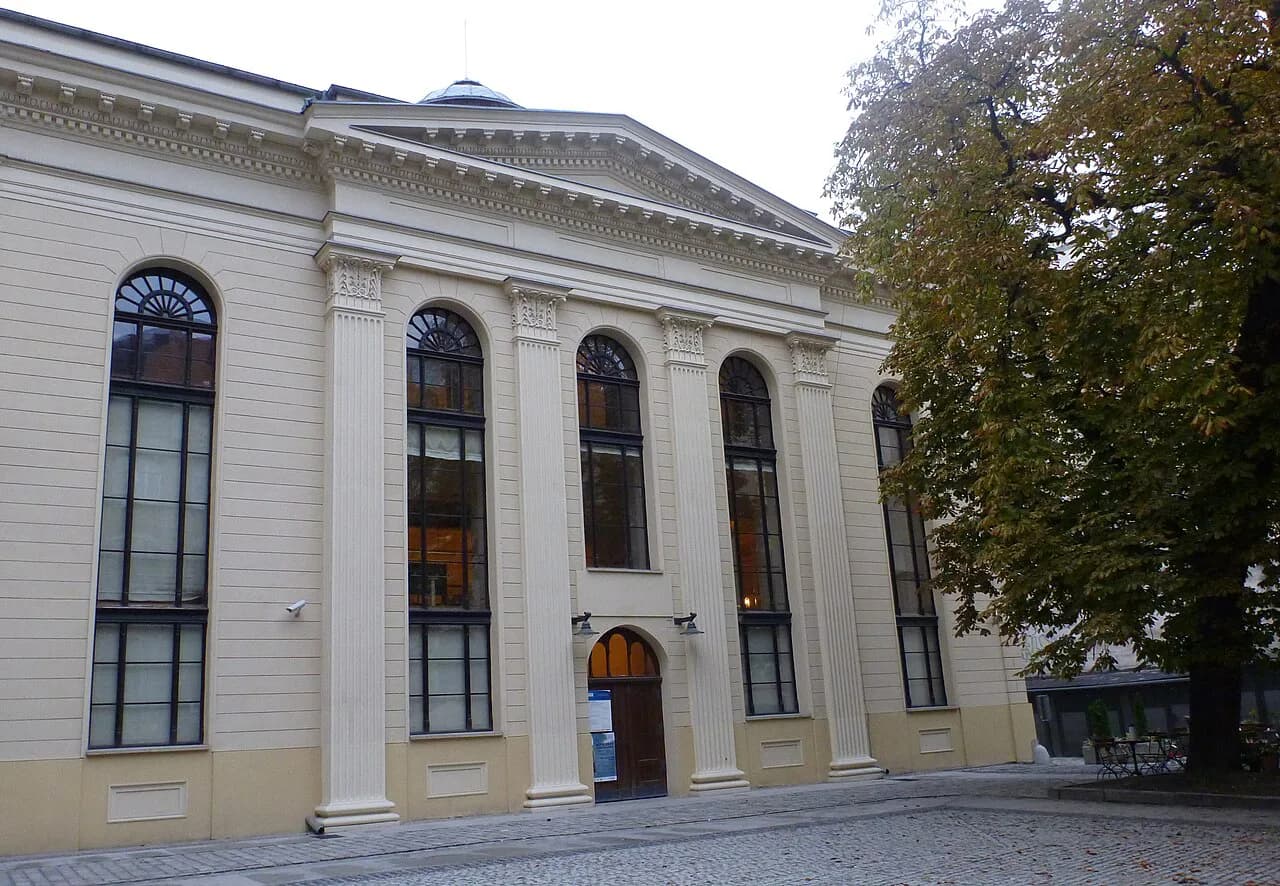
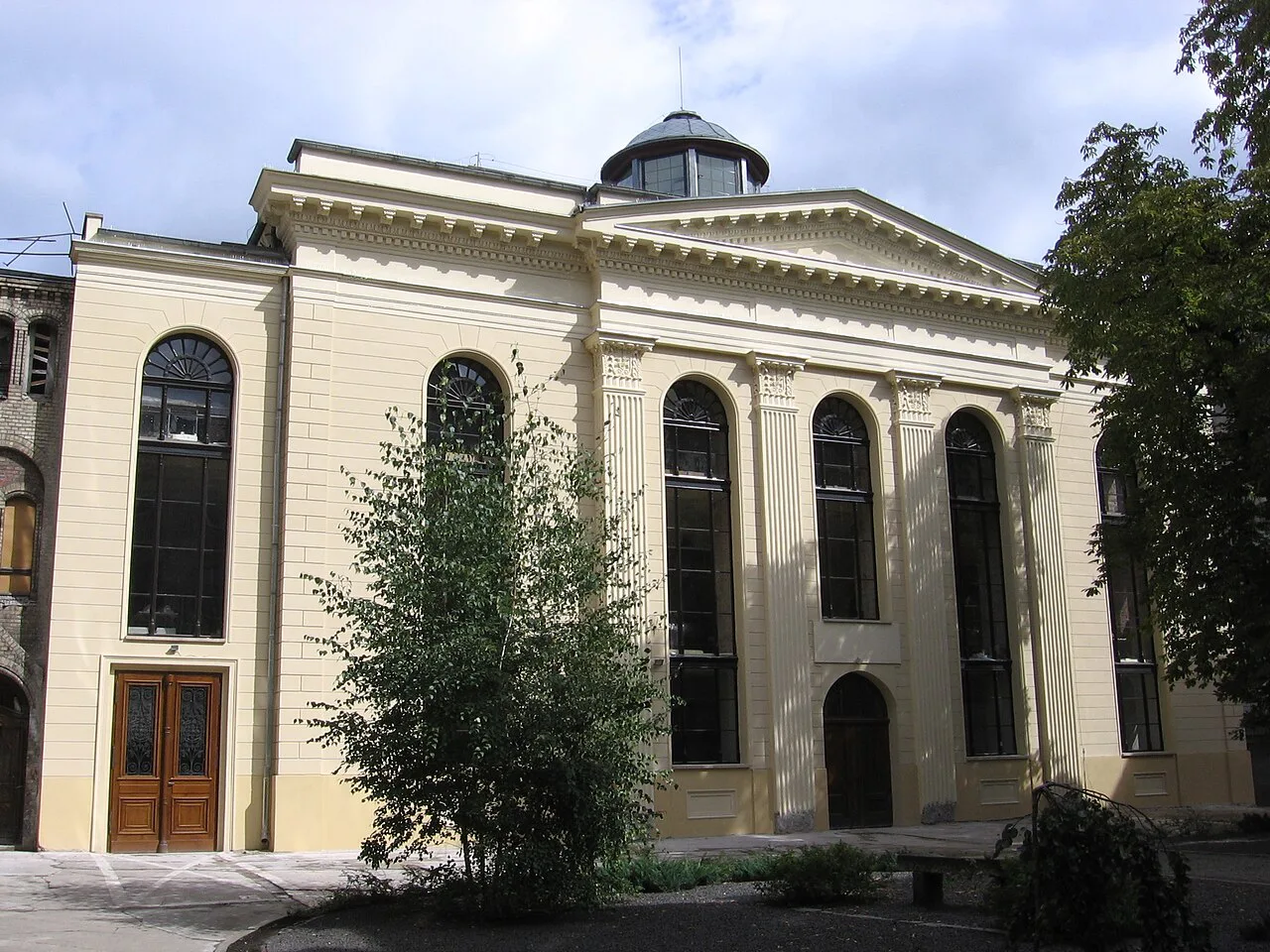
Wrocław's White Stork, completed in 1829, is a calm Neoclassical hall designed by Carl Ferdinand Langhans, and it serves a living congregation again. That single fact defines the visit: you are stepping into an active synagogue, not a gallery, so the atmosphere is quiet and the building is the attraction rather than an exhibition.
No online ticket is sold for it, so you cannot book ahead online; plan to visit around its opening times rather than treating it as a timed appointment. Build it into a walk through the surrounding streets, and you reduce the frustration of arriving to find the doors shut for a service or a private event.
Why the White Stork closes on Saturdays and how that shapes a Wrocław itinerary
The White Stork closes on Saturdays, which follows from its role as a working synagogue: Saturday is the Sabbath, when the congregation gathers for worship rather than visitors. Do not copy that rule across to every synagogue in Poland; it is the arrangement here, and each building keeps its own.
On a two-day Wrocław break, give the synagogue your first day and leave Saturday for the rest of the city. Wrocław's main square, the Rynek, and the riverside walks fill a Saturday comfortably, and the Panorama of Racławice and the university buildings take up the slack if the weather turns. Swap the order only if Sunday is your arrival day and you want the synagogue early.
One building rarely justifies a trip on its own, but this one sits close to the old town and takes under half an hour, so it slots in between bigger sights rather than competing with them. Read our White Stork Synagogue, Wrocław guide for what is inside and how the surrounding streets fit together.
The Old Synagogue in Kraków: a museum branch rather than a working synagogue
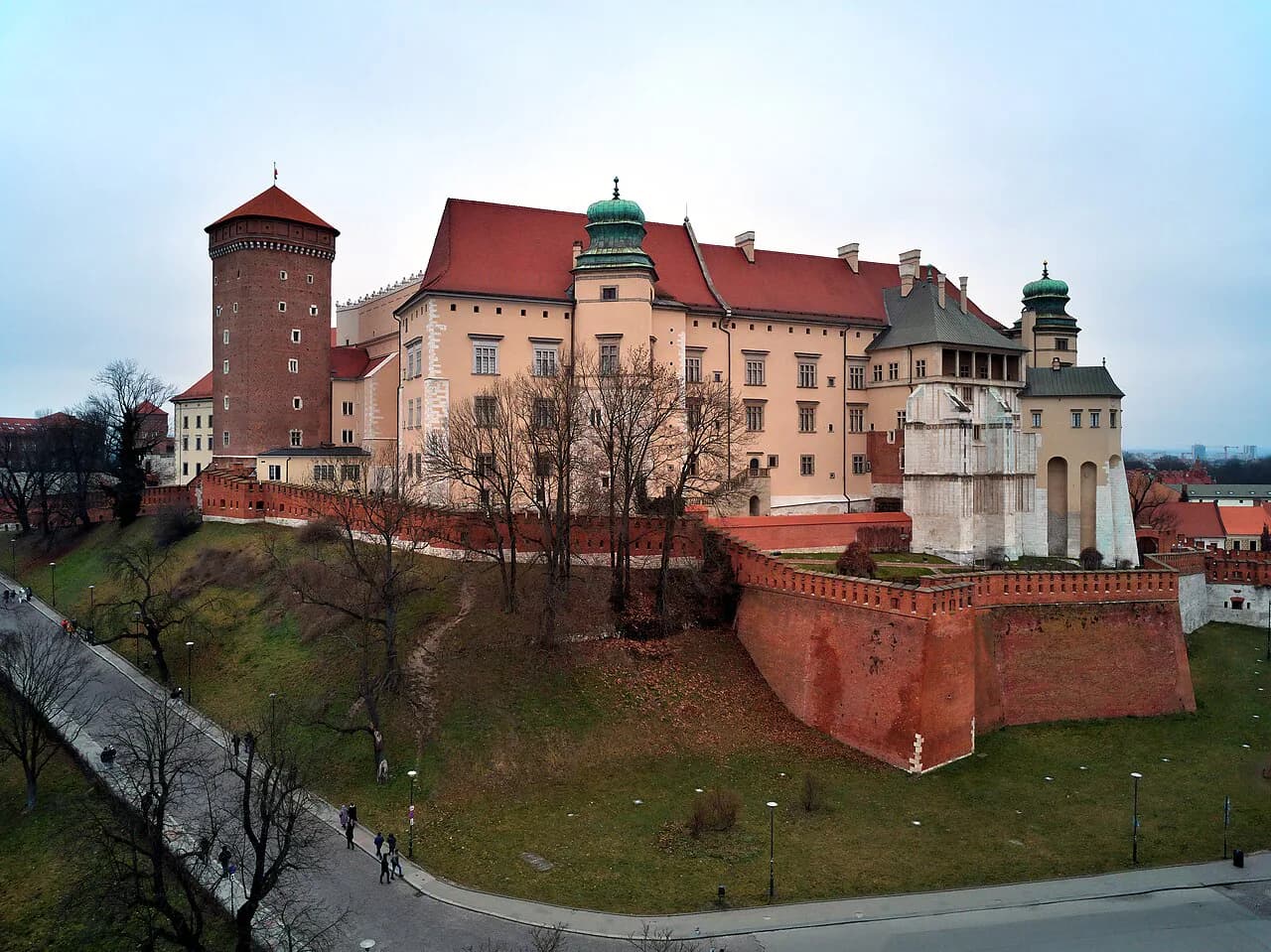
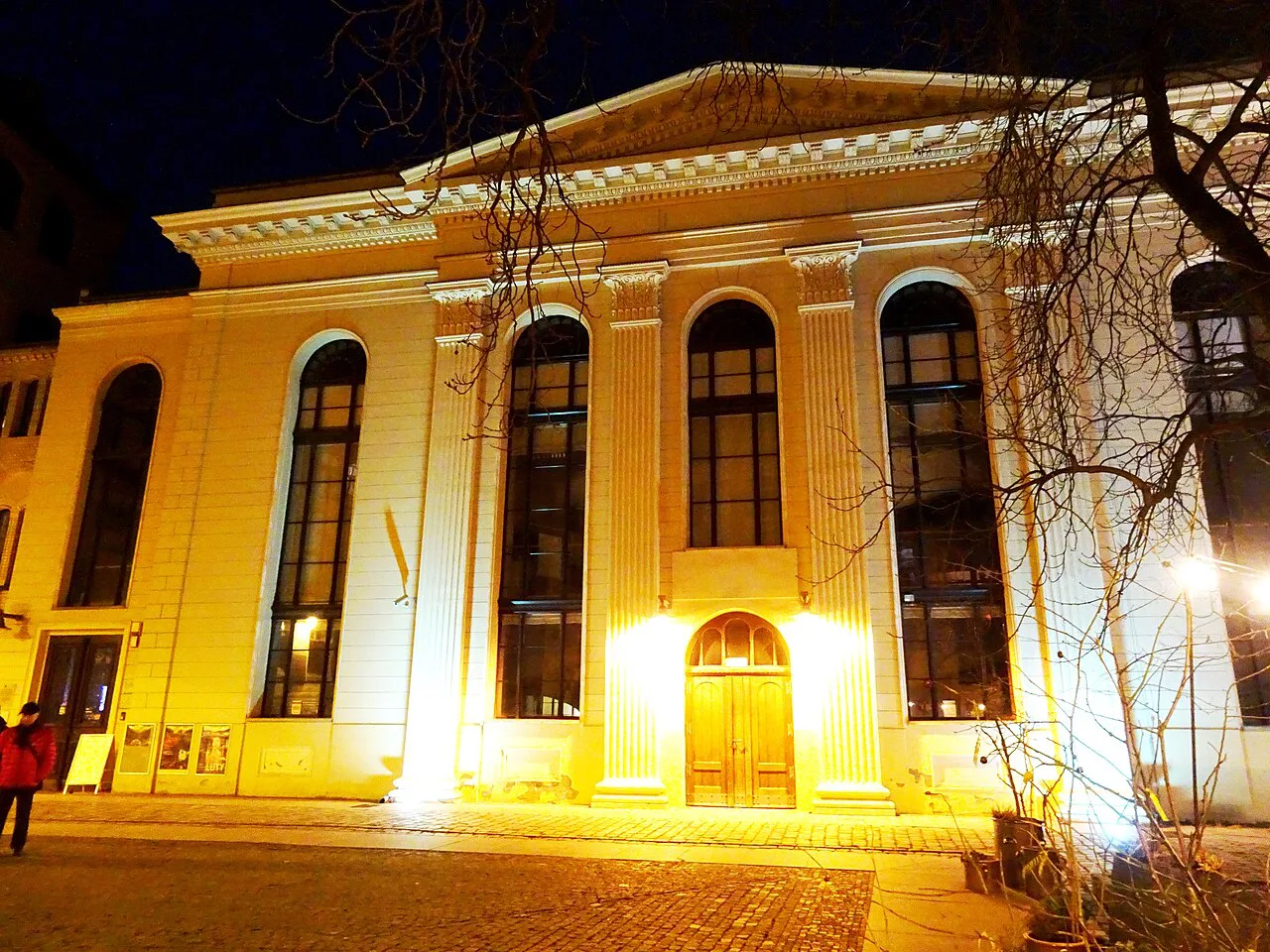
Kraków's Old Synagogue in Kazimierz, rebuilt around 1570 by an Italian architect in a fortress-like Renaissance style, is the oldest surviving synagogue building in the country. It is no longer a place of worship: it operates as a branch of the city's historical museum, with exhibitions and a ticket, so you visit it the way you visit a museum.
The displays cover Jewish life and ritual in the city and are the reason to come; the building itself, with its thick walls and high prayer hall, does the rest. Budget an hour if you read the panels, less if you are skimming on the way to somewhere else. The city's Jewish museums close one day a week, so check the day before you commit a morning to Kazimierz.
The High Synagogue in Kraków: a small exhibition space above former shops
The High Synagogue nearby raised its prayer hall above a row of shops, a compact arrangement that still shapes what you see inside. It now runs as a small exhibition space, and no ticket for it alone is sold online: you pay a modest sum at the door.
Be honest about the scale. This is a modest room, and making it the centrepiece of a day will disappoint; pair it with the Old Synagogue and treat it as the second stop. Two buildings in an afternoon is a sensible Kazimierz plan, with a walk along the surrounding streets filling the gaps.
Reading the pattern: working synagogues, museums and memorials
Set the four buildings side by side and a pattern emerges. Warsaw and Wrocław give you a living congregation and a survivor's story; Kraków gives you museum presentation of a community that the war destroyed. Neither is the more authentic experience, but they answer different questions, one about continuity and one about loss.
Warsaw's wider Jewish story is laid out at the POLIN Museum of the History of Polish Jews, which opened in 2014 and won the European Museum of the Year award in 2016; it traces a thousand years of Jewish life in Poland through to the post-war period. If you have time for only one indoor stop in the capital, that museum gives the context the Nożyk cannot.
Beyond these cities, smaller surviving synagogues sit in towns that were once heavily Jewish, and they are worth a detour if your route passes through. The Tykocin synagogue in the Podlaskie Voivodeship is the example to know about; our Tykocin page sets out what survives there and how to reach it.
How to plan a city break around one or two synagogue visits
For a one- to four-day break, pick one working synagogue and one museum. In Warsaw that means the Nożyk plus POLIN; in Wrocław, the White Stork plus the old town. If Kraków is your base, Kazimierz gives you both the Old and High Synagogues in one afternoon, and you can add the Galicia Jewish Museum nearby if you want more.
Timing matters more than duration. Working synagogues are best visited on weekdays when no service is scheduled, and Saturdays are out at the White Stork. Museum branches keep their own weekly closing day, which varies by venue, so check the day before you go rather than assuming.
Walking distances in these cities are short: the Nożyk is central, and the White Stork sits within reach of Wrocław's Rynek on foot. Build each visit into a neighbourhood walk rather than crossing town for a single room, and the day holds together without a rigid schedule.
What to keep in mind when visiting a working synagogue
Dress modestly, keep phones silent and cover your head if that is the custom of the congregation. If you are unsure what is expected, ask before entering the prayer hall. Photography during services is intrusive, so wait until the hall is empty.
Remember that services take priority. If the doors are open but a congregation is gathering, step back and return later rather than treating the room as a sight. Community centres attached to these synagogues run educational and welfare programmes, and their comings and goings are not part of the visit.
Which synagogue should you actually visit?
If you want a living congregation, the answer is Warsaw's Nożyk or Wrocław's White Stork; if you want the history laid out with labels, it is Kraków's Old Synagogue. A four-day break can comfortably include two of them alongside a cemetery or museum, and our Jewish Heritage in Poland guide helps you slot them into a wider itinerary.
Check the day before you go, particularly for Saturday closures and the weekly closing day at museum branches, and treat any working synagogue as a place of prayer first. That single habit of planning the visit around the congregation rather than your own schedule is what makes these visits work.
Explore more Poland guides
Frequently Asked Questions
Is there a synagogue in Warsaw?
Yes. The Nożyk Synagogue is Warsaw's only synagogue to have survived the Second World War, and it still serves as the main place of worship for the city's Jewish community. It hosts regular Sabbath and holiday services and occasionally concerts. Visitors are welcome to look around outside service times, dressed modestly and with heads covered where that is the custom.
What are Jews from Poland called?
There is no single term. Polish Jews, or Jews of Polish descent, covers the community that lived in Poland for centuries and its descendants around the world. In Hebrew, the traditional term for Jews of Central and Eastern European descent is Ashkenazi, and most Polish Jews before the war were Ashkenazi.
What is the difference between the Old Synagogue and the White Stork?
The White Stork in Wrocław is a working synagogue, so you visit a living congregation and around its services. Kraków's Old Synagogue is a museum branch of the city's historical museum, with exhibitions and a set route. One gives you continuity, the other gives you the history laid out with labels, so choose according to what you want from the visit.
Sources
Notes for your next Polish city break
Optional updates to our Poland guides.
You might also like

Continue reading
More guides you'll find useful