Kazimierz Dolny: Poland's Renaissance Town on the Vistula
Plan a day in Kazimierz Dolny: the arcaded market square, castle tower, loess gorges and Vistula views, plus how long to allow and when to come.
On this page
Kazimierz Dolny is a small Renaissance town on the Vistula, and one full day is enough to see its market square, climb to the castle tower and walk at least one of its loess gorges. It works best as a day out from Lublin rather than a multi-day break, because the historic core is compact and the sightseeing sits within a short radius. This guide covers the named sights, the uphill sections, the town's art and Jewish heritage, and how to budget your legs as well as your hours.
What Kazimierz Dolny is and where it sits
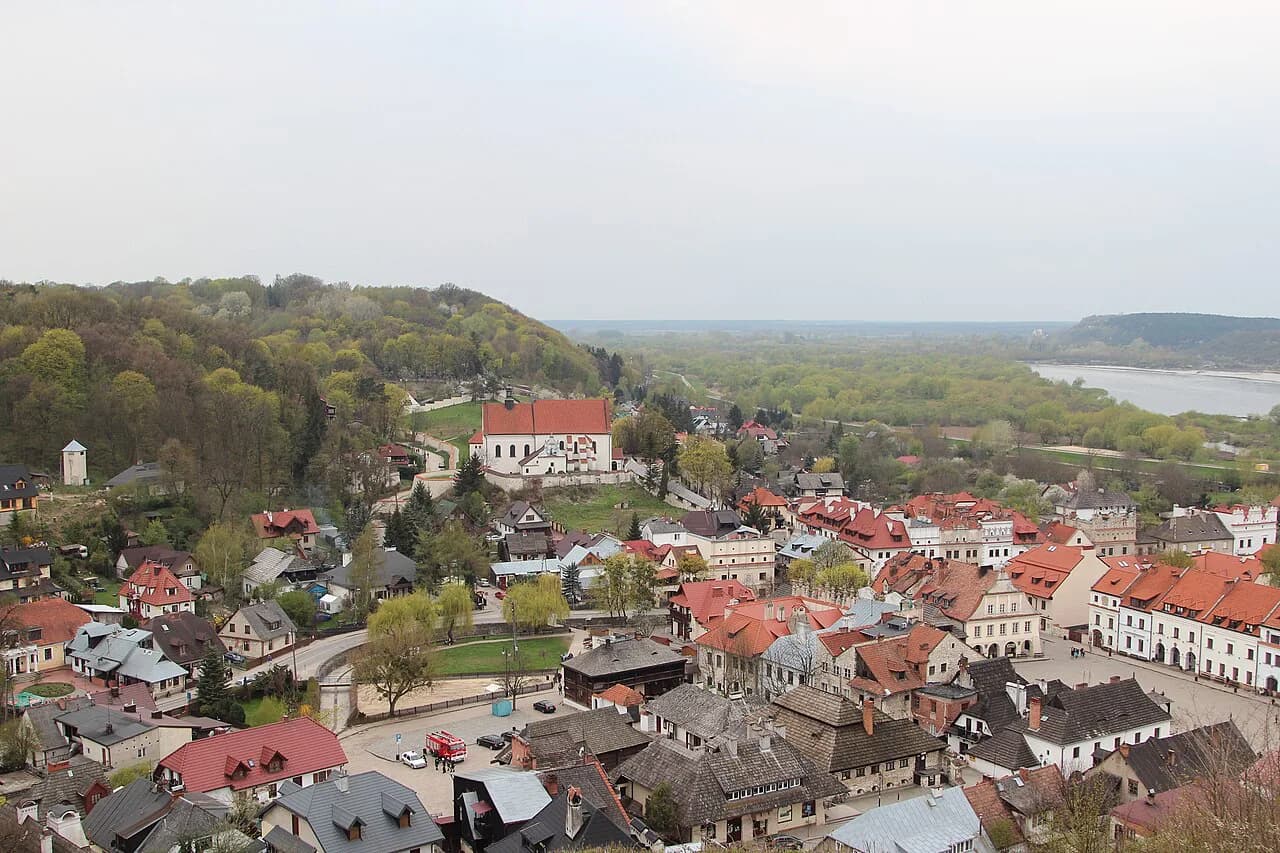
The town lies on the Vistula, with a market square and arcaded houses at its centre and a ring of loess gorges and hills around it. The municipal authority describes Kazimierz Dolny as a place of art and festivals with more than a hundred monuments, and claims the largest concentration of gorges in Europe, an assessment it makes for its own area.
For a traveller based in Lublin, Kazimierz Dolny is the natural full-day escape; from Warsaw it is a longer outing but still doable with an early start you arrange yourself. The town rewards a single unhurried day more than a rushed half-day, and it does not need the multi-day planning of a city break. If you are weighing it against other small Polish towns, it belongs in the same conversation as the most beautiful towns in Poland.
Plan your base in Lublin first, since the city gives you several days of sights and Kazimierz Dolny slots in as a single excursion. A Lublin City Break Guide covers the Old Town, castle and the rest of the city so you can leave one clear day free for the Vistula.
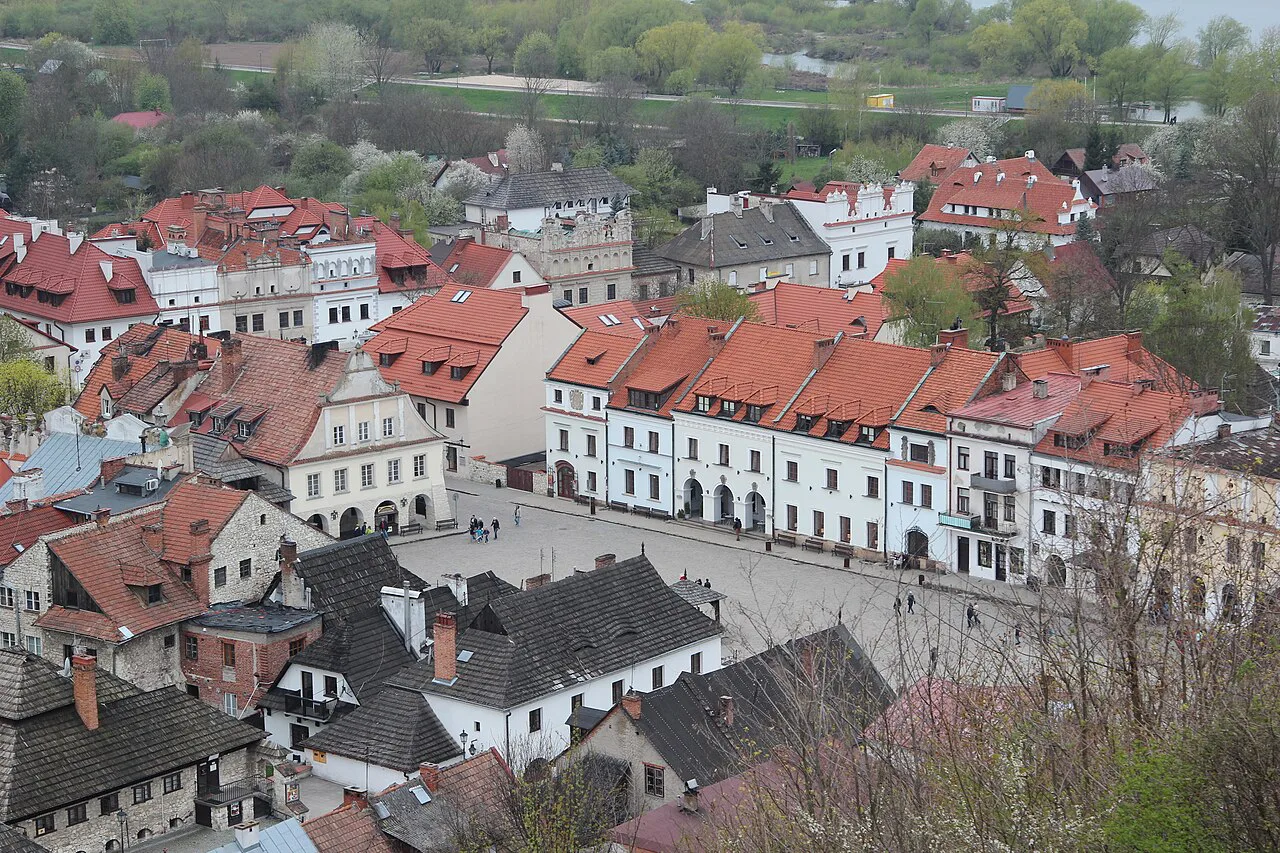
The market square and Mały Rynek
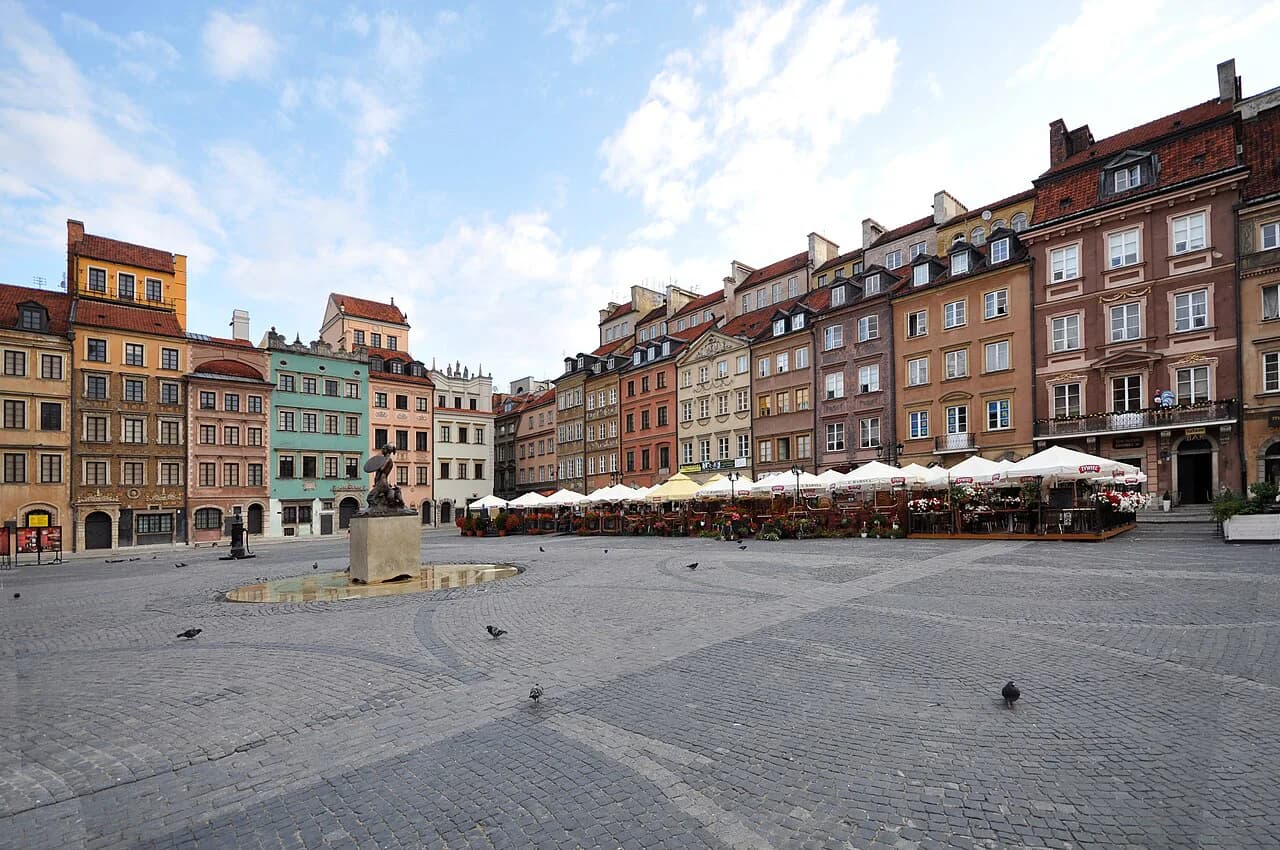
Start in the centre, where the market square and the smaller Mały Rynek set the tone: arcaded houses, painted fronts and a well-worn cobbled floor. The town's attraction listing names individual buildings rather than lumping them together, including Kamienica Biała and Kamienica pod św. Mikołajem i Krzysztofem, so you can pick them out as you walk.
Allow an hour or so to circle both squares slowly, looking up at the attics and down at the arcades, because the pleasure here is architectural detail rather than any single interior. The centre is small enough to walk twice, and a second pass in different light is often more rewarding than pressing on uphill immediately. Local history writing records the market square and narrow streets as the heart of the pre-war town, which is why they carry most of its atmosphere.
The castle and the Baszta tower
Above the square, the castle ruins and the Baszta tower are the town's landmark climb, and the attraction listing names both as separate sights. Expect a short but steady ascent from the market square, then open ground around the ruins with the tower as the high point of the visit.
The ruins are exactly that: weathered walls and foundations rather than reconstructed interiors, so come for the position and the view back over the rooftops rather than for furnished rooms. Check the castle and Baszta tower listings for current opening days and tickets before you set out, since Polish museums commonly close one day a week and this is where a wasted climb would hurt.
The loess gorges
The wąwozy, or gorges, are the town's other signature: narrow lanes cut between high loess walls, some of them walkable straight from the edge of the centre. The municipal authority notes the unusual proximity of architecture and wild landscape here, and the gorges are the clearest expression of that pairing.
Pick one or two gorges close to the centre rather than trying to cover the whole network, because the walking adds up quickly once you are on the slopes. Roots and loose soil make the paths uneven after rain, so footwear with grip matters more than distance. The most convenient gorges are the ones that begin within a few minutes of the market square, which keeps the day manageable.
Uphill viewpoints and Góra Trzech Krzyży
Góra Trzech Krzyży, the Hill of Three Crosses, is the classic viewpoint above town, and it appears in local memory as a childhood playground on the slopes over Kazimierz. The climb is the price of the panorama back across the roofs to the Vistula, and the reward is the view rather than any structure at the top.
Budget your legs here: the market square, castle and gorges already involve slopes, so pick either the hill or the castle tower if you are short of time or energy. Both give you the town from above, and doing both in one day makes for a lot of up and down. Late afternoon light is the reason most people choose the hill last.
Churches and the Plebania Góra heritage
The farna church, the parish church, anchors the town's religious life and hosts summer organ concerts, according to the municipal site. It sits within the compact centre, so it fits naturally into a walk between the squares rather than needing its own expedition.
On the south-western side of town, Plebania Góra carries the former Reformati church with its small cemetery, and a 1926 account describes the hill and the old watchtower that once stood there. This is a quieter, more contemplative stop away from the market square crowds. Treat the cemetery with the usual respect and keep to the paths.
Jewish heritage and the sztetl
Before the war Kazimierz Dolny had a substantial Jewish community, and the town's Jewish past is documented through memoir and local history rather than through a single museum. The local history site carries a section on the sztetl, with accounts of Jewish painters who came to work here, including Natan Szpigel, and a memoir by Mordechai Canin recalling the ruined town after the war.
Approach this material as history to read rather than as a sight to tick off: the accounts are personal and often painful, and they reward a slower pace than the viewpoints. If you want context before you arrive, the sztetl and history sections of the local history site are the place to start, and they set the town's artistic reputation in a deeper frame. There is no need to seek out any single memorial to engage with this past.
Galleries, art and festivals
Kazimierz Dolny's reputation rests on its art colony as much as its monuments, and the municipal site describes dozens of galleries, a confraternity of artists and a calendar of festivals. Names it gives include the Dwa Brzegi film and arts festival, the summer organ festival in the parish church (kościół farny), the Festival of Folk Bands and Singers, and Kazimiernikejszyn.
Festival dates and tickets change each year and are announced by the organisers, so confirm them before you build a trip around one. A quiet midweek visit feels markedly different from a festival weekend, when the centre fills and galleries stay busy. If your priority is looking at art rather than joining a crowd, choose a weekday and give the galleries an hour.
How long to allow
A half-day covers the market square, Mały Rynek and one gorge at a stroll; a full day adds the castle and tower, a viewpoint and time in the galleries. The centre itself is minutes across, so the time goes on the uphill sections and on how long you linger in galleries and churches rather than on distance.
If you are coming from Warsaw, the travel itself eats a large part of the day, so treat the visit as a full day out and drop either the hill or the castle if you run short. From Lublin you have more slack and can do both. Either way, one day is the honest allocation for this town.
When to come
Summer brings the festival calendar and the fullest squares, while spring and autumn give you the gorges and viewpoints with fewer people and softer light. The town's cultural season is concentrated in the warmer months, with the parish church organ concerts described as a summer fixture.
Weekdays are calmer than weekends, and if you are combining Kazimierz Dolny with Lublin, put the town on a weekday and keep the city for the weekend. Weather on the exposed hills changes quickly, so keep a layer for the climbs even in fine months.
Practical points for the day
Poland uses the złoty, so carry some cash for small galleries and cafés even where cards are accepted. The centre is compact and walkable, but the gorges and viewpoints involve real climbs on uneven ground, which is where you should spend your planning effort. Confirm opening days for the castle, tower and any gallery before you travel, since weekly closing days are common in Polish museums.
Getting there and back
Kazimierz Dolny is reached from Lublin or Warsaw by road, and the town is small enough that you arrive, walk and leave without needing local transport. Timetables and fares for buses and trains change, so arrange your connection directly with the operator rather than relying on any fixed schedule. If you are building a wider Polish trip, Sandomierz is another compact town in the same region worth comparing for a similar day out.
Is Kazimierz Dolny worth a day of your Polish trip?
Yes, if you are already in Lublin or can spare a full day from Warsaw: the market square, castle and a gorge fill a day without padding. It is not a substitute for a city break, and one day is the right unit of time here.
Go midweek, climb either the castle tower or Góra Trzech Krzyży rather than both, and leave room for a gallery and a slow circuit of the squares. Check the castle and tower listings for current tickets and opening days before you set out.
Explore more Poland guides
Sources
Notes for your next Polish city break
Optional updates to our Poland guides.
You might also like

Continue reading
More guides you'll find useful