
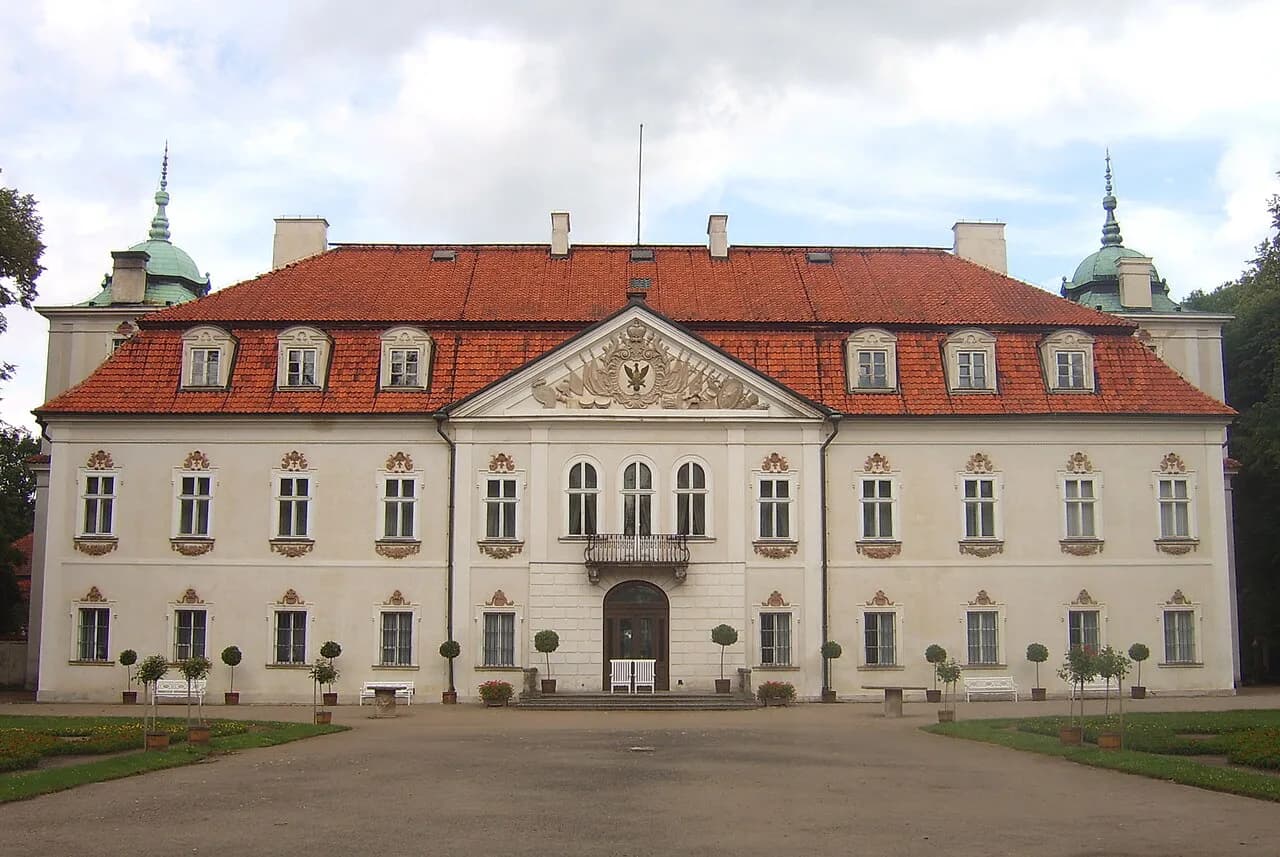
Nieborów Palace: The Radziwiłł Residence and Arkadia Garden
Nieborów Palace is a baroque Radziwiłł residence near Łowicz with formal gardens, historic interiors and the romantic Arkadia park a short drive away.
On this page
Nieborów Palace needs most of a day, and two visits if you want the interiors and Arkadia without rushing. It is a baroque Radziwiłł residence run as a museum near Łowicz, between Warsaw and Łódź, and it comes with two quite different gardens: the formal French layout beside the palace and Helena Radziwiłł's romantic landscape park at Arkadia. This guide covers what is inside, how the two gardens differ and how to split your time.
What Nieborów Palace is and where it sits
Nieborów is a village with a palace complex rather than a city sight, sitting in the countryside near Łowicz between Warsaw and Łódź. That position shapes the trip: you cannot fold it into a city-break morning, and you need a car or a deliberate plan to reach it. Treat it as a half-day or full-day excursion from whichever of the two cities you are based in, and pair it with something else in the region rather than expecting an afternoon in town.
The museum is part of the National Museum in Warsaw, which runs Nieborów Palace and Arkadia as one institution with separate visitor information, tickets and tour arrangements for each. If you are comparing Polish residences, the wider set of palaces in Poland ranges from city-based castles to country estates like this one, and Nieborów sits firmly in the country-estate category. The palace and the park are toured as two things, not one ticket in one place.
The palace's story in brief
The present baroque palace was built for Cardinal Michał Stefan Radziejowski, who bought the grounds in 1694 and reused the walls of an older mansion in a design by Tylman van Gameren, as the museum's own history sets out on its page about the history of Nieborów Palace. The site itself goes back much further, to a settlement founded at the end of the 12th century and a village with a wooden mansion and a church recorded in 1314. That layering of medieval origins and a seventeenth-century baroque shell is what you are looking at when you walk up to the facade.
The palace's golden age came under Duke Michał Hieronim Radziwiłł, who acquired Nieborów in 1774 and assembled collections of European paintings, portraits, several thousand engravings and old prints from the sixteenth century onwards, along with Polish, English and French furniture, silver, porcelain, glass and fabrics. The interiors were reworked in rococo and early classicist styles in the decades around 1770 to 1784. Later heirs divided the estate, ran it down and sold parts of the collection abroad before Michał Piotr Radziwiłł bought it back in 1879 and restored the palace and library.
Janusz Radziwiłł, owner in the interwar years, rebuilt interiors including the Venetian Chamber and the Tobacco Room between 1922 and 1929 and added a third floor, making Nieborów a residence visited by public figures. During the Nazi occupation he was involved in resistance activity and was imprisoned by the Soviet NKVD twice, in 1939 and again from 1945 to 1947, while his son Edmund and Edmund's wife Izabela managed the estate and took part in the Home Army resistance around Łowicz. What survives on display is the palace and its collections rather than a separate wartime exhibition.
What you see inside
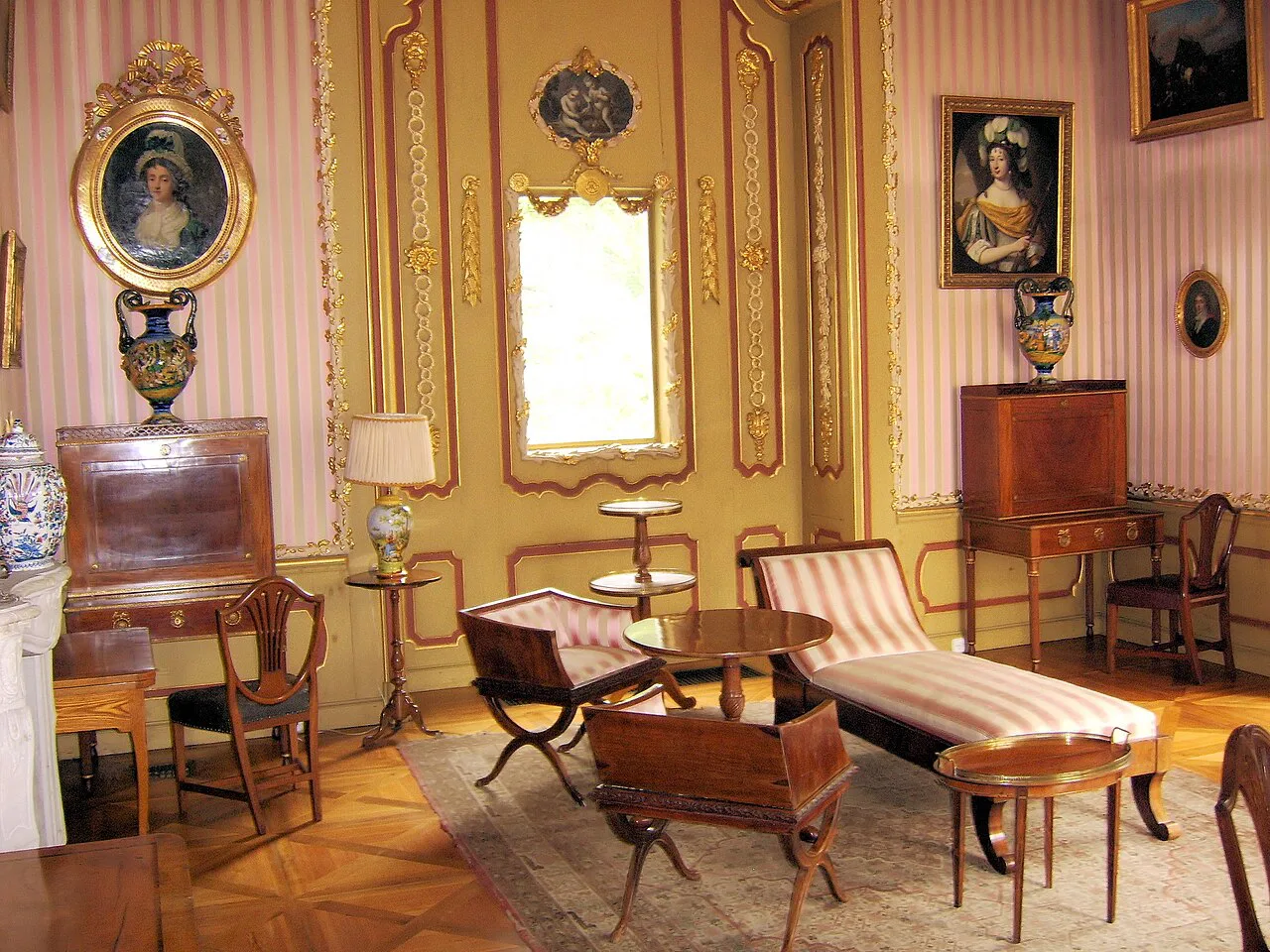
The interiors span several centuries of redecoration, so read the rooms as layers rather than a single period. Cardinal Radziejowski's baroque building was reworked in rococo style for Michał Kazimierz Ogiński in the years 1766 to 1768, and Szymon Bogumił Zug rebuilt rooms in early classicist taste in 1784, among them the Yellow and Green Cabinet and the Voivode's Bedroom. Janusz Radziwiłł's interwar work added the Venetian Chamber and the Tobacco Room.
The collection is the reason to slow down inside: European paintings, a portrait gallery of Polish and foreign figures, old prints and a library, plus decorative arts in silver, porcelain, glass and textiles. A majolica workshop belongs to the estate's story, revived under Michał Piotr Radziwiłł in the late nineteenth century, and the museum still lists a Majolica Workshop among its activities. How much of the collection is on show at any time depends on the display, so check the museum's own pages for what is currently open.
The formal French garden
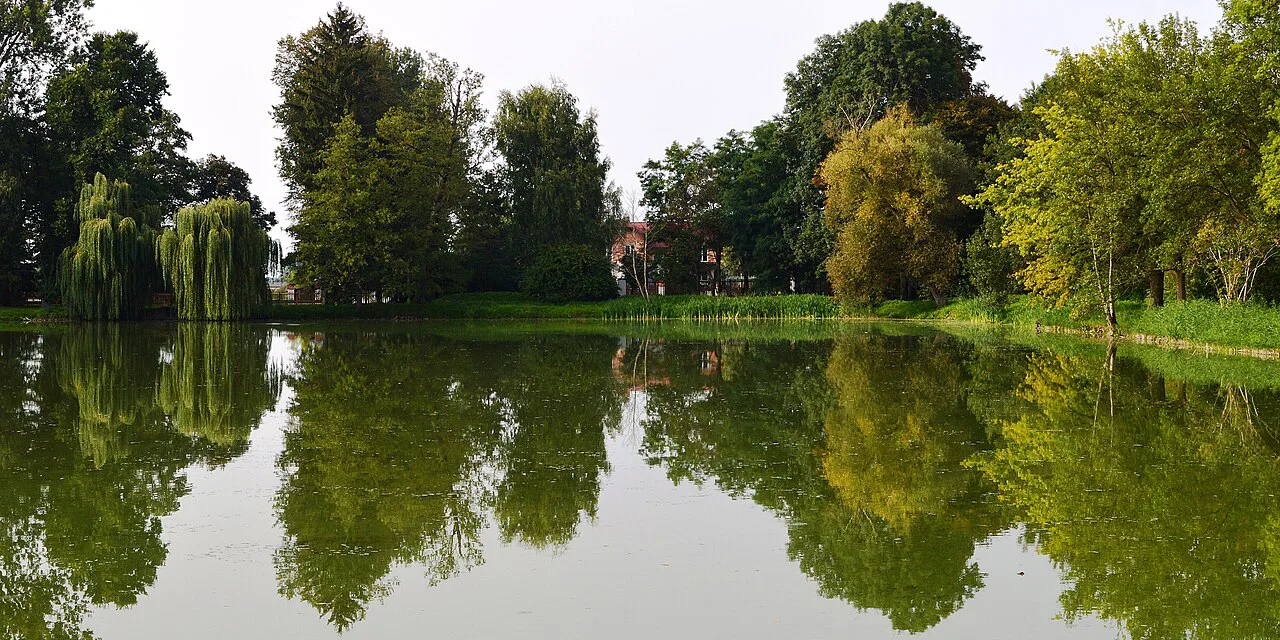
The garden immediately around the palace is a regular French layout, founded by Szymon Bogumił Zug for Michał Hieronim Radziwiłł at the start of the 1770s. It is the ordered counterpart to Arkadia: geometric, close to the house and best understood as part of the residence rather than a separate attraction. Walk it before or after your palace tour, since it needs far less time than the interiors.
Garden visiting at Nieborów and Arkadia falls under the museum's garden regulations, which cover how visitors move through the grounds. Read those regulations on the museum site if you plan to spend time in the gardens rather than only touring interiors, and note that ceremonial and wedding sessions also take place here, which can affect access to parts of the grounds on some days.
Arkadia: Helena Radziwiłł's romantic landscape garden
Arkadia is a separate garden, founded by Helena née Przeździecka, the wife of Michał Hieronim Radziwiłł, in the English romantic style and named by her. She filled its pavilions with a collection of art largely from ancient Greece and Rome, which makes it a landscape garden built around classical references rather than a botanic collection. It is the reason to give Nieborów a full day: the mood and the design language are entirely different from the formal garden by the palace.
Arkadia's fortunes followed the family's. Zygmunt Radziwiłł sold the garden with its unique furnishings, and Michał Piotr Radziwiłł bought it back in 1879 as part of his restoration of the estate. That history explains why the park reads as a reconstruction as much as an original composition. It is managed with the palace by the same museum, with its own tour arrangements.
Palace and Arkadia tours: how to split the day
The palace and Arkadia are distinct visits with separate tour pages on the museum site, so plan them as two bookings rather than one continuous walk-through. Put the palace interiors first while you are fresh, then drive or move to Arkadia for the garden, which rewards unhurried walking rather than a guided dash. If you only have half a day, choose one: the interiors for collections and rooms, Arkadia for landscape and classical pavilions.
The museum publishes separate pages for palace tours, Arkadia tours and garden visiting, plus visitor information and tickets, which is where group arrangements and any tour language options appear. Photography rules are separate from visiting: stock images of the palace are widely licensed, but that tells you nothing about what is permitted inside. Confirm photography rules through the museum before you rely on taking pictures indoors.
Getting there from Warsaw or Łódź
Nieborów lies in the countryside near Łowicz, between Warsaw and Łódź, and the museum publishes address and directions rather than a city-centre location. Plan on a car or an arranged lift for the final stretch, and build in slack for rural roads and parking. Use the museum's directions together with a live map on the day, because road works and local access change.
For scale, treat Nieborów as a day out from either city, not an add-on to a museum morning. If you are touring Polish residences, Łańcut Castle in the south-east is a very different proposition, a castle in a town with its own visiting rhythm, and comparing the two helps you decide how much of your trip to give to country estates. Other options such as Pszczyna Castle or Kórnik Castle work better as stops on a longer route than as substitutes for Nieborów.
If you are assembling a palaces itinerary across Poland, group Nieborów with Warsaw or Łódź rather than with the western estates. Rogalin Palace near Poznań and Kozłówka Palace in the east each anchor a different region, and hopping between them in one day makes no sense. Build the trip around one base and one or two estates per day.
Tickets and visitor information
Tickets, opening arrangements and tour times are published by the museum on its tickets and visitor information pages rather than fixed here, since they change with the season and with what is open. Check those pages for the palace, for Arkadia and for the gardens before you commit to a date, and book tours in advance where the museum offers that option. If you are travelling specifically for the interiors, confirm they are open on your chosen day rather than assuming.
The museum also runs temporary exhibitions and events alongside the permanent palace and garden visits, so your date may bring something extra or close off part of the site. Check what's on before fixing the day if you have flexibility. For anyone weighing up a longer Polish palace trip, the broader Palaces in Poland overview helps you slot Nieborów into a sensible route.
Should you give Nieborów a full day?
Yes, if you want both the palace interiors and Arkadia, because the two are toured separately and each deserves proper time. If your schedule is tight, pick the interiors for the collections and the Radziwiłł story, or Arkadia for the romantic landscape and its classical pavilions, and leave the other for a return visit. Either way, confirm tours, tickets and garden access through the museum before you travel, and build the day around a car rather than public transport assumptions.
Sources
Notes for your next Polish city break
Optional updates to our Poland guides.
You might also like



Continue reading
More guides you'll find useful





