Kozłówka Palace: Visiting the Zamoyski Museum Near Lublin
Kozłówka Palace is a Baroque Zamoyski residence near Lublin, now a museum with a palace and park complex. Here is what to see and what to expect.
On this page
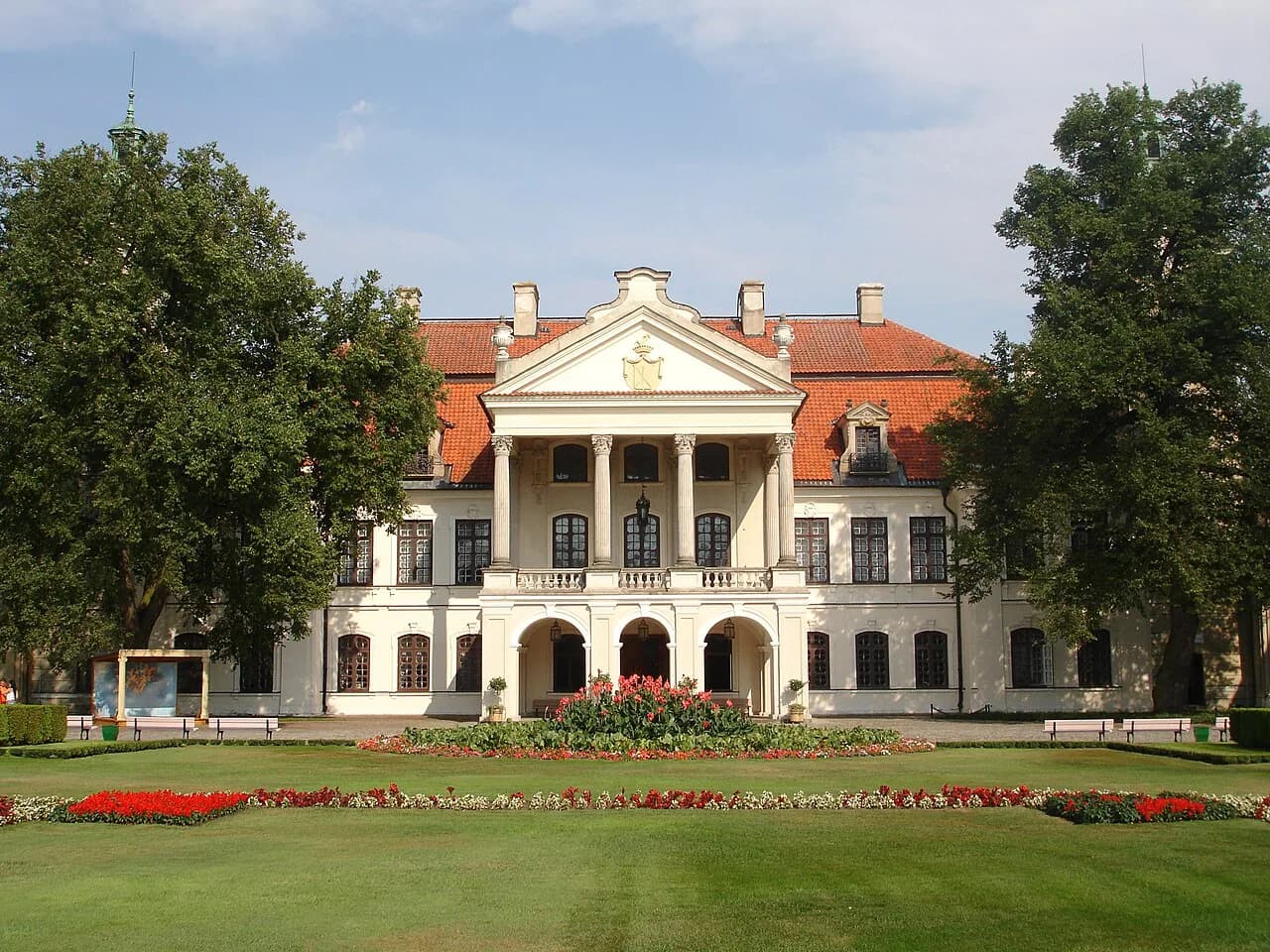
Kozłówka Palace is worth a half-day if you are in Lublin and want a Baroque country residence rather than another Old Town square. The palace and park complex holds the Zamoyski family interiors and a gallery of socialist realist art, alongside restored outbuildings, a theatre and stables. This guide sets out what the ensemble includes, how to walk it, and how long to allow.
Kozłówka has the scale and setting of a magnate's residence, but it is not a full day in the way that Łańcut Castle is. Plan for two to three hours on site, and treat the palace interiors and the socialist realist gallery as the two things to prioritise.
What Kozłówka Palace is and where it sits near Lublin
Kozłówka is a village in Lubelskie, north-west of Lublin, close enough for a half-day out from the city. The palace was built between 1736 and 1742 for Michał Bieliński, Voivode of Chełmno, probably to a design by the Italian architect Józef II Fontana. That makes it a first-half-of-the-18th-century Baroque ensemble, set in a park rather than on a town street.
The palace is not in Lublin itself, so it needs a deliberate journey rather than a stroll from the Old Town. It fits the same pattern of palace-and-park visits as Łańcut Castle and other noble residences in eastern and central Poland. Check current transport options before you commit, and see our guide to the palaces in Poland to judge how it compares.
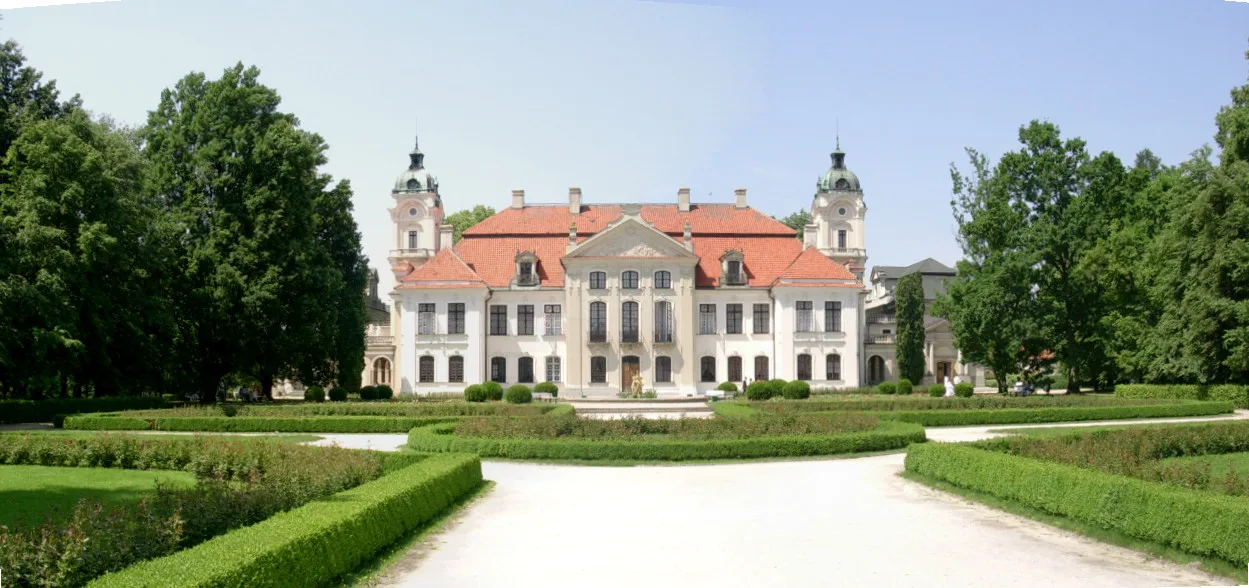
The palace and park complex: what the ensemble includes
Kozłówka is not a single building but a palace and park complex with two outbuildings, a theatre and stables, all adapted for cultural and tourist use. The northern outbuilding, the southern outbuilding with part of the theatre, and the stable block have each been restored, so the visit is a circuit through several structures rather than one interior.
That layout matters for planning: if you arrive expecting one palace interior, you will miss the theatre building and the rest of the complex. A sensible route is palace first, then outbuildings, then the stables and park, so the strongest interiors are not rushed.
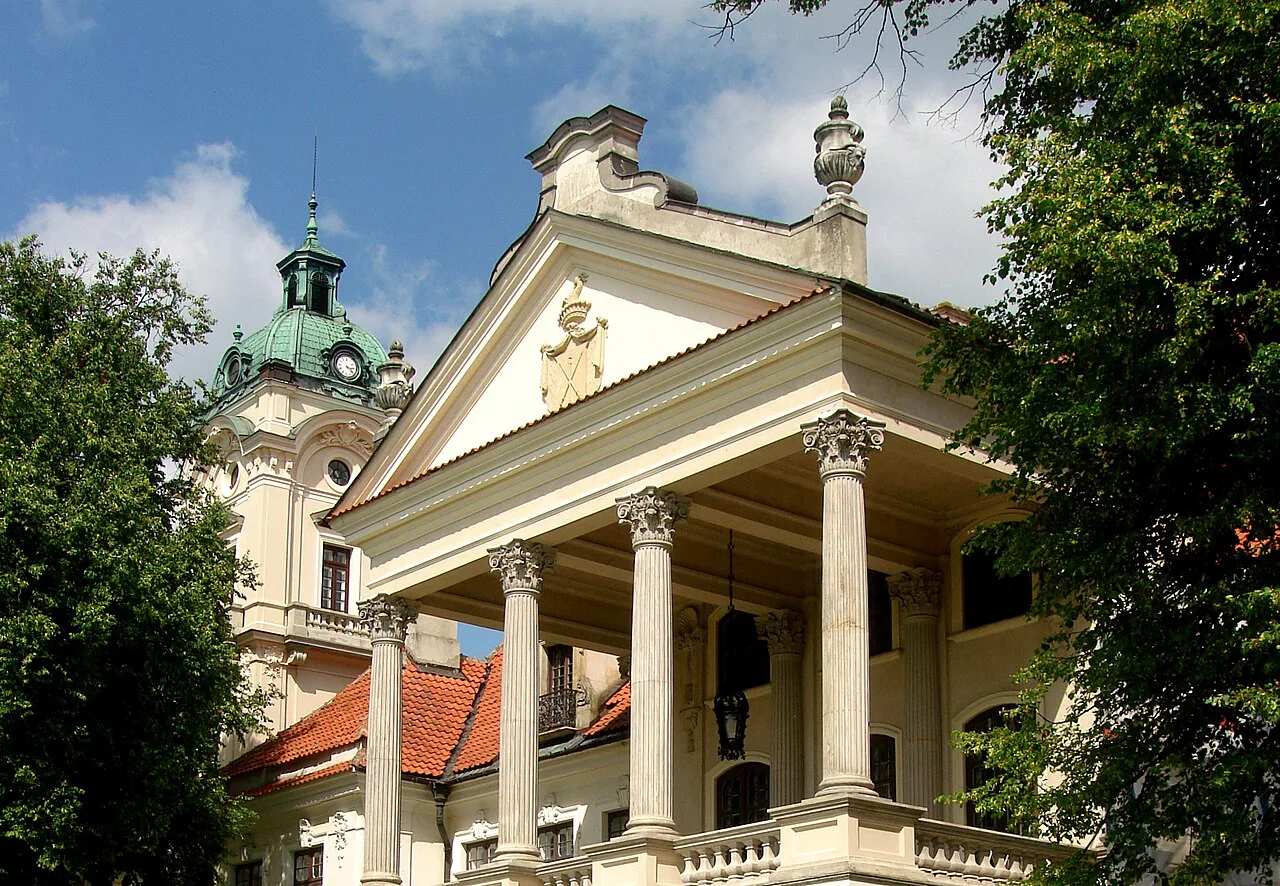
How the palace came to be built and how the Zamoyski family shaped it
The Zamoyski family owned Kozłówka from 1799 to 1944, and it was under them that the building was rebuilt and transformed from a modest palace into one of the most magnificent residences in the Congress Kingdom of Poland. The museum itself was founded in 1979, which is when the palace became a public collection rather than a family home.
That history is the context for the interiors: the palace is presented as a Zamoyski residence, not as a neutral art gallery. If you have visited other Polish palaces, such as Nieborów Palace or Rogalin palace, you will recognise the pattern of period rooms and a park setting.
The Zamoyski family residence and its interiors
The palace interiors are the core of a visit: period rooms presented as the Zamoyski family residence, with the scale and decoration of a magnate's country house. Restoration has kept the original floor patterns in the ground-floor hall and corridors and the tiled floors on the first floor, with recovered terracotta reused in the ground-floor corridor. Give the palace the largest share of your time; it is the part that justifies the journey from Lublin.
Look for the fireplaces, renovated using existing tiles, and the window and door joinery, replaced while keeping the original divisions. The attic has been opened up with three dormer windows on the north elevation and visible roof trusses, though the main visit is on the ground and first floors.
The gallery of socialist realist art in the former stable block
The second strand is the gallery of socialist realist art, with an outdoor gallery area of 1950s monuments extending the collection outside. The stable block's open, single-space interior was left unchanged, with its vaults restored and reinforced, so parts of the complex read as long open halls rather than a sequence of period rooms. A new path with all-terrain steps leads from the former stable block to the outdoor gallery area.
This is the part of Kozłówka that surprises visitors who expect only a Baroque palace, and it is why the complex rewards more than a quick interior tour. If your interest is interiors, see the gallery after the palace so you are not tired before the main rooms; if your interest is twentieth-century art, reverse the order.
The theatre building and outbuildings
The southern outbuilding includes part of the theatre, and its form and facade have been preserved, with a basement added to the western part and connected to the south extension by a passage. The northern outbuilding required more structural work, including replaced roof trusses and non-combustible ceilings while keeping the ground-floor and cellar vaults.
The outbuildings sit between the palace and the stables, so you will pass through them on a sensible circuit. If time is short, the theatre building is the one to see after the palace; the outbuildings are secondary.
Walking the park and grounds
The park is what makes Kozłówka a country residence rather than a town palace, and it is the connective tissue between the buildings. New pedestrian and service routes have been laid out for the refurbished buildings, and a path with all-terrain steps runs from the former stable block to the outdoor gallery of 1950s monuments.
Allow twenty to thirty minutes for the grounds rather than treating them as a backdrop, and walk them between the palace and the stables so you end at the gallery. Compared with the grounds at Kórnik Castle, Kozłówka's park is smaller and more workmanlike, but it completes the residence.
How long a visit takes and what to prioritise
Two to three hours on site covers the palace interiors, the outbuildings, the stables and a walk through the park. If you have only ninety minutes, do the palace and then see as much of the rest of the complex as time allows, because the palace interiors are the core of the visit. Add travel time each way from Lublin, so a half-day is realistic and a full day is not necessary.
The main trade-off is depth against breadth: Kozłówka rewards a focused visit, and trying to see every outbuilding will thin out the time in the palace. It is more compact than Łańcut Castle and less aristocratic in its setting than the Kaiser Wilhelm II apartment at Pszczyna castle, so it suits a shorter stop. If you have already seen several Polish palaces, give the palace interiors and the rest of the complex equal attention on a return visit.
Opening days, tickets and getting there
Check the Zamoyski Museum's own site for current opening days, ticket prices in złoty and any seasonal closures before you travel, and confirm how to reach the village from Lublin. The restoration record documents the outbuildings, theatre and stables in detail. For the palace's place in the wider Polish palace landscape, see our guide to Palaces in Poland, which sets Kozłówka alongside Łańcut, Nieborów and Rogalin.
Is Kozłówka worth the trip from Lublin?
Kozłówka is worth the trip if you want one country palace with two distinct collections: the Zamoyski interiors and the socialist realist gallery in the stables. It is not worth a full day, and it is not a substitute for the larger residence at Łańcut Castle if that is the kind of palace visit you are after. Plan it as a half-day from Lublin and give the palace interior and the gallery most of your time.
Frequently Asked Questions
Is Kozłówka Palace worth visiting?
Yes, if you are in Lublin and want a Baroque country residence with the Zamoyski family interiors and a gallery of socialist realist art alongside the outbuildings, theatre and stables. It is a half-day visit rather than a full-day destination, and the palace interiors are the strongest part.
Who lived at Kozłówka Palace?
The palace was built between 1736 and 1742 for Michał Bieliński, Voivode of Chełmno, and the Zamoyski family owned it from 1799 to 1944. The museum was founded in 1979 and presents the interiors as the Zamoyski family residence.
Sources
Notes for your next Polish city break
Optional updates to our Poland guides.
You might also like

Continue reading
More guides you'll find useful