
Pszczyna Castle: what you see inside the Palace Museum
Plan a visit to Pszczyna Castle: the furnished 19th-century interiors, the free Tuesday, the closures and how long each ticket route takes.
On this page
Pszczyna Castle is worth a half-day from Katowice: it is a fully furnished palace museum rather than an empty shell, and the ticket routes let you choose between the state rooms alone or a longer run through the armoury and stables. This guide covers the rooms you actually walk through, the published opening hours, how the last-entry rules set your timing, and the days the museum closes.
The castle sits at Brama Wybrańców 1 in Pszczyna, a town about an hour by road or rail from Katowice, which makes it one of the easiest palace excursions in the region. Treat it as a standalone stop rather than a Kraków sight, and pair it with the town square if you have the afternoon.
Why Pszczyna Castle is worth the trip from Katowice
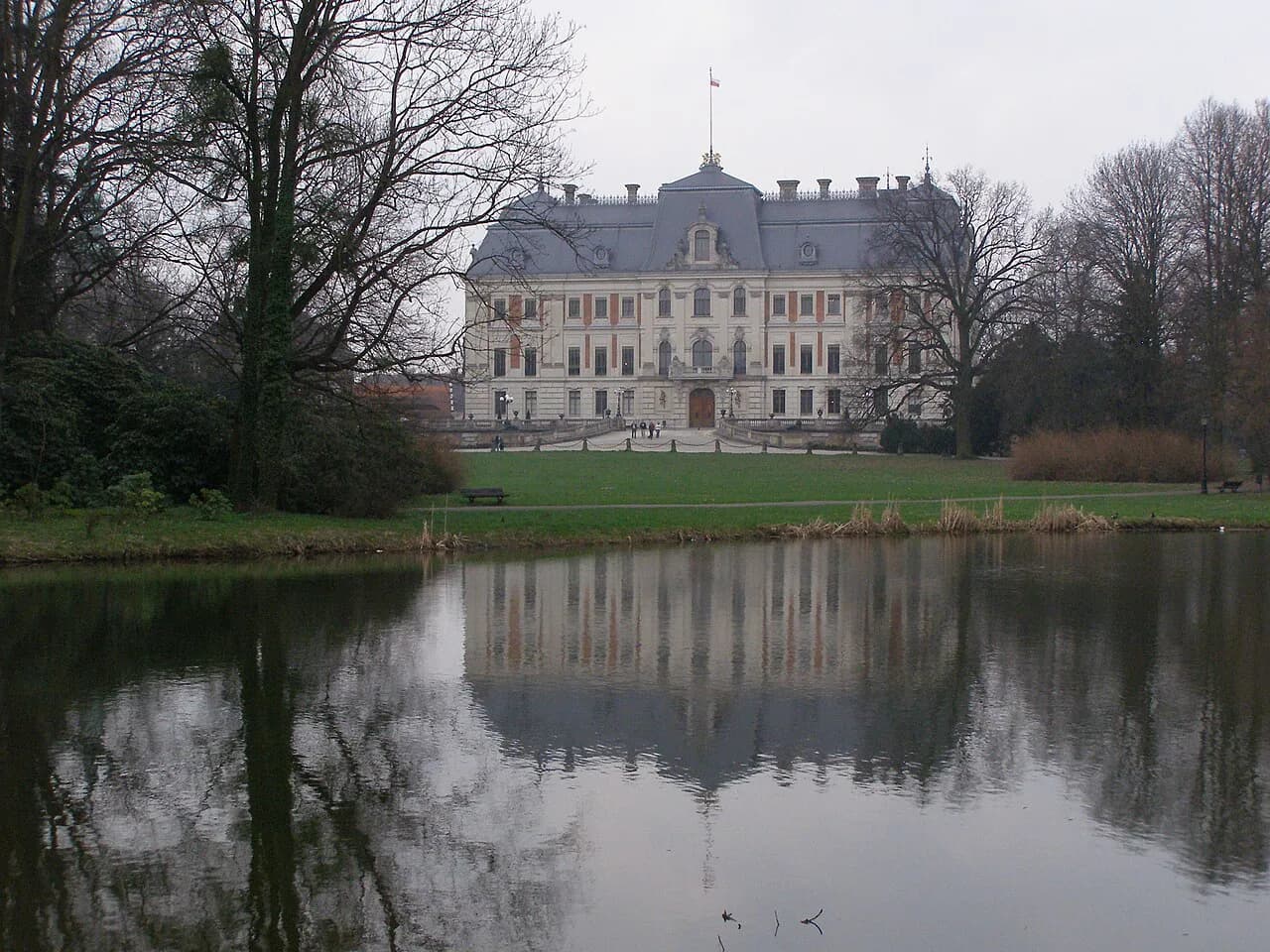
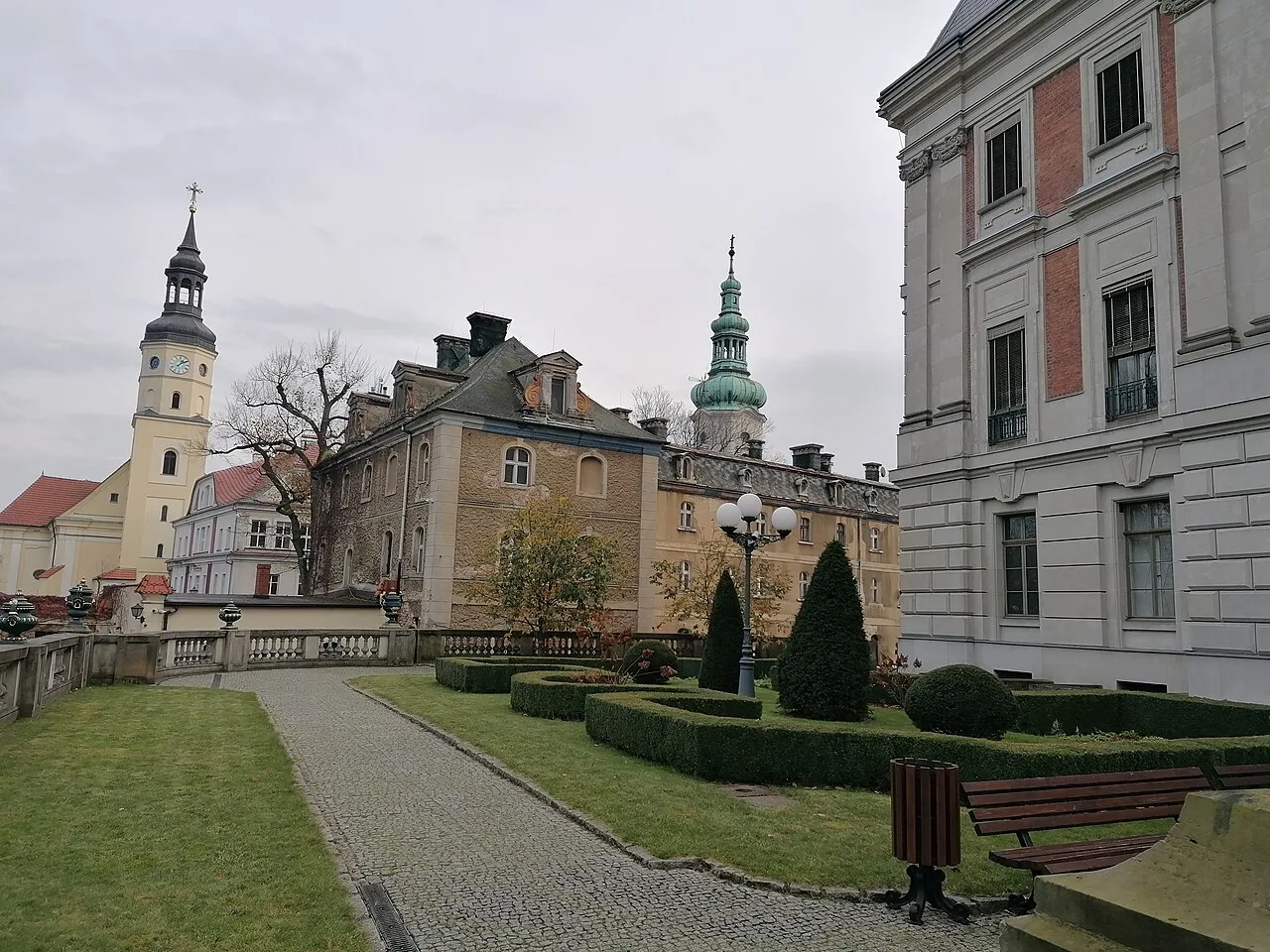
The building began as a Gothic defensive castle and was rebuilt repeatedly: the documented brick castle withstood a Hussite attack in 1433, the Promnitz family turned it into a Renaissance residence, and a Baroque three-wing palace followed after 1737. What you see today is largely the work of the 1870–1876 rebuild by the French architect Alexandre Hippolyte Destailleur for Hans Heinrich XI, which gave the two-storey, horseshoe-plan palace its French 17th-century facades.
That matters for the visit because the interiors are the point: a monumental dining room built to seat 32 at table, with two 19th-century mirrors of 14 square metres each, and a sequence of state rooms kept as a princely residence. If you have already worked through the great houses in this guide to palaces in Poland, Pszczyna stands out for the completeness of its furnished rooms rather than for scale.
Opening hours and last entry
For September to November 2026 the museum publishes the following: closed Monday; Tuesday 10:00–15:00 with last entry at 14:00; Wednesday to Friday 9:00–16:00 with last entry at 15:00; and Saturday and Sunday 10:00–17:00 with last entry at 16:00. Those are the hours for that period, so check the same page before a visit in another season rather than assuming they hold all year.
Tuesday is the shortest day, closing at 15:00, which is worth knowing before you build a train timetable around it. Weekends give you the latest finish and the most slack if you want the long route.
Tickets and what each one covers
The museum sells tickets for separate exhibitions, individually and without a guide or audio guide, and the last-entry cut-off depends on which route you buy. The 19th and 20th-century interiors admit their last visitors one hour before closing; interiors plus the armoury cut off an hour and a half before closing; and the full route, excluding the Ducal Stables, closes admissions two and a half hours before the museum shuts.
Prices are published in the museum's own price list for the year, and online ticket sales run through the castle's booking system. Buy through that system or at the ticket office rather than relying on secondhand figures.
Tuesday free entry: the trade-offs
Tuesday is the museum's free day, and it comes with rules that change the visit. No reservations are taken, entry is for individual tourists only, and the pool is capped at 400 tickets; once it runs out the ticket office can close earlier than the posted hours. Cloakroom staff control the flow of visitors, so expect a longer wait to get in.
On free days only a reduced set of rooms opens: the apartment of Kaiser Wilhelm II and part of the first-floor chambers. If the armoury or the full route is the reason you are coming, pay on a different day and keep Tuesday as a cheap taster.
Inside the rooms: the interiors and the Imperial apartment
The core ticket takes you through the 19th and 20th-century interiors, the furnished state rooms that carry the palace's story from the Hochberg rebuild to the early 20th century. The Wilhelm II apartment is the room set the museum opens even on free days, and it ties to the castle's Imperial chapter.
In 1914–1917 the castle served as the German army's headquarters, with the emperor, field marshal Paul von Hindenburg and general Erich von Ludendorff taking military decisions from Pszczyna. The museum also records that the Baroque composer Georg Philipp Telemann was court kapellmeister and organist here from 1704 to 1707, and that the Telemann Evenings concerts have run in the Mirror Hall since 1979.
Daisy, Princess of Pless
Hans Heinrich XV inherited the estate after the death of the 'old prince', and his wife was Mary Theresa Olivia Cornwallis-West, the English-born Princess Daisy. She came to Pszczyna after their London wedding and left a sharp first impression in her diary: hectares of terraces and gardens, overwhelming formal luxury, but, in her words, no comfort and not even a personal bathroom.
Her story is why the furnished rooms read as a lived-in house rather than a gallery, and it is the thread to follow if you have seen Łańcut Castle and want another Polish residence with a strong family narrative behind the furniture.
How long the visit takes
Work backwards from the last-entry rules rather than guessing. For the interiors alone, arrive at least an hour before closing; for interiors plus armoury, an hour and a half; for the full route, two and a half hours. On a weekday with a 16:00 close that means the full route needs you at the ticket desk shortly after 13:30.
Allow time after the palace for the park and town square, which together fill an easy half-day from Katowice. Add another hour for the Ducal Stables if that exhibition is open on your date.
When the museum is closed
Beyond the Monday closure, the museum shuts from December to January for a housekeeping and conservation break, on the first day of Easter, on Corpus Christi, and on 1 and 11 November. Plan a November or spring visit around those dates rather than turning up to a locked gate.
Getting there and fitting it into a Katowice day
Pszczyna is in the Silesian conurbation south of Katowice, roughly an hour by road and reachable by rail, which makes it one of the simplest palace outings from the city. Arrive for opening, take the interiors route, then walk the park before lunch.
If you are collecting residences across the region, Kórnik Castle near Poznań pairs a similar moated setting with a library and arboretum, while Rogalin Palace is a compact stop southwest of Poznań. Both reward the same approach: pick a weekday, check the day's hours and decide your ticket route before you travel.
Accessibility during the lift modernisation
The museum currently posts a notice that the passenger lift is being modernised, so people with reduced mobility cannot move between floors and the wheelchair-accessible toilet is unavailable for the duration. Visitors using wheelchairs or with limited stairs mobility should factor that into their choice of ticket before booking.
Which ticket should you buy?
Take the interiors plus armoury route on a weekday if you want the fullest picture without the long-route time commitment, and book the full route only when you have a clear two and a half hours before closing. Choose a Tuesday only if a cheap, partial visit suits you and you can arrive early for the 400-ticket pool.
Check the museum's published hours for your exact dates and buy through its own ticket system so the booking matches the current rules.
Explore more Poland guides
Frequently Asked Questions
Did Princess Daisy live at Pszczyna Castle?
Yes. Mary Theresa Olivia Cornwallis-West, known as Daisy, married Hans Heinrich XV and came to Pszczyna after their London wedding, and the museum's history records her diary impressions of the castle's terraces and formal rooms.
Can you visit Pszczyna Castle without a guide?
Yes. The museum sells individual tickets for separate exhibitions without a guide or audio guide, and the last-entry cut-offs differ by route, so pick your ticket before you arrive.
How long does the visit take?
Allow at least an hour for the interiors, an hour and a half for interiors plus armoury, and two and a half hours for the full route, measured back from closing time according to the museum's last-entry rules.
Sources
Notes for your next Polish city break
Optional updates to our Poland guides.
You might also like



Continue reading
More guides you'll find useful





