Majdanek: Visiting the Former Camp and State Museum in Lublin
What you see at Majdanek, the German Nazi camp on Lublin's edge, how the State Museum presents it, and how to plan a respectful visit.
On this page
Majdanek is a visit of roughly two to three hours, made on foot across open ground on the eastern edge of Lublin, where the German Nazi camp's buildings and terrain have been preserved rather than rebuilt as a gallery. The State Museum at Majdanek was established on the site in 1944, and it presents the camp's history through the authentic grounds and two permanent exhibitions. This guide covers what the camp was, how the museum lays the visit out, the ticketed guided tours, and how the site fits into a Lublin city break.
Treat it as commemoration first and sightseeing second: the museum's own framing is an authentic camp infrastructure shown in place, with individual stories told alongside. The practical points below come from the museum's published visitor information, so you know what is ticketed, what is free and what to confirm before you travel.
What Majdanek was
Majdanek, also called KL Lublin, was a German Nazi concentration and extermination camp built and operated by the SS on the outskirts of Lublin between 1941 and 1944. The State Museum at Majdanek states that nearly 80,000 people perished there in 1941–1944, mainly Jews, Poles, Belarusians, Ukrainians and Russians.
The camp is not the same as Auschwitz: it was a separate SS facility, close to a major Polish city and built for the occupation of the Lublin district, and its history is presented by the museum here rather than by the Auschwitz-Birkenau memorial. It was liberated by the Red Army in July 1944, and the museum's news page marks each anniversary of the camp's liquidation with a published notice.
The wider German occupation system is documented at length by the United States Holocaust Memorial Museum, whose article on Lublin/Majdanek conditions explains how the camp was established in 1940 and how prisoners were held and used. Read it before you go if you want the chronology straight, because the site itself carries you through fabric and objects more than through long explanatory panels.
Why the site looks the way it does
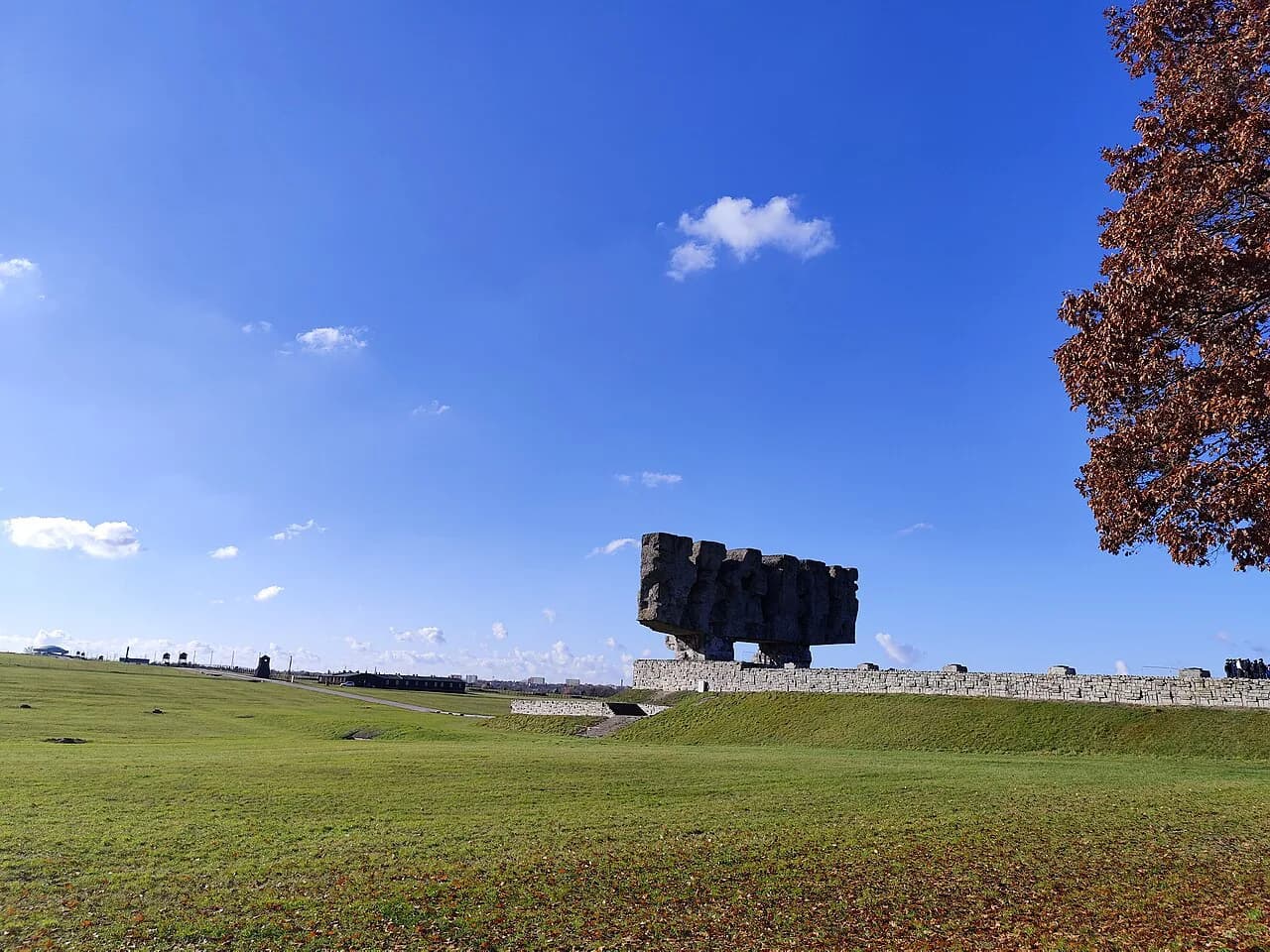
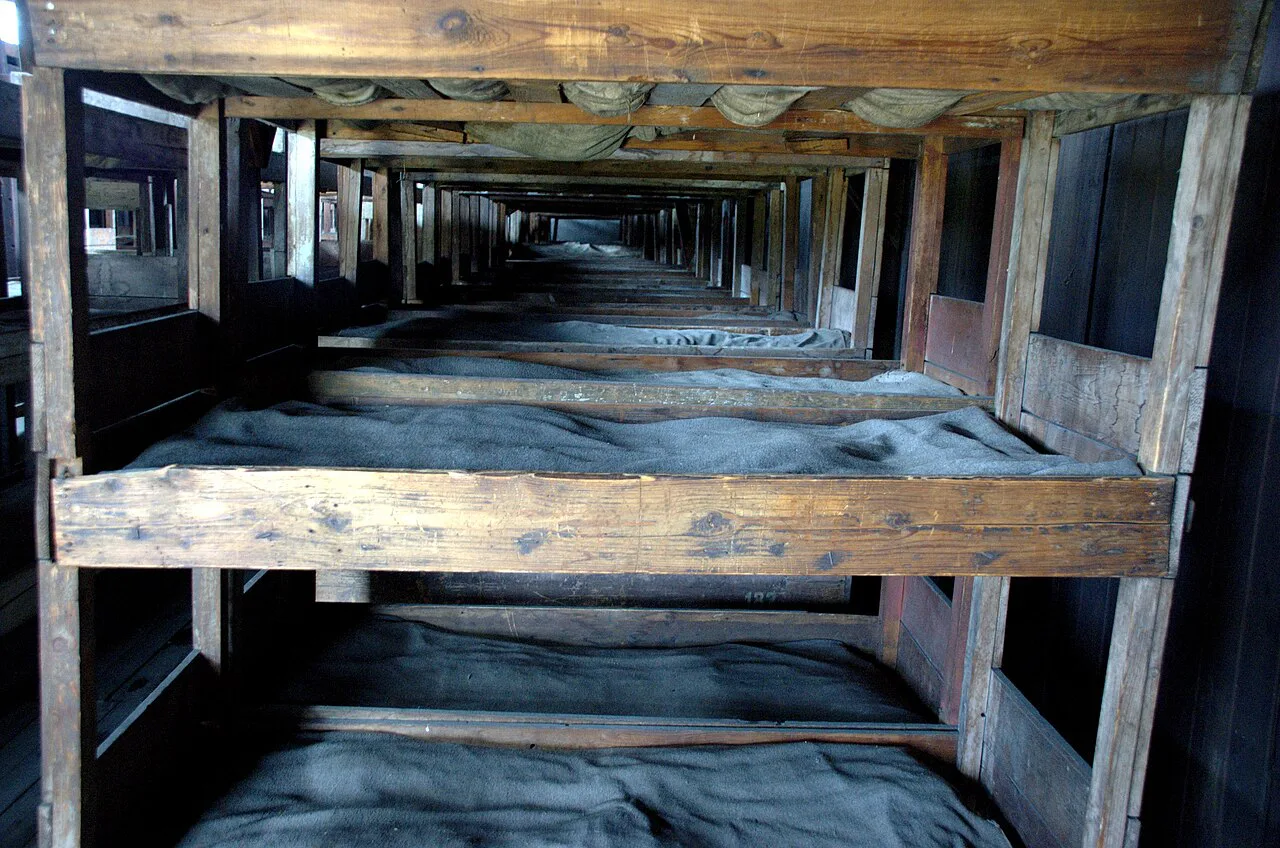
The grounds are the exhibition. Rather than clearing the terrain and building a visitor centre over it, the museum keeps the former camp landscape and its surviving structures as they stood, which is why so much of the visit happens outdoors and why the site feels open and exposed.
Majdanek sat directly beside the city, and that proximity shapes the modern visit: houses and roads run up to the edge of the memorial, and you arrive from an ordinary Lublin street into the camp terrain. The contrast is part of understanding the place, and it is also why the museum can close side entrances when it needs to manage the boundary.
Allow for weather and footwear accordingly. Much of the route is unsealed ground and a good stretch of it is out in the open, so waterproof shoes and a warm layer matter more here than in a museum building.
What you see on the grounds
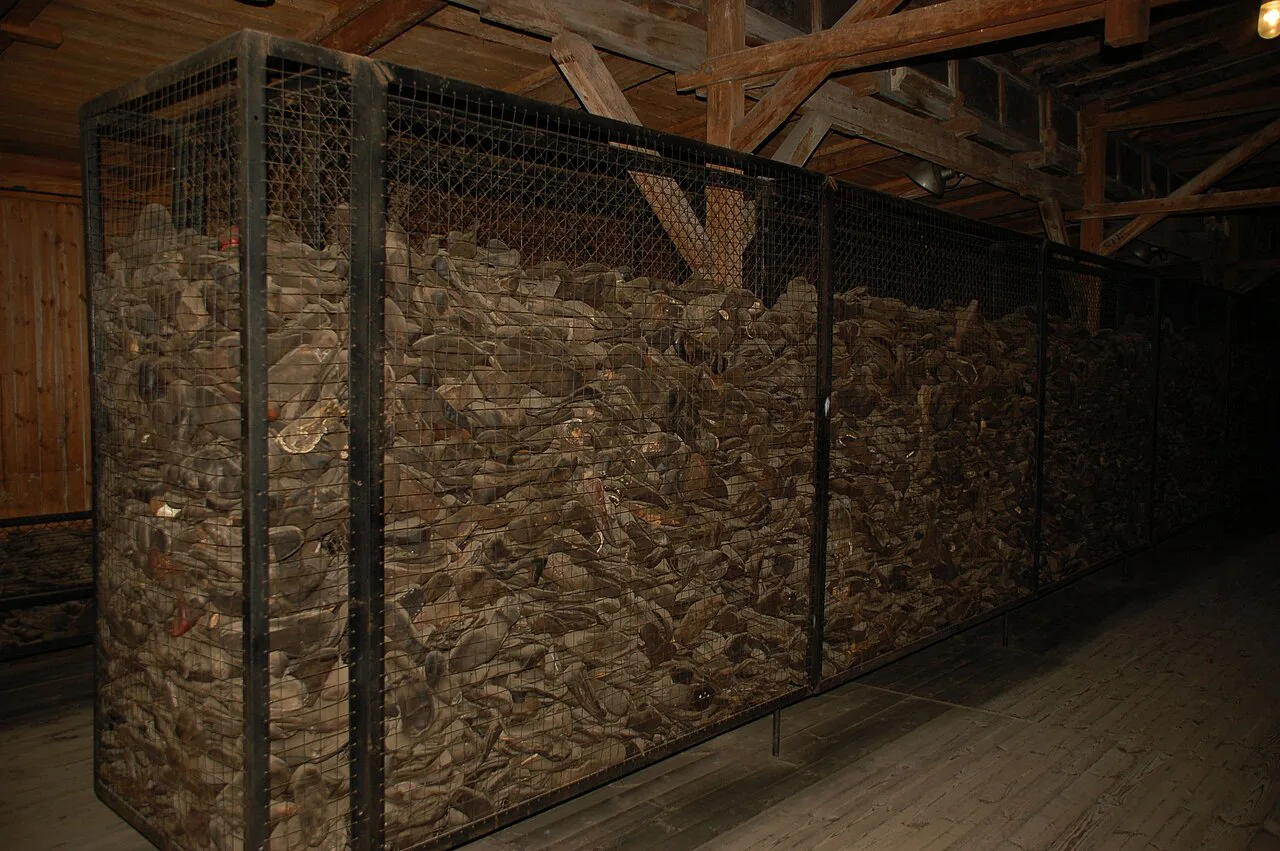
The museum lists two permanent exhibitions. The first, Former Camp Grounds, is exactly what its name suggests: the authentic camp infrastructure, seen where it stood, with the memorial landscape around it. The second, The Prisoners of Majdanek, opened in 2014 and turns to individual stories, putting names and biographies against the terrain outside.
There is also a Memorial of an Unknown Victim, listed by the museum as a shrine, along with the camp's surviving fabric including barracks and the structures around the roll-call area. Interpretation is deliberately restrained; the objects and the layout carry the weight, so give yourself time to stop rather than marching the perimeter.
Temporary exhibitions rotate through the site, and the museum's programme has covered subjects including the camps of the Third Reich and the final year of KL Lublin. Check the exhibitions page before you travel if a particular show matters to you.
The permanent exhibitions in detail
Former Camp Grounds is the reason to come here rather than to a city museum: what you see is the camp, unaltered in its essentials, and the museum treats the buildings and ground as the primary document. Walk it slowly and in sequence, and read the information points as you reach them rather than all at once at the entrance.
The Prisoners of Majdanek balances that with the human record, using individual lives to break down the scale of the numbers. It is the exhibition to prioritise if you arrive late in the day, because it is the one that gives the terrain its names.
Both exhibitions are included in the visit to the museum grounds. The museum also runs a prisoner records search online, which is the place to look if your family history might connect to the camp, and it publishes a free online magazine alongside its research.
Paying your respects
The museum's language is uncompromising and worth matching: the camp was German Nazi, run by the SS, and its victims were mainly Jews, Poles, Belarusians, Ukrainians and Russians. Avoid the phrase 'Polish camp' in any form; it misattributes the crime and is inaccurate.
On the grounds, keep voices low, do not climb or lean on structures, and treat the memorial areas as you would a cemetery. The site is a grave for many of the people deported there, and the museum presents it in that register throughout.
If you want to go deeper into the occupation in Poland, the country's commemorative landscape extends well beyond Lublin, from the sites collected in our guide to WW2 sites in Poland to the city that rebuilt itself after near-total destruction.
Entry and visiting practicalities
Walking the grounds and exhibitions is free of charge; the charge applies to the museum's guided tours for individual visitors. That matters for budgeting a city break, because the main outlay at Majdanek is time rather than money.
The museum has published a change to its entrances: from 7 April 2026 the entrances from ul. Cmentarna and ul. Tetmajera are closed, so check which gate is in use on the day you go rather than heading for the nearest street corner.
Opening arrangements follow a seasonal pattern published by the museum, and the current visitor information on the museum's Plan Your Visit pages is the place to confirm times for your dates.
Guided tours: when they run and what they cost
Guided tours for individual visitors run in Polish on Saturdays and Sundays at 11:00, and in July and August also at 14:15, with departures on other days of the week except Mondays during the summer period. No advance reservation is needed for the Polish-language tour, so you can turn up and join.
The museum publishes the fees as 25 PLN for a regular ticket and 20 PLN for a reduced ticket, per person, and states that the offer does not apply to organised groups. These are modest sums against a day's spending in Lublin.
Between 1 July and 28 August the individual tours are offered daily except Mondays. Outside that window, plan your visit around the weekend departure or walk the site independently, which is entirely possible and, for many visitors, preferable for the quiet.
Getting there and how long to allow
The museum sits at Droga Męczenników Majdanka 67, on the eastern side of Lublin, a straightforward ride by tram or bus from the centre. The same street carries the name of the camp road, so you know when you are close.
Plan on two to three hours: an hour for the grounds, an hour for The Prisoners of Majdanek and the rest for the memorial and walking between them. Add time if you join a guided tour, which moves at the group's pace rather than your own.
The museum also runs the memorials at the former German Nazi extermination camps at Sobibór and Bełżec, both outside Lublin and visited separately. They are not on the Majdanek site, so do not fold them into the same afternoon.
Majdanek and the rest of a Lublin break
Majdanek takes a half day, which leaves Lublin's old town for the afternoon. Doing the camp in the morning and the city afterwards works well, because the old town lifts the mood without trivialising what you have just seen.
If you are building a longer trip around occupation history, the Wolf's Lair (Wilczy Szaniec) in Masuria and the tunnels of Project Riese in the Owl Mountains are two very different sites from this one, and both need their own day. Our guide to The Warsaw Uprising of 1944 covers the city's own commemorative landscape and pairs naturally with a Lublin stop.
For a wider route through the country's museums and memorials, the WW2 sites in Poland hub sets out what each place needs in time and money.
Respectful visiting: photography and behaviour
Photography is possible on the grounds, but not everything should be photographed: keep the camera down in memorial areas, do not pose for pictures against camp structures, and never treat the site as a backdrop. Approach the place as a memorial first.
Groups should remember that the museum's individual guided tour offer does not extend to organised groups, which have their own arrangements. If you are travelling as a party, sort out what you are doing before you arrive.
Reading a factual account first, such as the camp's history as set out by the US Holocaust Memorial Museum, makes the walking visit far clearer and reduces the temptation to fill gaps with guesswork while you are on site.
Should Majdanek be on your Lublin itinerary?
Yes, for anyone with an interest in the history of the occupation in Poland, and it costs little beyond a morning. Go on a Saturday or Sunday if you want the Polish-language guided tour at 11:00, arrive with sturdy shoes, and plan two to three hours on the grounds and in the exhibitions.
If you only have a single day in Lublin, do the camp in the morning and the old town in the afternoon. Leave the memorial in the state the museum keeps it: quiet, unpictured and unposed.
Explore more Poland guides
Sources
Notes for your next Polish city break
Optional updates to our Poland guides.
You might also like

Continue reading
More guides you'll find useful