Wolf's Lair (Wilczy Szaniec): What Remains and How to Visit
The Wolf's Lair near Kętrzyn was Hitler's main Eastern Front headquarters. See what remains of the bunkers and how to plan a visit to the site.
On this page
The Wolf's Lair is the ruined bunker complex in Masuria that served as Hitler's main field headquarters on the Eastern Front, visited today for the evidence it leaves of German Nazi decision-making and occupation. It lies in the woods near Kętrzyn in the former East Prussia, and it is a long way from any city break base.
This guide sets out what the complex was, why engineers built it in this forest, what the walk round the concrete ruins actually shows, and how the 20 July 1944 assassination attempt fits the site. It then compares approaching by public transport with an organised tour from Warsaw, and explains how to read the place with the seriousness it demands.
What the Wolf's Lair was and where it sits in Masuria
The Wolfsschanze, rendered in Polish as Wilczy Szaniec, was a fortified headquarters built for Hitler and his staff in the forests of East Prussia, near the town then called Rastenburg and now Kętrzyn in Poland's Masuria region. Hitler arrived there on 23 June 1941, the day after Operation Barbarossa began, and the site was already operational.
It functioned as the main centre of the Nazi regime on the Eastern Front, where Hitler received generals, ran daily military conferences and signed off on policies that drove mass destruction and genocide. That is the frame to hold on to: this was a workplace of occupation and extermination policy, not a fortress for its own sake.
Masuria itself is lake country in north-eastern Poland, far from the big-city routes most short-break travellers follow. The Wolf's Lair is one of several wartime sites scattered across the country, and it sits apart from the urban ones; the wider map of German Nazi camps, memorials and headquarters is set out in the guide to WW2 sites in Poland.
Why it was built in this forest
From autumn 1940, engineers and construction workers from Organisation Todt cleared forest and laid concrete foundations for the compound. Thousands of forced labourers, including prisoners of war, worked on the site as it grew.
The location balanced two needs. It stood close enough to the Soviet border to be useful operationally, but remote enough to stay out of reach of Allied surveillance aircraft. Layers of camouflage netting and dense tree cover made aerial photography close to useless, which is the practical reason the site sat hidden in woodland rather than in open country.
The wartime complex eventually covered roughly 6.5 square kilometres and included its own power plant, airstrip, water supply and a rail spur with a platform for Hitler's personal train. These are figures for the complex as built, not a description of what a visitor walks through now; the scale of the wartime installation is far greater than the footprint of the ruins on show today.
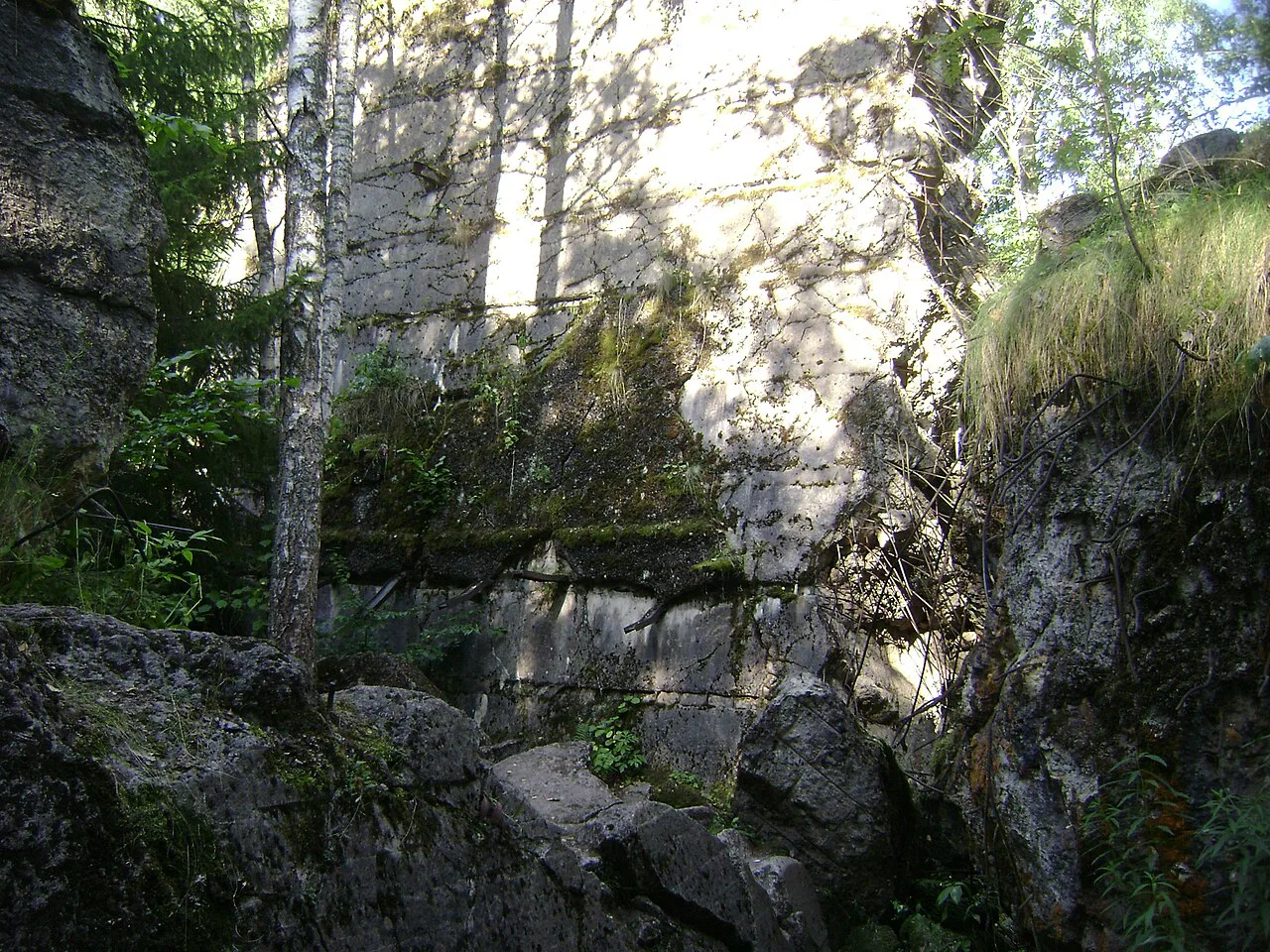
What survives today: ruined reinforced bunkers and the scale of the complex
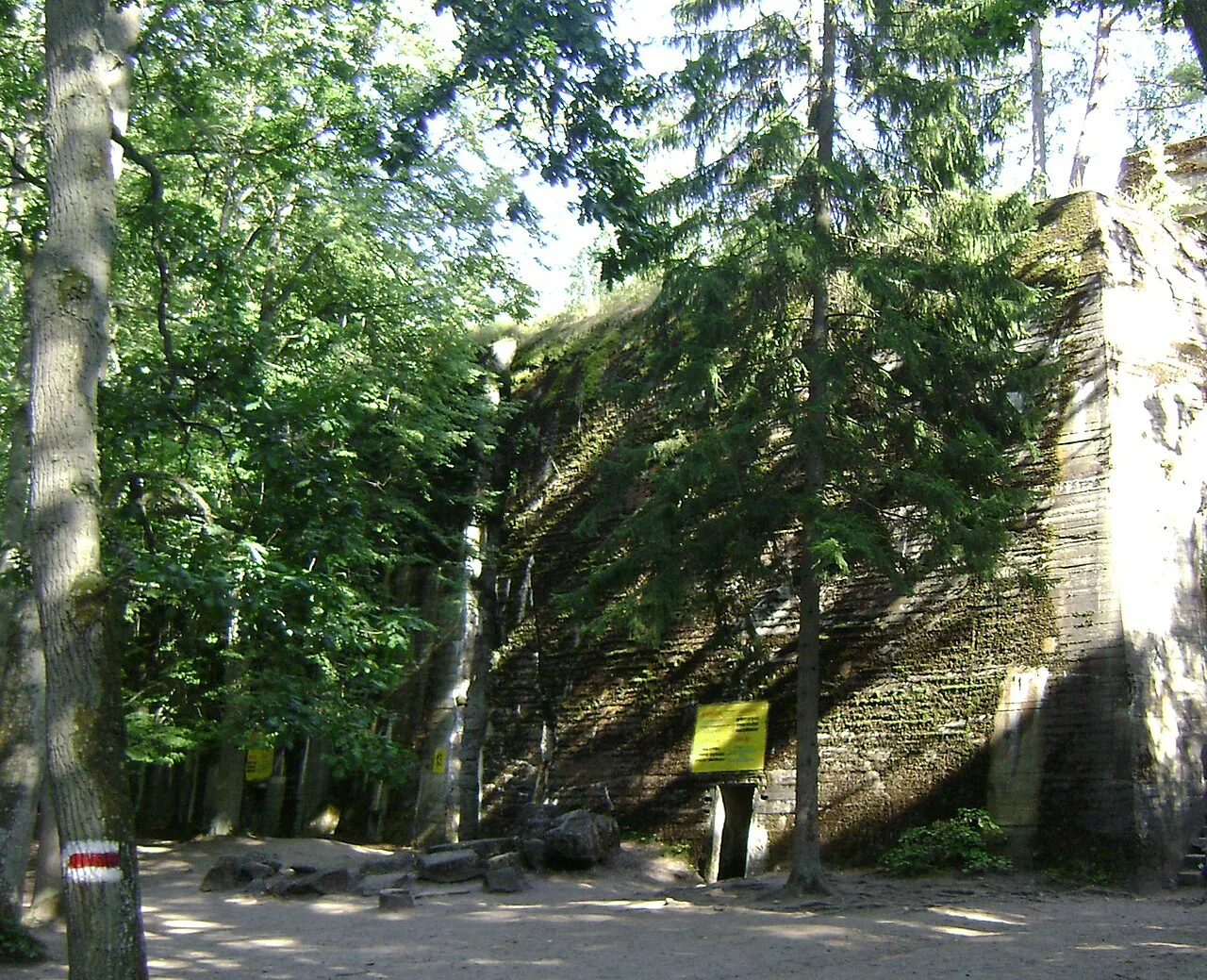
By 1944 the Wolf's Lair held more than 80 buildings, including around 50 reinforced bunkers of steel-reinforced concrete with walls up to two metres thick. The compound was split into three security zones, from the innermost ring around Hitler's own bunker to an outer perimeter of anti-aircraft batteries, minefields and barbed wire, with up to 2,000 personnel stationed there at its peak.
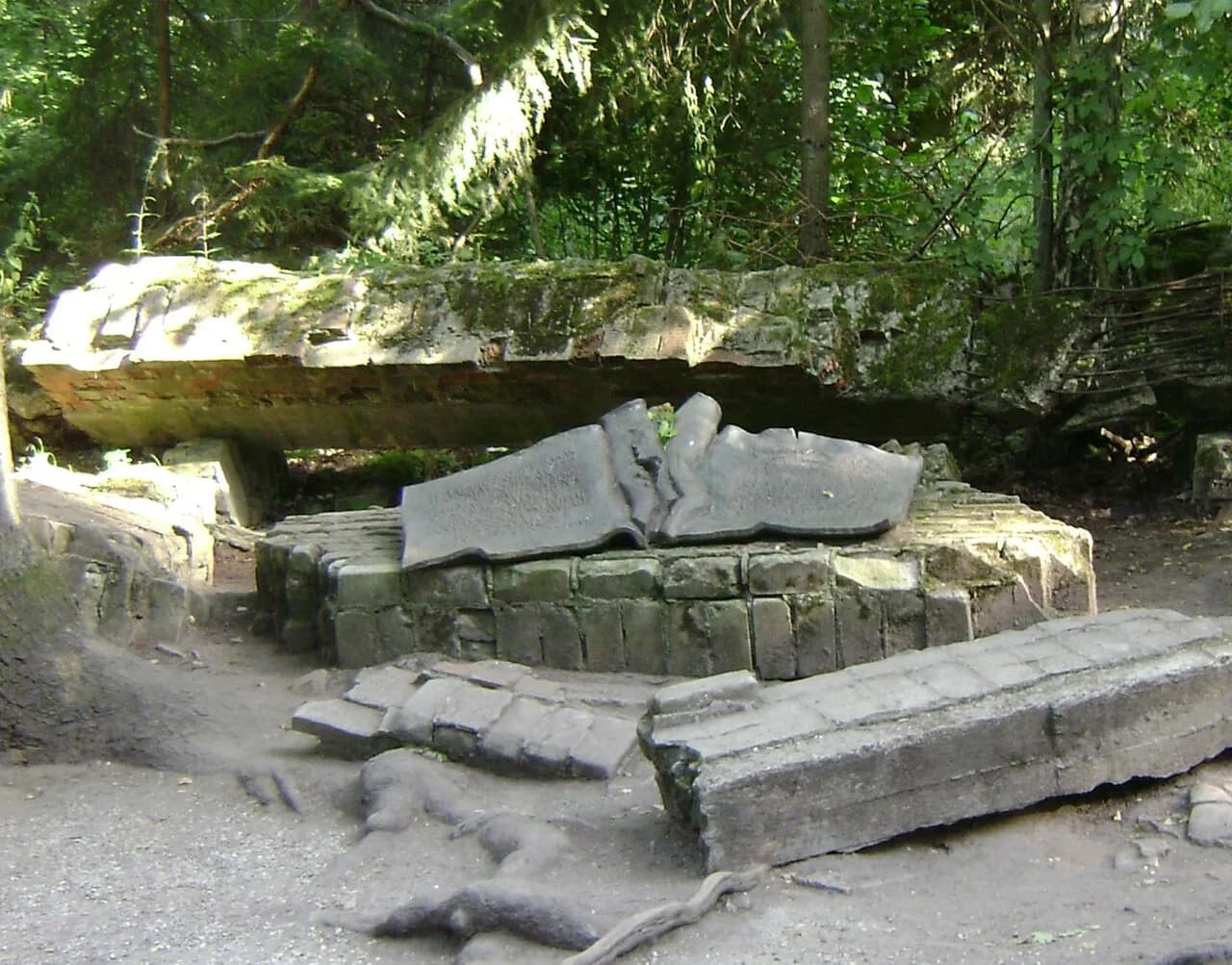
The headquarters was abandoned and the site destroyed as the war moved west, so what a visitor sees is the wreckage of that installation: shattered concrete slabs, toppled walls and foundations spread through the trees. Expect broken mass rather than intact rooms, and read the wartime figures above as the measure of how much has gone.
Visitors describe the scale of the site as striking, a testament to the megalomania of the Nazi regime, and note that the museum has historical material.
The concrete is the point of the visit. You are looking at the physical trace of a command centre whose orders shaped the war on the Eastern Front and accelerated the Holocaust, and the ruined bunkers carry that weight more directly than any reconstruction could.
The 20 July 1944 assassination attempt and where it happened
On 20 July 1944, Claus von Stauffenberg planted a bomb at the Wolf's Lair in an attempt to kill Hitler; the explosion failed to do so, and the plot collapsed. The attempt is the event most visitors associate with the site, and it belongs to the same compound as the military conferences.
Hitler spent almost three years at the headquarters, from 1941 to 1944, taking major decisions there. Placing the bomb attempt inside that stretch of time helps explain why the site mattered: it was the routine setting for the regime's eastern war, not a ceremonial retreat.
The wider Polish story of 1944 runs through Warsaw, where the uprising began that August. If you are building a longer itinerary around occupation and resistance, the account of the Warsaw Uprising of 1944 pairs naturally with a visit here, though the two places are hundreds of kilometres apart and need separate days.
How long a visit takes and what to expect from the walk round
Allow time on site for a slow walk rather than a quick photo stop. The ruins are spread through woodland, the distances between the main concrete structures are real, and the ground is uneven underfoot, so stout shoes matter more than a camera.
The walk is outdoors and unglamorous: forest tracks, moss-covered concrete and long views of broken bunker walls. There is no intact command post to step inside, and anyone hoping for preserved interiors will be disappointed; the value lies in the extent of the site and what it represents.
Because the complex was camouflaged under trees and netting during the war, the wooded setting is part of the evidence rather than scenery. Walking between the ruins gives a sense of how concealment worked, which no single exhibit can convey.
Getting there without a car versus joining an organised tour from Warsaw
The honest trade-off is distance against convenience. Kętrzyn and the surrounding Masuria lakes are a long haul from Warsaw, so a day trip from the capital means many hours in transit for a few hours on site; staying in Masuria and driving or taking local transport shortens the journey considerably.
Organised tours exist for travellers who would rather not arrange the journey themselves. One operator lists a twelve-hour private tour from Warsaw with availability every day, including private transport, a local English-speaking guide, the entrance fee and taxes, priced on request rather than at a published rate.
That format suits anyone based in Warsaw with a single free day and no car, but twelve hours is essentially the whole day, and the price is quoted individually, so ask for a figure before committing. Independent travellers with a vehicle keep far more flexibility and can combine the site with the Masurian lakes.
If you are already touring the wartime sites of Lower Silesia, note that the rail and road geography points the other way: the Project Riese tunnels in the Owl Mountains are a separate undertaking in the south-west, not a detour from Masuria.
Tickets and opening times: check the official site before travelling
The Wolf's Lair is operated as a visitor site with a museum, and the practical details that decide your day, ticket prices, opening hours and any seasonal changes, are set by the operator. Confirm them on the official site before you set out, particularly outside the main season.
Tour inclusions vary between operators: one includes the entrance fee in its price, while others may not. Read what is covered before you book, and keep some złoty on hand for anything the package leaves out.
Reading the site respectfully: it is a place of German Nazi crimes, not a curiosity
The Wolf's Lair was where orders were issued that shaped the sieges of Leningrad and Stalingrad, and where Hitler met Heinrich Himmler in 1941 and 1942 to discuss logistics that fed the Holocaust. Visitors are standing in the place where those decisions were made, and the register should match that.
Keep voices low, avoid posing theatrically on the ruins, and treat the concrete as evidence rather than a backdrop. Groups with a guide can ask for context on the occupation of Poland, and independent visitors do well to read up before arriving so the site is not reduced to war machinery.
The same care applies at the memorial sites of the German Nazi camp system, such as Stutthof, where the remains demand quiet attention rather than spectacle.
At Majdanek, near Lublin, the State Museum at Majdanek preserves a camp within the city, and the approach along Droga Męczenników Majdanka sets a comparable tone. The Wolf's Lair is a headquarters rather than a camp, but the obligation to visit thoughtfully is the same.
Is the Wolf's Lair worth the journey from Warsaw?
Treat a Warsaw-based visit as a full-day commitment, worth it mainly if Second World War history is the purpose of your trip; base yourself in Masuria instead if you want time on site without the long return leg. Travellers who prefer cities may find the journey hard to justify against the ruined concrete they actually see.
Whichever route you take, arrive with the wartime scale in mind so the ruins read as what they are: the shattered remains of a headquarters where German Nazi policy was directed. Then confirm tickets and hours with the operator before you travel.
Frequently Asked Questions
What did they find under the Wolf's Lair?
The Wolf's Lair was a working headquarters rather than a hidden vault, and what remains on the surface is the wreckage of its bunkers, buildings and perimeter works. The compound was destroyed as the war ended, so the visible archaeology is shattered concrete and foundations spread through the forest.
Where was Hitler's bunker located?
Hitler's headquarters stood in the forests of East Prussia near Rastenburg, now Kętrzyn in Poland's Masuria region. The innermost security zone held his private bunker along with quarters for close aides, surrounded by guard barracks, communications staff and an outer ring of defences.
What does Hitler's bunker look like now?
The bunkers are ruins: thick concrete walls collapsed and broken among the trees, with no intact interior to walk through. Visitors see the footprint of the complex and the scale of its construction rather than preserved rooms.
Sources
Notes for your next Polish city break
Optional updates to our Poland guides.
You might also like

Continue reading
More guides you'll find useful