Warsaw Uprising 1944: What Happened and Where to Remember It
What the Warsaw Uprising of 1944 was, why it lasted 63 days and failed, and where in Warsaw to see the memorials that tell its story today.
On this page
The Warsaw Uprising began on 1 August 1944 and ended on 2 October 1944, after 63 days of fighting by the Home Army against the German Nazi occupation of Warsaw. It was one of the largest acts of military resistance in wartime Europe, and it ended in surrender and the near-destruction of the city. This guide explains what happened and why, then maps the memorials and Old Town streets where you can follow the story on foot, including a self-guided walk published by the Museum of Warsaw.
It is a different event from the Warsaw Ghetto Uprising of 1943, which was fought by Jewish fighters inside the ghetto; the 1944 rising was a city-wide Home Army operation. Keep that distinction in mind when you read English-language coverage, because the two are routinely confused. For the wider map of wartime sites across the country, see our guide to WW2 sites in Poland.
Why the Home Army rose as the Red Army approached
The Home Army launched the uprising as the Red Army advanced towards Warsaw from the east, while Allied forces pushed from the west. The insurgents supported the Polish government-in-exile in London and hoped to take control of the capital before the Soviets arrived, fearing that otherwise a pro-Soviet regime would be imposed on Poland. That calculation shaped the timing: the rising was as much a political gamble about the country's postwar future as a military operation.
The Poles made early gains against the Germans, but Hitler sent reinforcements, and superior German weaponry gradually wore the insurgents down in brutal street fighting. Poorly supplied from the start, they ran out of arms, food and water.
Why the Soviets did not help
Soviet forces reached the outskirts of Warsaw but did not intervene to assist the Home Army, despite Polish appeals for support. The Soviets also refused a British request to use Soviet air bases to fly supplies to the insurgents. Historians argue that Stalin held back because he had his own plans for postwar Eastern Europe, and a strong, independent Polish resistance did not fit them.
This is the strategic hinge of the whole story rather than a footnote: the rising was timed around an ally that never came. With the Red Army waiting on the far bank, the Home Army fought alone for two months.
How long it lasted and what it cost
The fighting lasted 63 days, from 1 August to 2 October 1944, when the surviving insurgents surrendered to German forces. Casualty estimates run to about 18,000 military deaths and 150,000 to 180,000 civilian deaths. Those figures come from the Museum of Warsaw's account of the uprising and give a sense of the scale of what was lost in a little over two months.
What happened to Warsaw afterwards
After the surrender, the Germans deported much of Warsaw's population and destroyed the city, leaving it in ruins. The uprising's failure also cleared organised opposition from the Soviets' path as they moved to install a communist government in Poland. Today the rising remains a contested part of Polish memory: some see it as a heroic and patriotic act, others question its timing and strategic sense given the death toll.
The Warsaw Uprising Monument on Krasiński Square
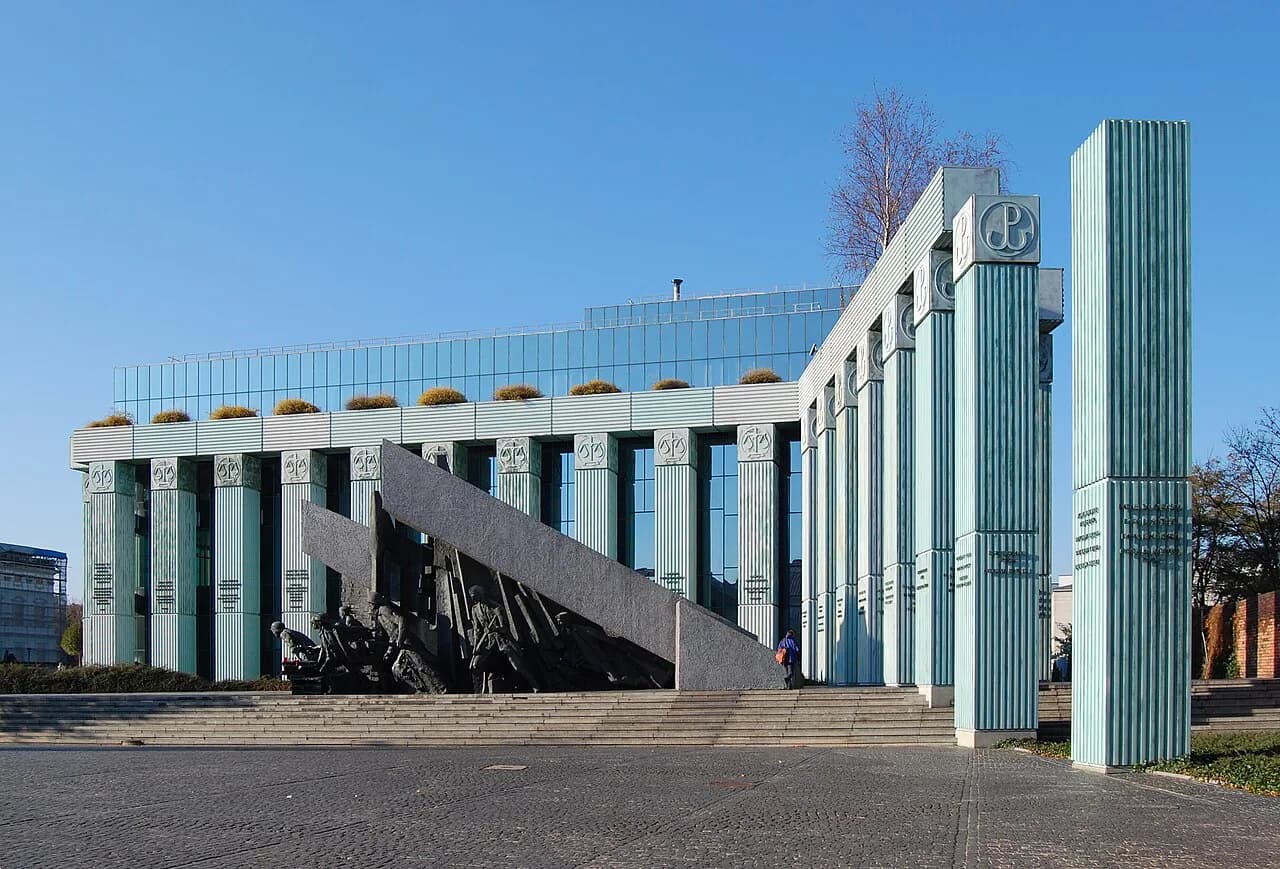
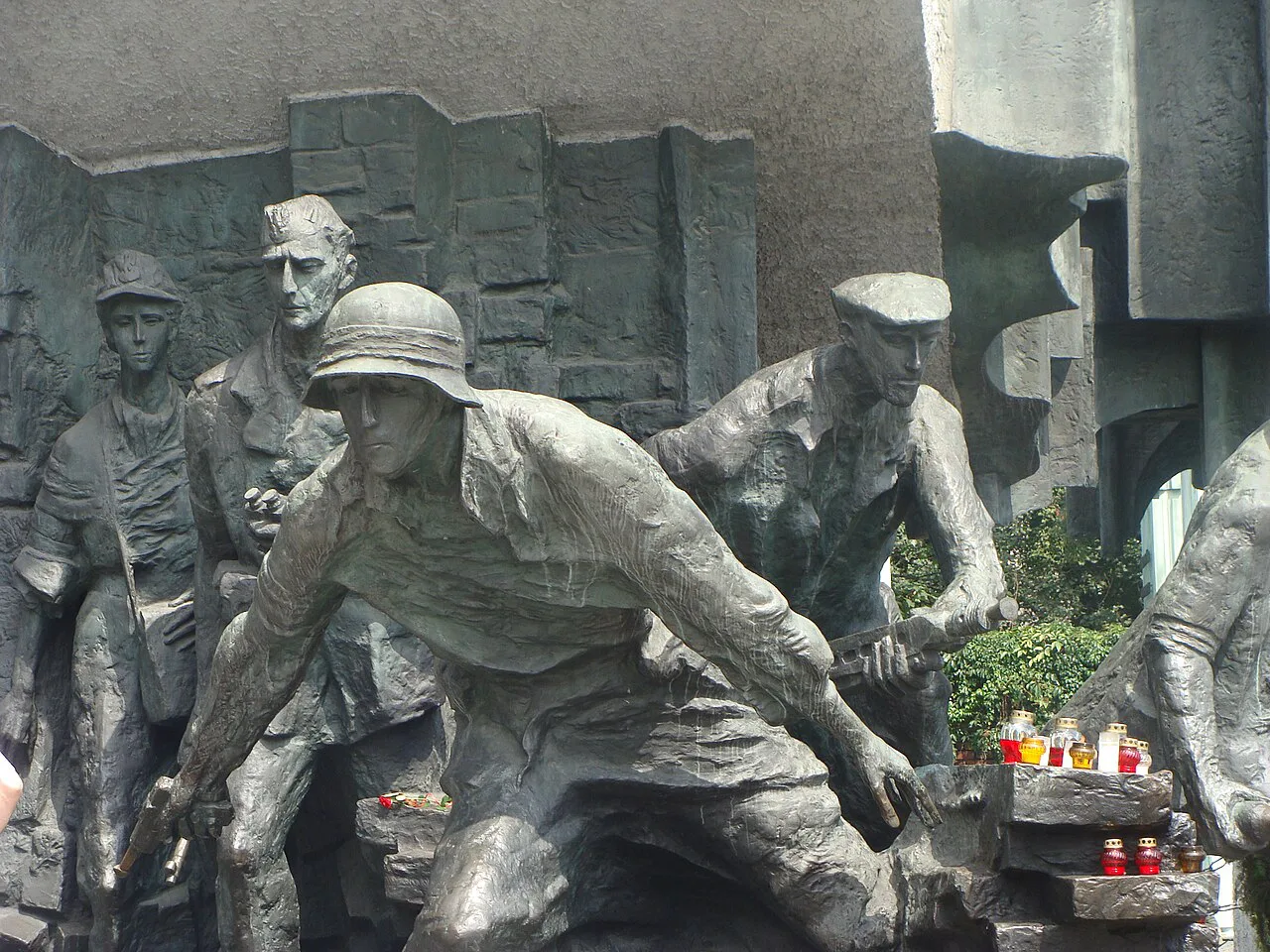
Start any walk through the story at the Warsaw Uprising Monument on Krasiński Square, the most important commemorative site linked to the rising. It is made up of two sculpture groups. In the first, figures of insurgents appear to emerge from under stone pillars in front of the Supreme Court building; the second, smaller group shows soldiers and civilians descending into a sewer, the route used in the evacuation of the Old Town and a well-established symbol of the uprising's defeat.
The monument was unveiled on 1 August 1989, the forty-fifth anniversary of the outbreak, after decades of political obstruction. Attempts to build a permanent public memorial began soon after the war but were repeatedly rejected, because Poland's postwar communist government treated the uprising's myth as a threat to its legitimacy. Its eventual construction belongs to the final years of the communist era, when a popular campaign to build it became a way of defying the state's control of memory.
The Little Insurgent and the Old Town streets
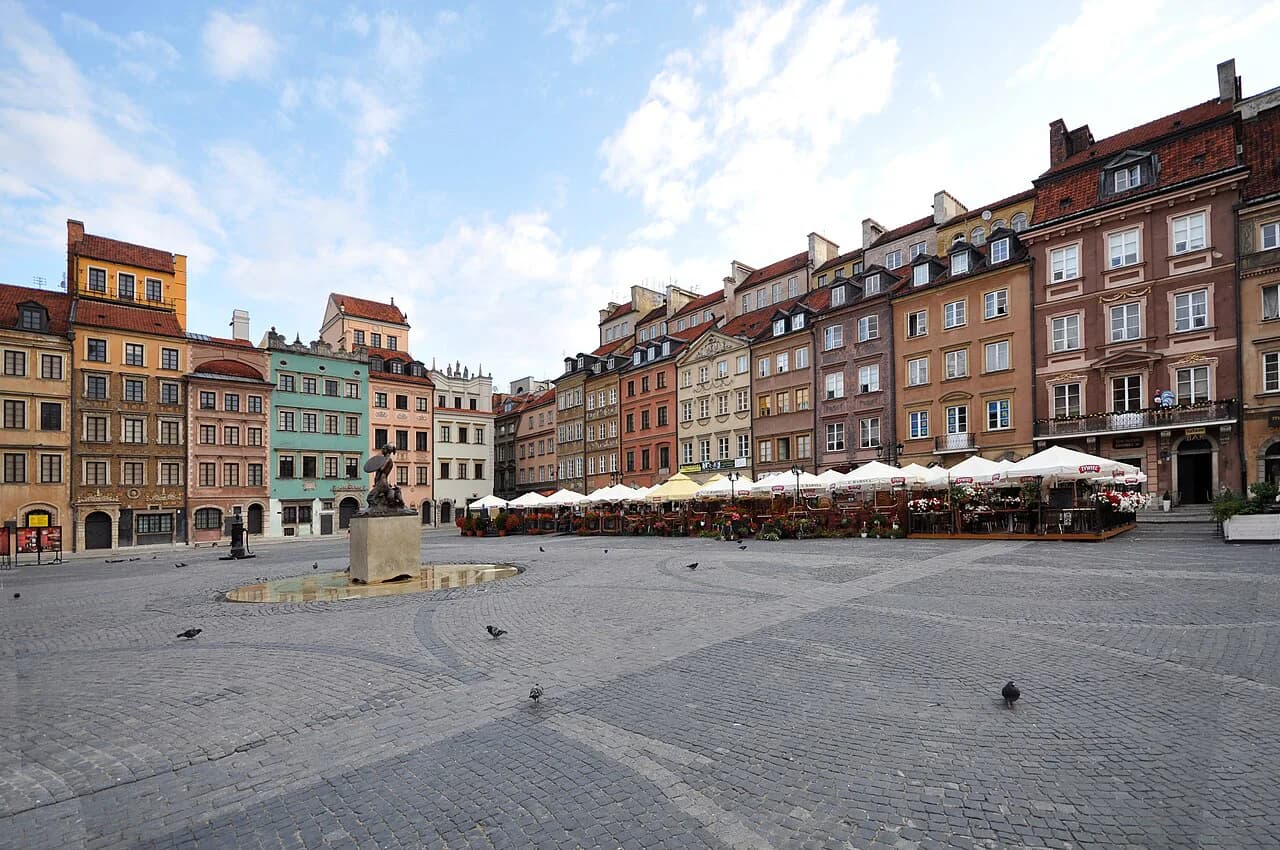
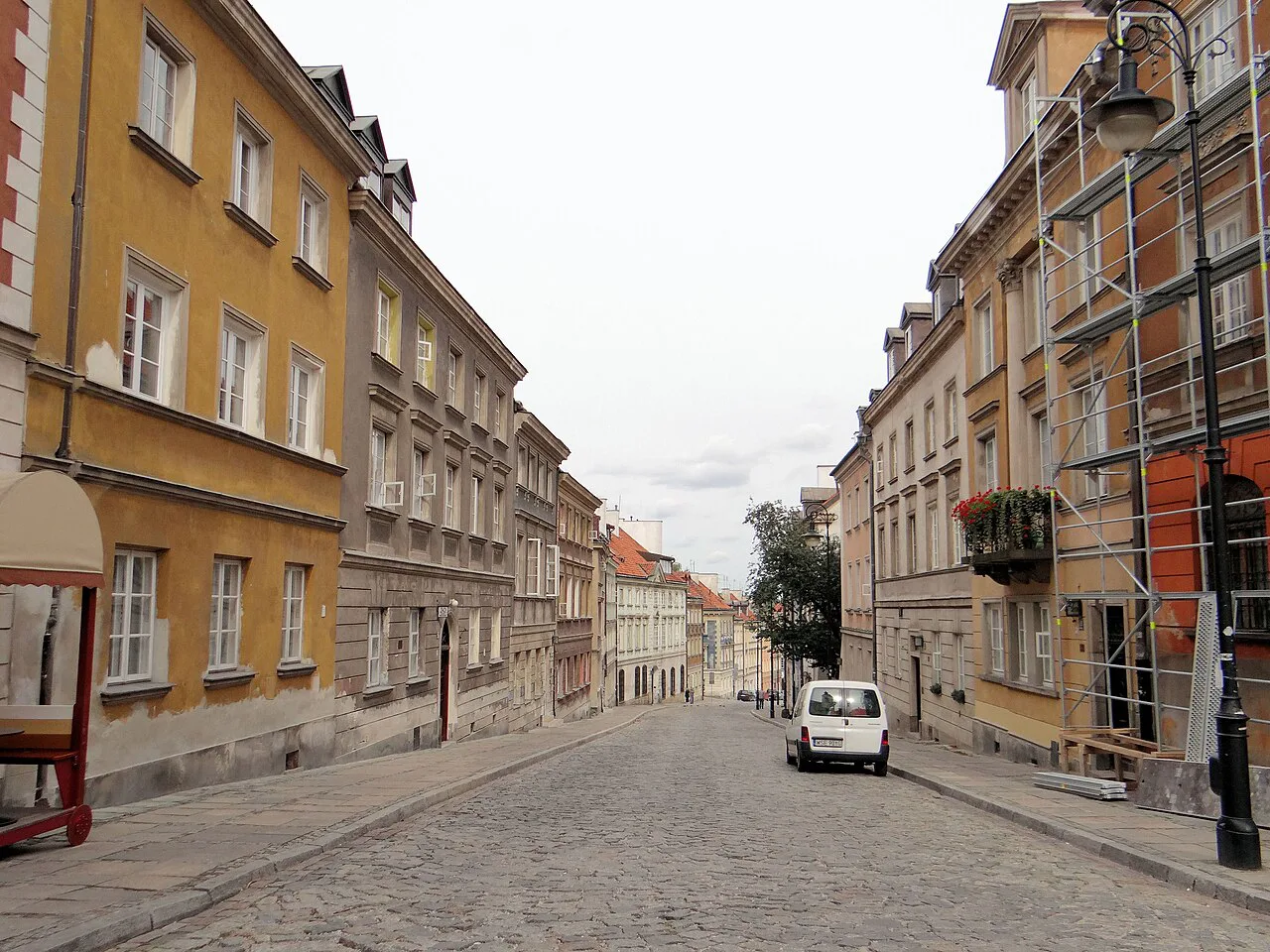
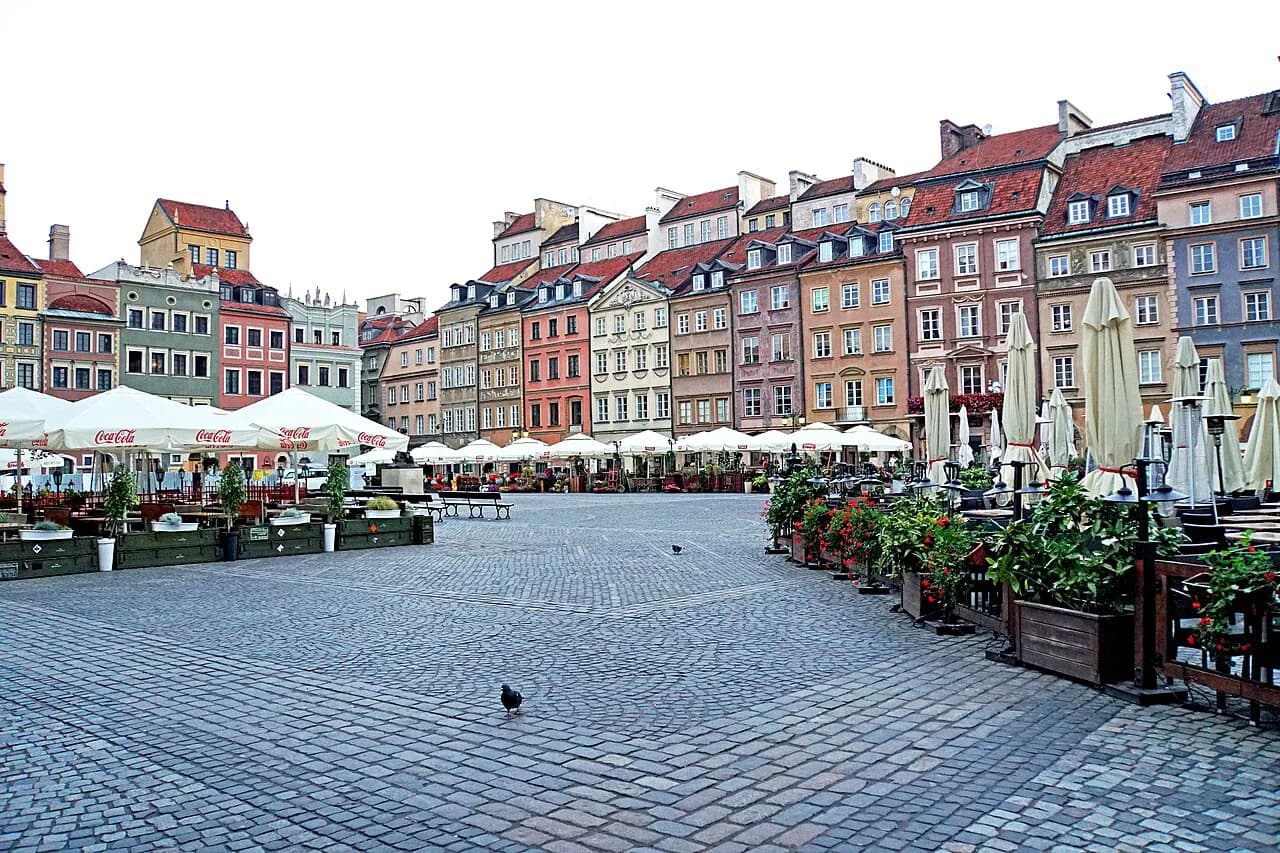
The Old Town was one of the Home Army's main strongholds, and its narrow streets and alleyways suited guerrilla tactics against the occupying German forces. It also carried symbolic weight as a piece of Polish heritage, which helped rally support and keep morale up among the fighters. Walking these streets today, the connection between the rebuilt architecture and the fighting is what the memorial route is designed to make legible.
The Museum of Warsaw's walk includes the Statue of the Little Insurgent, the site of the tank explosion on Kilińskiego Street, the corner of Długa and Freta Streets, and the house at Mostowa Street 27/29. It also takes in the Field Cathedral of the Polish Army at Długa Street 13/15, the field hospital at the Raczyński Palace at Długa Street 7, St Hyacinth's Church at Freta Street 10, the Heritage Interpretation Centre on Brzozowa Street, Dziekania Street, St John's Archcathedral, the Royal Castle and Sigismund's Column. Each stop is tied to a specific event or building rather than being a general sightseeing list, so the order carries the narrative.
Doing the Museum of Warsaw's self-guided walk
The walk is a self-guided audio route published by the Museum of Warsaw, beginning in front of the Warsaw Uprising Monument in Krasiński Square. It is aimed at English-speaking visitors curious about the city's history and takes about an hour and a half. Recordings accompany each stop, and full transcriptions are available for anyone who prefers to read rather than listen.
Come prepared: bring headphones, a charged phone or a powerbank, and comfortable shoes, because the route crosses cobblestones. The museum also publishes a map that locates the starting point and the other stops, so download it before setting out rather than relying on signposting on the day.
Visiting the memorials with care
These are active places of remembrance as well as sights, so keep the tone low-key: listen to recordings at a modest volume and give others room at the monument and in the churches along the route. The walk passes working churches, including St Hyacinth's and St John's Archcathedral, where visitors should observe normal etiquette for places of worship. Plan the route as a single sequence rather than dropping in on individual stops, because the audio commentary builds the story from one point to the next.
Books, documentaries and wider wartime sites
Reading or watching a documentary before you go makes the Old Town walk far easier to follow, since the recordings assume some familiarity with the sequence of events. Search for titles that cover the Home Army and the 1944 rising specifically, and check publication details so you are not reading a book about the 1943 ghetto uprising by mistake.
If the wartime story is the thread of your trip, Warsaw pairs naturally with other sites in the country: the Wolf's Lair (Wilczy Szaniec) in the north-east, the tunnels of project Riese in the Owl Mountains of Lower Silesia, and the memorial sites at Stutthof and Majdanek. Each is a different kind of place, and none is a substitute for the memorials in Warsaw itself.
Should the uprising walk be your first stop in Warsaw?
Yes, if you want the city's twentieth-century history to make sense before you see anything else: the Krasiński Square monument plus the Old Town audio route give you both the strategic story and the streets where it was fought, in about half a day. Do it early in your trip, then read the memorials you pass afterwards with the chronology in place.
Skip it only if your interest is architectural rather than historical, because the rebuilt Old Town rewards context, not a quick look. Check the museum's page for the current map and audio files before you set out.
Frequently Asked Questions
Was the Warsaw Uprising the same as the Warsaw Ghetto Uprising?
No. The Warsaw Ghetto Uprising took place in 1943, inside the ghetto, and was fought by Jewish resistance fighters. The Warsaw Uprising was a city-wide Home Army operation that ran from 1 August to 2 October 1944. English-language coverage often conflates the two, so check the date when you read about either.
Why didn't the Soviets help the Warsaw Uprising?
Soviet forces had reached the outskirts of Warsaw but did not intervene on the Home Army's side, and the Soviets refused a British request to use their air bases to resupply the insurgents. Historians argue that Stalin had his own postwar plans for Eastern Europe and did not want a strong independent Polish resistance in place when the war ended.
How long does the Old Town uprising walk take?
The Museum of Warsaw's self-guided audio walk takes about an hour and a half. It starts in front of the Warsaw Uprising Monument on Krasiński Square and continues through the Old Town, with recordings and transcriptions for each stop. Bring headphones, a charged phone and comfortable shoes for the cobblestones.
Sources
Notes for your next Polish city break
Optional updates to our Poland guides.
You might also like

Continue reading
More guides you'll find useful