Stutthof: Visiting the Former Camp Near Gdańsk
What Stutthof was, how it fitted into the Holocaust, and how to approach the memorial site near Gdańsk with honest historical context.
On this page
Stutthof is worth visiting if you want to understand how the German occupation of the Gdańsk region escalated from a local prison camp in 1939 into a camp that killed an estimated 65,000 people before 1945. It rewards preparation: the site is a memorial and museum rather than a display, and the history is denser than a quick stop allows. This guide covers what the camp was, who was held and killed there, and how to plan the visit.
What Stutthof was: a camp outside Germany's pre-war borders
Stutthof opened on 2 September 1939, the day after the German invasion of Poland, making it the first camp established by the Nazis beyond Germany's pre-war borders. It began as a civilian internment camp under the Danzig police chief, holding Poles and Jews from the Danzig region, which is now Gdańsk. In November 1941 it became a labour education camp before being absorbed into the regular concentration camp system.
That change in January 1942 matters for a visitor, because it explains why the site is presented as part of the SS-run camp network rather than as a regional prison. The Holocaust Educational Trust notes that incorporation into the national system brought expansion and a far larger, more organised prisoner population. Keep that sequence in mind as you walk the site: what you see was built and rebuilt across six years, not in one phase.
Who was imprisoned at Stutthof
The first prisoners were Poles and Jews from the Gdańsk region, and until the summer of 1944 most prisoners were Poles. Prisoners from the Soviet Union, Denmark and Norway were also held there as the camp expanded. The mixture reflects how the camp served the German occupation across northern Europe rather than a single targeted population.
From mid-1944 the camp took on a significant role in the Holocaust. Around 50,000 Jews were sent to Stutthof between summer and autumn 1944, in two main groups: Lithuanian, Latvian and German Jews evacuated from camps in the Baltic states as the Red Army advanced, and Jews of various nationalities sent from Auschwitz-Birkenau as slave labourers. That influx swelled the main camp and dozens of satellite camps across the region.
Why Stutthof was not an extermination camp yet still one of the deadliest
Stutthof was not an extermination camp like Auschwitz-Birkenau or Treblinka, meaning people were not murdered on arrival as a matter of course. Many prisoners still died from physical exhaustion through slave labour, disease, malnutrition, exposure to the harsh climate and abuse by guards, conditions generally regarded as among the worst in the Nazi camp system. Jewish prisoners were especially vulnerable, having already been weakened by years of starvation and abuse in ghettos and other camps before they arrived.
In 1944 the camp also had a small gas chamber, used to murder prisoners considered too sick to continue working. That detail is often missed by visitors expecting either a pure labour camp or a death factory, and it is the clearest illustration of how the categories blur in practice. Read the museum's own panels on this before moving on to the memorial areas.
The evacuation of early 1945
As the Red Army advanced in early 1945, prisoners were evacuated from Stutthof and its satellite camps towards territory still held by Germany, some on forced marches and others on barges. Conditions were appalling in every case: around 25,000 prisoners died in this period from cold, hunger, disease and shooting, with those who could not keep up shot on the spot by SS guards. Including these death marches, an estimated 65,000 of the camp's 110,000 inmates died, around 28,000 of them Jewish.
Those figures are estimates from historical research, not a register, and they are best read as a scale rather than a precise count. They also explain why the memorial landscape extends beyond the main camp: the satellite camps and march routes spread the suffering across a wide area of what is now northern Poland. If you have already followed the German occupation elsewhere in the country through our guide to WW2 Sites in Poland, Stutthof is the northern counterpart to the camps and battlefields further south.
Where the site is and what a visit involves
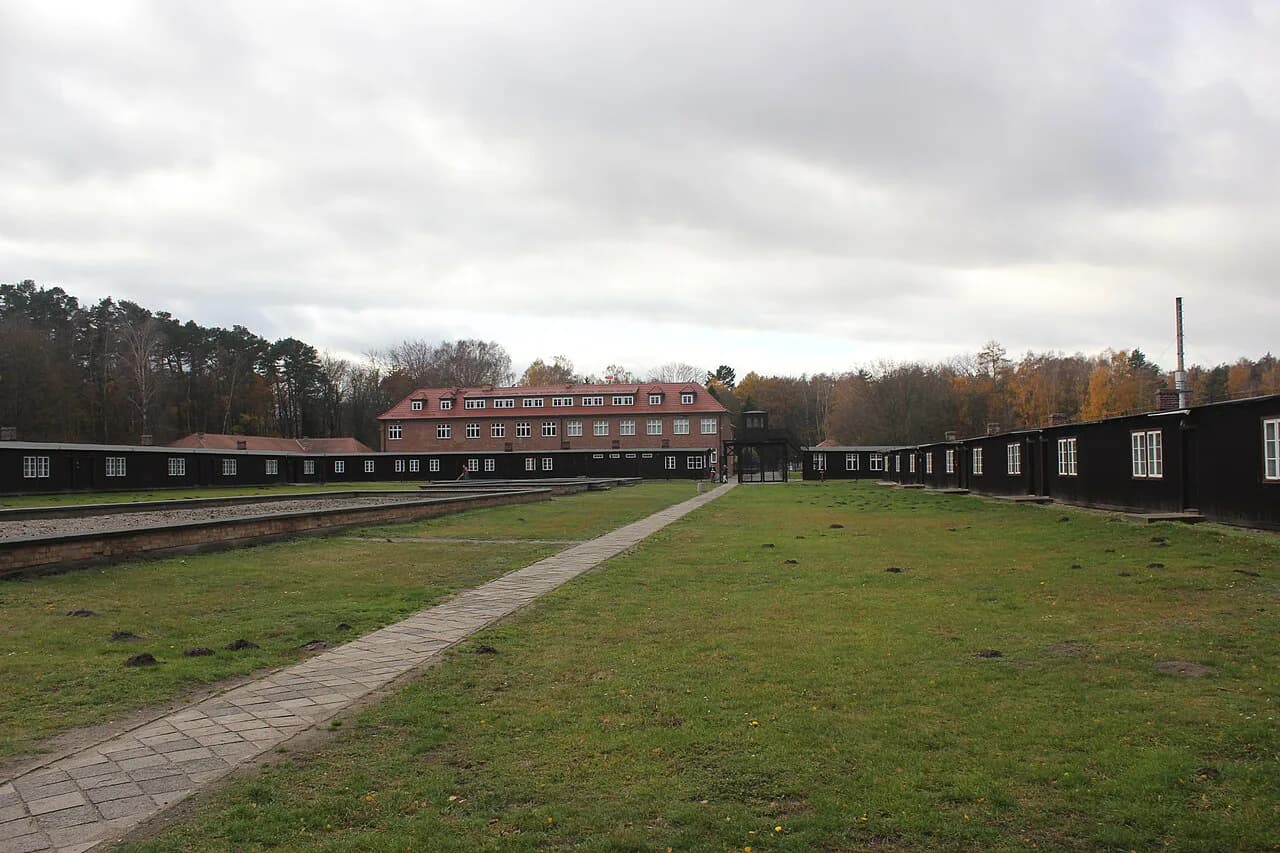
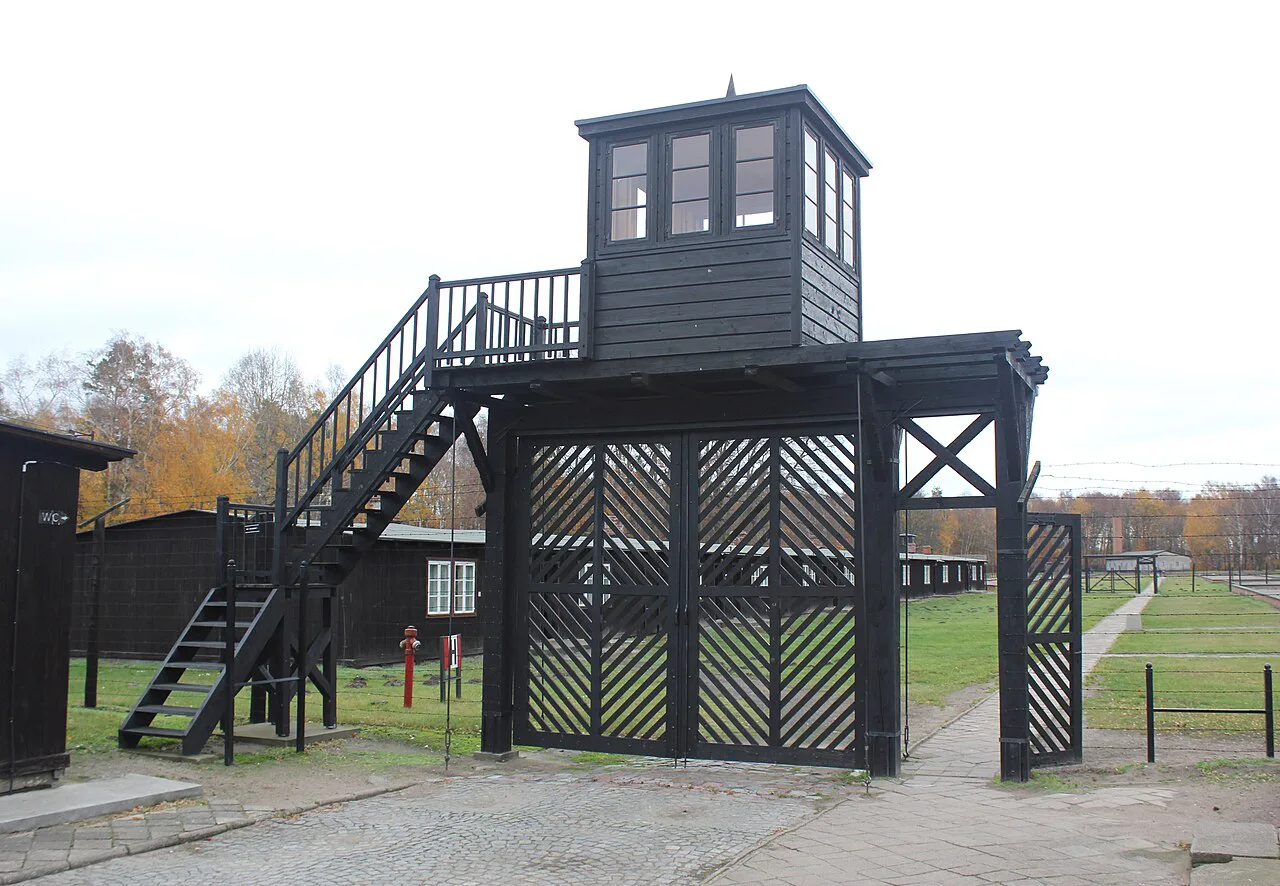
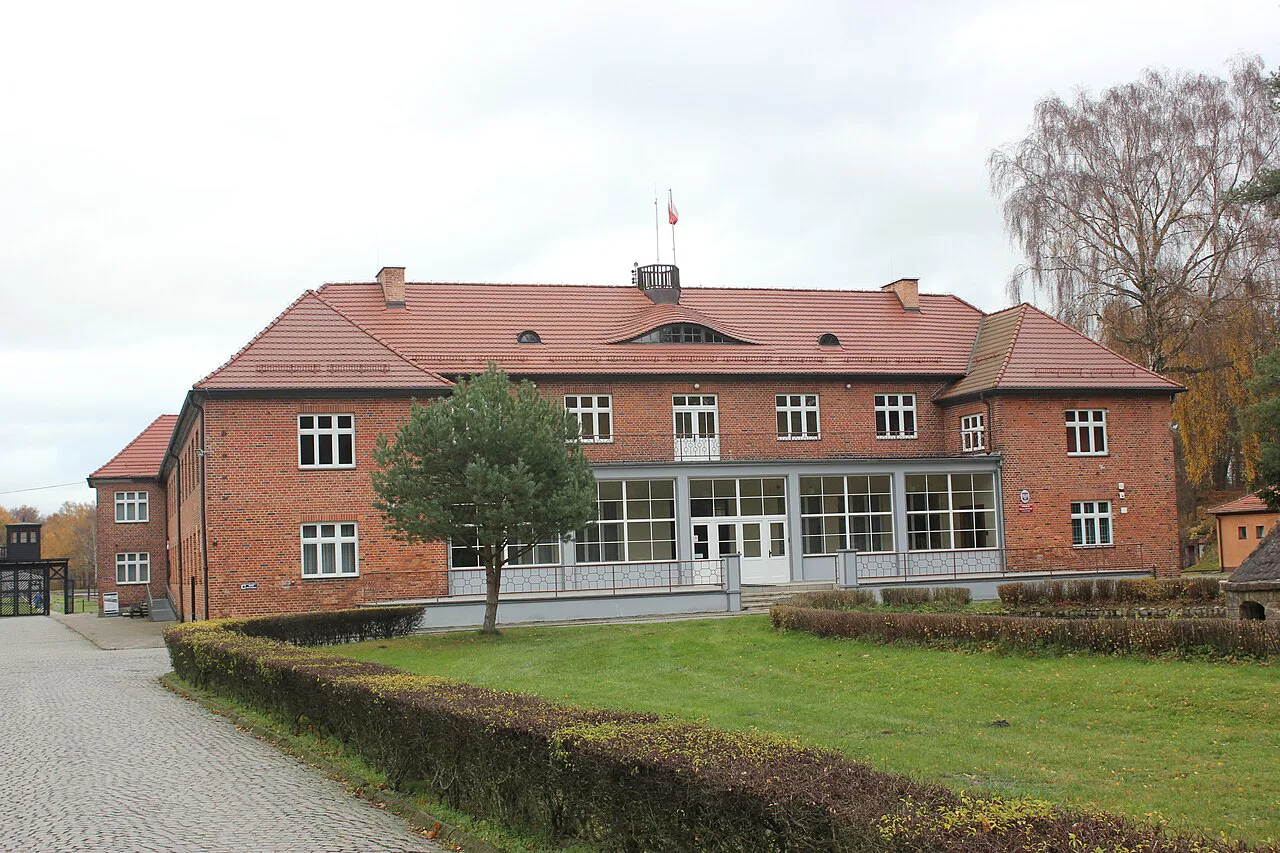
The former camp lies east of Gdańsk, in the village of Sztutowo, and the site is preserved as a memorial and museum with surviving buildings, watchtowers and prisoner barracks. Allow at least half a day: the grounds are large, the exhibitions are text-heavy, and the emotional weight slows most visitors down more than they expect. A rushed hour is worse than not going.
Treat it as the centrepiece of a day, not an item squeezed between Gdańsk's Old Town sights. Distances on foot between the main camp areas mean you should plan for walking in the open, with weather-appropriate clothing and no assumption of indoor shelter throughout.
How to behave at a former camp
The register is quiet and factual. Walk the site without commentary aimed at other visitors, keep phone calls and group chatter off the memorial areas, and photograph the buildings and memorials rather than posing cheerfully in front of them. This is not a rule imposed by the site but a normal courtesy in a place where tens of thousands died.
If you are travelling with children, decide in advance what they can absorb. The exhibitions deal with starvation, forced labour and mass death in plain terms, and the gas chamber is confronting. Many families choose to visit from the teenage years upwards, but that is a judgement for the adults travelling.
Practical points before you go
Opening days, admission charges and any tour arrangements are set by the museum itself, so confirm them on its own website before travelling rather than relying on older listings. The same applies to any guided tour sold from Gdańsk: check what the operator actually includes, since some tours cover transport only and leave the site interpretation to the museum displays. That one check is the difference between a well-planned visit and an afternoon waiting at a closed gate.
Fitting Stutthof into a Gdańsk city break
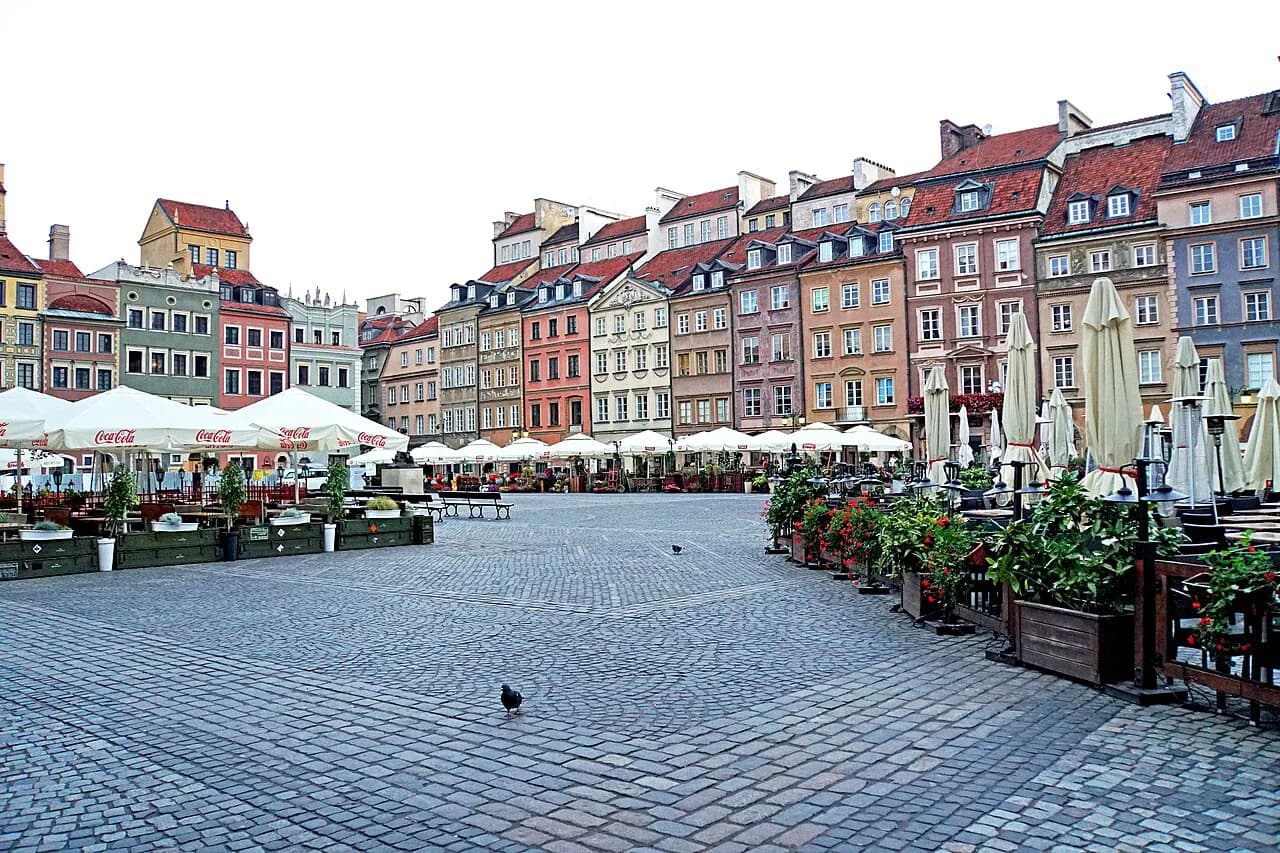
Stutthof works best as a deliberate half-day out of a longer Gdańsk stay, not as a stop on the way to anywhere else. Give it a morning or an afternoon of its own, then return to the city for something lighter rather than trying to pair it with another museum. The contrast is part of the point: Gdańsk's reconstructed Main Town and the camp sit a short drive apart.
If your trip is built around twentieth-century history, it pairs naturally with The Warsaw Uprising of 1944, which covers the same occupation years from a different angle and gives the destruction of Polish cities a wider frame. Reading about it beforehand makes the Stutthof exhibitions easier to place in sequence.
Should Stutthof be part of your Gdańsk trip?
Yes, if you are prepared to give it real time and to read rather than glance. Stutthof is not a comfortable stop, and the estimated 65,000 dead of 110,000 inmates deserve more than a photo opportunity between Gdańsk's riverside and its restaurants. It is the right choice for travellers who want the historical record at first hand.
No, if your city break is short and shaped around food, architecture and wandering. A three-day Gdańsk trip with no space for a sombre half-day is better served by skipping the camp entirely than by arriving unprepared and leaving quickly. Either decision is defensible; the mistake is treating it as a tick-box attraction.
Explore more Poland guides
Sources
Notes for your next Polish city break
Optional updates to our Poland guides.
You might also like

Continue reading
More guides you'll find useful