Polish Modern Architecture: Where to See It on a City Break
Polish modern architecture spans reconstructed old towns, Soviet-era landmarks and striking new museums. Here is where to find them and how to plan a city break.
On this page
Polish modern architecture is easiest to read as three layers stacked on top of each other: historic centres rebuilt after the war, a vast Soviet-era layer from the 1950s to the 1980s, and the museums and cultural buildings put up after 1989. For a short break, the payoff is that Warsaw and Kraków each hold all three within a compact area, and a handful of named buildings will teach you more than a week of general sightseeing. This guide names the specific places and suggests how to sequence them across one to three days.
What Polish modern architecture covers
The term covers everything from the twentieth century onwards, but in Poland it has an unusual twist: much of what looks oldest was built or rebuilt in living memory. Warsaw's historic core was reconstructed after wartime destruction in a style inspired by the views painted by Bernardo Bellotto, who worked in the city until 1780, and the same process reshaped Gdańsk. If you are tracing the long history of Polish architecture, this reconstruction story is the essential first chapter.
Below that sits the layer most travellers overlook. Brutalist Modernism of the Soviet type, vernacular wooden building in the Carpathians and post-1989 work in line with international trends all share the same streets, which is why the country now draws architects and designers as much as historians. The Adam Mickiewicz Institute in Warsaw, a public institution promoting Polish culture abroad, was preparing twentieth-century Polish architecture exhibitions for abroad for exactly this reason. Poland used its EU funding to build a run of new museums and support a new generation of designers, which is why the contemporary layer is so visible.
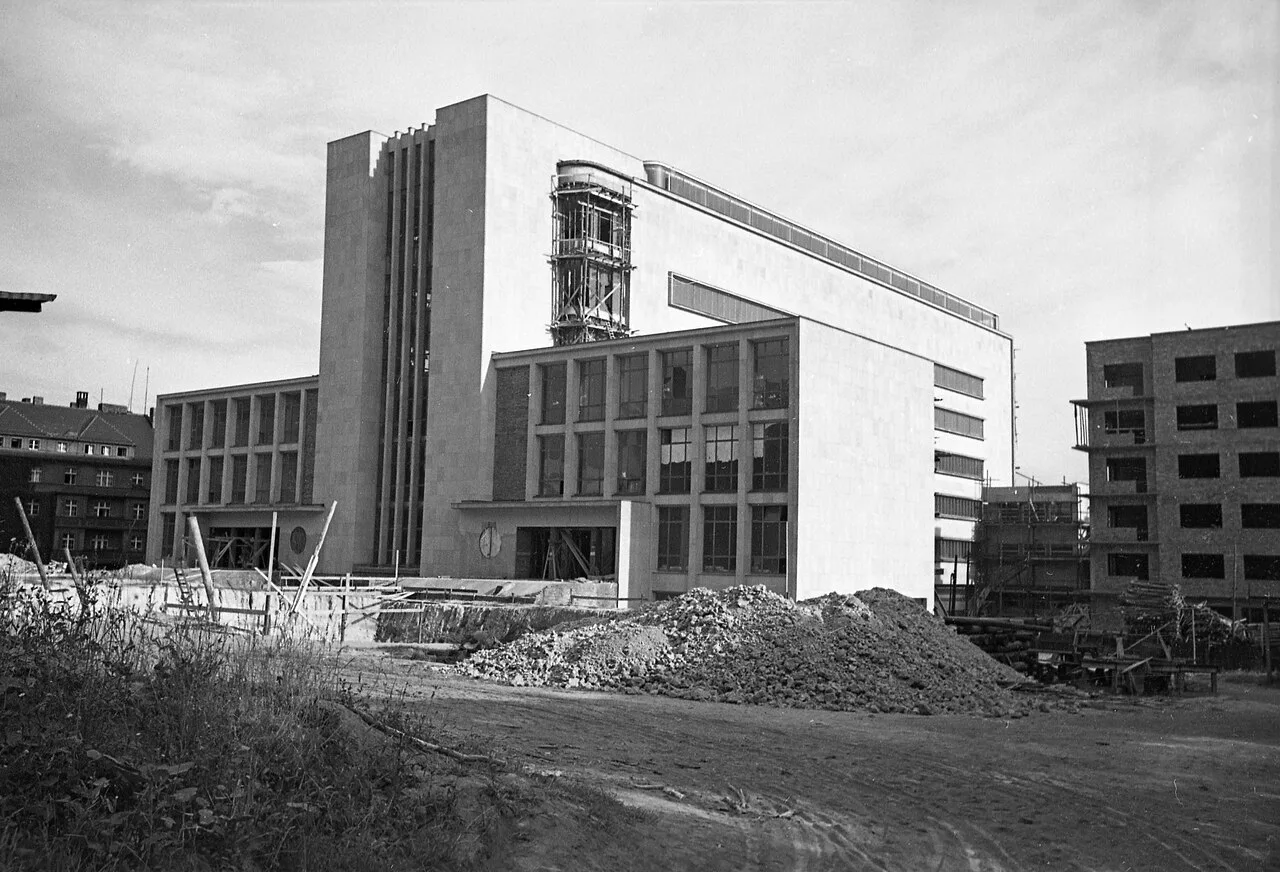
How the layers form: rebuilt centres, 1950s–80s, and after 1989
The first layer is a reconstruction choice. Everything in Warsaw's centre was razed under Hitler in 1939, and the castle, cathedral and surrounding old town were rebuilt in a style drawn from Bellotto's paintings. Read the layers chronologically: start with the rebuilt core, then look for what was added during the communist decades, then finish with the glass and concrete of the last thirty years.
The middle layer is broader than the tower blocks suggest. Between the 1950s and 1980s plenty of residential blocks went up with little to recommend them, but a number of high-quality buildings from the same period have been saved and are now treated as part of the architectural canon rather than an embarrassment.
The top layer is the current one. Poland's building programme after 1989 is the quickest way to see contemporary Polish architecture in use rather than in photographs, and the new museums are the most accessible examples for a visitor.
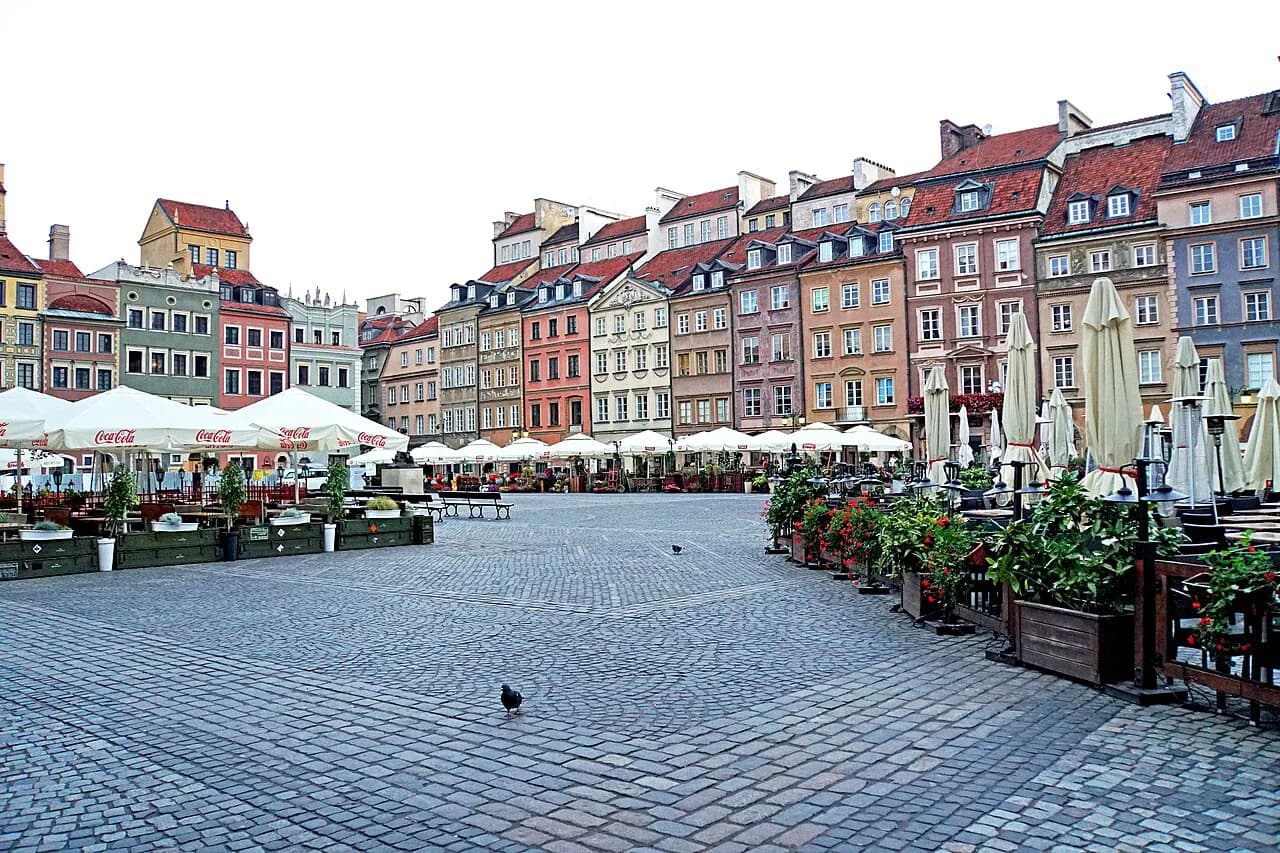
Warsaw: the Old Town rebuilt after wartime destruction
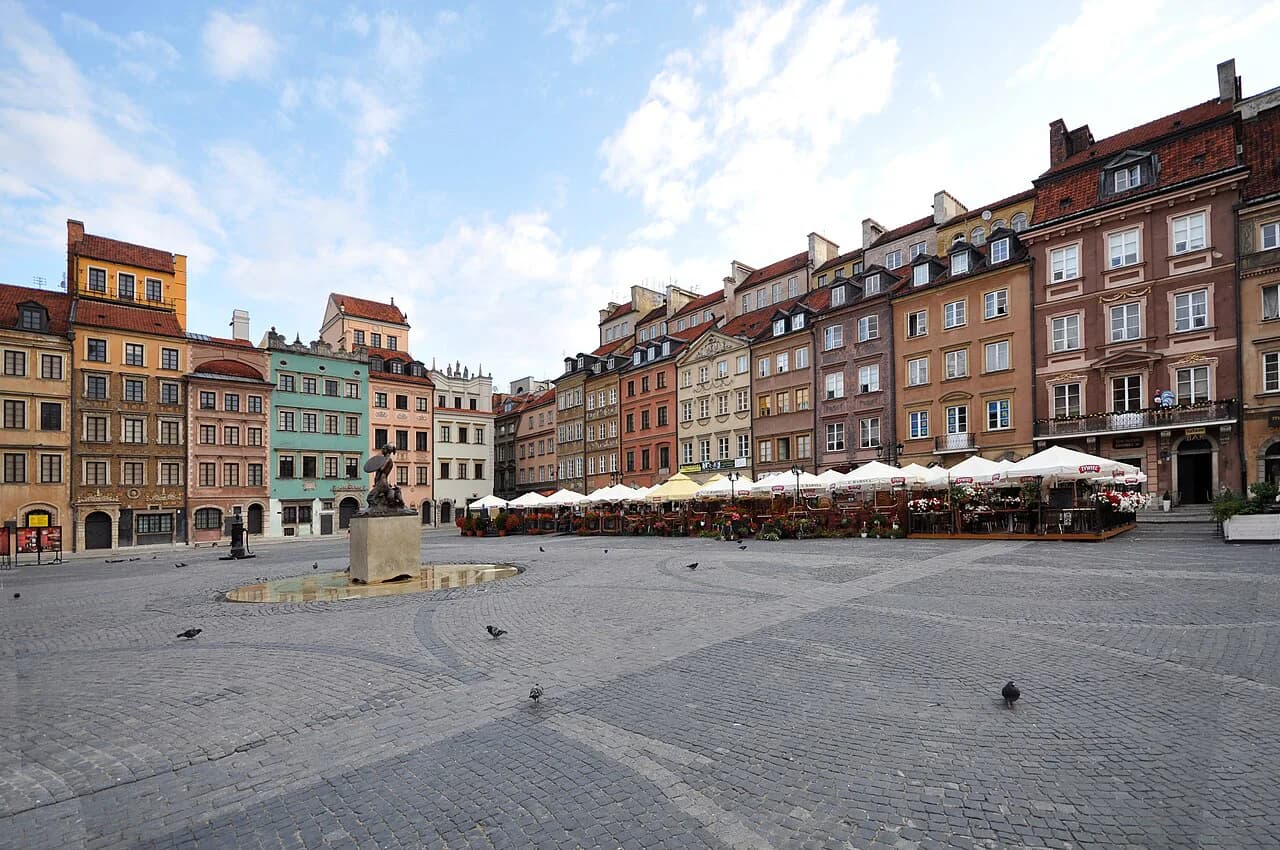
Warsaw is where the argument about reconstruction is most visible. The Old Town was rebuilt after being razed in 1939, with the castle and cathedral restored in a form guided by Bellotto's eighteenth-century views, and the debate over how far to go was intense at the time. An exhibition on the reconstruction once ran at the University Library, documenting how the city weighed faithfulness against modern needs.
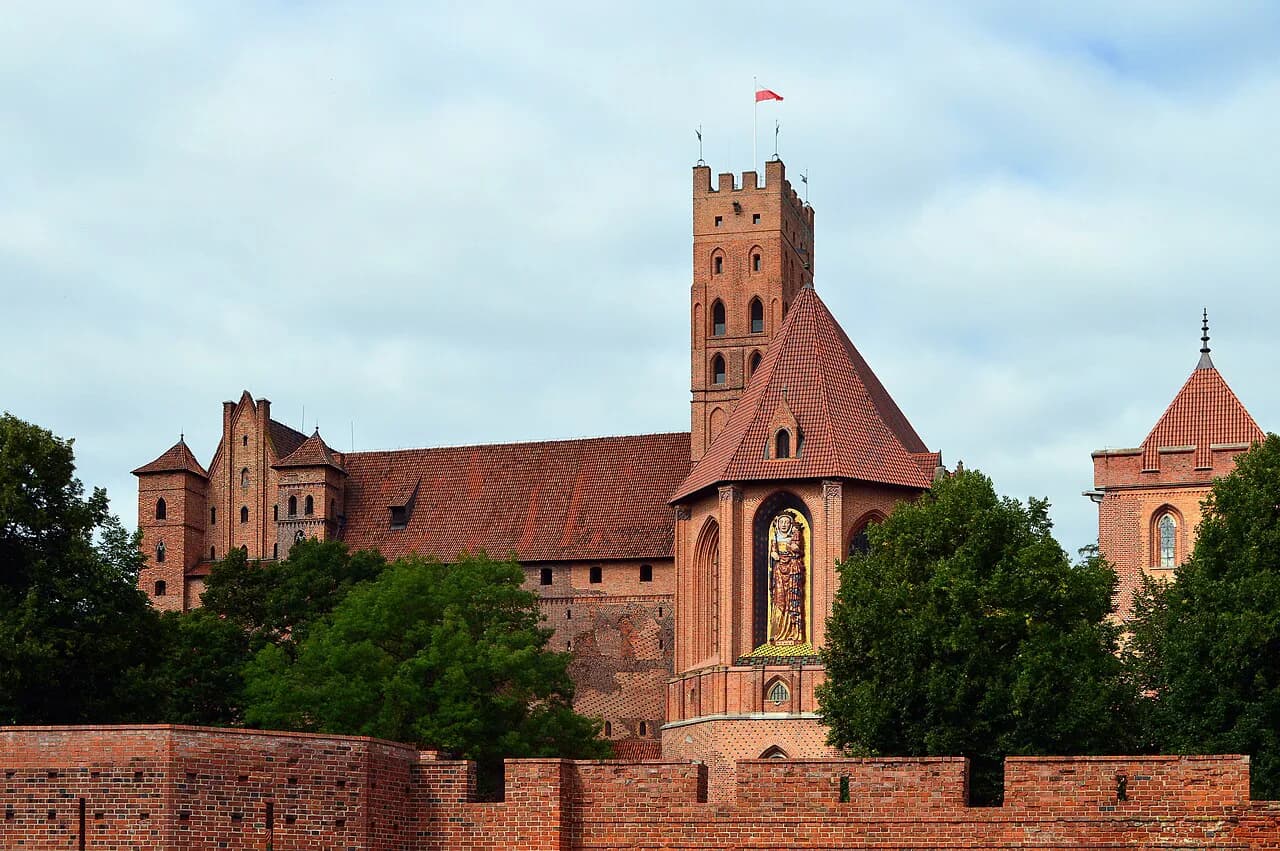
For a visitor the practical point is that this is not a medieval quarter you are walking through but a post-war reconstruction of one, and knowing that changes how you look at the brickwork and the rooflines. Pair it with the wider story of Polish architecture across the country, from Malbork Castle to the Toruń Old Town, to see how much of Poland's heritage was rebuilt rather than merely restored.
Warsaw: the University Library and post-war buildings still in use
The University Library, known as BUW, is a useful anchor for the post-1989 layer: it was designed in 1999 by Marek Budzyński and Zbigniew Badowski, and its monumental façade hides interiors that are remarkably easy to use. It also hosted the reconstruction exhibition, which makes it a natural first stop if you want the argument before the buildings.
For the middle layer, head for the Cedet building on Aleje Jerozolimskie, an elegant shopping centre whose rounded curtain wall carries arrow-shaped neon lights. It is the clearest demonstration that the 1950s–80s produced more than housing blocks, and it sits on a main artery rather than down a side street, so it costs you little time to see.
Warsaw: the Koneser vodka distillery in Praga
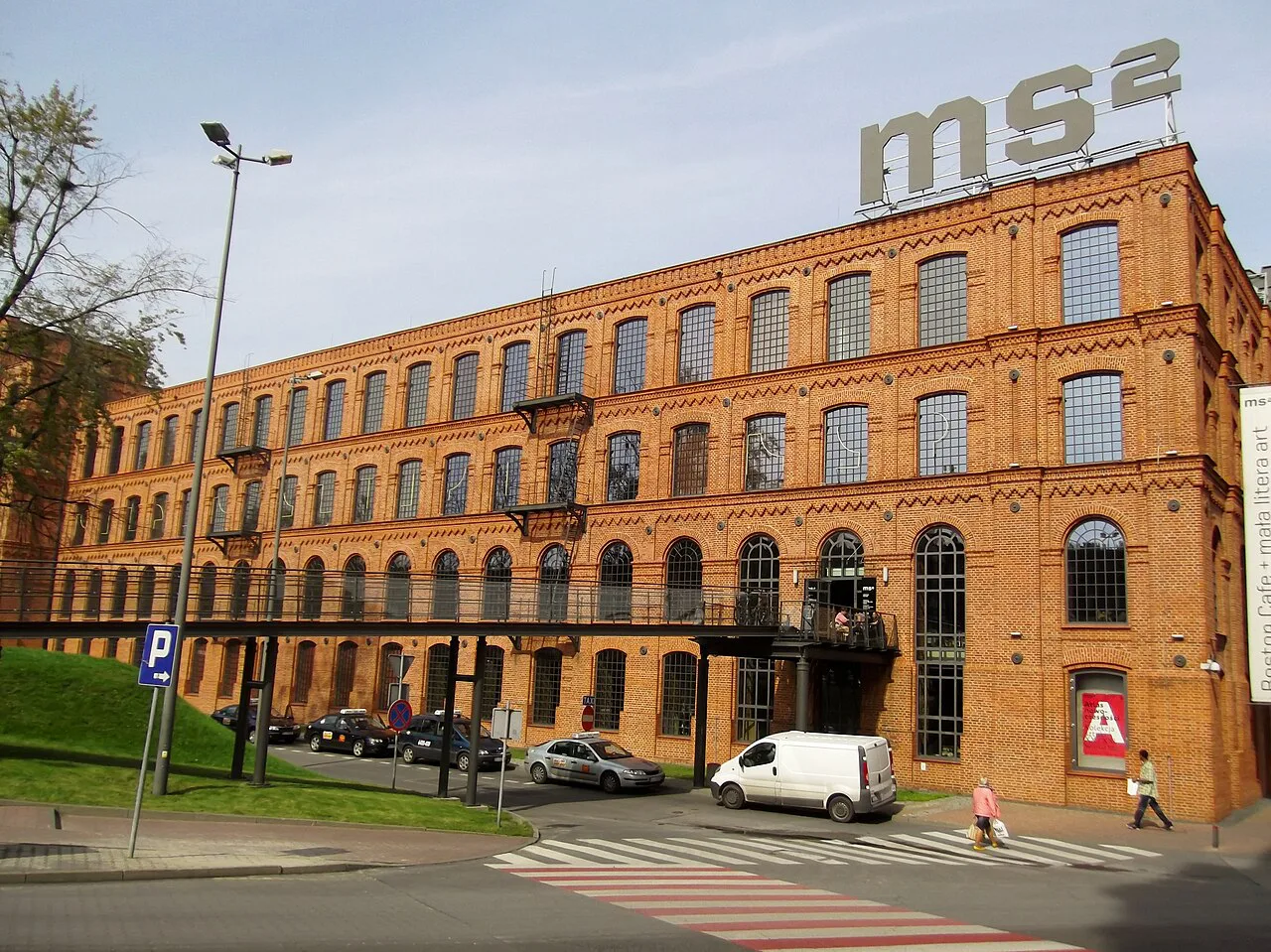
Across the river in Praga, the former Koneser vodka distillery has been converted into a mix of shops, bars and exhibition space for younger artists. It is the same repurposing formula now common across Europe — disused industrial buildings turned into cultural quarters — and it gives you a reason to cross the Vistula rather than stay in the centre.
Treat it as a half-day rather than a single stop: the appeal is the complex as a whole, not one exhibit. If your interest runs to nineteenth-century industrial building rather than the modern conversion, the brick Gothic tradition in trading cities such as Główne Miasto gives useful context on what these structures originally looked like.
Kraków: the Jubilat building near the Vistula and the castle
Kraków's Jubilat commercial building stands on a street corner near the Vistula, opposite the castle, and it is a compact lesson in Soviet-era quality: a complex system of interlocking glazed elements and sunscreens. Because it is right by the castle, you can see it on the way to or from Wawel without planning a separate trip.
This is the building to use if you want to argue that 1950s–80s architecture rewards a second look. The glazing and sunscreens change with the light through the day, so approach it from the river side first and then from the street corner for the full effect.
Kraków: the Manggha Centre and MOCAK near the Schindler factory
East of the centre, the Manggha Centre is a museum of Japanese art designed by Arata Isozaki in 1994, with undulating volumes running along the Vistula. Further along the same stretch, MOCAK opened in 2011 in a building by the Florentine architect Claudio Nardi, alongside the Schindler factory made famous by Spielberg's film. The two make a natural pairing, but check each museum's current opening days before you set out.
Both buildings are as much the point as their collections, so budget time to look at the exteriors and the riverbank setting, not just the galleries. If you are in Kraków mainly for older architecture, note that the city also carries a strong fin-de-siècle layer, and a walk through its Art Nouveau streets makes a good counterweight to the twentieth-century material.
Zakopane's wooden chalets and the style drawn from local crafts
In the early twentieth century the architect Stanisław Witkiewicz created a style in Zakopane based on local arts and crafts, producing wooden chalets richly decorated inside and out, consistent down to the furnishings, fabrics and crockery. That artistic period coincided with Poland regaining independence in 1918, and it is now considered fundamental to the country's sense of identity. The Zakopane style is the one strand of Polish architecture here that predates the twentieth century's main currents but shaped how later architects thought.
If the wooden buildings appeal, build a short stay around them rather than treating the town as a mountain base; the villas and their interiors are the attraction. Zakopane sits beneath the Tatra mountains, but the architecture is reason enough to go.
How to fit the architecture into a one- to three-day city break
With one day, pick one city and one layer. In Warsaw, do the rebuilt Old Town in the morning and BUW or the Cedet building in the afternoon, then cross to Koneser in Praga if time allows; in Kraków, see the Jubilat by the castle, then take the riverbank walk east to Manggha and MOCAK.
With two days, give Warsaw the full day it needs and keep Kraków for the second, accepting that you will see exteriors rather than exhibitions. With three days, add the museums properly and consider Zakopane only if you are staying longer than a city break allows, since it needs a journey of its own.
The main trade-off is geography: several of the best buildings sit outside the Old Towns, in Praga across the Vistula or along the river east of central Kraków, so plan a loop rather than a wander. Opening days vary between museums, so check the specific museum's own site for the week you travel before fixing your route.
Which building earns your only free afternoon?
If you have a single afternoon, choose Warsaw's rebuilt Old Town and finish at BUW: the two together explain reconstruction, the Bellotto-inspired design and the post-1989 building programme, and they make a natural single route. In Kraków, the equivalent compact choice is the Jubilat by the castle, which asks nothing of your schedule beyond a detour on the way to Wawel.
Save Koneser, Manggha and MOCAK for a longer stay, when you can see them properly rather than photograph the façades. Whichever you pick, confirm the museum's opening days for your dates before you build the day around it.
Frequently Asked Questions
Is Warsaw's Old Town original or rebuilt?
It is a reconstruction. The centre was razed under Hitler in 1939, and the castle, cathedral and surrounding old town were rebuilt in a style inspired by the views painted by Bernardo Bellotto, who worked in the city until 1780. Walking it with that in mind makes the brickwork and rooflines far more interesting.
How much time do I need for Polish modern architecture on a city break?
One day gives you one city and one layer — for example Warsaw's Old Town plus BUW. Two days lets you add Kraków's Jubilat and the riverbank museums as exteriors, and three days lets you go inside the museums rather than just past them, checking each museum's current opening days beforehand.
Where can I see Soviet-era architecture in Kraków?
The Jubilat commercial building is the handiest example, standing on a street corner near the Vistula opposite the castle, with a system of interlocking glazed elements and sunscreens. Because of its position it costs almost no extra time on a walk to or from Wawel.
Sources
Notes for your next Polish city break
Optional updates to our Poland guides.
You might also like

Continue reading
More guides you'll find useful