
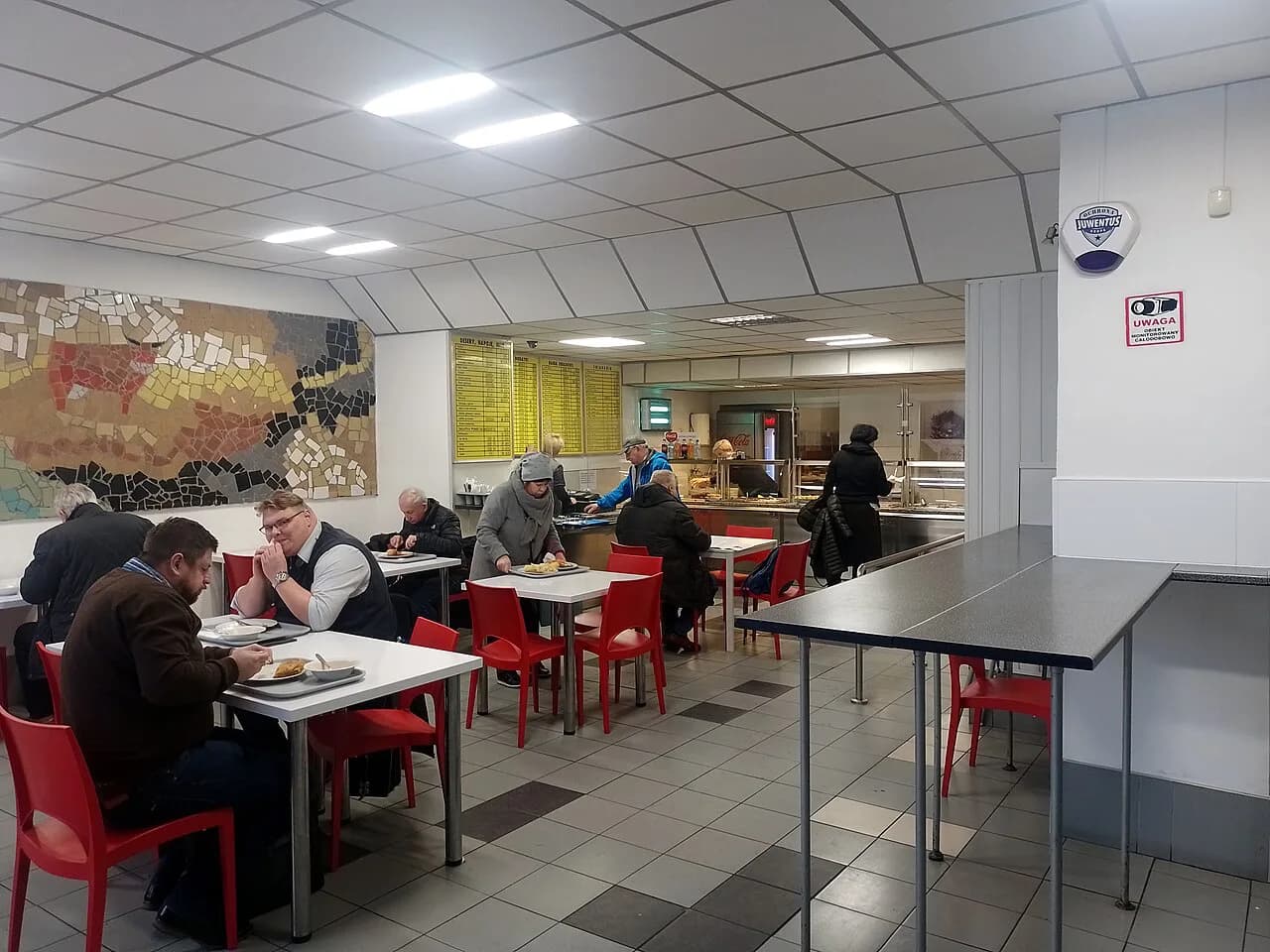
Milk Bars in Poland: What a Bar Mleczny Is and How to Order
Polish milk bars are subsidised canteens serving cheap home cooking. Here is how a bar mleczny works, how to order, what to eat and where to find them.
On this page
A milk bar, or bar mleczny, is a plain Polish canteen serving traditional home cooking at low prices, and it is the cheapest proper sit-down meal a city-break traveller will find. Warsaw has a strong cluster of them, including long-running canteens and newer takes on the format. This guide covers what a milk bar is, how the ordering system works, which dishes to look for and which Warsaw addresses fit a day's walking route.
It is not a secret find or a culinary trend, and treating it as one misses the point. A milk bar is somewhere working people eat lunch quickly, the menu is written on the wall and the room is functional rather than designed. Go for the food and the price, not the atmosphere.
What a milk bar is and why it is cheap
Milk bars began in the communist era as a way of giving workers access to affordable, nutritious meals, and they became a fixture of everyday Polish life. They continue to serve simple staples such as dumplings, potato pancakes and chicken soup, and they are still valued for keeping costs down. Think of them as publicly minded canteens rather than restaurants.
The subsidy model is what separates a milk bar from a cheap restaurant. Many small workplaces never had their own canteen, so the state subsidised these public ones to fill the gap, and present-day milk bars are privately owned but still partly subsidised, which keeps prices low. That is why a full plate of home cooking costs a fraction of a mid-range restaurant main.
Menus stay close to Polish home cooking rather than restaurant cooking: dairy dishes, soups, dumplings and breaded cutlets. If you want a broader tour of the cuisine before you go, start with our guide to Polish Food, which covers the dishes you will meet across the country.
Why the name mentions milk
True to the name, milk bar menus originally centred on dairy-based dishes and, of course, milk. Cheese-stuffed pierogi were part of that dairy repertoire, and milk itself was served alongside the food. The name stuck even as the menus widened.
Today you will find far more than dairy. Expect soups, dumplings, potato pancakes and breaded meats on the same board, which is why the format suits anyone who wants a full savoury meal rather than a snack. Read the whole board before deciding.
How to order: till first, then the hatch
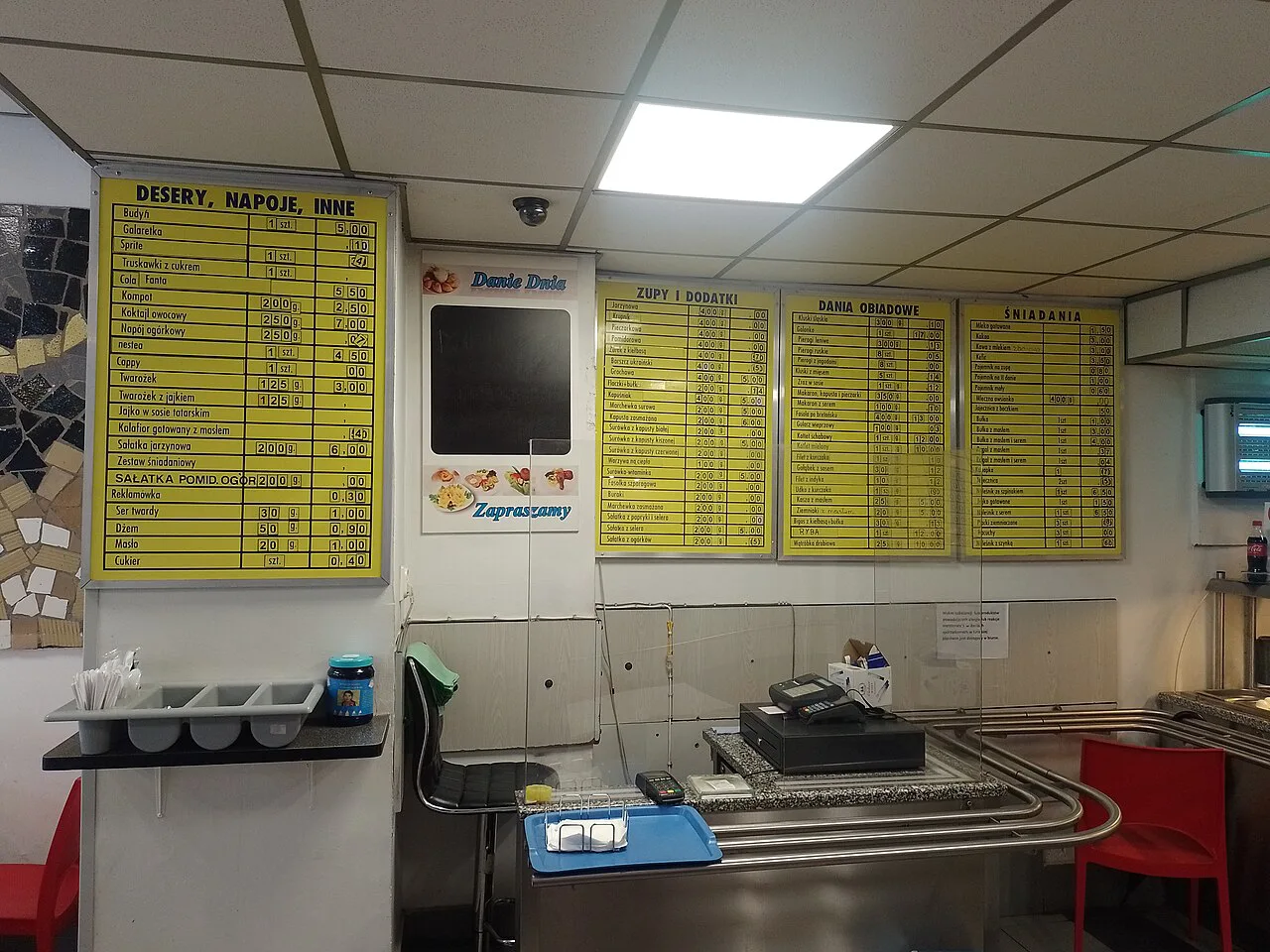
The step first-timers get wrong is the order of operations. You queue at the till, choose from the menu on the wall and pay there, then take your receipt to the serving hatch and collect your food when it is called. Milk bars are often busy, so a queue is normal rather than a warning sign.
Queues move quickly because the food is already cooking at a busy bar, and the wait for a hot plate is usually short rather than an afternoon gone. If you are nervous about ordering, look up the menu before you arrive and learn how to pronounce your dish in Polish, which guards against confusion at the till.
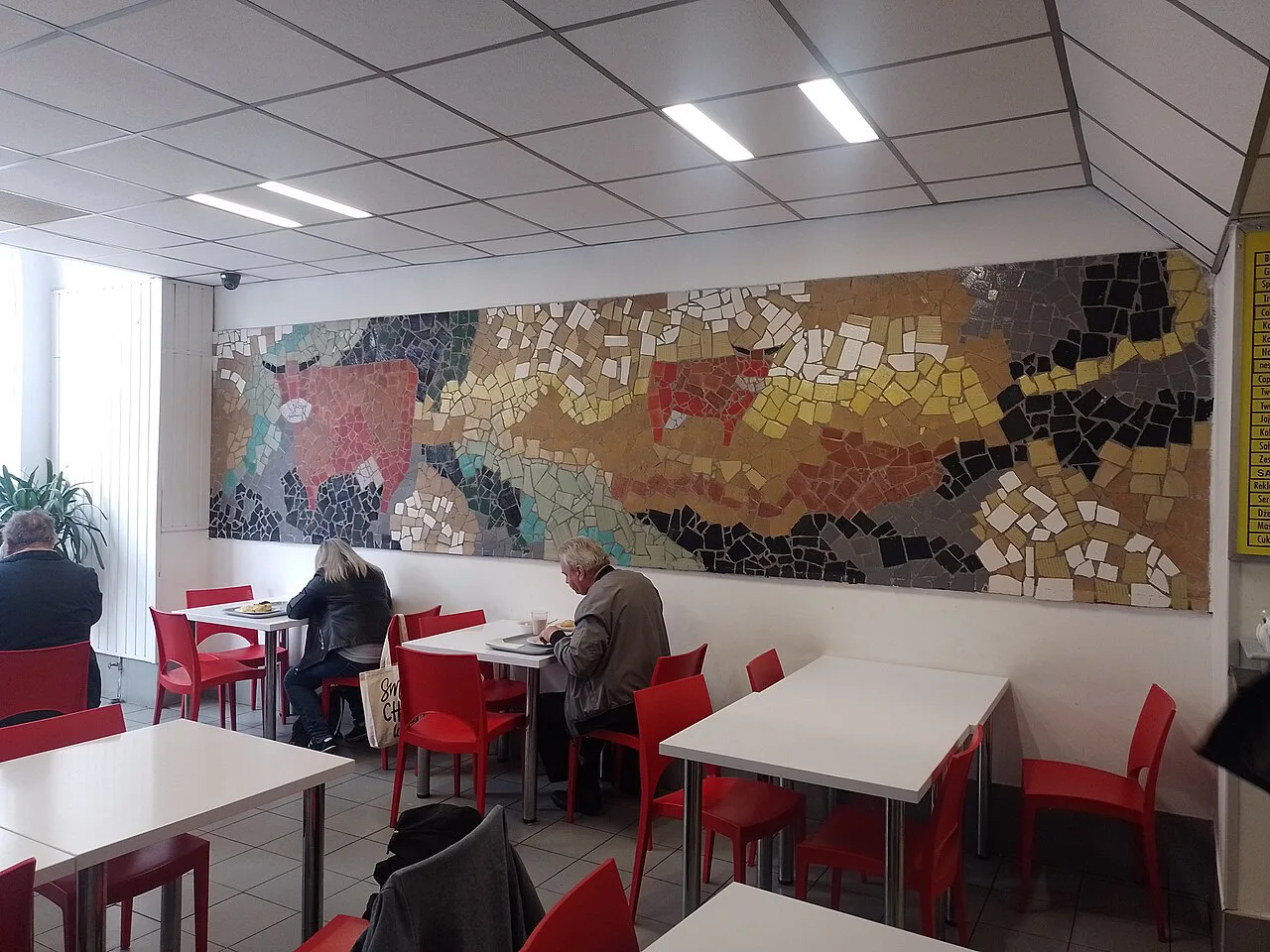
Rooms are simple: tiled floors, wooden tables and a window where you return your dishes when you finish. Clearing your own tray is part of the routine. Cash and cards are both common in Polish cities, but carry some cash in case a smaller canteen's card machine is out of action.
What to eat: the dishes to look for
Start with the soups. Rosół is a clear chicken broth, Żurek is a sour rye soup, and barszcz czerwony is beetroot soup, all listed on typical Warsaw milk bar boards. On a cold day a bowl of Żurek with bread is a meal in itself.
For the main event, pierogi ruskie, filled with potato and cheese, are the safest introduction to Polish dumplings, and they appear on nearly every milk bar menu. Our guide to traditional Polish dishes explains the wider repertoire if you want to branch out.
Kotlet schabowy is a breaded pork cutlet, usually served with mashed potatoes and pickles, and it is the most filling thing on most boards. Pair it with a side of placki ziemniaczane, potato pancakes with sour cream, if you are hungry after a long morning of walking.
Beyond that, look for gołąbki (cabbage rolls stuffed with meat and rice), bigos (hunter's stew of cabbage and meat) and naleśniki (crepes with cheese or jam). A well-made cabbage roll has a sauce that lets the meat and cabbage show through rather than drowning them, and bigos and naleśniki turn up on Warsaw boards alongside the soups and dumplings.
If you cannot decide, point at what the person ahead of you is collecting from the hatch. It is the fastest way to order something good, and staff are used to it.
What a meal costs and why it undercuts restaurants
Milk bar food is inexpensive by Polish city standards, and the subsidy is the reason. Because these canteens are publicly supported, they can charge far less than a restaurant for a plate of the same home cooking. Budget for a full lunch rather than a snack, and expect change from a mid-range restaurant main.
Prices are posted at the till and on the wall board, so check the board rather than relying on a guide written months ago. Ordering one soup and one main is usually plenty for lunch; a side of potatoes or pancakes is optional.
Warsaw milk bars worth a lunch stop
Bar Mleczny Lindleya 14 sits just outside the city centre on Lindleya Street, and its menu runs to Żurek and pierogi ruskie, with daily specials that change. It is a good stop if you are exploring the streets west of the centre and want a sit-down lunch rather than a snack.
Sztuka Mleka on Grzybowska pairs the canteen format with a sleeker room, and its menu includes bigos, naleśniki and placki ziemniaczane. The location near the business district makes it an easy lunch if you are heading for the Saxon Garden or the Palace of Culture and Science afterwards.
Bar Mleczny Mokotowska 22 is on one of Warsaw's most strollable streets, and its kotlet schabowy with mashed potatoes and pickles is the dish to order. It suits a shopping-and-walking day along Mokotowska rather than a detour.
Marszałkowski Bar Mleczny on Marszałkowska is the old-school option, with rosół, placki ziemniaczane, pierogi ruskie and barszcz czerwony served plain and central. Its position makes it the easiest to slot into a day of sightseeing, so it is a sensible fallback when you are near the main axis of the city.
Dziki Bar Mleczny in Żoliborz, at Dzika 4, is the modern end of the spectrum, with vegan pierogi and gluten-free placki ziemniaczane on the menu. It is the one to choose if someone in your group has dietary needs, and a walk through Żoliborz or its parks afterwards makes a natural finish.
Practical etiquette and when to skip a milk bar
Expect queues at peak lunch hours, shared tables in busy rooms and modest interiors with no table service. That is the format, not a fault. Eat, clear your tray and move on, which is what makes a milk bar fit neatly into a sightseeing day.
Milk bars outside Warsaw
The format is national, not a Warsaw speciality. Kraków's Bar Mleczny Krakus in Podgórze, for example, runs the same system of a wall menu, a till and a hatch, and its menu covers pierogi, goulash, chicken filet and schabowy. Treat it as a format example rather than a specific recommendation, and for a wider picture of the dishes themselves see our guide to Traditional Polish Dishes.
Any Polish city of reasonable size has at least a couple of milk bars, usually near offices, universities or transport hubs where people need a quick lunch. Look for the words bar mleczny on a plain shopfront rather than a polished restaurant sign, and treat it as an everyday canteen rather than a visitor attraction.
When a milk bar is the wrong choice
A milk bar is not the place for a long sit-down dinner or a special occasion, and it is not a spot for a quiet evening out. The service is fast, the room is basic and the point is the food and the price. If you want linen tablecloths and a slow meal, choose a restaurant instead.
For serious dietary restrictions beyond the modern options at a place like Dziki, the menu may not have enough choice. Check the board before you queue so you do not hold up the line while deciding.
Which milk bar fits your day?
Build lunch around where you are walking rather than making a special trip across the city. Central picks are Marszałkowski on Marszałkowska and Sztuka Mleka on Grzybowska; Lindleya 14 and Mokotowska 22 suit days spent wandering west and south of the centre, and Dziki in Żoliborz is the one for dietary needs.
Check the door for current opening days before you set out, as city-centre canteens can keep different hours at weekends from weekdays.
Explore more Poland guides
Frequently Asked Questions
Do they sell milk in Polish milk bars?
Yes, milk was part of the original dairy-focused menu, along with cheese-filled dumplings. Today the menus run much wider, but the dairy heritage explains the name.
What is Poland's most famous dish?
Pierogi are the most internationally recognised Polish dish, and the potato-and-cheese version, pierogi ruskie, is the usual starting point at a milk bar. Kotlet schabowy, the breaded pork cutlet, is the other everyday staple.
Are milk bars good for vegetarians?
Pierogi ruskie, placki ziemniaczane and naleśniki are meat-free options on most boards, and a few canteens offer a fuller vegetarian menu. If you need vegan or gluten-free food, a modern milk bar such as Dziki in Warsaw's Żoliborz is more likely to have an option than a traditional canteen.
Sources
Notes for your next Polish city break
Optional updates to our Poland guides.
You might also like



Continue reading
More guides you'll find useful





