Zakopane Style: Witkiewicz's Wooden Architecture and Villas to See
What the Zakopane Style is, who created it, and which wooden villas in Zakopane show it best, from Villa Koliba to the Jaszczurówka church.
On this page
The Zakopane Style is a late 19th-century Polish architectural style that takes the wooden building of the Podhale highlanders and turns it into a designed, national architecture, most visibly in villas and churches around Zakopane itself. This guide covers who created it, which buildings to see in Zakopane, and what to look for inside and out.
It is one of the threads worth pulling if you are following Polish architecture across the country, because it sits quite separately from the brick and stone traditions of the north and west.
What the Zakopane Style is
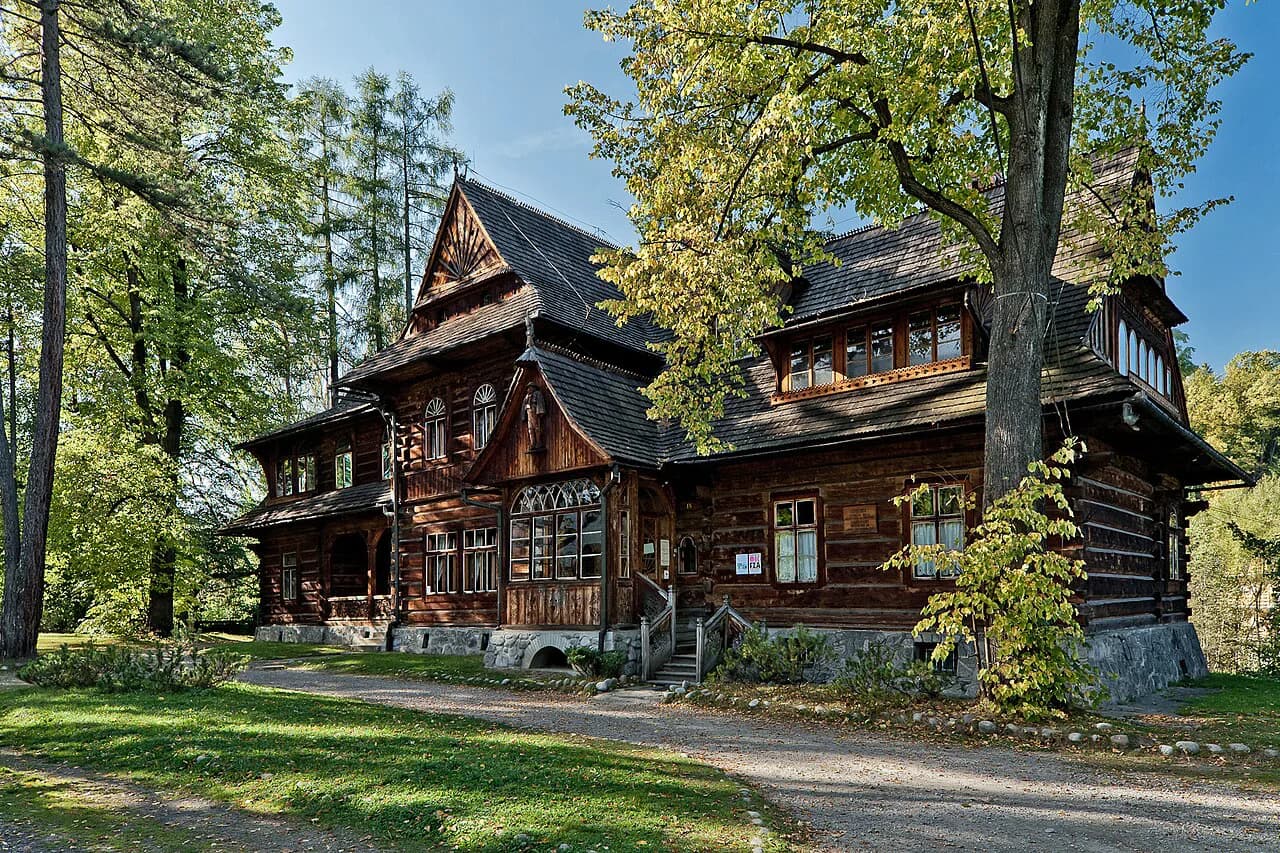
The style is known as the Zakopane Style, or the Witkiewicz Style, and it shows up most clearly in architecture but also in furniture and related objects, all drawing on the regional building of the Podhale highlanders. It is a designed style rather than surviving folk building: architects and craftsmen took the highland hut as a model and reworked it deliberately.
The starting point was the highlander hut. The aim was to reconcile folk construction with the more complex demands of comfort and beauty, so that a modern villa could still read as highland building. Ornament was pushed into the background, though it remained important in many places, which is why a Zakopane Style house can look plain at first glance and busy on the detail.
If you know other Polish building traditions, treat this as a separate chapter. The brick Gothic of the Hanseatic cities, for instance, works in fired brick and stone, while the Zakopane Style works almost entirely in wood.
Who Stanisław Witkiewicz was
Stanisław Witkiewicz created the style. He settled in Zakopane in 1890, at a moment when the Arts and Crafts Movement was in full bloom elsewhere in Europe, and the idea for a Polish national style built on highland models came to him in 1898.
His route to the idea ran through St Petersburg, where he studied between 1868 and 1872 and could have met the Ruthenian Style, and through Giewont, which he first climbed in 1886 and which produced his observation that the highlander hut was a developed style rather than raw material. That remark is the intellectual seed of everything that followed.
The ambition was large: this was the first Polish national style that went beyond theoretical postulates and could actually be built, not only in Zakopane but in many other places in Poland, including the Austrian and Russian partition zones.
What the style borrows from Podhale huts and carpenters
Witkiewicz treated highlander carpenters and woodcarvers as co-creators of the architecture he designed, not as labour executing someone else's drawings. That is the key to reading a Zakopane Style building: the joinery and carving are part of the design, not applied decoration.
The ornament repertoire began with the geometrical and plant motifs common to Podhale folk work and was then expanded with motifs of the flora of the Tatra Mountains. Look for that flora detail on furniture and fittings as much as on the outside of a villa.
An earlier attempt at a decorative, highland-flavoured idiom came from the Professional School for the Wood Industry in Zakopane, which produced ornamented furniture in the 1885/1886 academic year for Countess Róża Krasińska to designs by Magdalena Butowt-Andrzejkowiczówna adapted by Franciszek Neužil, and from 1887 that movement was promoted by the school under the name Zakopane Style. Witkiewicz was critical of that furniture for ignoring the shapes of original highlander pieces, which pushed him to develop the highland style himself.
Villa Koliba: the first house in the style
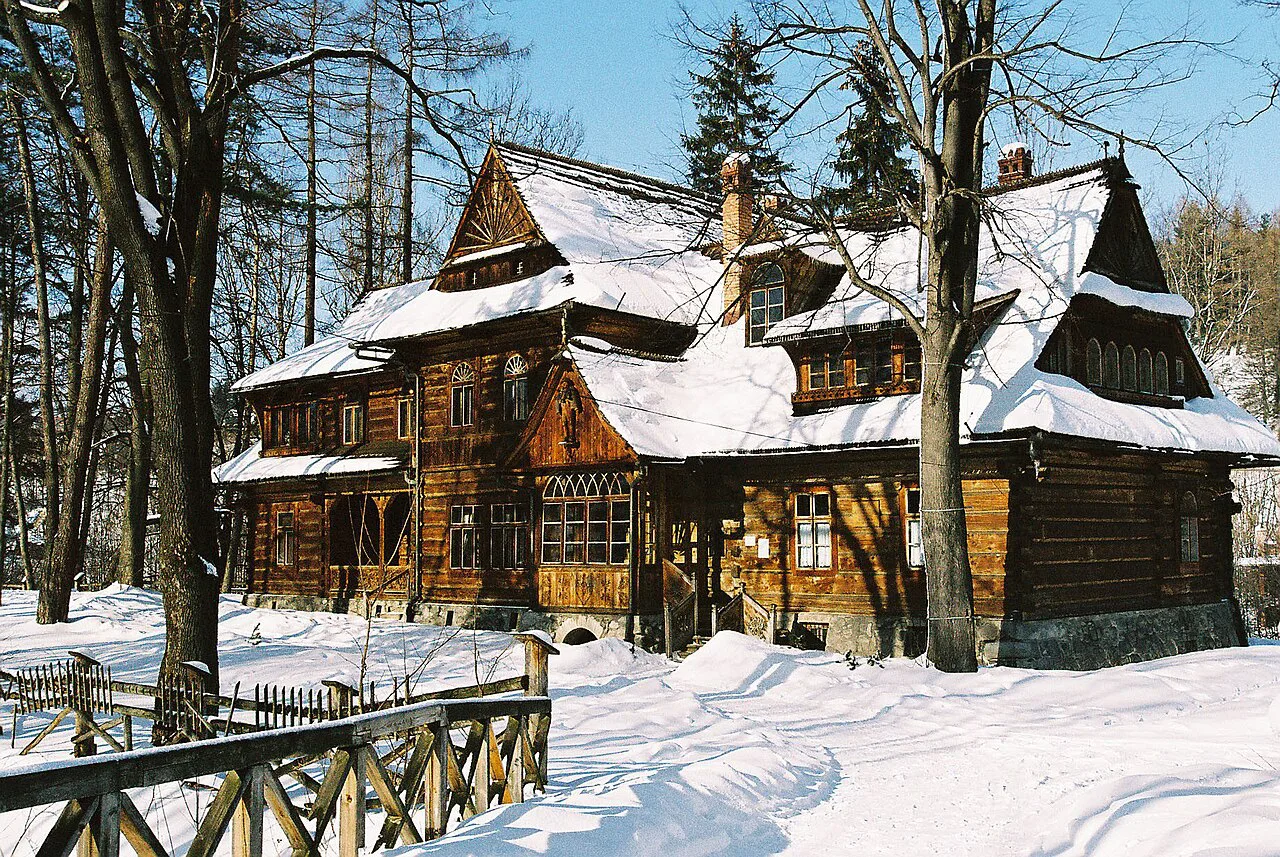
The first home in the Zakopane Style was Zygmunt Gnatowski's Koliba Villa, built by Witkiewicz between 1892 and 1894. It was intended to settle doubts about whether folk architecture could meet the demands of comfort and beauty, which makes it the logical first stop on any tour of the style.
The Museum of the Zakopane Style of Architecture is housed in Villa Koliba and provides visitors with information on the style. Treat the villa as both the origin point and the explanation: see the building first, then use the museum to make sense of the other villas.
The museum is the one place in Zakopane where the style is presented as a subject rather than simply used, so if you have time for a single interior, this is the strongest candidate.
The Jaszczurówka wooden church
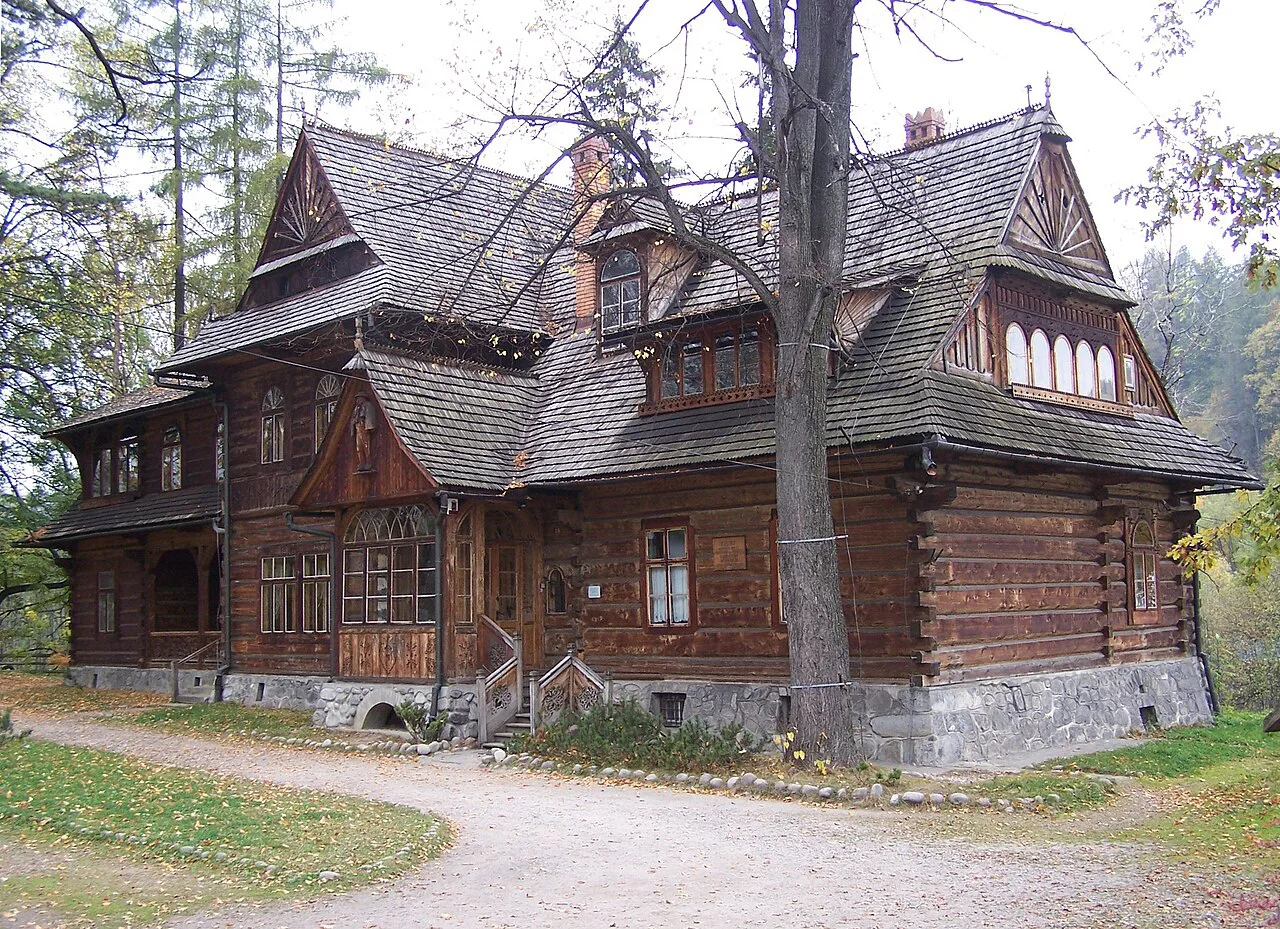
The Jaszczórówka wooden church was constructed by Stanisław Witkiewicz in Zakopane, and it shows the style applied to a sacred building rather than a villa. Churches in this idiom read differently from the brick Gothic parish churches of the northern cities: the material is wood, and the detail is carpentry rather than masonry.
Pair it with Villa Koliba on the same outing. One is a house, the other a church, and seeing both makes clear how far the same vocabulary of wood, proportion and carved detail stretches.
Villa Oksza and its Witkacy paintings
Willa Oksza is the second villa to put on the list, and it holds paintings by Witkacy, the artist Stanisław Ignacy Witkiewicz, whose work is shown here under the same roof tradition. That connection is the reason to combine the two: Koliba explains the architecture, Oksza shows the art that grew alongside it.
Willa Oksza holds paintings by Witkacy, and the building has also been linked with a store selling local craftsmanship. Treat the villa as an art stop first: the paintings are the reason to go inside, and any shop on site is a bonus rather than the point of the visit.
Villa Pod Jedlami and Villa Zofiówka
Beyond Koliba and Oksza, the named examples are Villa Pod Jedlami and Villa Zofiówka, which together with Koliba and Oksza received the first villa interiors in the Zakopane Style during the course of five years, some to Witkiewicz's own designs. These are the houses to look for if you want to see the style as a group rather than as a single monument.
Treat the four as a loose set to seek out around Zakopane rather than a single walk. Koliba is the one with the museum, Oksza the one with the paintings, and Pod Jedlami and Zofiówka complete the picture of how the style was furnished in its first years.
Furniture and interiors: what to look for
Inside a Zakopane Style villa, look at the furniture before anything else. Witkiewicz's method was to furnish the hut with stylish furniture and everyday objects of his own design, using the characteristic attributes of folk furnishings and employing their constructions artistically.
The goal was harmony between furnishings and architecture: every detail was to be covered with highlander ornament or given highlander shape, while the designs themselves were meant to be things never seen in highlander huts. That tension, familiar shapes pushed into new forms, is exactly what separates the style from simple rustic revival.
In a Polish context this belongs with the other designed movements of the period. If you enjoy reading interiors this way, the same habit of close looking pays off when you turn to Art Nouveau in Poland, where ornament carries a very different charge.
How the style spread beyond Zakopane
The Zakopane Style dominated architecture in the Podhale region for many years, and although 1914 is usually taken as the cut-off date for buildings designed in the style, the model Witkiewicz devised is still used for new pensions, villas and highlander homes today. That is why the style is not only a museum subject: you will see it in new building as you move around the region.
It also travelled. Because it was conceived as a national style, it could be built in the Austrian and Russian partition zones as well as in Zakopane, which is why examples turn up in towns far from the Tatras.
Set against the rest of Polish architecture, that reach is unusual: most regional building idioms stay regional, while this one was explicitly designed to be exported.
Where the story ends and what came afterwards
The conventional end point is 1914, after which buildings are no longer classed as designed in the Zakopane Style. What follows is not a clean break: the same architectural model kept being used for new pensions and homes, so a building put up later can still look the part without belonging to the historical period.
For contrast, look at what Polish architects did in the twentieth century, when the wooden idiom gave way to reinforced concrete, glass and steel. Polish modern architecture gives you the other end of that arc, and seeing both makes the Zakopane Style's insistence on wood and handwork feel like a deliberate choice rather than a default.
Reading the two together is also a reminder that Polish building is not one story but several, running in parallel in different regions and materials.
Which Zakopane Style building should you see first?
Start with Villa Koliba, because it was the first house built in the style and it holds the Museum of the Zakopane Style of Architecture, so it gives you the vocabulary for everything else. Add the Jaszczurówka church to see the style in a sacred building, and Willa Oksza if the Witkacy paintings appeal.
If you have a second day, seek out Villa Pod Jedlami and Villa Zofiówka to complete the group of early furnished villas, then walk the streets looking at newer pensions and homes built on the same model. Opening days, ticket prices and any free-entry days are set by each venue, so check the museum's own pages before you go.
Frequently Asked Questions
Why is Zakopane so popular?
For this subject, the draw is that Zakopane is where the style was invented and where its first houses still stand, so the architecture and the town are inseparable. The Tatras provide the mountain setting and the flora motifs that the style borrowed.
Is two days enough in Zakopane?
Two days is enough to see the core buildings in the style: Villa Koliba with its museum, the Jaszczórówka church and Willa Oksza, with Villa Pod Jedlami and Villa Zofiówka on the same or a second day. Opening days are set by each venue, so check before fixing a route.
Sources
Notes for your next Polish city break
Optional updates to our Poland guides.
You might also like

Continue reading
More guides you'll find useful