The Solidarity Movement in Gdańsk: What to See and What Happened
The Solidarity movement began with the 1980 Gdańsk shipyard strike. Here is what happened, who led it, and which city sites tell the story today.
On this page
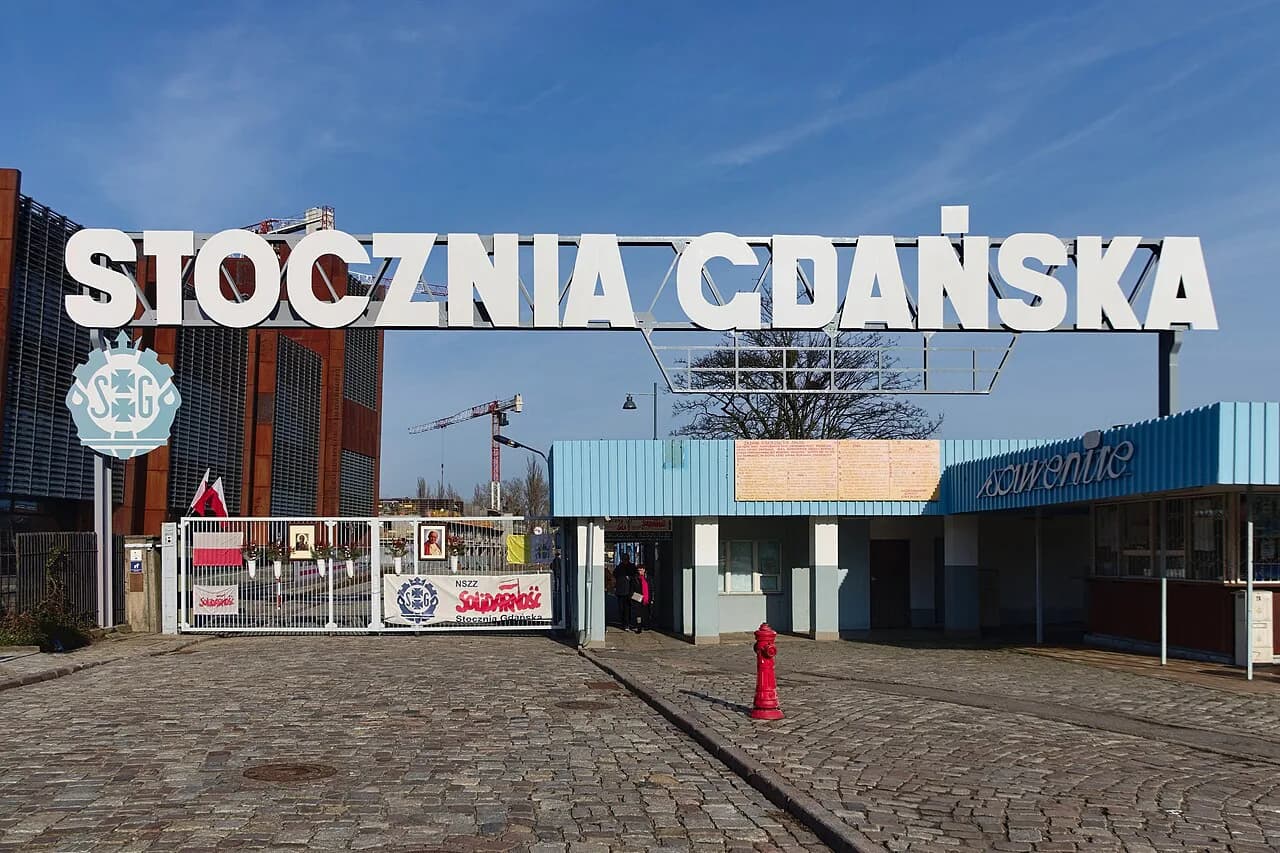
Solidarity began at the Lenin Shipyard in Gdańsk, where the dismissal of a shipyard worker in August 1980 set off a strike that became a nationwide movement with ten million members by the following year. This guide explains what the movement was, how it started and ended its legal phase in December 1981, and how to visit the places in Gdańsk that tell its story.
Treat the city's Solidarity sites as two separate experiences: the European Solidarity Centre, founded in 2014, is a research centre, museum and library covering Solidarity and other opposition movements across the former Soviet Bloc, while the memorial landscape around the former yard is something you read on foot. Allow a half day for the museum and a separate hour for the shipyard walk rather than trying to combine them.
What the Solidarity movement was and why it started in Gdańsk
Solidarity was an independent trade union, founded in August 1980 and recognised by the authorities in Gdańsk on 17 August that year. It was the first trade union independent of the state to win official recognition in the Soviet Bloc, which made it a space for free political organisation rather than just a workplace body. Gdańsk was the flashpoint because the Baltic port was a large industrial centre with a concentrated workforce, and the Lenin Shipyard was the most visible of its workplaces.
The movement's early success owed a lot to the wider economic backdrop. Food price rises in the 1970s, at a time of stagnant wages, had already pushed workers into protest, and the Polish economy contracted in 1979 for the first time since 1945. That combination of falling living standards and organised labour in one port city explains why a local grievance could turn national so quickly.
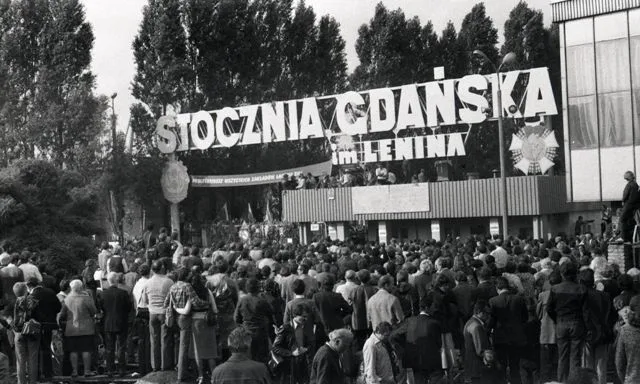
The August 1980 strike at the Lenin Shipyard and the demands behind it
The trigger was the dismissal of Anna Walentynowicz from the shipyard on 7 August 1980, five months before she was due to retire, for membership of an illegal trade union. Workers downed tools and chanted for her reinstatement, and management at first backed down in the face of the scale of the walkout. It is worth knowing this sequence before you arrive, because it turns the shipyard from an abstract backdrop into a specific story about a sacked worker.
The demands did not stay local. Walentynowicz and Alina Pieńkowska kept the strike mobilised and pushed it from local concessions towards a wider vision of democratic change, with recognition of an independent union as the central demand. What began as a sit-in in the summer of 1980 ended as a nationwide movement, and gave Poland its first independent trade union inside the Soviet alliance.
The negotiated agreement between the strike leaders and the Polish Communist Party is the defining document of the movement, and it is the point at which Solidarity moved from protest into Polish history. As Polish history goes, the strike is also part of the broader story of the fall of the Iron Curtain, which is why the shipyard carries the weight it does.
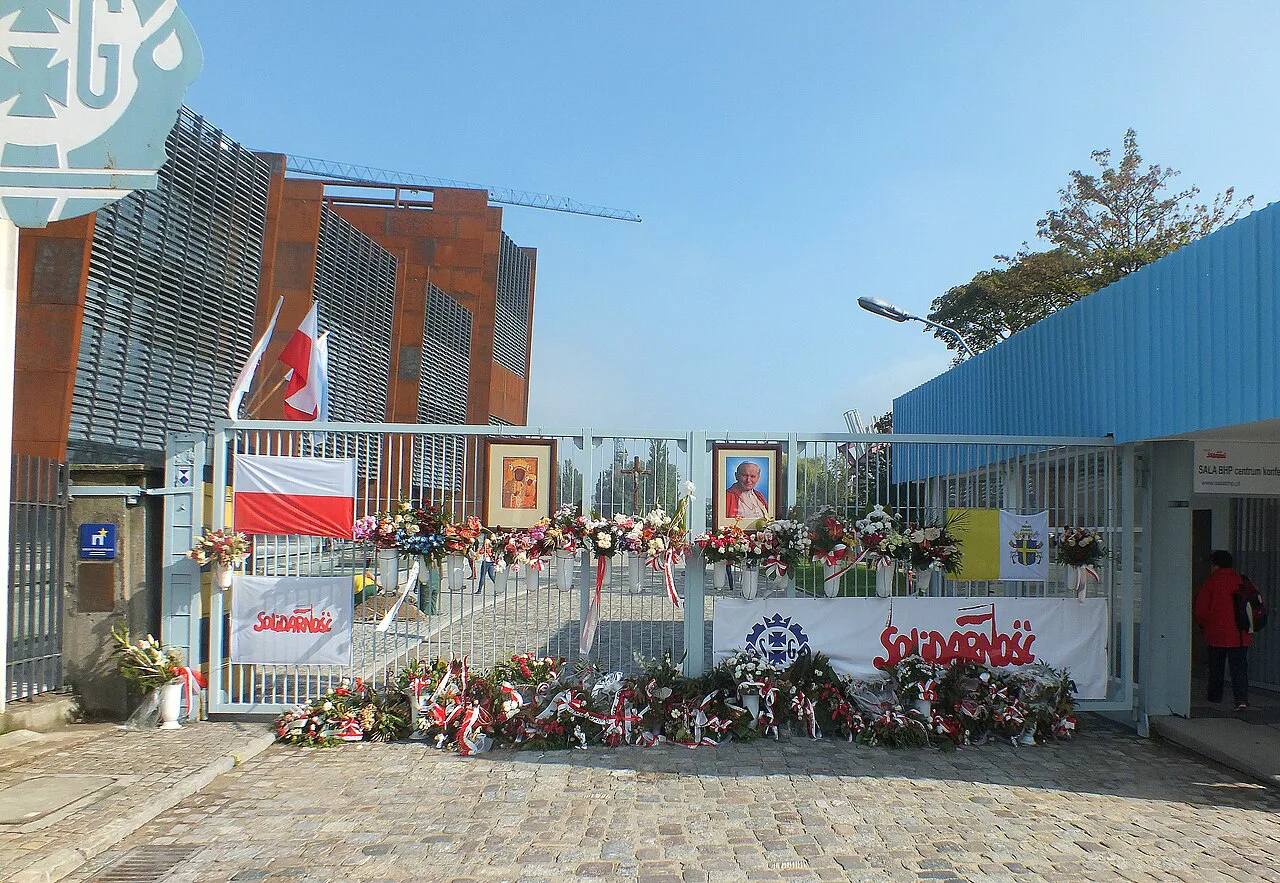
Who led Solidarity: Lech Wałęsa, Anna Walentynowicz and Alina Pieńkowska
Lech Wałęsa, an electrician from the shipyard, became the public face of Solidarity and was elected president roughly a decade after the strike. His fame has tended to flatten the story, because Walentynowicz, whose dismissal started it all, and Pieńkowska, who kept the strike alive, were central to turning a workplace grievance into a democratic movement. When you see Wałęsa's name on signage at the shipyard, the women's names are the ones to look for alongside it.
Membership grew to ten million people by September 1981, around a third of Poland's working-age population, which is why the movement felt less like a union and more like a parallel society. That scale explains the speed of the state's reaction and the extent of the underground network that followed.
From legal union to martial law in December 1981
The government moved against Solidarity in December 1981, when martial law was declared and the legal union was suppressed. The movement did not disappear; it shifted underground and kept operating through the 1980s, sustained by networks inside and outside workplaces, and it survived without anything like the foreign support that gets credited to it.
Martial law also came with an economic crisis the state could not manage indefinitely. By 1989 the regime was opening talks with the underground movement's leadership on partially free parliamentary elections, a step that became one of the first dominoes to fall as communist rule collapsed across the region.
What the movement achieved by 1989
The clearest outcome is the transition itself: an independent labour movement, born in one shipyard, ended up at the table when the Communist government negotiated elections. The round table process led to the first semi-free elections in a Soviet Republic, which is the line of progress to hold onto when you walk past plaques about 1980. For wider context on the Polish People's Republic and how the post-war state was built and then dismantled, read our guide to communist Poland before or after your Gdańsk leg.
Visiting the European Solidarity Centre: what the museum covers
The European Solidarity Centre was founded in Gdańsk in 2014 and combines a research centre, a museum and a library dedicated to Solidarity and other opposition movements across the former Communist Bloc. Plan the museum as a stand-alone visit of several hours rather than a quick add-on, and check the centre's own website for current opening days and ticket prices before you commit a morning.
The exhibitions repay a critical eye, because the centre's subject is contested. The Polish governing party that took power in 2015 tried to take control of the centre, and when that failed it opened another museum with a different purpose, so read labels as arguments as well as facts. Södertörn University researchers describe the politicisation of history as a deliberate tool used to delegitimise leaders from the post-1989 period and to build a new set of national heroes.
If the museum turns out to be your first deep dive into Polish communism, follow it at home with Warsaw's PRL museum, where the everyday life of the period is the focus rather than the shipyard struggle. The two tell complementary halves of the same story.
The Monument to the Fallen Shipyard Workers and the BHP Hall
The Monument to the Fallen Shipyard Workers and the BHP Hall sit within the former yard area and are where most visitors start, because they frame the space before you reach the museum and set up the sequence of the strike. Read the memorials as the anchor of the site, not as an optional extra on the way to the gift shop, and allow time to circle them slowly.
Approach the BHP Hall as part of the same walk rather than a separate destination, since the point of the landscape is the proximity of the strike's key sites. The shipyard area is sprawling and signage is uneven, so keep a map on your phone rather than trying to orient yourself from the memorials alone.
How to read the shipyard landscape as you walk through it
Walk the shipyard with the chronology in your head: dismissal on 7 August 1980, recognition on 17 August 1980, ten million members by September 1981, martial law in December 1981, elections in 1989. Each stage maps onto a stop, which stops the memorials blurring into one slab of grey stone. Start at the monument, move through the halls and the yard, and finish at the museum where the detail is.
The wider shipyard is part of the modern redevelopment story too, with cranes and brick halls now sharing space with new buildings, and it is fine to read it as a working urban quarter rather than a shrine. If you want the architecture of the post-war state made explicit, our socialist realism architecture guide is the companion piece for the rebuilt cities elsewhere in Poland.
Where Solidarity history sits in Polish politics today
Solidarity's memory is actively fought over. The ruling Law and Justice party, in power from 2015, presents Lech and Jarosław Kaczyński as leaders of the movement even though the researchers describe them as marginal figures within it, and Lech Wałęsa has faced accusations of spying for the secret police. These are claims in a political argument rather than settled history, so hold them lightly when a display presents them as fact.
The movement's legacy is also claimed from the left. Feminist researchers and activists point to women's contributions to the democratic transition, and in 2016 women opposing a ban on abortion drew on Solidarity's imagery because they identified with its fight for freedom. Extinction Rebellion's Polish section has made the same move on social media, setting photos from 1980 beside its own demonstrations.
That contested quality is why the shipyard remains worth an afternoon. You are not looking at a settled monument but at a working argument about who owns Poland's recent past; a Warsaw communist tour adds the capital's version of the same debate about what to preserve and how to explain it.
Which Gdańsk site should you visit first?
Start with the monument and the BHP Hall for the physical story, then give the European Solidarity Centre the rest of the day, because the museum's depth is wasted if you arrive tired after the walk. If you only have an afternoon, choose the museum and skip the walk, and read the chronology here afterwards.
Confirm the museum's current opening days and ticket prices before you go rather than assuming Monday or Sunday arrangements, and pair Gdańsk with Warsaw if you want the everyday-life side of communist Poland as well as the shipyard side. The movement began as one sacked worker's dispute; an hour of preparation turns the site from grey industrial space into a story you can follow.
Explore more Poland guides
Sources
Notes for your next Polish city break
Optional updates to our Poland guides.
You might also like

Continue reading
More guides you'll find useful