Easter in Poland: Traditions, Customs and What Happens on Each Day
Easter in Poland means blessed baskets, painted pisanki and a water fight on Easter Monday. Here is how the traditions work and how the holiday days are spent.
On this page
Easter in Poland is a two-day public holiday built around a week of church observance and folk custom: Easter Sunday for the family breakfast and the blessed basket, Easter Monday for Śmigus-Dyngus, the water dousing that Poles call Lany Poniedziałek. In 2025 the holiday fell on 20 April for Easter Sunday and 21 April for Easter Monday. This guide takes the customs in the order a visitor meets them and explains what changes when you spend the weekend in a city, at the sea or in the mountains.
The religious half of the week belongs to Holy Week: palm processions on Palm Sunday, food baskets blessed on Easter Saturday, and eggs painted in the days before. The folk half arrives on Easter Monday with buckets of water in the streets. Knowing which is which helps you decide whether to base yourself somewhere with a big church celebration or somewhere quieter, and it sits alongside the rest of the Polish traditions that shape the year.
What Easter in Poland is and which days it covers
The Easter weekend proper runs from Easter Sunday to Easter Monday, and both are public holidays in Poland. Easter Sunday carries the religious weight: morning church, then the family breakfast shared at home. Easter Monday is Lany Poniedziałek, literally Wet Monday.
What precedes those two days matters just as much for the traveller's timetable. Palm Sunday opens Holy Week with processions of decorated palms, and Easter Saturday is the day households and churches focus on the basket blessing and the food for the next morning. If you are planning a city break, arriving before Easter Sunday gives you the richest week of ritual; arriving on Easter Sunday gives you the quietest.
Holy Week and the tall-palm competitions
Palm Sunday palms in Poland are not the short fronds you may know. They are elaborate constructions assembled from branches, dried flowers and crepe paper, and in some places they are large enough that several people are needed to carry a single one.
The parish of Łyse in the Kurpie region holds an annual contest for the tallest palm, and the same day is when local residents wear Kurpie folk costume. Further south, the village of Lipnica Murowana stages one of the country's best-known palm competitions, where the longest entries have exceeded 30 metres. These are documented past events rather than a published timetable, so treat the villages as the places that hold them.
Holy Week also brings Passion Plays. The oldest Calvary complex in Poland, at Kalwaria Zebrzydowska in the south, dates to 1600 and became a UNESCO World Heritage Site in 1999; its Holy Week Passion Play has drawn thousands of pilgrims. Kraków's Jerusalem Procession on Good Friday, organised by a confraternity dating to 1595, walks from the Church of Francis of Assisi. Both are documented annual traditions rather than fixed things to book, so build your trip around the day rather than a guaranteed slot.
Blessing the Easter basket (święconka)
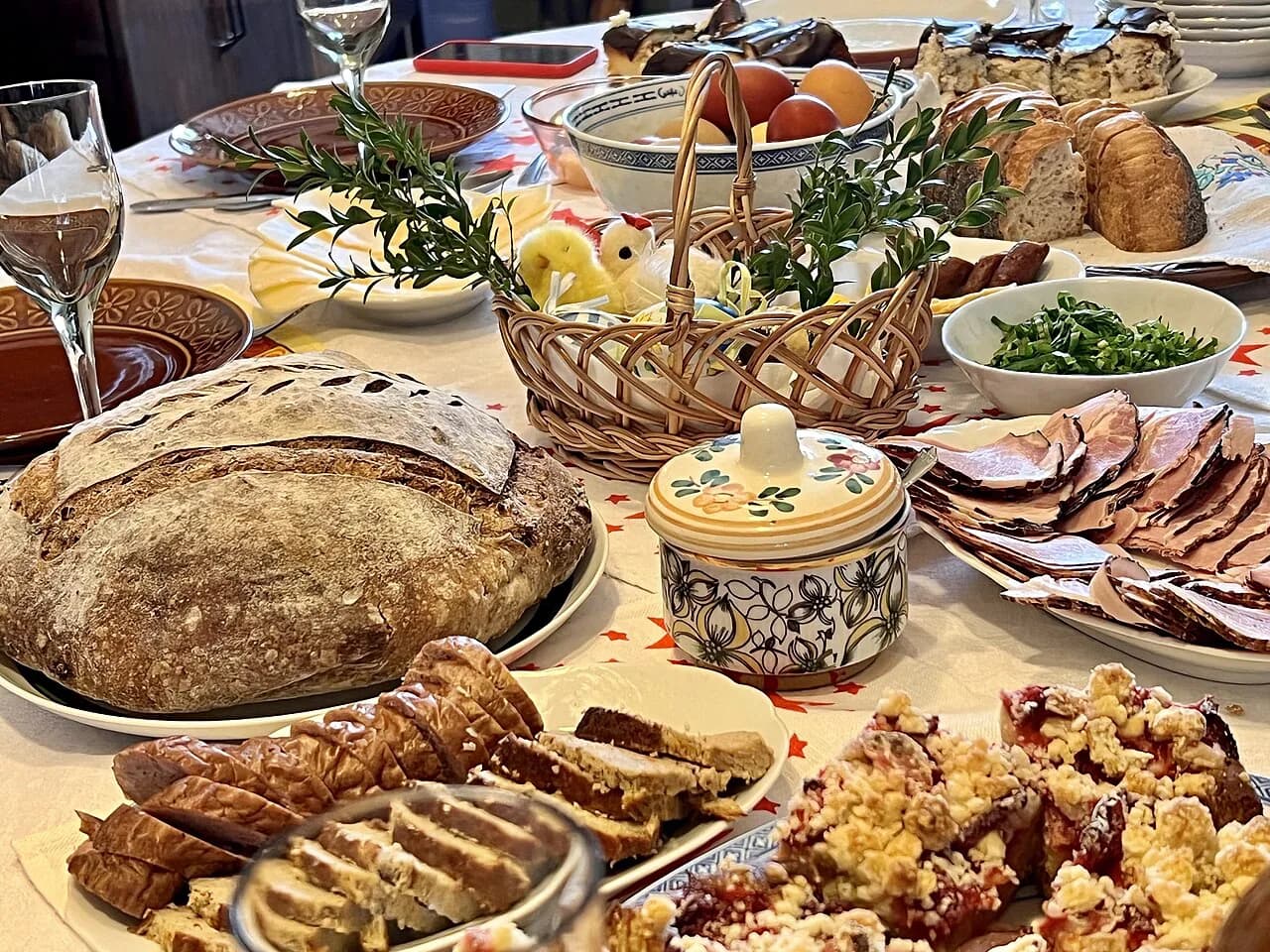
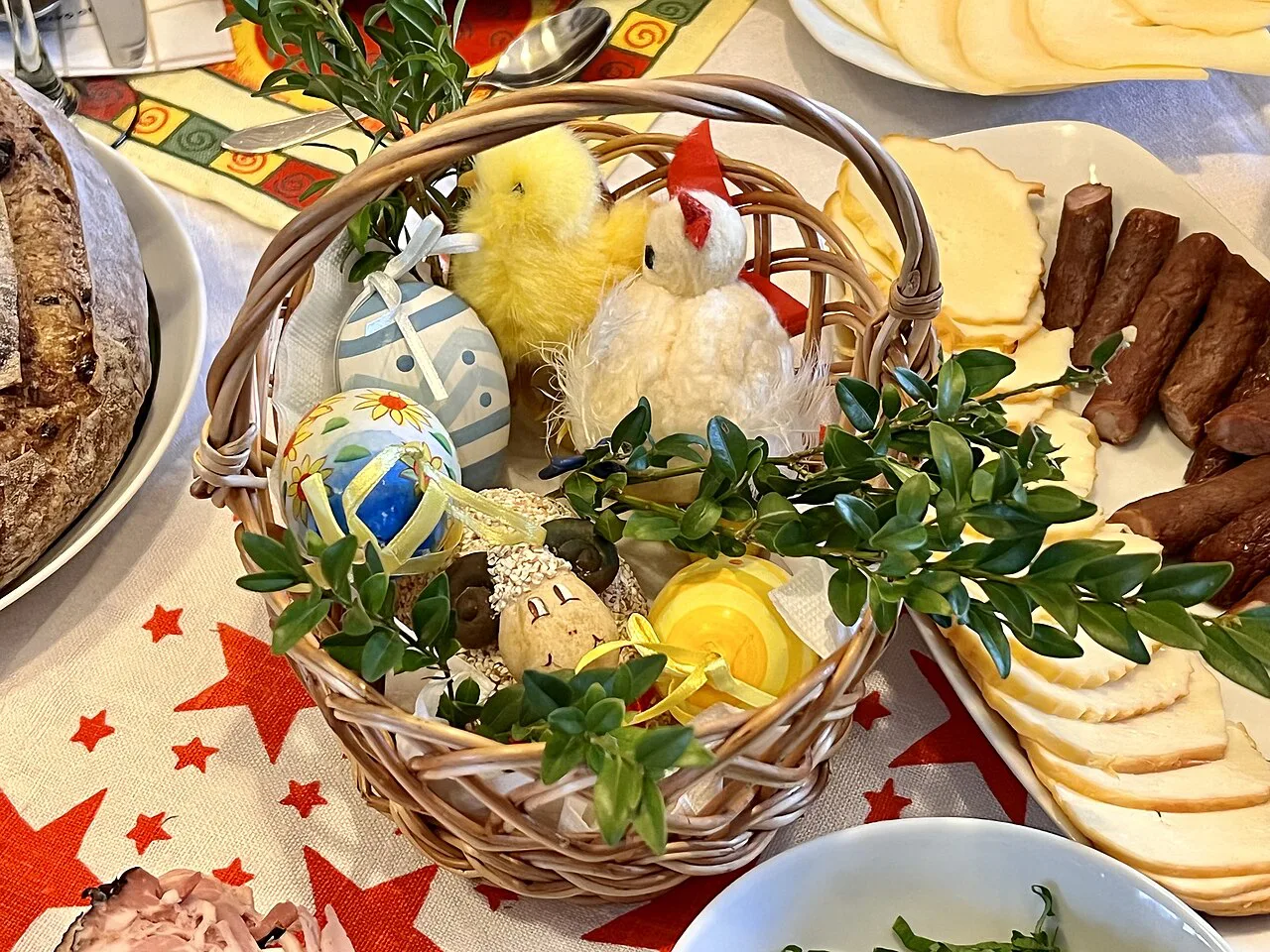
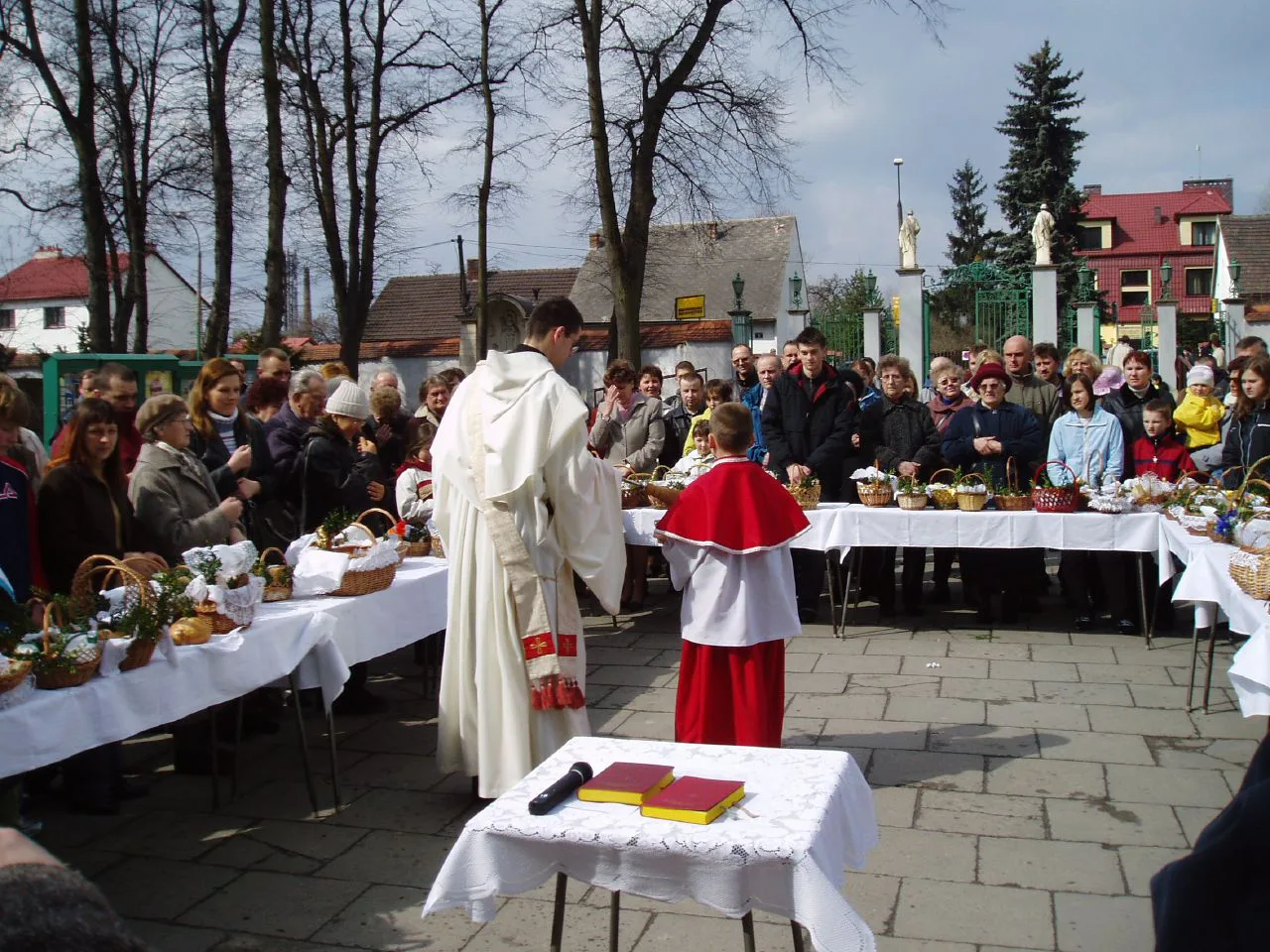
The most characteristic custom of the weekend is the blessing of the Easter basket, święconka. On Easter Saturday, families take a basket of food to church to be blessed, then eat its contents at the Easter Sunday breakfast.
The basket is a modest display of things the household will eat: hard-boiled eggs, which usually carry painted designs, plus other foodstuffs for the next morning. Visitors cannot easily replicate the custom from a hotel room, but recognising it explains the queues at churches on Saturday and the shops selling baskets, eggs and decorations in the days beforehand.
Pisanki: the painted eggs
The eggs that go in the basket are pisanki, painted in intricate bright designs on hard-boiled eggs. Work on them happens in the final days of Holy Week, largely on Easter Saturday, in the same window as the basket blessing.
In Poland the painting is communal rather than specialist: homes, schools and kindergartens all organise sessions before Easter, and the finished eggs double as decorations. The craft sits inside a long folk tradition of decorating surfaces and objects, from painted cottage interiors to glazed ceramics, which makes Easter a good hook for that broader interest in Polish folk art.
If painted surfaces are what draw you, the obvious first addition on a spring trip is Zalipie, the village where houses and barns are covered in floral painting. Easter egg techniques and cottage painting are different crafts, but they share the same instinct for colour and pattern, so a spring itinerary can comfortably hold both.
Food on the Easter table
The Polish Easter menu is built around eggs and soup, with fresh spring flavours to lighten the cold months before. The table usually carries hard-boiled eggs and a sour soup, and a salad of the kind that appears on Polish festive tables alongside the baked sweets, including mazurek.
For a visitor, that means restaurants and cafés in the big cities may run their own Easter menus, but the family meal itself is a private event and not something to join. Do not expect to walk into a hotel restaurant on Easter Sunday and find a typical święconka spread on the table; the cooked dishes are what you might encounter, and the customs of home are what you observe rather than attend.
Śmigus-Dyngus: Easter Monday and the water
Easter Monday in Poland is Śmigus-Dyngus, also called Lany Poniedziałek, and the custom is simple: people douse each other with water. Buckets, plastic water pistols and eggs all get used, and children take to it most enthusiastically.
The two halves of the name were once separate customs. Śmigus involved slapping each other's legs with willow stems and pouring water, understood as a spring cleansing; dyngus was the round of visits with refreshments attached. As a visitor, expect to be within range of water at some point on Easter Monday in the streets, especially anywhere family groups are out.
Carry your phone and camera somewhere waterproof that day and treat it as the folk end of the weekend, with the churches quieter and ordinary sightseeing easier to plan around. The custom is playful by nature rather than a formal event, so it works best as something you happen upon rather than schedule.
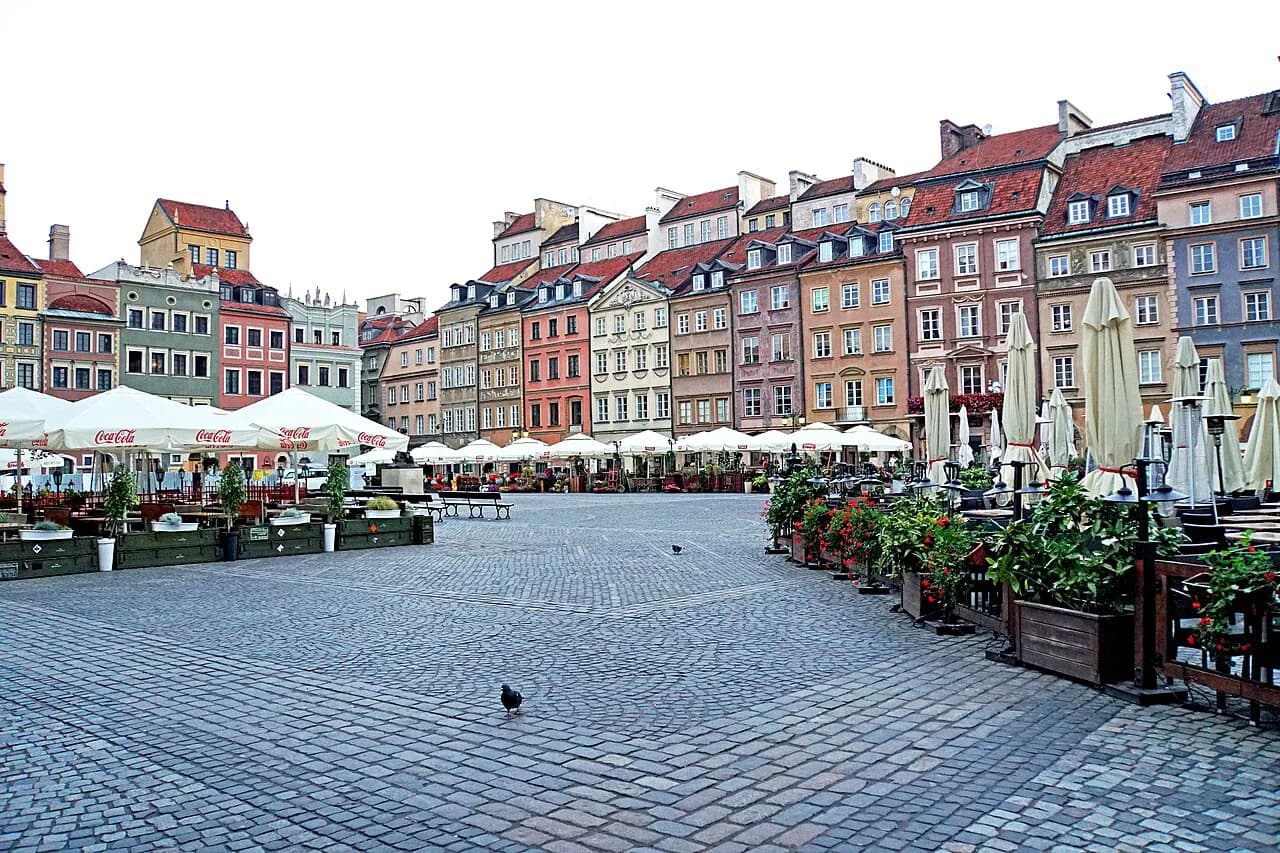
Easter in the cities: Gdańsk, Wrocław and Warsaw
The big cities offer the same Easter with a visitor's infrastructure behind it. In Gdańsk, the Old Town and Westerplatte sit within reach of a city break that carries on through the holiday, while Gdańsk, Gdynia and Sopot together give you a coastal option within one trip.
Wrocław and Warsaw are framed by the same source as Easter destinations in their own right, and both fit the pattern of a short city break within the holiday window. Easter is one point in a calendar that runs from Carnival through the spring and into the All Saints' season in November; if you want the full year mapped out, festivals in Poland are the place to start planning around the fixed dates.
A word on the calendar's opposite end: if Easter falls early in the year, think about All Saints' Day in Poland on 1 November, when cemeteries across the country fill with candles. The two holidays could hardly look more different, but both repay being in a Polish city rather than just reading about them.
Spending Easter by the sea in the Tri-City
If your priority is quiet, the Tri-City with its coastal air is the choice for you. Gdańsk, Gdynia and Sopot are listed together as an Easter option with beach walks, historic streets and seaside restaurants; Easter in Gdańsk also puts Westerplatte within range for a half day.
Beyond the Tri-City, Jastarnia on the Hel peninsula is described as a calm spot for an Easter stay, with a traditional Easter breakfast available in local restaurants. Świnoujście offers long beach walks and fresh air for a family trip. Beach time in Sopot is one element of a coastal Easter, not the point; in April it is the walking and the sea air that carry the day, not sunbathing.
Spending Easter in the mountains
Mountain Easter appeals if you want activity in your weekend. The Tatras, Beskids and Bieszczady are named as the places to go for an active Easter, and Krynica-Zdrój is singled out as a good fit for families.
The trade-off is that mountain Easter is about the setting, not the city rituals: you get the air and the trails and the family table in a guesthouse, and you miss the street energy of a big city. That is a fair choice, so book the stay around your chosen mountain base rather than planning to swap between them.
Easter also sits in a year full of named days. If you enjoy planning around Polish name days (imieniny), you have a calendar full of small celebrations to build future city breaks around, and it is worth checking them against Easter if you want the whole trip to have a cultural theme rather than just a holiday weekend.
Holiday opening hours, prices and transport
Polish museums commonly close one day a week, often Monday, and public holidays can change opening times too, so a museum that is open on a normal Sunday may not be open on Easter Sunday. Easter Sunday and Easter Monday are public holidays, so check each venue's own site before you book the trip rather than assuming normal hours.
The workable approach is to book the Easter days around church and street traditions rather than around museums, and to keep sightseeing for the days either side. Look up the local parish for the year you travel to know when the basket blessing happens, and confirm restaurant hours separately if you want to eat out on the holiday days.
Which kind of Easter should you book?
Choose a city if you want Easter with museums, restaurants and streets around it, the Tri-City if you want sea air and long walks between the traditions, and the mountains if the setting matters more than the ceremony. In every case, arrive before Easter Sunday to catch Palm Sunday and the basket blessing, and treat Easter Monday as the folk day when water and streets take priority over galleries and halls.
The most important planning step is not the itinerary: it is the venue check. Before you travel, confirm any museum or restaurant you care about is open on the holiday days, and look up your parish's Holy Saturday basket blessing time.
Explore more Poland guides
Frequently Asked Questions
Is Easter Monday a public holiday in Poland?
Yes. Both Easter Sunday and Easter Monday are public holidays, and Easter Monday carries the Śmigus-Dyngus water custom. Book travel and museum visits around those two days rather than assuming normal opening.
Can visitors join the Śmigus-Dyngus water fight?
The custom happens in the streets and among families on Easter Monday, and children are the most enthusiastic participants. Treat it as something you encounter rather than an event you sign up for, and keep phones and cameras dry if you are out that day.
Where can I see the tallest Easter palms in Poland?
The Kurpie parish of Łyse holds an annual contest for the tallest palm, and Lipnica Murowana in the south is known for entries over 30 metres. Check the local parish's schedule for the year you travel before building a trip around either.
Sources
Notes for your next Polish city break
Optional updates to our Poland guides.
You might also like

Continue reading
More guides you'll find useful