Polish Traditions: A Visitor's Guide to What You'll See
Polish traditions explained for city-break travellers: name days, Easter baskets, Wet Monday, All Souls' candles and midsummer customs, with what each one means.
On this page
A short city break in Poland will overlap with only a handful of traditions: name days, everyday greetings, flower etiquette, and, if the calendar lines up, Easter Monday water fights or November candle-lighting in the cemeteries. Most of the rest, Wigilia above all, belong to family homes and are not staged for visitors. This guide separates the public customs you might witness from the private ones you should simply understand, so a trip to Gdańsk, Wrocław or Poznań comes with fewer awkward moments.
The pattern to hold on to is that Polish traditions divide into calendar customs, which you can plan a trip around, and social customs, which apply every day whether you noticed them or not. Both have specific rules worth knowing before you arrive, and neither requires you to buy anything.
What a short city break can actually overlap with
Think in two categories. Public and calendar-led customs include Easter Monday water fights, All Saints' and All Souls' candle-lighting, midsummer wreaths, and the spring drowning of Marzanna; social customs include using Pan and Pani, handshakes on entering a room, odd-numbered flowers and toasts. On a one-to-four-day visit you will almost certainly meet the social ones and may meet a calendar one.
Planning around a tradition means accepting the trade-offs that come with it: Easter Monday is a public holiday, and the first days of November shift the mood of a city towards cemeteries rather than sightseeing. Both are worth seeing if you are curious, but neither is a normal sightseeing day. If your dates are fixed, treat any tradition you encounter as a bonus rather than the reason for the trip.
The Christmas season is the hardest to overlap with by design. Wigilia and the family gatherings around it are private evenings at home, so a December city break gives you the atmosphere of a country preparing for a family holiday rather than a public spectacle. Anyone weighing up when to travel will find the wider seasonal picture set out in our guide to the best time to visit Poland.
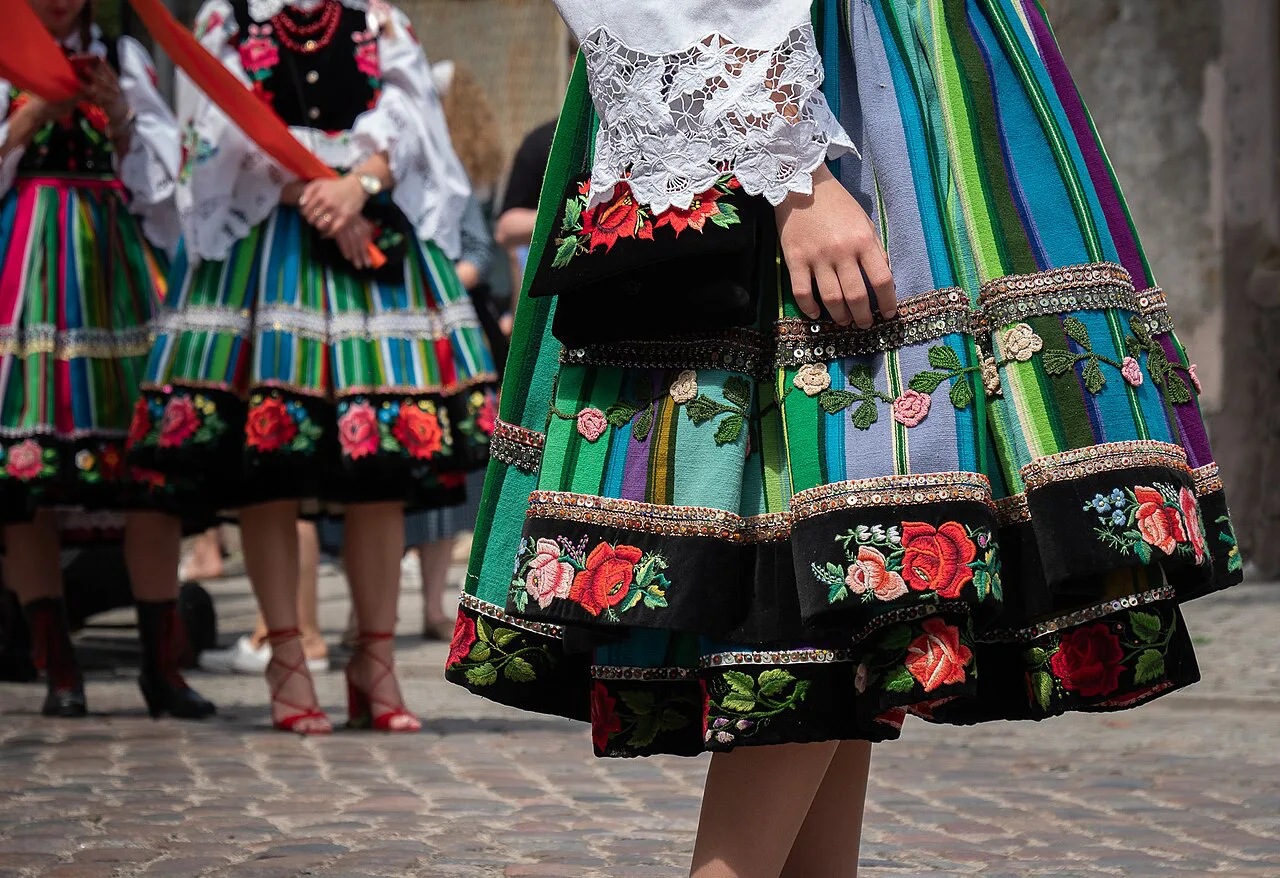
Name days: why a saint's day can outrank a birthday
Imieniny, or name days, fall on the date the Catholic calendar assigns to a given name, and they are often considered more significant than birthdays, particularly among older generations. Each Polish calendar lists the Saints' names for every day; if your name appears more than once, the usual convention is to celebrate the first occurrence after your birthday.
The reversal catches visitors out: the person celebrating acts as host, providing food and drink for guests rather than receiving them. Expect toasts such as Za zdrowie solenizanta (to the health of the person celebrating) and wishes of Wszystkiego najlepszego. You will not see name days on any city's event programme, so this is knowledge that matters only if you are invited to something.
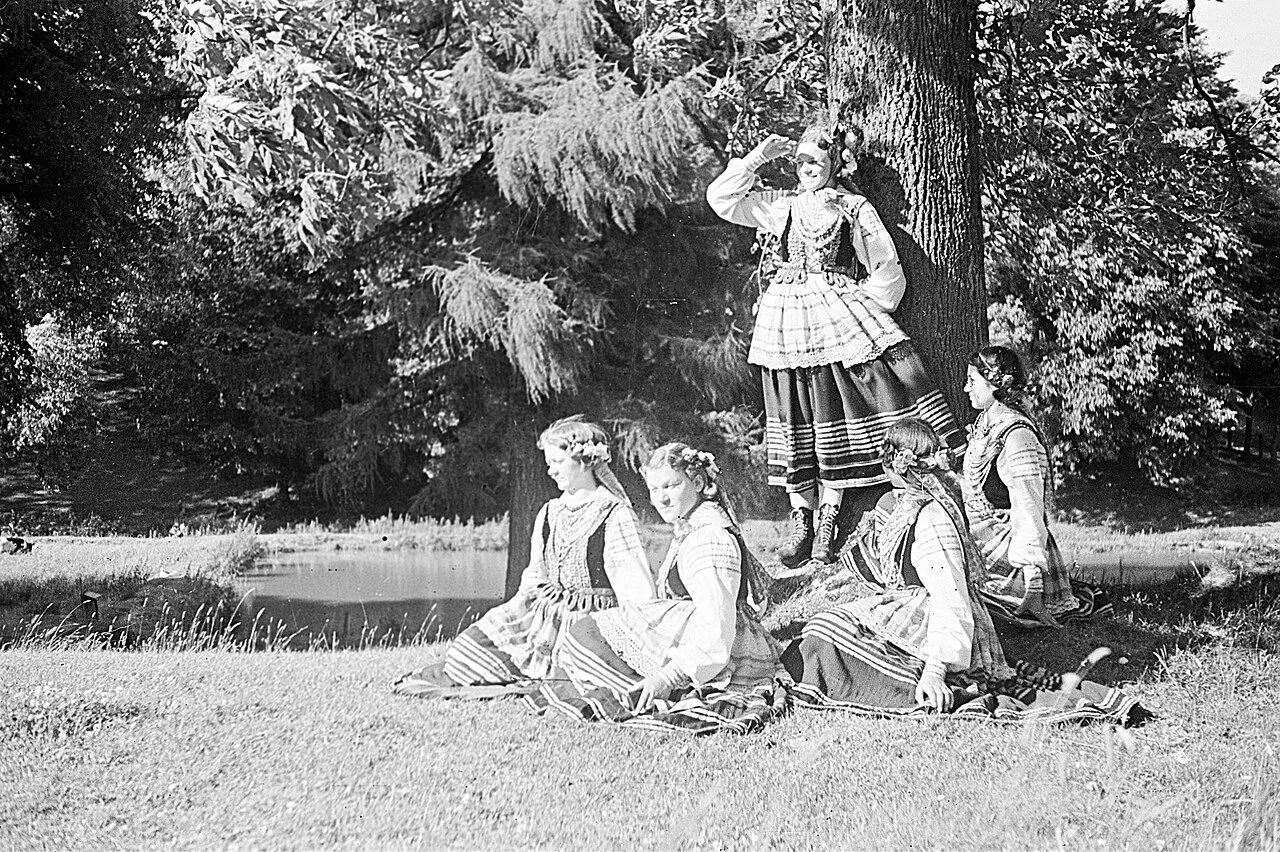
Greetings and everyday etiquette: handshakes, Pan and Pani and flowers
A firm handshake with direct eye contact is the standard greeting, and the detail that matters most in practice is that you shake hands with everyone individually when entering a room, not just the person you came to see. In business settings, wait for a woman to extend her hand first; some older men may offer a traditional hand-kiss as a mark of respect. Address people formally as Pan (Mr) or Pani (Ms) followed by their surname until you are invited to use first names.
Flowers are given frequently and for many occasions, and the rules are specific enough to get wrong. Give an odd number, three, five or seven is safe, except for dozens; even numbers are reserved for funerals and mourning. Avoid red and white flowers together, since these are the national colours used for special occasions, and avoid yellow chrysanthemums, which are funeral flowers; red roses imply romantic intent. Pink roses, tulips or a mixed odd-numbered bouquet are the safer choices.
Religion still shapes the daily rhythm and the calendar of customs, and the Cultural Atlas is a useful primer on how that plays out in society. Beyond weddings and name days, it explains the family and religious structures that sit behind much of what a visitor observes. Treat church interiors as working spaces rather than attractions, and cover shoulders if the building is in use.
Wigilia: the wafer, twelve dishes and the empty chair
Wigilia, Christmas Eve, is the most anticipated family gathering of the year and often more important than Christmas Day itself. The meal traditionally has twelve meatless dishes representing the twelve apostles, among them barszcz, pierogi and carp. Before eating, families share the opłatek, a Christmas wafer, breaking pieces from each other's wafer while offering wishes for the coming year.
Two details say most about the occasion. An empty chair remains at the table for an unexpected guest or in memory of someone who has died, which reflects Polish hospitality. The meal begins only after the first Star appears in the sky, symbolising the Star of Bethlehem.
If you are invited, bringing a thoughtful gift is a sensible courtesy, and the evening is long and meaningful rather than rushed. This is not something a short city break can wander into, so treat it as context for why Polish cities empty out on Christmas Eve rather than as an activity to plan.
Easter: blessing baskets and Wet Monday
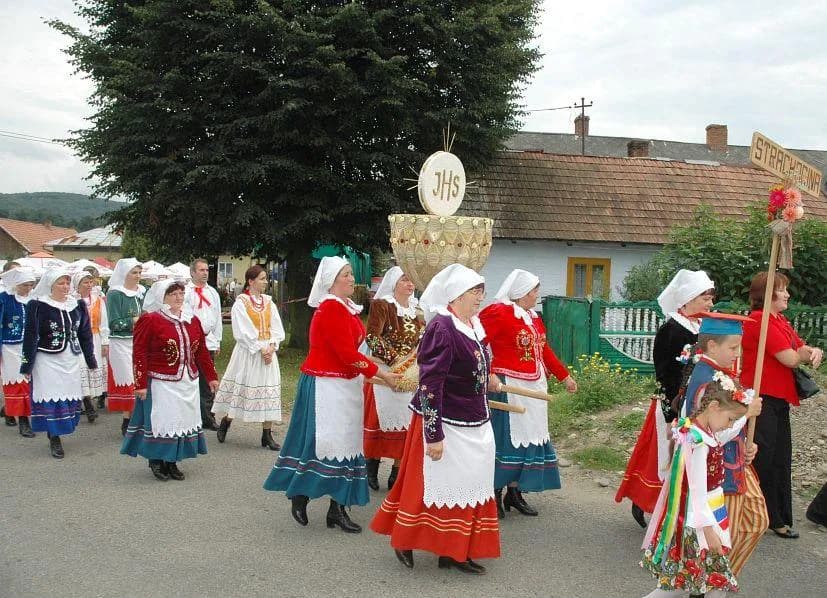
The ceremony most visible to an Easter visitor is the blessing of Easter baskets, which takes place in churches on Holy Saturday as part of the wider Polish Easter calendar. Poland's Easter observances are covered in depth, with the calendar and regional variations, in our companion guide to Easter in Poland; read it before locking in a spring trip.
The Monday after Easter turns into a nationwide water fight, Śmigus-Dyngus or Wet Monday. The custom mixes pre-Christian spring fertility rituals with Christian baptism symbolism, water standing for cleansing and renewal. Historically young men sprinkled water on women they found attractive, with the folklore that the woman soaked most would marry first; today people of all ages splash friends, family and even strangers in the street.
For a traveller the practical question is what to wear and how to react. Distant splashing is harmless fun, close range can soak a jacket and a camera bag, and a polite smile while stepping away works. Children take part enthusiastically, so expect the tradition to be live in the streets if you are out.
All Saints' and All Souls': what the November candles mean
All Souls' Day on 2 November, Zaduszki, is when Polish cemeteries fill with candles and flowers, and the mood extends across several days around it. This shift does not fall neatly into a standard visitor's calendar, but for anyone visiting by chance it changes what a city feels like more than anything else that week.
If you are in Poland during those days, visit a cemetery to understand how it works, in daylight and without guiding a group. Walk the side paths rather than the main alley, and avoid photographing mourners. For the full picture of how families mark the days, read our guide to All Saints' Day in Poland, which covers the calendar and what changes in the city.
Midsummer wreaths and drowning Marzanna
On the first day of spring, communities drown Marzanna, a straw doll representing the winter goddess. The effigy is made from straw, old clothing and accessories, paraded through towns while people sing traditional verses, then thrown into a river or burned. The pre-Christian Slavic ritual has survived centuries despite attempts by various authorities to suppress it, and children take part enthusiastically.
Midsummer wreaths belong to the same seasonal round of customs. If you want the wider decorative traditions, our guide to Polish folk art covers painted houses, flowers and craft motifs; the link between craft and calendar is stronger than it looks.
Fat Thursday and kanapki: food customs you can join today
Some traditions need no invitation. Tłusty Czwartek, Fat Thursday, is the day for eating doughnuts and pastries before Lent, and it is entirely possible to join in by walking into a bakery. Kanapki, the open sandwiches that anchor Polish breakfasts and packed lunches, are simply part of daily life; a bakery or deli counter makes the custom accessible on any trip.
Polish food carries much of the identity visitors most easily connect with. The signature dishes, such as pierogi and barszcz, are worth knowing by name, and sharing a table is itself part of the tradition. The customs around generosity are also documented by AFS, which notes that families commonly gather for a Sunday lunch.
If you want a souvenir that carries a tradition rather than just a fridge magnet, Bolesławiec pottery is a real craft with a long history and is widely sold in city centres. Our guide to Bolesławiec pottery explains the patterns, so you can tell handmade from mass-produced.
Sto lat and other toasts: what to say and when
Sto lat, literally a hundred years, is the all-purpose Polish wish for long life, sung or said at birthdays, name days and weddings. At a table, a toast works best short: raise your glass, make eye contact with the person you are honouring, and let the Poles around you lead. The other phrases worth knowing, Wszystkiego najlepszego and Za zdrowie solenizanta, cover most occasions.
If drinking alcohol is not for you, a raised glass of anything is enough. Polish hospitality is unlikely to push, but the pressure to try everything is real. No one polishes off a table of food, and a small helping beside your plate is a way of saying yes without overcommitting.
Giving gifts without getting it wrong
The gift rules boil down to a handful of decisions: odd numbers of flowers, no red and white together, no yellow chrysanthemums, and no red roses unless the intent is romantic. Pink roses, tulips or mixed bouquets in counts of three, five or seven cover almost every situation. A named item is better than a generic one when you have no idea of the recipient's taste.
At a home, bring something to share rather than a gesture object. If you are invited for Wigilia, a thoughtful gift is the stated expectation. A bottle, a box of chocolates or a good tea is unlikely to offend.
Hospitality: why refusing food is hard
A Polish table is a test of stamina disguised as generosity. Refusing food outright can read as rejection, and the accepted solution is to take a little and leave the rest. The same instinct sits behind the empty chair at Wigilia and the twelve dishes on the table: abundance is the point.
Families often gather for a Sunday lunch, which matters for visitors because a Sunday invitation is a warm offer rather than a casual one. If invited, accept before you ask about the timing. If you must decline, soften it with a reason and a suggestion of another day.
Which of these a city break in Gdańsk, Wrocław or Poznań can realistically include
On a normal long weekend you can expect the everyday traditions: Pan and Pani in shops and cafés, handshakes on being introduced to a group, flowers sold in odd bunches at street kiosks. These are the customs you will actually use, and they cost nothing. The calendar customs are matters of luck with dates rather than planning.
If you want a tradition to anchor the trip, build the dates around it: Wet Monday, All Souls' candles, early spring Marzanna events, or Fat Thursday, and accept that the city will be doing something other than its usual tourist self. Otherwise treat the social customs as the main event.
Pick the tradition you can actually witness
The useful split is between traditions you can join and traditions you can only understand. Join the social ones, and let the calendar decide whether you join the public ones: Easter Monday, All Souls' candles and Fat Thursday sit in the first category uniquely because they are public and time-bound rather than staged. Everything else, especially Wigilia, is context for why a country empties out on certain nights.
If your dates are fixed, use the social customs as the main event and treat anything on the calendar as a bonus. A city break with Pan and Pani, odd-numbered flowers and a fluent Sto lat is a better trip than one chasing a festival you cannot actually attend.
Explore more Poland guides
Frequently Asked Questions
Do I need to speak Polish to follow these customs?
No. Pan and Pani can be used with a surname or simply as a polite form, and a handshake plus eye contact covers most introductions. Sto lat and Wszystkiego najlepszego are short enough to learn phonetically before you travel.
Is it rude to refuse food or drink in Poland?
Hospitality is central, and an outright refusal can read as rejection. The usual solution is to accept a small portion or a glass and leave what you do not want, which is rarely remarked on. If you do not drink alcohol, a raised glass of anything is enough.
Can I see Wigilia or name days as a tourist?
Practically, no. Both are hosted at home and follow the Catholic calendar of saints rather than any public programme. Unless you are invited by someone, treat them as family customs and respect the private evening.
When do the public traditions happen?
The calendar is fixed by religious and seasonal dates: Wet Monday follows Easter weekend, All Souls' Day is 2 November, and the spring Marzanna custom falls on the first day of spring. Wigilia is Christmas Eve, and name days follow the Catholic calendar of saints rather than any public programme.
Sources
Notes for your next Polish city break
Optional updates to our Poland guides.
You might also like

Continue reading
More guides you'll find useful