Polish Folk Art: Wycinanki, Embroidery and Where to See It
Polish folk art explained: wycinanki paper cuts, regional embroidery, painted cottages and pottery, plus how the regional styles differ and where to see them.
On this page
Polish folk art is not one style but a group of regional crafts, covering paper cut-outs, painted eggs, pottery, weaving, embroidery, carved wood and household utensils. The tradition grew up in villages and small towns and varies sharply from one region to the next, which is why the floral cuts of one area look nothing like the stripes of another. This guide explains the main crafts, uses Zalipie's painted cottages as the clearest place to see the tradition in situ, and sets out how to tell good work from tourist tat when you buy.
What Polish folk art covers
The standard forms are painting, sculpture and wood engraving, alongside decorative work such as paper cut-outs, straw decorations, painted Easter eggs and even decorated wedding and birthday cakes. Weaving, embroidery, pottery, wooden vessels, household utensils and metal products belong to the same tradition. That range matters for a city break: you will meet folk art as a painted chest, a ceramic jug and a paper cut in the same museum room, not as a single object type.
The crafts were passed down within families and within regions, taught from father to son and mother to daughter rather than in art schools. Their value lies in that continuity: a pattern repeated across generations carries local meaning as well as decoration. The tradition is still alive in many regions of Poland today, so what you see in a craft shop is often contemporary work rather than museum pieces.
If you are planning a trip around one of these crafts, the broader context helps: folk art sits alongside the seasonal customs covered in these Polish traditions, from spring celebrations to autumn remembrance. The crafts themselves are portable, which is why they make better souvenirs than most city-centre gifts.
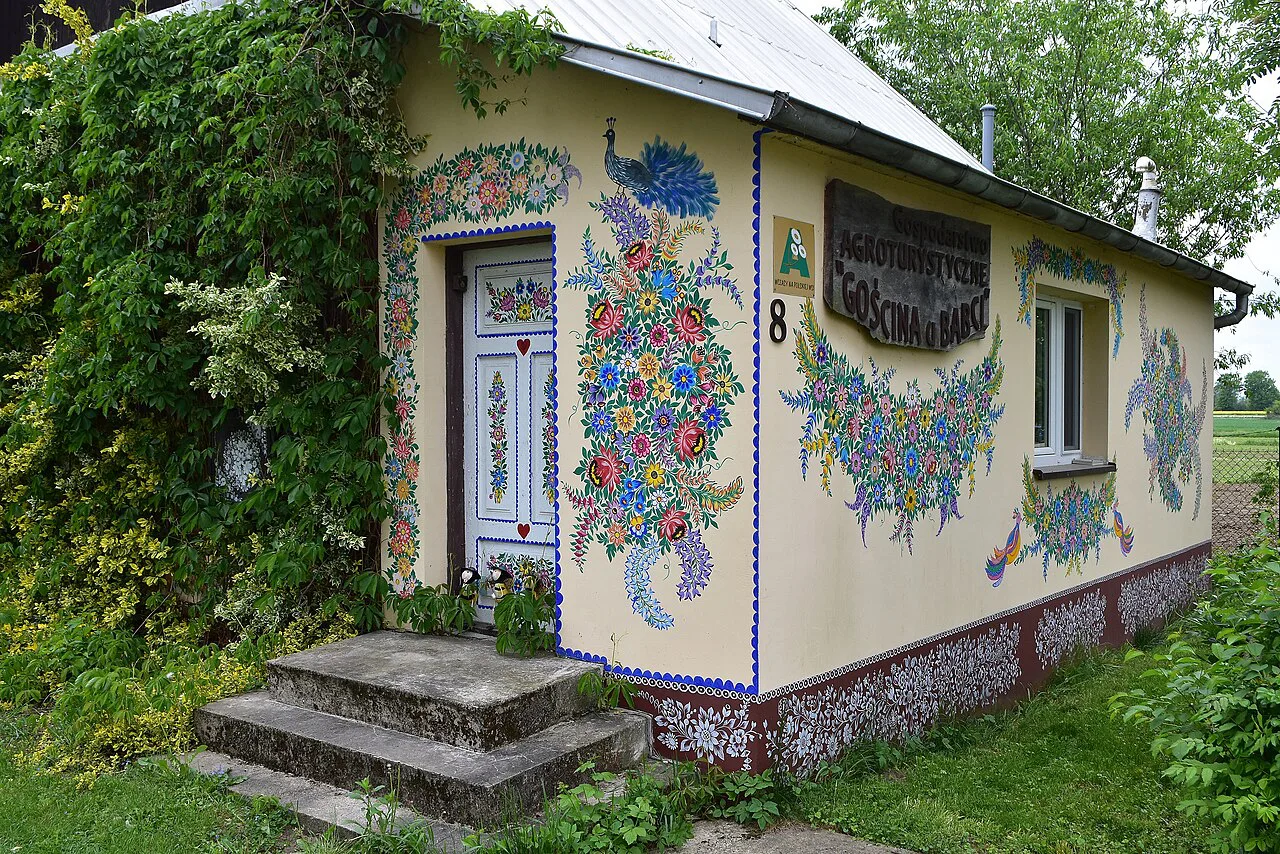
Wycinanki paper cuts: what they are and how they are made
Wycinanki are cut paper designs, traditionally made by folding a sheet and snipping symmetrical patterns with sheep shears or small scissors. The results are floral or geometric, often layered in bright colours and stuck directly onto walls, beams and window frames. They belong to the same decorative instinct as the straw hangings and painted eggs that brightened village interiors.
For a visitor, the appeal is that wycinanki are cheap to carry, easy to frame and clearly handmade. The trade-off is fragility: thin paper fades in direct sunlight and creases in a suitcase, so buy a stiff folder at the same time or ask the seller to pack it flat. A large single-colour cut is usually the most striking piece on a wall; multicolour layered designs read better close up.
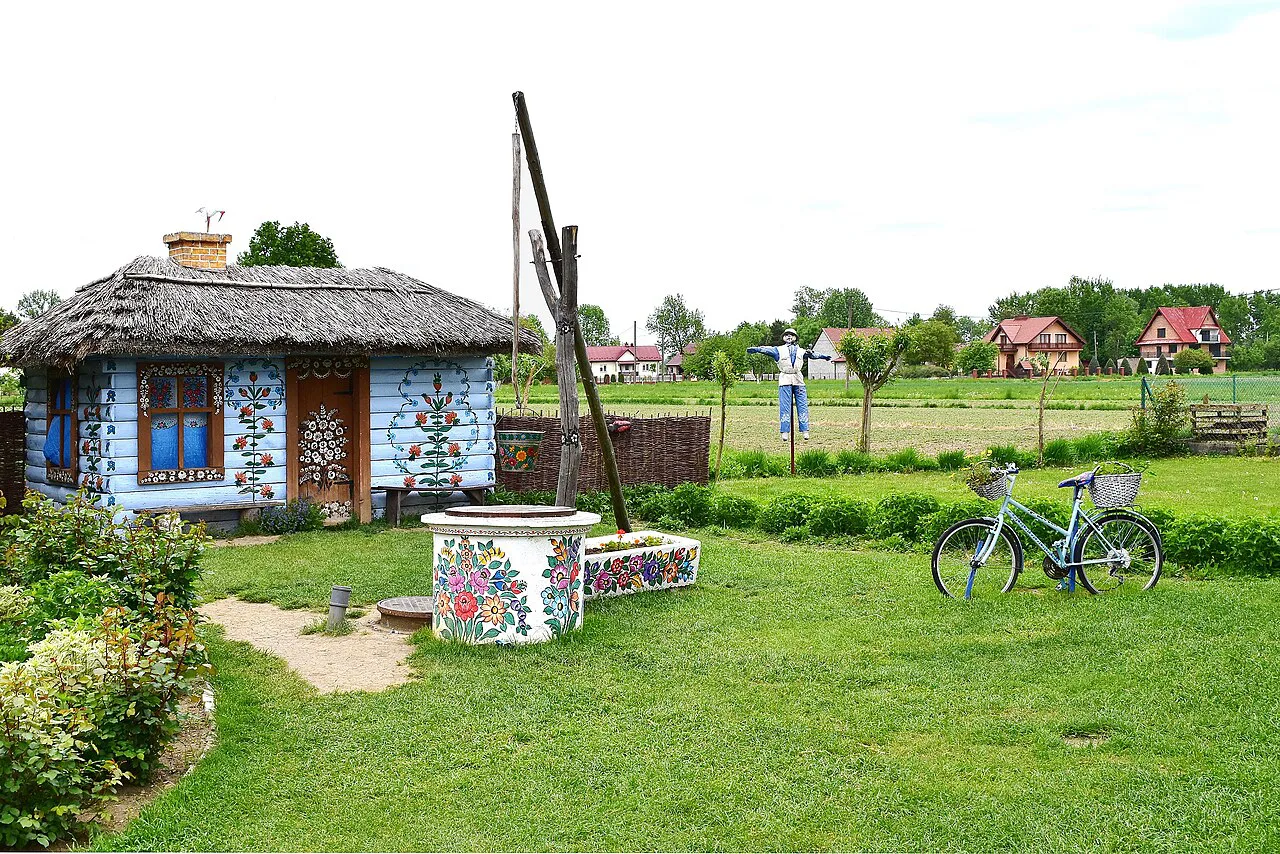
Zalipie painted village: flower-painted cottages
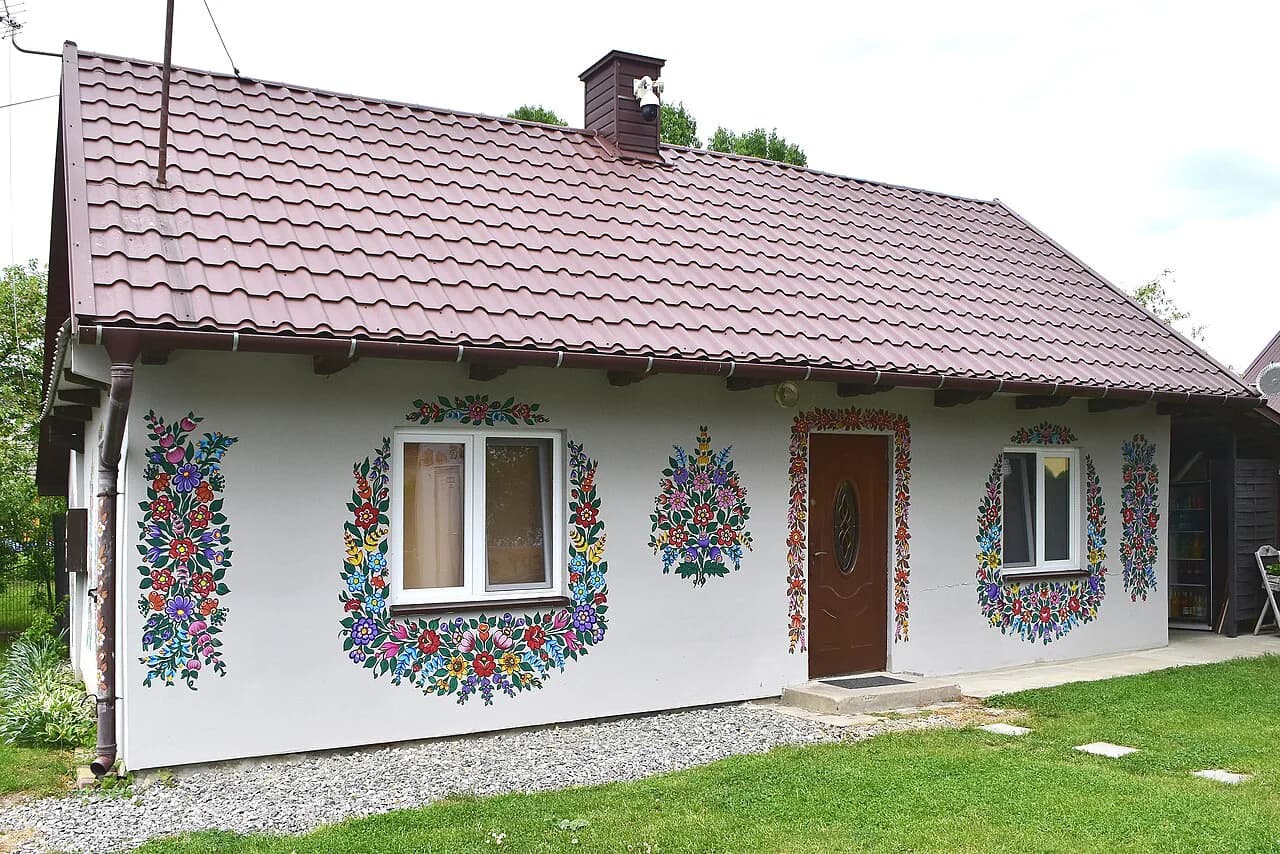
Zalipie, in Małopolska, is the best-known place to see Polish folk decoration applied to architecture: cottages, farm buildings, fences and even dog kennels and tree trunks painted with colourful flowers. The custom began at the end of the nineteenth century, when enclosed stoves with chimneys replaced older furnaces and soot-blackened walls could finally be decorated rather than just whitened with lime. Women painted interiors first, then moved outside.
Felicja Curyłowa (1904–1974) was the village's most celebrated painter, a repeat winner of the local house-painting competition and known beyond Zalipie for decorating interiors elsewhere, including a Kraków restaurant. Her homestead became an attraction during her lifetime, was bought after her death and placed in the care of the District Museum in Tarnów, and opened as a museum in 1978. The old cowshed on the site has been turned into an exhibition and workshop space showing work by local artists.
The most important practical point is that Zalipie is a working village, not an open-air museum: most of the painted buildings are private households, and the school, post office and church are also decorated. Treat the lanes as a neighbourhood rather than a gallery, keep to the road when photographing houses, and save your interior visits for the Curyłowa homestead. The village sits within reach of Tarnów and Kraków as a long half-day rather than a city-break stop.
A painted-cottage visit pairs naturally with the spring calendar, when village decoration and church festivals overlap with Easter in Poland. It is also worth knowing that painted eggs, another folk-art staple, are tied to that season rather than sold at their best all year.
Regional styles: why the patterns change
Polish folk art differs from region to region, and some local styles are very old. Colour, motif and technique shift with local materials, costume and church decoration, so a Kashubian embroidered border and a Łowicz striped skirt belong to different visual worlds even though both are called folk art. Read a piece by asking where it comes from before asking what it costs.
The Zalipie flower-painting style of southern Małopolska is one clearly documented regional tradition, popularised largely through Curyłowa's work and now kept going by local painters. The tradition of floral decoration on paper, walls and household objects is common across the region, with the village as its densest concentration. Labels at craft stalls and museum cases usually name the region, which is the quickest way to learn the map.
Folk art in everyday objects: vessels, utensils and textiles
Much of the tradition is functional: wooden bowls, spoons, pottery jugs, woven cloth and embroidered linen were made for use, and decoration came second. That is why folk art sits comfortably in a kitchen rather than behind glass, and why a hand-thrown mug or a woven runner is a reasonable thing to carry home. Look for visible tool marks and slight variation between pieces; identical rows of the same item suggest factory production.
Stoneware is the strongest folk-ceramic tradition you are likely to meet on a city break, and Bolesławiec ware is the best-known example, with its stamped patterns and blue-and-white palette. It is heavier and pricier than paper cuts, and a full dinner service will blow a hand-luggage allowance, so a single mug or small jug is the sensible buy.
Painted eggs deserve a separate look. They are seasonal decorative objects rather than tableware, and the techniques range from simple dyed shells to wax-resist patterns built up in layers. If you are in Poland in spring, they appear in markets and museums alongside Easter displays rather than in year-round souvenir shops.
Seeing folk art in the cities: what to look for
In the cities, folk art turns up in three reliable settings: ethnographic museum collections, temporary craft fairs and the folk-art sections of gift shops. Start with the ethnographic museum in whichever city you are visiting, because regional costume, wycinanki and ceramics are usually displayed together and labelled by origin. That single room will teach you more than a dozen souvenir stalls.
Cepelia, the state-founded folk-art and artistic industry organisation, is the name to look for when you want a shop rather than a stall; it is also the body that took over Curyłowa's homestead after her death. Assortment and quality vary by branch, so treat the label as a starting point and inspect the goods. Seasonal craft markets are covered under festivals in Poland, where folk-art stalls often sit alongside food and music.
Buying folk art: what to consider before you commit
Decide what the object is for before you shop. A wall piece such as a wycinanka or a small painting travels flat and cheaply; ceramics and woven textiles are heavier, need padding and may not survive a budget airline cabin bag. If you are buying a gift, choose something small and robust rather than impressive and breakable.
Ask where the piece was made and who made it. Handmade work carries small irregularities, a signature or a workshop label, while imported lookalikes tend to be uniform and cheaply finished. Price is a poor guide on its own, but a suspiciously low price for a large hand-cut design or a painted ceramic usually tells you something.
Seasonal buys shift with the calendar: painted eggs and spring decorations in the Easter period, and decorated candles and wreaths around All Saints' Day in Poland. Buying out of season is not impossible, but the range narrows.
Which folk-art stop fits your trip?
For most short city breaks, the realistic plan is a morning in an ethnographic museum plus one careful purchase from a craft shop: enough to understand the regional differences without turning the trip into a shopping expedition. Add Zalipie only if you have a car or a spare day near Tarnów or Kraków, and treat it as a village visit rather than a ticketed attraction.
Whatever you buy, check how it was made and where it comes from before you pay, and pack it flat or padded for the journey home. The object will outlast the trip; the questions you asked are what separate a real piece of Polish folk art from a fridge magnet.
Explore more Poland guides
Frequently Asked Questions
What is the difference between wycinanki and other Polish paper decorations?
Wycinanki are cut rather than folded or glued: a sheet is folded, snipped into a symmetrical pattern and unfolded, usually in floral or geometric shapes. Straw decorations and painted eggs use different materials and techniques, even though all three were used to brighten village interiors.
Is Zalipie a museum?
No. Zalipie is a working village where most painted buildings are private homes, alongside a decorated school, post office and church. The Curyłowa homestead is the museum element, run under the District Museum in Tarnów, so plan around that rather than expecting an open-air site.
Where can I see folk art on a city break?
Ethnographic museums are the most reliable stop, since they display costume, paper cuts and ceramics together with regional labels. Craft shops and seasonal markets fill the gaps, and Cepelia branches are the best-known retail name to look for.
Sources
Notes for your next Polish city break
Optional updates to our Poland guides.
You might also like

Continue reading
More guides you'll find useful