Polish Desserts: What to Try and What's in Them
Polish desserts explained: pączki, sernik, faworki, knedle and more. What each one is, when Poles eat it, and what to look for in a bakery or café.
On this page
Start with a pączek if you want one dessert that sums up Poland: a soft, jam-filled doughnut dusted with icing sugar or glazed, eaten in quantity on Tłusty Czwartek, Fat Thursday. Beyond it sits a sweet table of cheesecakes, fried ribbons, fruit dumplings and gingerbread.
Polish desserts split into two families. One is yeast and pastry, the other is twaróg, the curd cheese behind sernik and kluski leniwe. Knowing which is which helps you order in a café, or spot the right thing in a bakery window.
Desserts sit at the end of a meal built around savoury food, so it helps to know the rest of the menu too. Our guide to Polish food covers the cutlets and potato pancakes that come first. If you want the full spread, traditional Polish dishes runs from pierogi ruskie to śledź w śmietanie.
Pączki: jam-filled doughnuts and the pale ring to look for
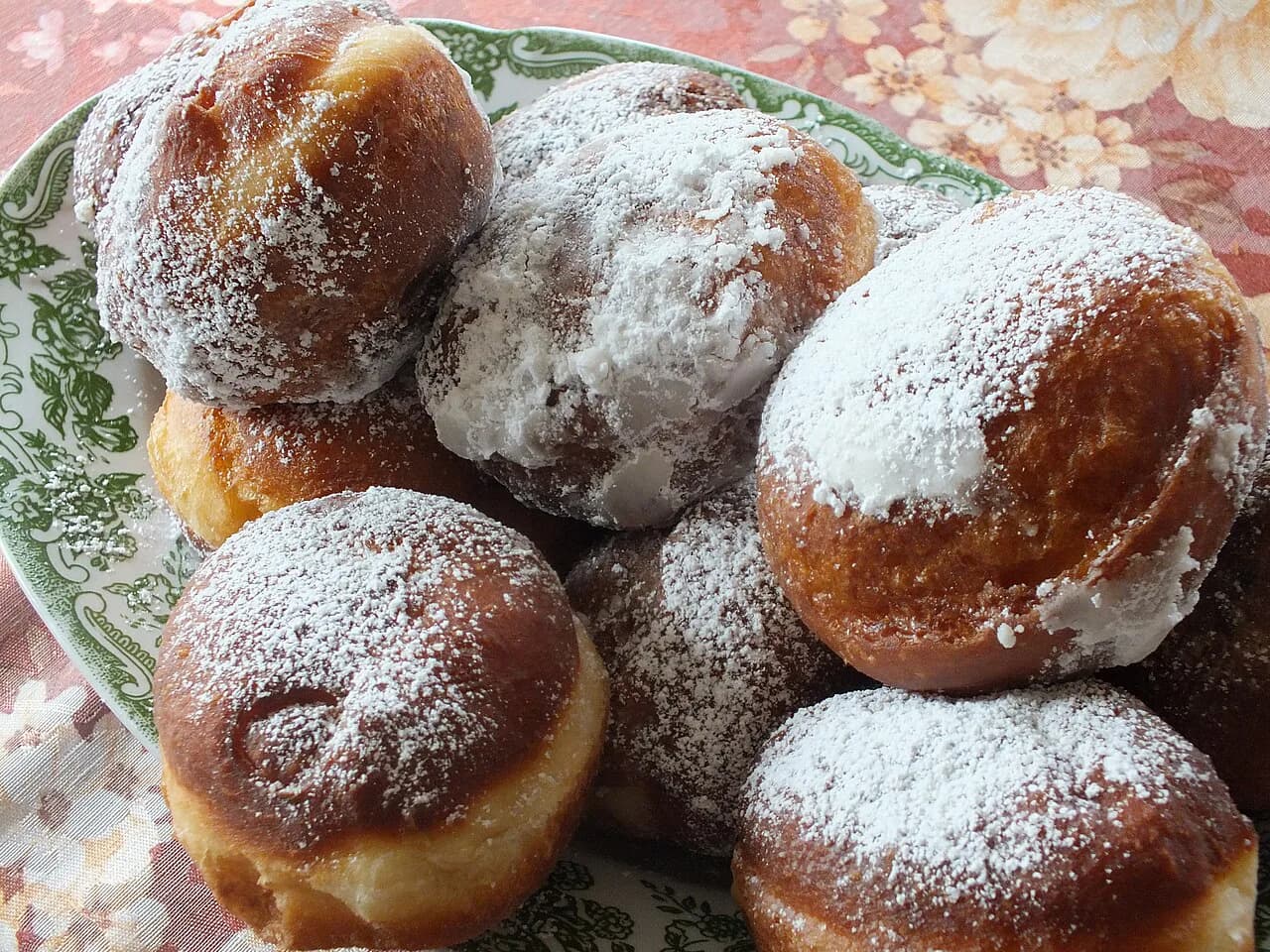
Pączki are pillowy doughnuts, softer and richer than a ring doughnut, filled with jam and finished with icing sugar or glaze. They are the traditional treat of Tłusty Czwartek, Fat Thursday, the last Thursday before Lent. That is the day Polish bakeries and cafés sell them in the greatest numbers.
Home fryers watch for the obwódka, a pale band around the middle of the doughnut. A light dough floats high in the oil, so a strip around its waist never goes under and stays white. The recipe source treats that band as the sign of a well-fried pączek, and holds the oil at 175C to get it. Take it as a home-frying test rather than a rule every shop follows.

Sernik: baked cheesecake made with twaróg
Sernik is Poland's baked cheesecake, made with twaróg, the Polish curd cheese. Bought ready ground, it gives a creamy, fluffy texture and a smooth top. The classic version keeps things plain, and the recipe source is firm that raisins do not belong in it.
Cracks come from cooling too fast or an oven that runs too hot, so bakers lower the temperature gently and resist peeking. Straight from the oven the centre looks a little soft, and it firms up once chilled. If you see a plain, pale cheesecake on a café counter with no fruit or glaze, this is probably it.
Sernik na zimno: the no-bake cheesecake set with jelly
Sernik na zimno shares a name with baked sernik but is a different dessert: a cool, creamy no-bake cheesecake on a biscuit base, topped with strawberry jelly and fresh fruit. It sets by ratio rather than by baking, so too little setting agent or too much liquid leaves it sloppy, and too much turns it rubbery. Blended smooth twaróg or a full-fat cream cheese gives the cleanest texture, and it needs a few hours in the fridge, ideally overnight.
For a traveller the difference matters at the counter. Baked sernik is dense and sliceable, often plain or with a dusting of icing sugar. Sernik na zimno is lighter, wobblier and usually topped with fruit or jelly. Order the one that matches the texture you want, not just the name.
Faworki (chruściki): crisp angel wings and when they appear
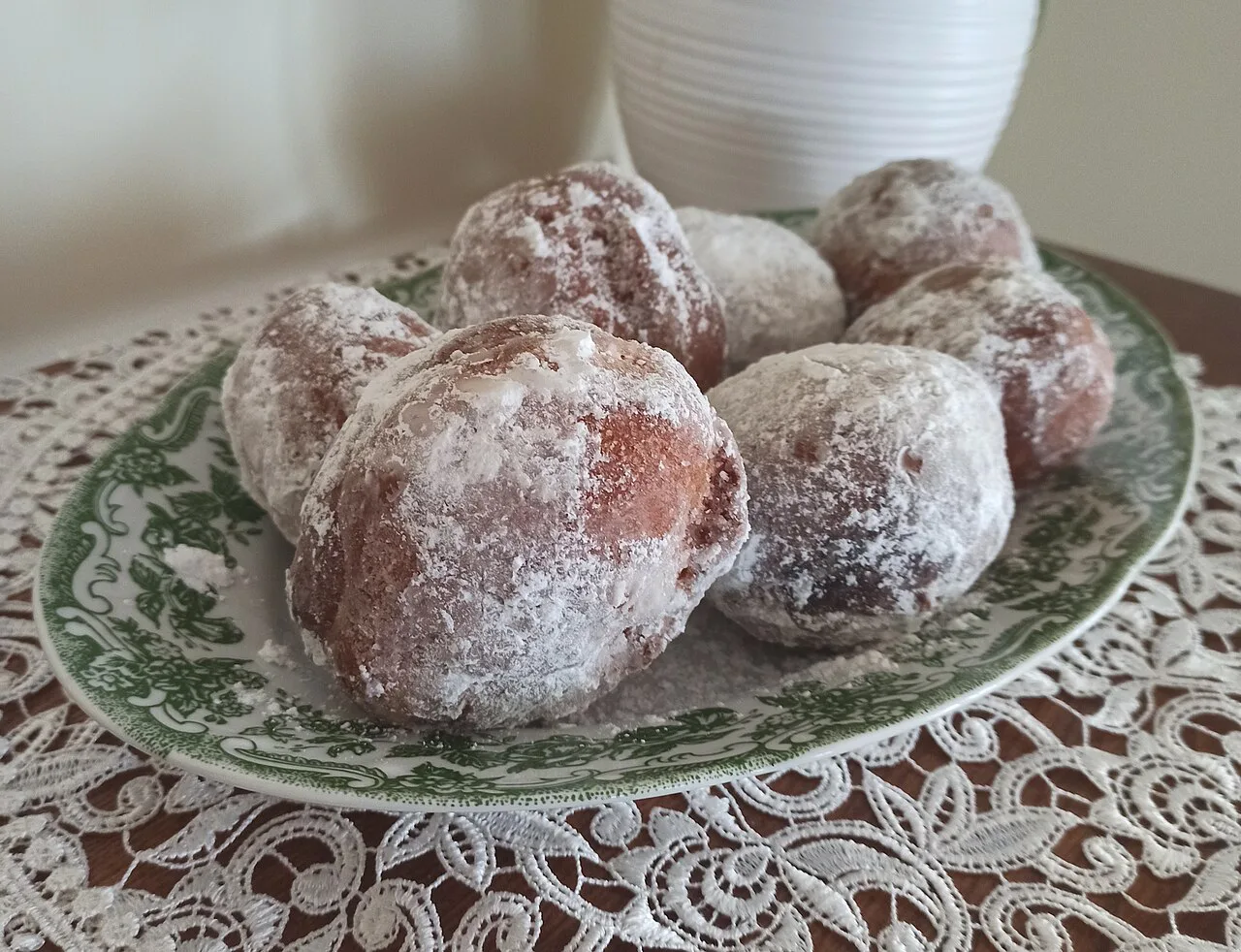
Faworki, also called chruściki, are paper-thin ribbons of dough fried for barely half a minute a side and buried in icing sugar. They are crisp, blistered and light, and they are the traditional treat of Polish Carnival and Fat Thursday. Look for them in the weeks before Lent rather than all year.
The home recipe depends on beating the rested dough with a rolling pin to force air through it, then rolling it thinner than feels sensible, until you could see your hand through it. A little spirit or vinegar helps the dough relax enough to roll that thin, and the oil is kept around 170 to 180C. These are home-cooking notes, not a shop standard, but they explain why good faworki taste so light.
Knedle: plum or strawberry dumplings in buttery breadcrumbs
Knedle are soft dumplings filled with fruit and served warm, coated in golden buttered breadcrumbs and sprinkled with sugar. Plum is the classic filling, and strawberry knedle appear while strawberries are in season. The dough is potato-based, so the effect is closer to a sweet pieróg than to a pastry.
They are a summer dish in Polish homes, which makes them a good bet in the warmer months and a rarer sight in winter. On a menu, look for knedle ze śliwkami for the plum version, or knedle z truskawkami when strawberries are around. They arrive as a small plate rather than a slab of cake, so they suit a lighter appetite.
Kluski leniwe: soft cheese dumplings with browned breadcrumbs
Kluski leniwe are soft Polish lazy cheese dumplings, made with twaróg, egg and flour and finished with buttery golden breadcrumbs and a sprinkle of sugar. No sauce, no fruit, no extras. They turn up in a milk bar Poland as readily as in a home kitchen, and they sit comfortably beside the savoury pierogi on the same menu.
When they fall apart it is nearly always the cheese rather than the dough, because a wet twaróg gives a slack mixture. Pressing the whey out first solves it. If you order them and they are slightly chewy rather than crumbly, that is the intended texture.
Racuchy and naleśniki: apple pancakes and thin crepes
Racuchy z jabłkami are fluffy apple pancakes, soft and lightly sweet, with pockets of diced apple and a dusting of icing sugar. There is no yeast and no proving, so they are a quick order rather than a planned baking project. They suit a late breakfast or an afternoon stop.
Naleśniki are thin pancakes that sit between an American pancake and a French crepe, sturdy enough to roll around a filling and go back into the pan without tearing. Sweet versions come with jam or chocolate spread, savoury ones with cheese, spinach or mushrooms. The batter is half milk and half water, which keeps them soft rather than rubbery.
Pierniczki and gingerbread: the honey-and-spice end of the table
Pierniczki are Polish gingerbread cookies, small, spiced and often iced, at the honeyed end of the sweet table. They keep well and travel well, so they make an easy edible souvenir. Regional gingerbread also appears around New Year, including fafernuchy, crunchy cookies from the Kurpie and Mazury regions with honey and pepper.
Alongside them sits kutia, the grain-and-honey sweet that belongs to Christmas Eve rather than to a café counter. Polish sweets are not only cream and jam. The spiced, honeyed corner is worth a look if you want something you can carry home.
Bakery and café picks: jagodzianki, drożdżówki and szyszki
Beyond the dessert plate, the bakery counter carries the everyday sweet treats. Jagodzianki are soft, buttery yeast buns filled to the brim with wild bilberries and sold wherever summer fruit is in season. Drożdżówki are sweet yeast buns filled with twaróg cheese and topped with fruit.
Szyszki are caramel cones, and the older sweet list runs from andruty kaliskie, light flat waffles, to the Torcik Wedlowski from E. Wedel, a chocolate sponge and cream pie. Cakes make up much of the range. For a sit-down stop with cutlery, a bar mleczny or café handles the plated desserts; the bakery is for things you eat on the move.
How to order Polish desserts in a café or bar mleczny
Point at the thing you want by name. Pączek, sernik and faworki are the same words on most menus, and asking for sernik gets you the baked one while sernik na zimno gets the chilled version. If a menu lists both, the jelly-topped one is the cold one.
Hospitality works the same way as for the savoury courses. If you are toasting the table, Na zdrowie is the phrase for cheers. Polish vodka is the usual toasting drink in a restaurant; dessert is what follows.
Which Polish dessert to try first, by appetite and time of day
For a quick morning or afternoon stop, take a pączek. It is portable, easy to share and gives you the essential Polish bakery experience without sitting down. A drożdżówka or jagodzianka does the same job if you prefer a bun to a doughnut.
For a sit-down dessert after a main course, order sernik if you like dense cheesecake and sernik na zimno if you want something lighter and fruitier. If you are still full from a pierogi lunch, knedle or kluski leniwe are a softer, smaller plate. Racuchy and naleśniki split the difference and work at almost any hour.
If it is Carnival, hunt for faworki. If it is high summer, look for knedle and jagodzianki. Fitting the dessert to the season gets you closer to how Poles eat it than ordering the same thing in January.
What to order on your first bakery stop
Order a pączek on your first day, then a slice of baked sernik when you sit down for a proper meal. Add faworki in Carnival season and knedle in summer, and you will have eaten across the Polish sweet table in one city break.
Match the dessert to the rest of the meal. If you want the wider picture, the rest of the Polish food guide covers the savoury courses.
Explore more Poland guides
Frequently Asked Questions
What is the most popular Polish dessert?
Pączki are the dessert Poles eat most visibly as a shared tradition, filling bakeries on Tłusty Czwartek, Fat Thursday. Faworki share that Carnival slot. Outside those weeks, sernik is the standard café dessert.
What sweets is Poland known for?
The best-known are pączki, sernik, faworki and knedle, plus pierniczki gingerbread and the bakery buns jagodzianki and drożdżówki. They cover fried pastry, baked cheesecake, fruit dumplings and honey-spiced cookies.
Do Polish bakeries sell desserts by weight or by the piece?
It varies by counter, so ask when you pay. Doughnuts and buns are usually sold individually, while larger cakes and trays are often cut and weighed.
What is the difference between sernik and sernik na zimno?
Sernik is baked in the oven and comes out dense and sliceable. Sernik na zimno is set with jelly in the fridge and is lighter, usually topped with fruit.
Sources
Notes for your next Polish city break
Optional updates to our Poland guides.
You might also like


Continue reading
More guides you'll find useful