
Żurek: Poland's Sour Rye Soup, Explained
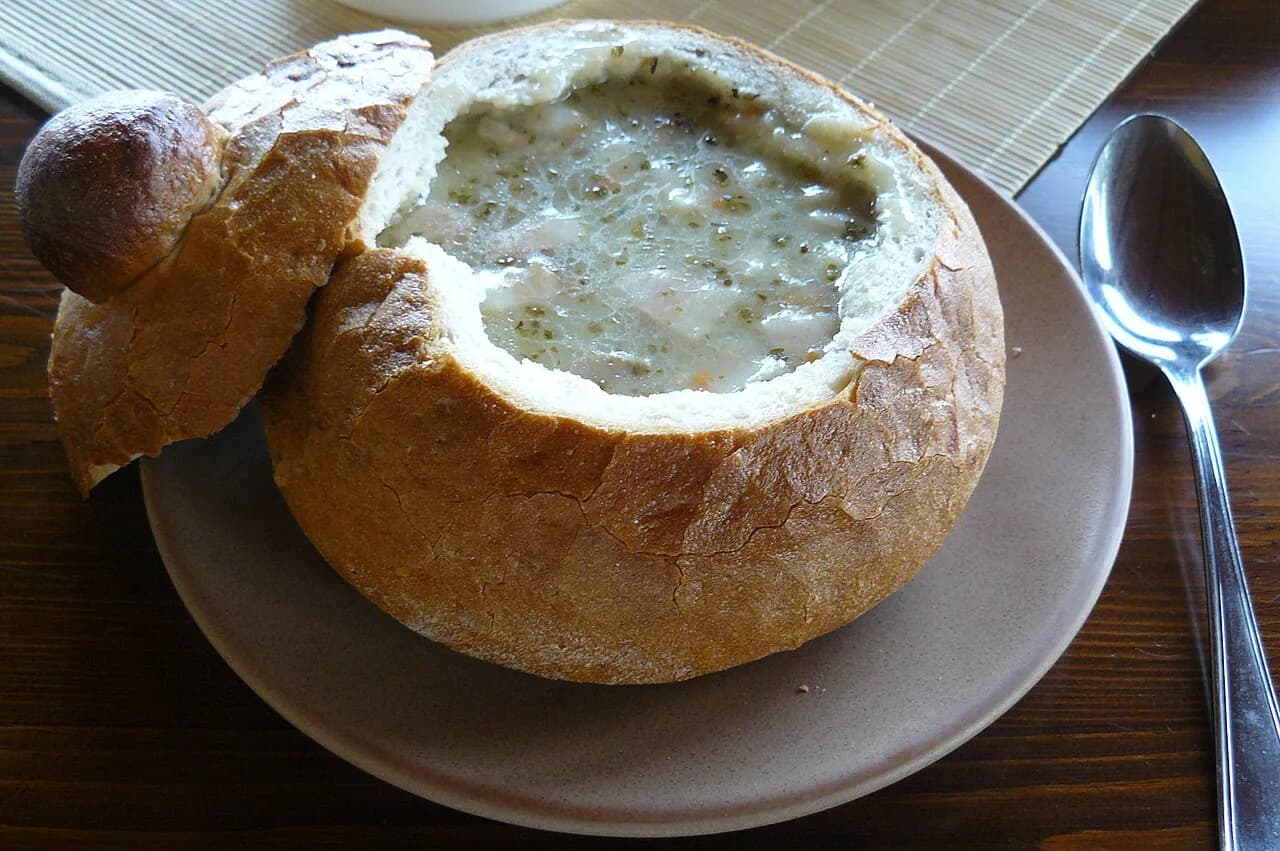
Żurek is Poland's sour rye soup, soured by a fermented rye starter and served with kiełbasa and boiled egg, often in a bread bowl. Here is what to expect.
On this page
Żurek is Poland's sour rye soup, and the sourness comes from a fermented rye flour starter rather than from vinegar or lemon. Order it and you get a thick, savoury bowl, usually with white kiełbasa and a halved boiled egg, and often served inside a hollowed-out bread loaf. This guide covers what is in it, how it tastes, how it is served and what to look for on a menu in Polish cities other than Kraków.
It is a year-round dish, not an Easter curiosity, so you can plan a city break in Gdańsk, Wrocław or Poznań at any time of year and expect to find it. It is also cheap eating in the sense that matters to a traveller: a bowl of soup is a light lunch rather than a full dinner, which leaves room for something else later.
What Żurek is
Żurek is a soup built on a liquid fermented rye starter, known in Polish as zakwas, which gives it its character. In Poland the soup itself is also called żur or Żurek depending on the region, and it is regarded as part of the national cuisine. Without the starter you have a meat and vegetable broth, not Żurek, which is why recipes treat it as the one ingredient that cannot be swapped out.
The word is a diminutive of żur, which is thought to come from a Germanic root meaning sour, so the name describes the taste directly. Historically it began as peasant cooking designed to use up what was in the larder, and when meat was scarce the fermented rye still gave the broth depth and umami. That history explains why such a simple soup carries so much flavour.
What Żurek is made with
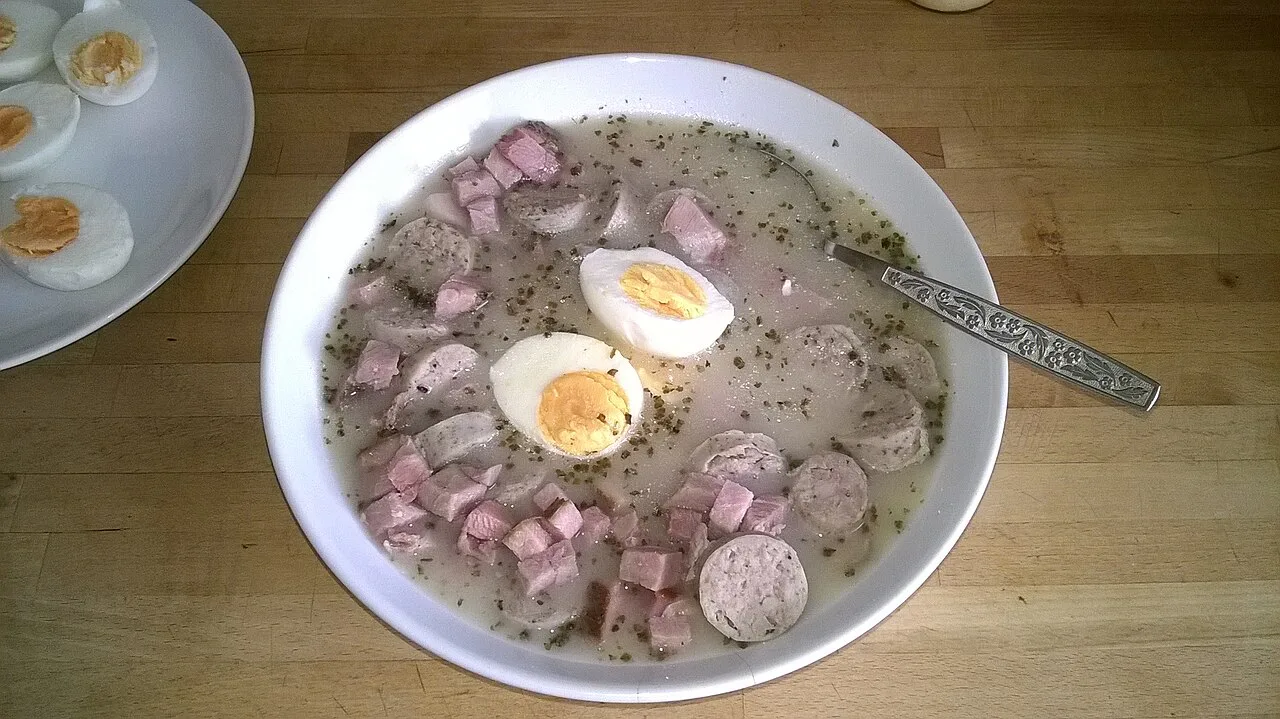
The core ingredients are the fermented rye starter, a meat stock, bacon, white kiełbasa, onion, carrot and root vegetables such as parsley root or celeriac, with marjoram and seasoning. White kiełbasa is a fresh, unsmoked sausage, so it has to be cooked through in the pot rather than eaten as it is. A boiled egg, halved, goes in at the end as a garnish rather than as an ingredient in the broth.
Regional kitchens vary the details: some add potatoes, some use smoked bacon or smoked sausage, some finish with cream and some serve the soup in a bread bowl. None of this changes the method, which is essentially the same everywhere. If you are cooking it at home, the practical constraint is time rather than skill, because the rye starter needs several days to ferment before the soup can be made.
What Żurek tastes like
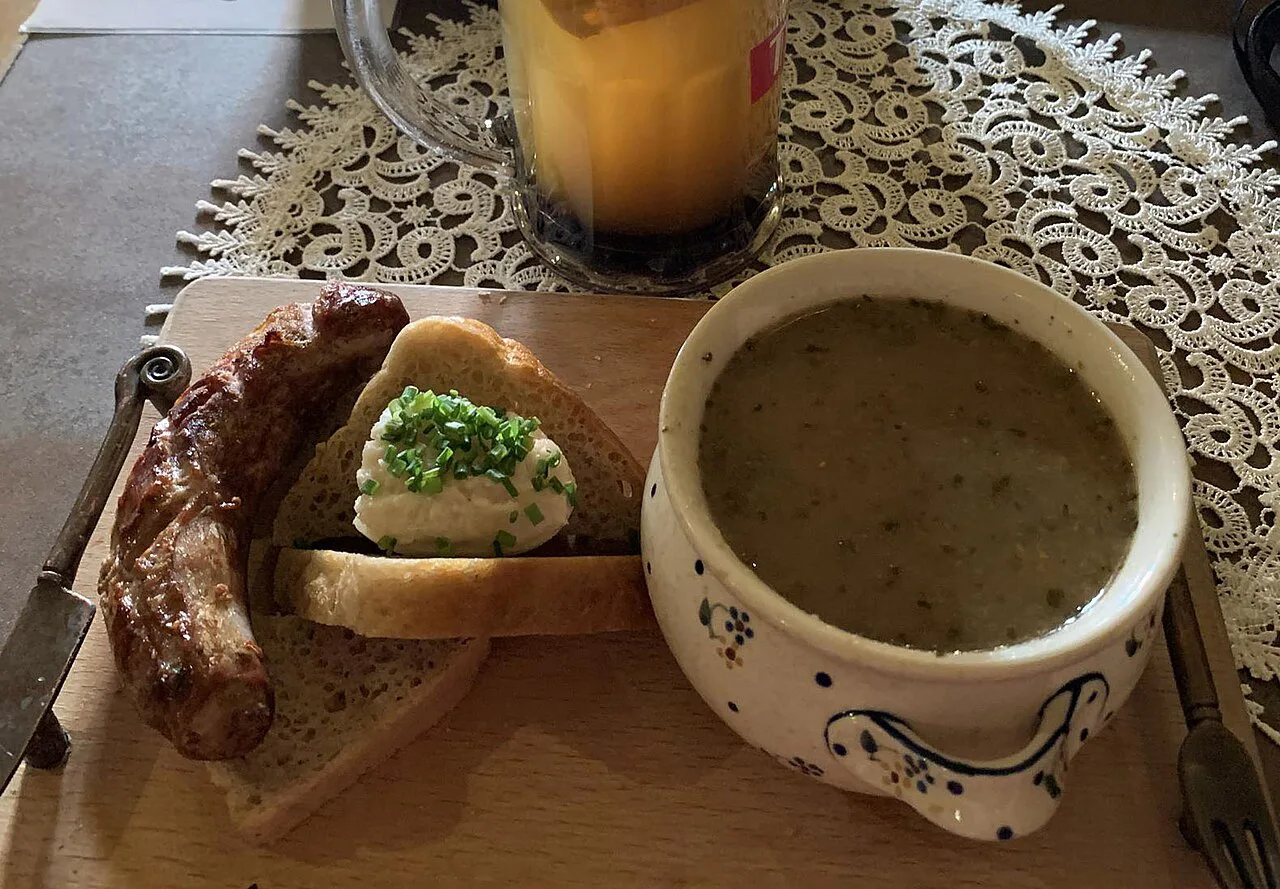
Expect sour, smoky and savoury rather than sharp. The sourness is fermented rather than acidic, which is why it reads as depth rather than as a vinegar tang, and the bacon and sausage add smoke underneath it. Marjoram gives a herbal note on top that regular eaters of the soup associate with the dish.
It is a rich, filling soup, which is why it is normally served on its own with sliced bread rather than as a starter before a main course. If you are ordering a multi-course Polish meal, treat Żurek as the main event or split a portion, and look at the wider picture of traditional Polish dishes such as kotlet schabowy and placki ziemniaczane before you commit to a second course.
How Żurek is served
The classic presentation is a bowl of soup with a halved boiled egg and slices of white kiełbasa, finished with fresh marjoram. Some versions arrive in a hollowed-out bread loaf, which soaks up the broth and turns the bowl into part of the meal. Both are common, so neither should surprise you when the plate lands.
Other regional serving styles include chopped or mashed potatoes, cooked root vegetables, smoked bacon, a poached or fried egg, croutons, or the bread bowl already mentioned. If you see it listed with potatoes, that is a regional variant rather than a different dish. Order it the first time in the plainest version on the menu, then decide whether you want the bread bowl on a second visit.
The regional versions: żur, zalewajka, keselica and barszcz biały
The same family of sour cereal soups appears across central and eastern Europe, and in Poland the names shift by region. You may see it as żur, Żurek, zalewajka, keselica or barszcz biały, and similar soups turn up on Slovak, Czech and Belarusian tables as well. Recognising the synonyms saves you from ordering what you think is a different soup and getting the same bowl.
Barszcz biały is the one that most often confuses visitors, since barszcz on its own usually means beetroot soup in a Polish restaurant. If a menu lists a white version, it is the rye-based soup rather than the red one. Ask what the base is if the description is thin, and you will get a straight answer.
Żurek at Easter and all year round
Żurek is strongly associated with Easter in Poland and often carries the nickname of Polish Easter soup, but it is eaten throughout the year. Every restaurant serving Polish cuisine tends to have it on the menu whatever the season, which is what matters when you are planning a short city break. If your trip falls outside spring, you are not missing out.
The Easter link explains why the soup is meat-free in its older form: it suited the fasting days of Lent, and the sausage and bacon came later or varied by household. That makes it a useful dish if you are travelling with someone who eats little meat, provided you ask whether the version on offer is made with stock. For the rest of the menu, look at pierogi and other traditional Polish dishes to build a meal around it.
How to pronounce Żurek and what the name means
Say it roughly as ZHOO-rek, with a soft zh at the start and a short, clipped ending. The ż is the sound in the middle of the English word measure, not a plain z. Getting it approximately right is enough for a waiter to understand you.
The name is a diminutive of żur, so the two words point at the same soup at different strengths. If you see żur on a menu, it is the same dish under its older name rather than a variant you need to research separately. Menus in big cities often use both spellings on the same page.
Where to try Żurek on a Polish city break
Any restaurant serving Polish cuisine is the place to look, from a plain bar mleczny to a smarter dining room, and the soup appears in the Polish food repertoire alongside pierogi ruskie and śledź w śmietanie. Milk bars in particular suit a quick, inexpensive lunch, and Żurek fits that format well. Your Łódź or Poznań lunch stop does not need to be planned around it; just check the soup section of the menu.
Bread-bowl versions are worth ordering once, because they change the texture of the meal and are the version most visitors picture. Beyond that, the honest advice is to order it early in the trip: a bowl of Żurek tells you a lot about the kitchen, and it costs little. Leave room afterwards for Polish desserts if you like a sweet finish.
Should Żurek be your first bowl in Poland?
Yes, if you want one dish that explains Polish cooking quickly: sour, savoury, filling and cheap enough to try without risk. Order it plain with kiełbasa and egg first, then try the bread-bowl version on another day. It also works as a light lunch rather than a heavy dinner, which matters when you have a city to walk.
If you are building a food plan for a short trip, put Żurek alongside a milk-bar lunch and one sit-down Polish dinner rather than trying to eat everything in a day. You will find it on menus all year, so there is no season to plan around.
Explore more Poland guides
Frequently Asked Questions
What is Polish Żurek made of?
The base is a fermented rye flour starter called zakwas, which supplies the sour flavour. Meat stock, bacon, white kiełbasa, onion, carrot and root vegetables go into the pot, with marjoram and seasoning, and the soup is finished with a halved boiled egg. Regional versions add potatoes, smoked sausage or cream.
What does Żurek taste like?
It is sour, smoky and savoury rather than sharp or vinegary. The sourness comes from fermentation, so it reads as depth, while the bacon and sausage add smoke and marjoram gives a herbal top note. It is a rich, filling soup and is usually served on its own with bread.
Is Żurek healthy?
It is a hearty soup built on meat stock, bacon and sausage, so it is substantial rather than light. If you are watching what you eat, ask whether the version on the menu is made with meat stock or with cream, since both vary between kitchens. Treat it as a meal in itself rather than a starter.
Can you make Żurek without the rye starter?
Not really: the fermented rye starter is what defines the dish, and without it you have an ordinary meat and vegetable broth. Outside Poland the starter is hard to buy, though Polish delis sometimes stock it, and it can be fermented at home over several days. A buckwheat starter is the gluten-free alternative.
Sources
Notes for your next Polish city break
Optional updates to our Poland guides.
You might also like



Continue reading
More guides you'll find useful





