
Traditional Polish Dishes: What to Order and What to Skip
Traditional Polish dishes explained: pierogi, Żurek, bigos, gołąbki and more. What each one is, how it is served and which are worth ordering on a city break.
On this page
Order pierogi, Żurek and bigos first: those three cover the savoury core of a traditional Polish menu, and gołąbki, golonka and śledź are the next most rewarding additions. This guide explains what each dish is made from, how it arrives at the table, and which ones are filling enough to share.
Polish cooking leans on cabbage, potato, rye, pork and cream, with sour notes from fermented rye and beetroot. Many dishes were built for holidays and family gatherings, which is why portions are generous and soups often come with bread on the side.
What counts as a traditional Polish dish
A traditional Polish dish is one cooked from the staples of the Polish larder: cabbage fresh and fermented, potatoes, buckwheat and rye, pork and game, freshwater fish, mushrooms and cream. Meals tend to be substantial and are seasoned with marjoram, bay leaf, allspice, pepper and horseradish rather than chilli.
The canon you will meet on almost any menu runs from dumplings and cabbage rolls through hunter's stew, pork knuckle and potato dumplings to a long list of soups. Many of these are shared with neighbouring countries, so expect similar dumplings under different names across the region.
Some dishes have moved from home kitchens to street food, most visibly zapiekanka, a halved baguette topped with cheese, mushrooms and ham. Others, like kotlet schabowy and placki ziemniaczane, sit in the everyday home-cooking tradition rather than the celebration one.
Pierogi: the fillings to know
Pierogi are filled dumplings, boiled and often finished with butter and onions, and they come with both savoury and sweet fillings. The classic savoury set includes potato and cheese, sauerkraut with mushroom, meat, buckwheat groat and spinach, while sweet versions use berries, often with cream.
Pierogi ruskie, the potato-and-cheese version, is the one to try first if you only order one plate, and it is frequently scattered with bacon bits. The sauerkraut-and-mushroom filling is sharper and works well with a mound of soft fried onion.
The trade-off is portion size: pierogi are often listed as a starter but a full portion is heavy enough that a main course afterwards may go uneaten. Share one plate between two and add a soup, or take pierogi as your main if you want the full experience.
Żurek and barszcz: the two soups to order first
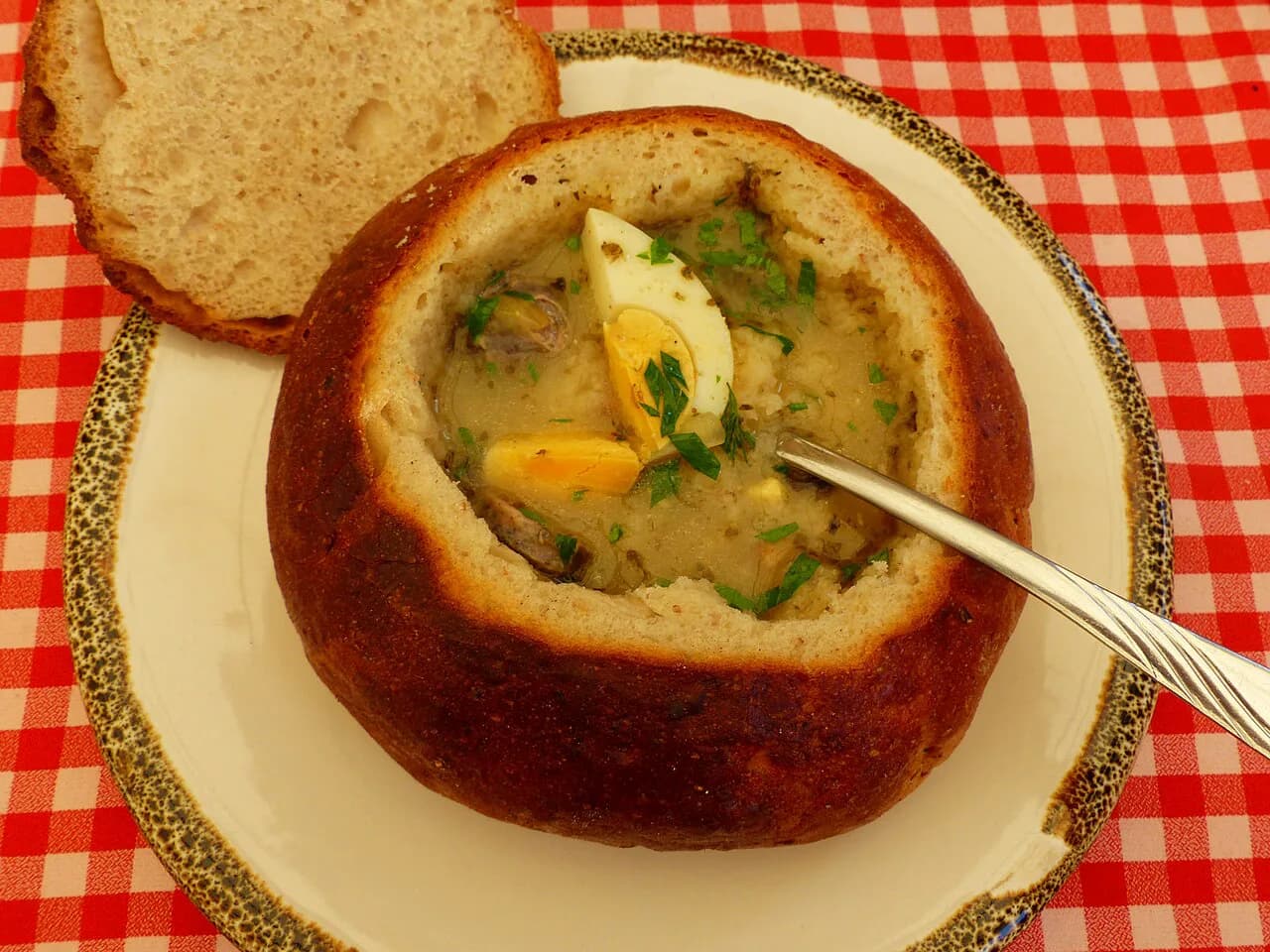
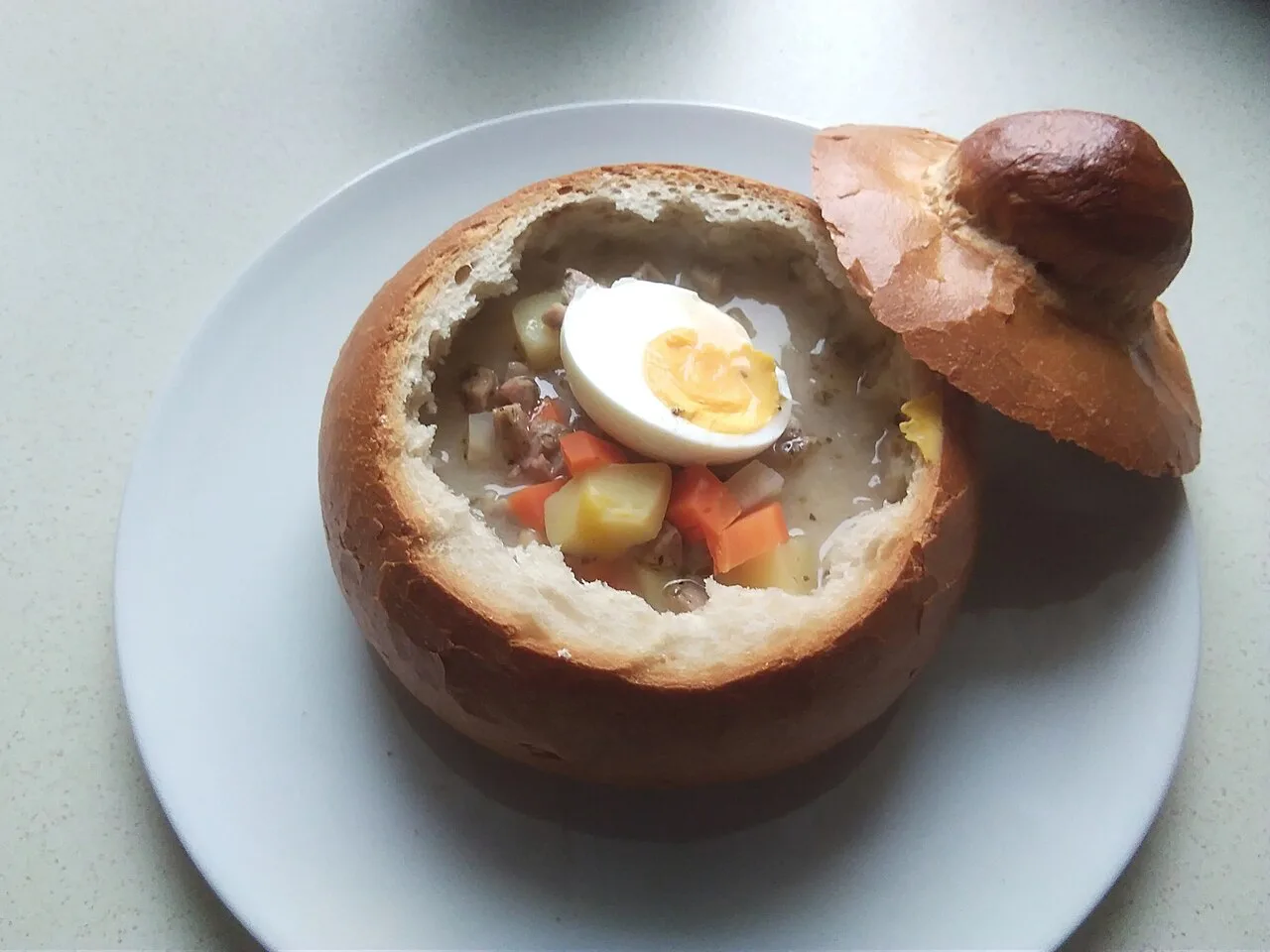
Żurek is a sour rye soup built on a fermented starter called zakwas, served in a light broth with sausage and egg, and it carries a pronounced sour, peppery edge. Barszcz is the red beetroot soup, and the clear, ruby version is the one most often served on its own or with a small pastry.
The distinction matters when ordering: Żurek is thick, sour and filling, while clear barszcz is lighter and often drunk from a cup at the start of a large meal. A third option, rosół, is a clear chicken broth and the mildest of the trio, useful if sour flavours are not for you.
Żurek is traditionally an Easter soup but now appears on menus year-round, frequently served inside a hollowed bread roll. Treat the bread bowl as part of the meal rather than decoration, because it makes an already substantial starter into a small lunch.
Bigos: what is in it and why reheating helps
Bigos is a hunter's stew of cabbage with several kinds of meat, mushroom and onion, seasoned with pepper, caraway and allspice. It is cooked in quantity, and the flavour deepens each time the pot is reheated, which is why it is often made days ahead of serving.
On a menu it is a safe order if you like sauerkraut, and a risky one if you do not, because the fermented cabbage dominates. It is also one of the dishes most likely to appear as a side to grilled meats and sausages rather than as a stand-alone main.
Gołąbki and golonka: cabbage rolls and pork knuckle
Gołąbki are blanched cabbage leaves wrapped around minced meat and rice or groat, baked and finished with a tomato sauce. Despite the name, which means little pigeons, there is no bird involved; they are a wedding and family-gathering dish that has stayed on everyday menus and in simple canteens.
Golonka is a pork knuckle boiled with vegetables and seasoning, served with sauerkraut, horseradish and baked potatoes, and it is the heaviest dish on this list. Regional versions exist, including one in the Beskid Śląski area where the knuckle is stewed in beer, so the same name can bring a different plate.
Order golonka only if you have a serious appetite or someone to share it with; a whole knuckle is a meal for one hungry person and more than enough for two moderate ones. If you want the flavour without the volume, look for pork dishes served with bigos instead.
Kopytka and other potato dumplings
Kopytka are small dumplings of potato, flour, egg and salt, shaped like little hooves and boiled, then served with butter or a mushroom sauce. They work as a side for meat or stew and as a meat-free main, and they are a staple of milk-bar menus.
If you like the idea of potato dumplings but want something more distinctive, placki ziemniaczane, potato pancakes, are the crispier alternative and usually come with sour cream.
Herring and cold starters, including galareta
Śledź w śmietanie is salted herring cut into pieces, mixed with onion and sometimes apple, and dressed in sour cream and herbs. It is served cold, often as one of several starters, and the cream and onion keep the fish flavour mild rather than overpowering.
Galareta is a savoury jelly set around poultry, fish or vegetables, and it appears at weddings and family gatherings as a cold snack. It is the dish most likely to divide a table, so try a spoonful from someone else's plate before committing to a portion.
Flaki, a tripe soup seasoned with bay leaf, marjoram and nutmeg, is the other acquired taste on a traditional menu. Both flaki and galareta are worth trying if you enjoy offal and texture, and easy to leave if you do not.
Sweet things: pączki, sernik, makowiec and faworki
Pączki are round doughnuts, usually filled with jam or rose conserve, and they are the simplest sweet to order at the end of a meal. Sernik is a baked cheesecake made with twaróg curd cheese, denser and less sweet than the New York version, and makowiec is a poppy-seed roll.
Faworki, thin twisted pastry fried and dusted with sugar, are light enough to share after a heavy main course. Polish desserts also run to cold set cheesecakes and fruit dumplings, which suit a summer visit better than a baked cake.
Regional and seasonal specialities
Toruń gingerbread is a regional speciality with a history going back to the Middle Ages, delicately spiced and softer than the brittle supermarket version. Oscypek is a smoked sheep's-milk cheese from the Tatra Mountains, traditionally made by a shepherd and often pan-fried and served with cranberry jam.
Goose appears on menus from November and is traditionally part of the Christmas table alongside carp, pierogi and soup, served roasted or as pate, terrine and carpaccio. Outside that window, expect it to be scarce; the Christmas menu is where you will find it most reliably.
Kiełbasa, Polish sausage, is sold grilled at street stalls and added to soups and stews, and it comes in pork, beef and poultry versions. It is the easiest traditional item to eat on the move when you do not want to sit down for a full meal.
What to skip and what to share
Skip flaki and galareta unless you actively enjoy tripe and set jelly, and skip golonka if you are eating alone or have a lighter meal planned later. Nothing is wasted by leaving them: a menu with pierogi, Żurek and bigos already covers the flavours most travellers come for.
Share the heavy plates. Pierogi, bigos and golonka all arrive in portions built for appetites sharpened by cold weather, and a table ordering one soup, one dumpling plate and one stew to split will taste more of the cuisine than three separate mains.
How to order: milk bars, starters and portion size
Milk bars, known in Polish as bar mleczny, are the cheapest way to eat these dishes, serving simple versions of kopytka, pierogi and soups to a canteen-style counter. The menu is usually short, the portions plain and filling, and the trade-off is a lack of atmosphere compared with a restaurant.
In restaurants, soups and cold starters come first and mains follow, but the line between the two is blurry because a dumpling portion can serve as a main. Order soups and one shared starter to begin, then decide on mains once you see the size of what arrives.
A word on drinks: beer and vodka are both standard with a Polish meal, and a small glass of vodka is often taken before eating rather than alongside the food. If you want to try one properly, order a single measure and sip it rather than treating it as a cocktail ingredient.
Which dishes suit vegetarians
Vegetarians can eat well from the traditional list without improvising: pierogi ruskie, sauerkraut-and-mushroom pierogi, kopytka with butter or mushroom sauce, placki ziemniaczane and most beetroot soups are meat-free as standard. Confirm that the soup has not been made with meat stock, which is common in bars and canteens.
The risky dishes are bigos and gołąbki, which usually contain several meats or mince, and golonka, which is pork by definition. Oscypek, the smoked sheep's cheese, is a good meat-free snack if you find it grilled at a stall.
Which three dishes to order first
If you have one meal in Poland, order Żurek to start, pierogi ruskie to follow and a shared plate of bigos on the side, which gives you the sour, the buttery and the fermented notes in one sitting. Add pączki at the end and you have covered the range without over-ordering.
Save golonka, flaki and galareta for a second visit or a table of confident eaters, and use a milk bar for a cheap lunch of kopytka or soup between sights.
Explore more Poland guides
Frequently Asked Questions
What is the most famous Polish dish?
Pierogi are the Polish dish most people know, and they are the safest first order because the potato-and-cheese version suits almost everyone. Żurek and bigos are close behind in recognition and give a better sense of how Polish cooking uses sour and fermented flavours.
How many traditional Polish dishes are there?
There is no fixed number, but a shortlist of the dishes visitors meet most often runs to about a dozen: pierogi, Żurek, barszcz, rosół, bigos, gołąbki, golonka, kopytka, flaki, galareta, śledź and kiełbasa. Regional cooking adds more, from Toruń gingerbread to Tatra oscypek.
Are Polish portions large?
They tend to be generous, particularly stews, dumplings and pork dishes, and soups are often served with bread. Sharing a starter and ordering mains after you have seen the plates is the simplest way to avoid leaving food.
Sources
Notes for your next Polish city break
Optional updates to our Poland guides.
You might also like



Continue reading
More guides you'll find useful





