
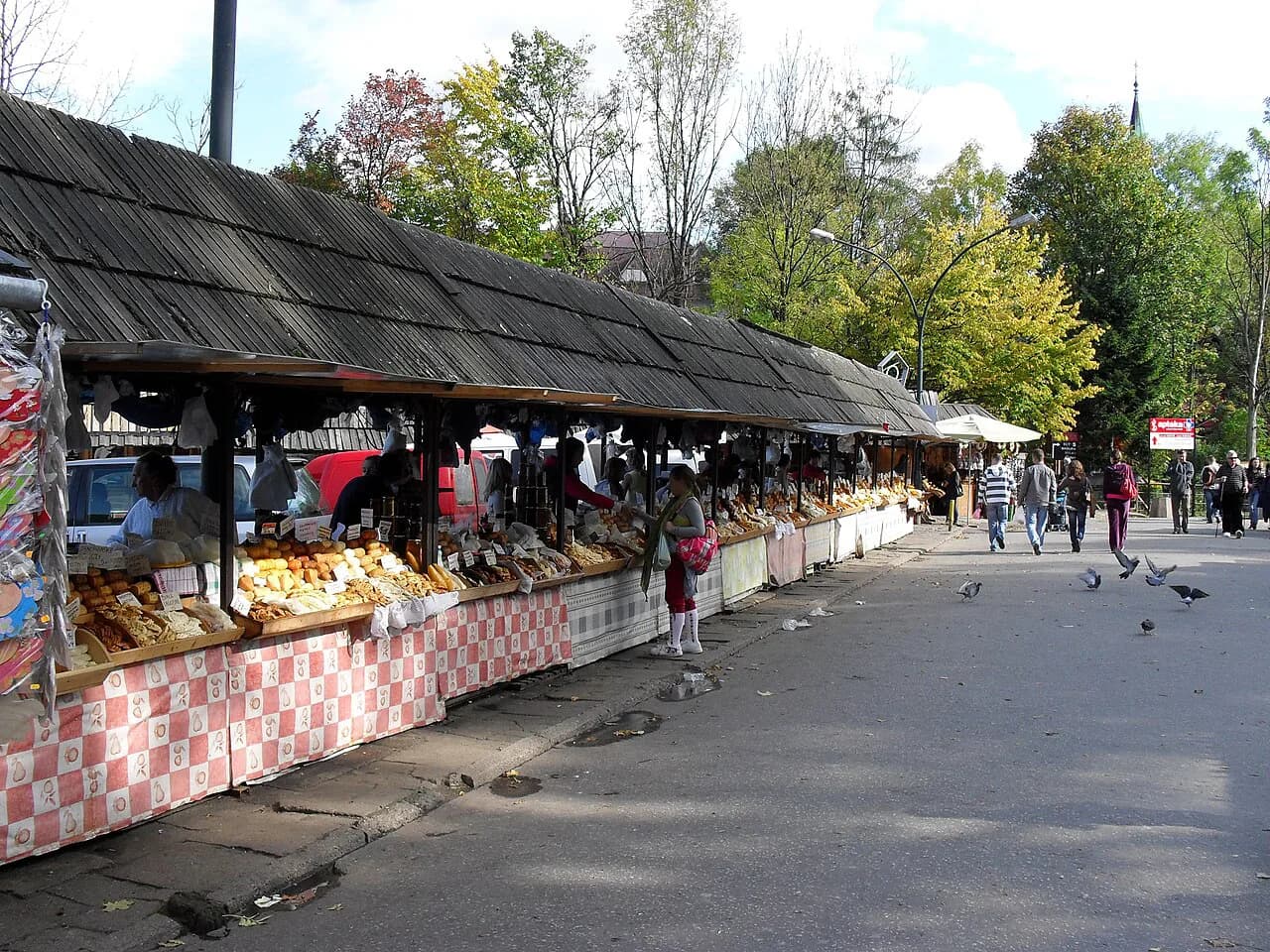
Oscypek: Poland's Smoked Sheep's Cheese Explained
Oscypek is a smoked sheep's milk cheese from Poland's highlands, pressed into decorative spindles. Here's what it tastes like and how it's served.
On this page
Oscypek is a smoked cheese made from salted sheep's milk, shaped in carved wooden moulds into decorative spindles and cured in hot smoke for up to two weeks. It is the best-known cheese of the Podhale highlands around Zakopane, and it is eaten either cold in thin slices with wine or vodka or grilled with cranberry preserves. This guide covers how it is made, what it tastes like, how to tell a traditional spindle from a shop-bought imitation, and where to look for it on a Polish city break.
Treat it as a small edible souvenir rather than a sit-down dish: one spindle goes a long way, and a grilled slice with cranberry jam makes a memorable snack. It is one of Poland's cheeses with a protected name, a specific mountain origin and a production method worth knowing before you buy.
What oscypek is, in short
Oscypek is a smoked cheese made from salted sheep's milk, registered and protected within the EU system as a regional product. It is pale straw-yellow with a clean smoky aroma and a pleasant saltiness, and it is usually served in thin slices alongside wine or vodka. That combination of smoke, salt and dense, chewy texture is what distinguishes it from ordinary smoked cheese.
Recipes vary, and some producers add cow's milk to the sheep's milk, which is the main reason the cheese you meet in a city shop can taste milder and less tangy than one bought in the mountains. The protected name signals a cheese made in the defined region to a defined method, not a generic smoked cheese pressed into a spindle shape.
You may also see the spelling oszczypek, which refers to the same cheese. Either way, it is a highland speciality rather than a national everyday cheese.
How oscypek is made
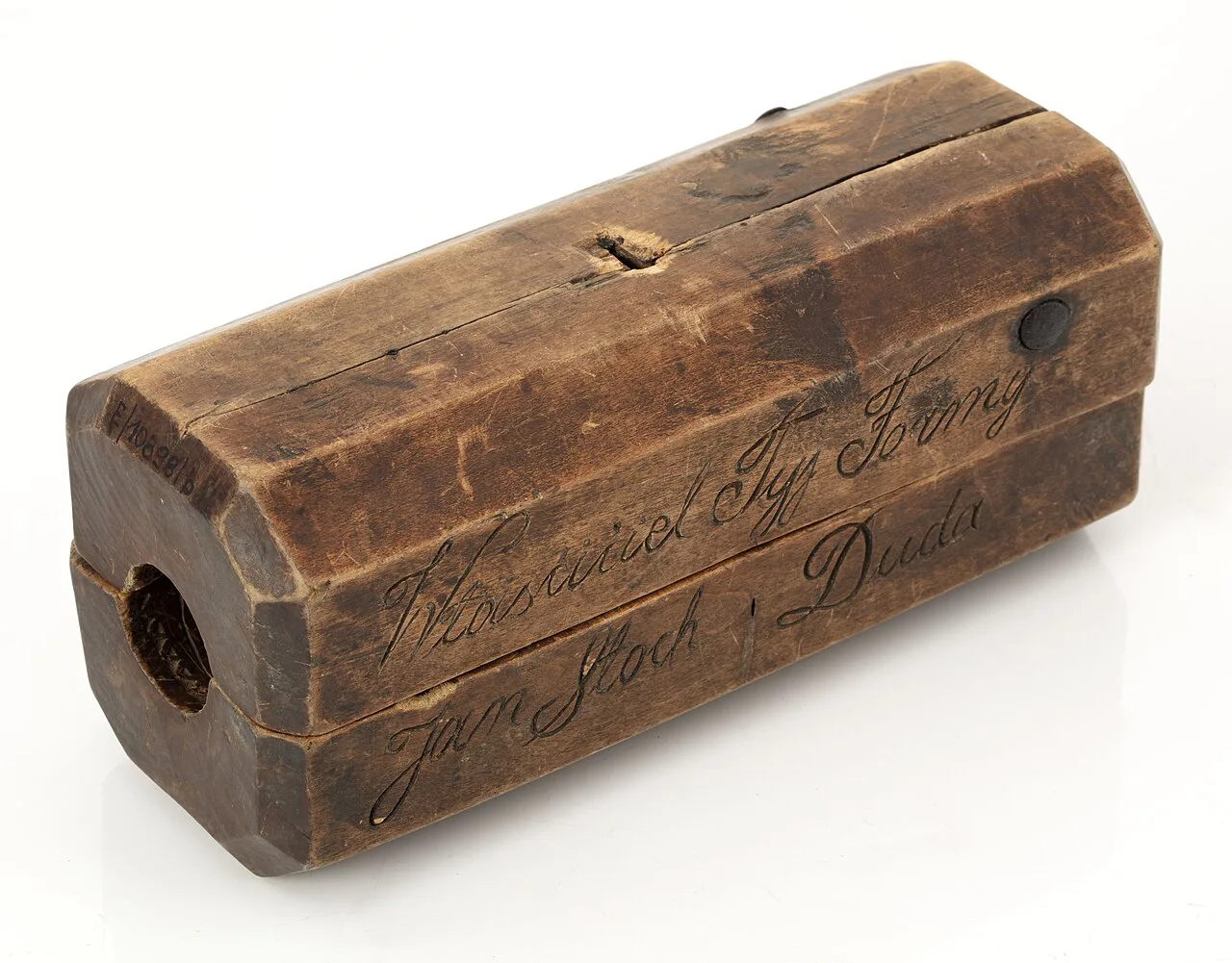
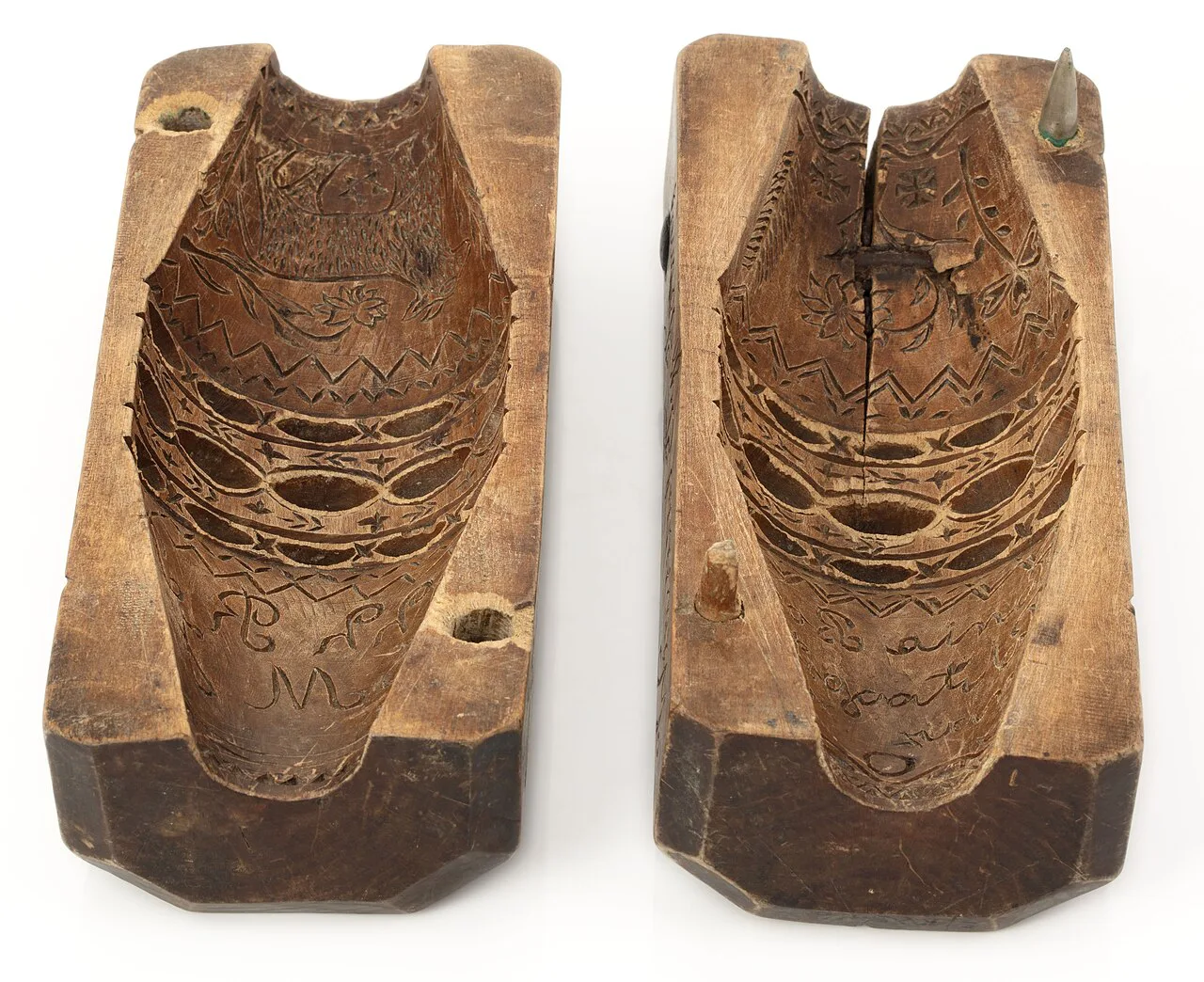
The milk is turned into curds, which are repeatedly rinsed with boiling water and squeezed to remove excess liquid. The mass is then pressed into decorative wooden forms and soaked in brine before the spindles are taken to a wooden hut and cured in hot smoke for up to two weeks. The result is a firm cheese with a golden exterior and a creamy white interior.
The smoking happens in a special wooden hut, which is where the colour and aroma come from. Because the cheese is smoked rather than aged for months, it is ready to eat relatively quickly.
Small variations in timing, brine and smoke explain why two spindles from different huts can taste quite different.
What oscypek tastes like and how it is eaten
Cold, oscypek is dense and chewy with a pronounced smoke and salt hit; some tasters find the interior reminiscent of mozzarella with smoke layered over it. The classic serving is thin slices with wine or vodka, which cuts through the fat and salt. Keep the slices thin — a thick wedge is heavy going.
The other standard preparation is grilled. Cut the spindle into half-inch slices, grill until golden, and serve immediately with a dollop of cranberry preserves; the sweet-sharp jam balances the smoke and salt. Bacon lovers can roll a slice around a thin strip of bacon and grill until the bacon crisps.
If you are building a Polish table at home, oscypek works as a starter before heavier courses such as pierogi or a bowl of Żurek, and it holds its own on a board with bread and pickles. Keep portions modest: it is rich, and a little goes further than you expect.
The shapes: spindles, ropes and related highland cheeses
Traditional oscypek comes as a spindle, pressed in a carved wooden mould that leaves a decorative pattern on the rind. You will also see roped versions and smaller smoked cheeses, which are easier to slice for a picnic and often sold at the same stalls.
Two other Podhale cheeses are worth knowing. Redykołka is a small smoked cheese made in the same region, and bundz is a fresh sheep's-milk cheese closer to cottage cheese, sold young and unsmoked.
Where oscypek comes from: Podhale and the bacówki huts
Oscypek belongs to the Podhale region around Zakopane, in the Tatra Mountains, where it is made in wooden huts called bacówki. The most famous huts sit near Zakopane, Czorsztyn, in the Gorce mountains and near Nowy Targ, and several are easy to reach without climbing high into the mountains.
Zakopane is about 1 hour 30 minutes by car from Kraków, which makes the highlands feasible if you are already based in the south. It is not a practical detour from Warsaw, Gdańsk, Wrocław, Poznań or Łódź, so plan to meet oscypek in a shop or at a market if your trip stays in the lowlands.
Buying oscypek: spindles versus commercial versions
Traditional oscypek can be hard to find outside the region, but commercial versions are readily available in Polish grocery shops, usually milder in flavour.
In the big city-break cities, look for it at deli counters, specialist cheese shops and food halls rather than expecting it in every supermarket.
Outside Poland, Polish delicatessens are the usual source, and smoked spindles travel better than fresh bundz. Buy smoked cheese for the suitcase and leave the fresh cheeses for eating on the trip.
Oscypek on a Polish city break
Oscypek turns up most often in the south, but it travels: in Warsaw, Gdańsk, Wrocław, Poznań and Łódź you are most likely to meet it at food markets, cheese stalls and restaurants billing themselves as regional or highland. Order it as a starter or a snack rather than a main course.
It fits neatly into a day of eating that starts in a bar mleczny and ends with a proper dinner, because it is small, salty and shared. Treat oscypek as one stop among many rather than a meal in itself, and save room for the mains.
At home, serve it before kotlet schabowy or placki ziemniaczane so the smoke does not compete with a heavy main course. It also works as a savoury counterpoint on a board of traditional Polish dishes when you are feeding a group.
Serving and storing oscypek at home
For grilling, cut half-inch slices so they hold together on the bars, and warm them just until golden.
Cranberry preserves are the standard accompaniment, but any tart fruit preserve will do the same job of cutting the salt. Serve grilled oscypek straight from the pan, with bread and a sharp pickle alongside, and let guests add their own jam.
If you bring a spindle home, treat it as a smoked cheese to be eaten soon rather than a long-keeping one, and plan to grill or melt any surplus rather than serving it cold.
Is oscypek worth seeking out?
Yes, if you treat it as a highland speciality rather than a novelty: one spindle, sliced thin or grilled with cranberry preserves, gives you a genuine taste of the Podhale region without a trip to Zakopane. Buy from a stall or deli that can tell you where it was made, and check the protected name on the label.
If your itinerary stays in the big cities, look for it at food markets and regional restaurants, and buy a small piece first to see whether the smoke and salt suit you. For more, see Polish food.
Explore more Poland guides
Frequently Asked Questions
What is oscypek cheese?
Oscypek is a smoked cheese made from salted sheep's milk, pressed into decorative wooden spindles and cured in hot smoke for up to two weeks. It comes from the Podhale highlands around Zakopane and has protected regional status in the EU.
Where can I buy oscypek cheese?
Look for it at cheesemaking huts in the Podhale region, at food markets and delis in Polish cities, and in Polish grocery shops, where vacuum-packed commercial versions are common. Outside Poland, Polish delicatessens are the usual source.
Is oscypek the same as redykołka and bundz?
No. Oscypek is the large smoked spindle; redykołka is a smaller smoked cheese from the same region, and bundz is a fresh, unsmoked sheep's-milk cheese sold young. Stalls in Podhale often sell all three together.
Sources
Notes for your next Polish city break
Optional updates to our Poland guides.
You might also like



Continue reading
More guides you'll find useful





