
Poland in July: Weather, City Picks and How to Plan
July in Poland brings typical highs of 20-25°C and long evenings. See what the climate averages say and which Polish cities suit a short July break.
On this page
July is the warmest, busiest month for a Polish city break, with typical daytime highs of 20-25°C and enough daylight to keep sightseeing going into the evening. It suits travellers who want long days on foot through old towns rather than a single-base holiday. This guide covers what the climate averages actually mean day to day, which cities fit a one to four day July trip, and how to build a plan around museum opening days.
The Polish Tourist Organisation describes summer as beginning in late May or June and lasting to the end of August, with temperatures around 20-25°C. It also names May-June and September-October as the best windows overall, when it is still warm and tourist numbers are lower. That is the honest trade-off: July gives you the most dependable warmth and the longest evenings, and in exchange you share the main squares with everyone else.
What July weather in Poland is typically like
The national picture is straightforward: summer runs from late May or June to the end of August with typical temperatures of 20-25°C, and hot spells above 28°C can occur from May to September. The Polish Tourist Organisation notes that hot days become more frequent the further you travel from the Baltic coast, so an inland city such as Wrocław or Łódź runs warmer than Gdańsk. Pack for warm days and keep a light waterproof layer, since rain falls across the year.
For a southern benchmark, Kraków's July averages show a high of 25°C, a low of 12°C, about seven hours of sunshine a day and rain on roughly 17 days of the month, according to Holiday-Weather.com. Treat those as long-term averages for Kraków, not a forecast and not a national figure. The practical reading is that a July week usually contains several bright sightseeing days and at least a couple of wet ones, so an indoor backup is worth planning from the start.
The same city-level pattern appears elsewhere: one travel-weather summary for Kraków puts typical July daytime temperatures at around 23°C. Averages like these are useful for choosing clothes and pacing, nothing more. Check a short-range forecast for your own dates a few days before you travel and let it decide which day gets the long walking route.
Why July suits city sightseeing rather than a single-base trip
July rewards a city break more than a touring holiday. With highs in the low-to-mid twenties and long daylight, you can split the day: a museum or cathedral in the morning, a long lunch out of the sun, then old-town streets and riverbanks in the golden evening. That rhythm works far better in a compact old town than on a multi-stop itinerary where you lose hours to travel.
The month suits a one to four day format because each of Poland's main city-break destinations has a dense core you can walk in a day or two, with a second layer of museums and districts for the remaining time. If your dates are flexible, weigh July against the quieter shoulder months on our best time to visit Poland guide, which sets out the May-June and September-October argument in full.
The trade-off: July warmth and crowds versus May-June and September-October
July's advantage is reliability: warm days are the norm rather than a gamble, and evenings stay usable. The cost is volume, since Polish cities fill with domestic and international visitors once schools break up, and the main squares and waterfronts feel busier at midday. The Polish Tourist Organisation's own recommendation of May-June and September-October points to exactly that trade-off.
Heat is manageable rather than extreme in most July weeks, but inland cities can string together hot days above 28°C. Build the plan so the middle of the day is spent indoors or in shade, and save exposed walks, towers and riverbank strolls for morning or evening. If you want the warm weather without peak-season pressure, compare our notes on Poland in June as a slightly cooler, calmer alternative.
Which Polish cities work well in July for a one to four day break
Four cities carry most short July breaks: Gdańsk for sea air and a rebuilt waterfront, Wrocław for a large market square and the Ostrów Tumski cathedral island, Poznań for a compact Old Market Square and cathedral island, and Łódź for a long shopping street and strong museum collections. Each works in two to three days without rushing. Kraków functions here mainly as an arrival hub and a comparison point rather than the subject of this guide.
Choose by temperament. Gdańsk and the coast stay cooler in summer because of the Baltic, while Wrocław and Łódź sit further inland and run warmer. Poznań sits between the two, with a walkable centre that makes short trips easy. A three-day stay gives you one full museum day, one old-town day and one district or river day in any of the four.
Gdańsk in July: sea air, the Motława waterfront and Główne Miasto
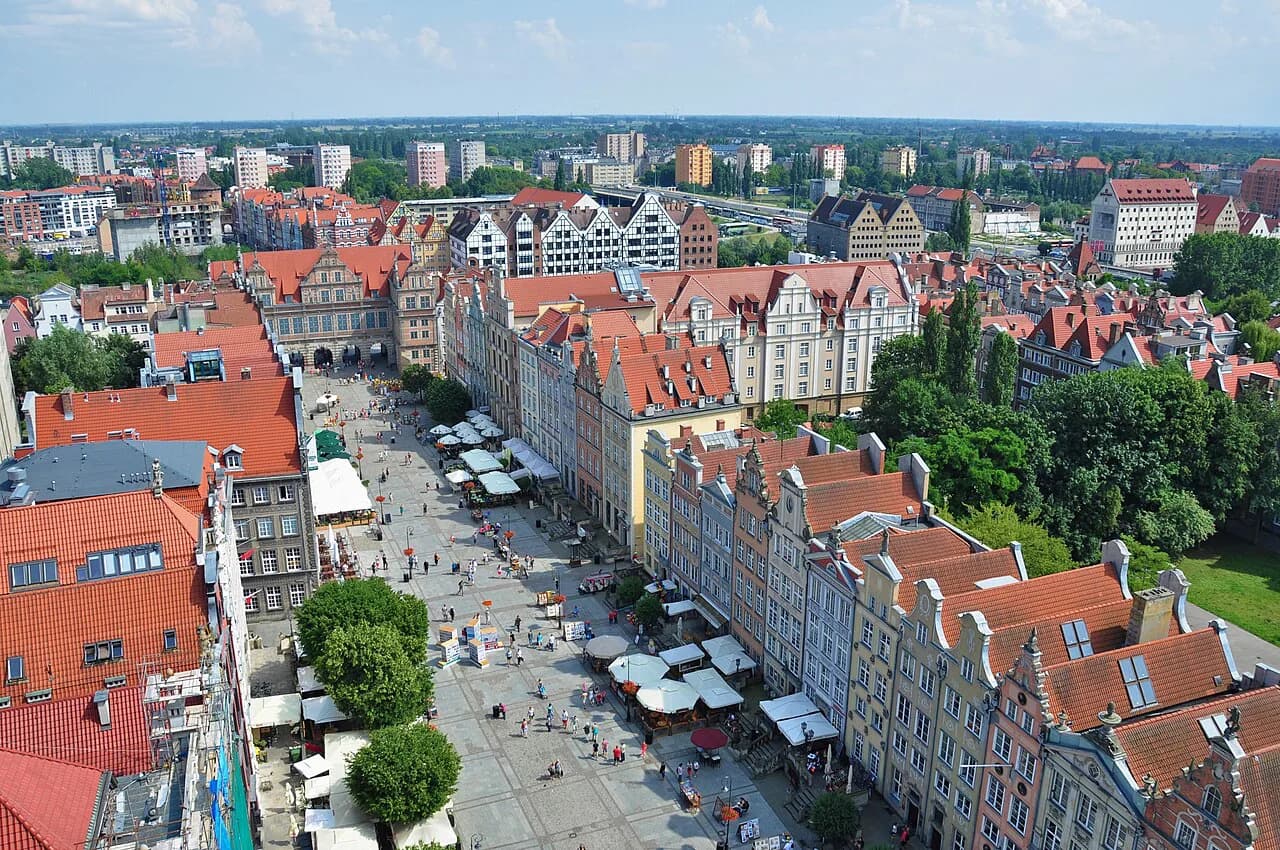
Gdańsk is the natural July pick if heat is your concern. The Baltic moderates summer temperatures, and the Polish Tourist Organisation notes the sea can make coastal areas cooler than the rest of the country in summer. The reward is the Główne Miasto, or Main Town, where Długi Targ forms the showpiece square lined with tall gabled townhouses.
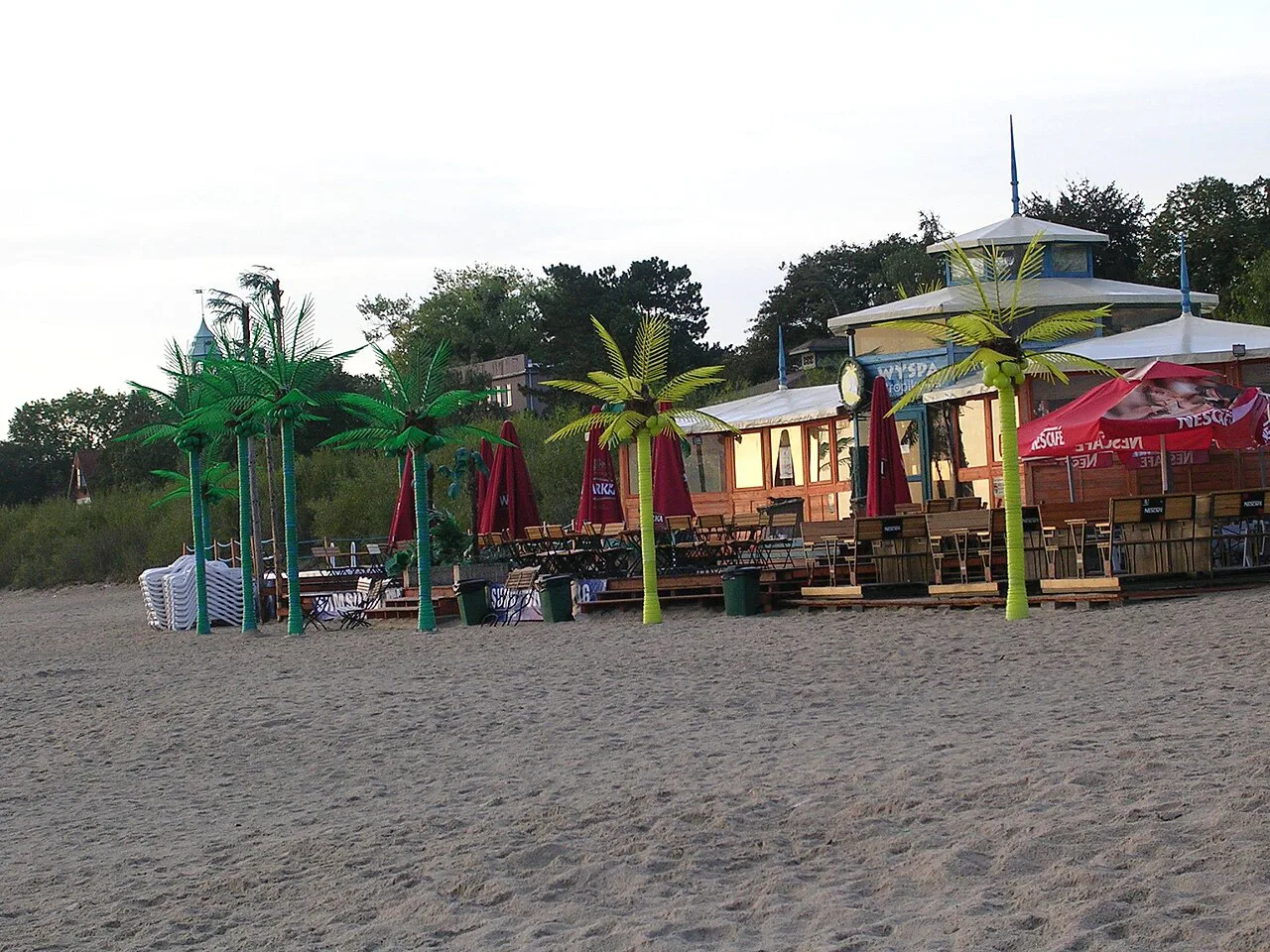
Allow time for the Motława waterfront and the Żuraw, the medieval port crane that now anchors the riverside walk, plus the solid brick of St Mary's Church. Two days covers the Main Town comfortably; a third lets you slow down along the water rather than squeezing everything into one loop. Sopot's beach is a short trip away if you want an hour or two of sand.
Wrocław in July: the Rynek, Ostrów Tumski and river islands
Wrocław's Rynek is one of the largest market squares in Poland, ringed by cafés and townhouses, and it sets the tone for a July visit: long, unhurried and best enjoyed early or late in the day. From there the walk north to Ostrów Tumski, the cathedral island, crosses the Odra and its islands and is the city's best outdoor hour.
Inland heat is real here, so plan the cathedral and museums for the middle of the day and the river walks for the evening. Three days is a comfortable allocation, with one day for the Rynek and its surroundings, one for Ostrów Tumski and the islands, and one for a museum or a slower district. For the wider season, see our Poland in summer notes.
Poznań in July: the Old Market Square and cathedral island
Poznań's Old Market Square is compact and easy to read on foot, with the town hall's mechanical goats drawing a daily crowd at midday. Cathedral Island, a short walk north, gives the city a second historic centre and a quieter evening alternative to the square. Two days handles the core; a third allows a museum or a longer walk along the Warta.
Łódź in July: Piotrkowska and museum-heavy days
Łódź is the most indoor-friendly of the four. Piotrkowska, its long central street, works as a walking spine, with museums and former factory complexes branching off it, so a hot midday can be spent inside and the street saved for the cooler hours. Two days is enough for the core; three if you want a second museum day.
How to build a three-day July plan around opening days
Build the plan around the fact that Polish museums commonly close one day a week, often Monday, though individual venues vary. Set the outdoor day on the day your first-choice museum is closed, and keep a second indoor option in reserve for a wet day. Check each museum's own website before you commit, since opening days shift between summer and winter seasons.
A workable shape: day one for arrival, the main square and an evening walk; day two for the largest museum followed by the historic core; day three for a district, riverbank or cathedral island and a relaxed final afternoon. Put the longest walking route on the day with the best forecast and keep the museum day for the hotter or wetter one.
What July costs look like and where to check prices
Prices in Poland vary by season and by venue, and summer is peak season, so check current ticket prices on each attraction's own site in złoty rather than relying on a guide. Confirm rates a few days before you go, when online booking pages show the price you will actually pay.
Allow for the standard costs of a city break: museum tickets, a few café lunches, a river or harbour boat trip where the city offers one, and public transport if your feet give out. Budget in złoty and pay by card where accepted; Poland is largely card-friendly, though small stalls and some market traders still prefer cash.
Rainy July days: which indoor sights to hold in reserve
With rain on a good share of July days, an indoor reserve list is worth having before you arrive. In Gdańsk that means the Main Town's museums and churches; in Wrocław the Rynek-side museums; in Poznań the Old Market Square collections; in Łódź almost anything along Piotrkowska. Pick one per city and note its opening days in advance.
If you are travelling outside July too, the pattern repeats across the year; our Poland in April guide covers the same mix of wet and bright days with lower temperatures and lighter crowds. And if your trip slips later, Poland in October shows what the shoulder-season change feels like.
Practical July planning: daylight, hydration and booking ahead
July gives you long evenings, so front-load walking in the cooler morning and save old-town strolls and riverbank viewpoints for after the main heat has gone. Carry water on museum days, and plan at least one shaded break in a park or café between sights.
Book popular museums and any boat trips ahead where the venue offers online booking, and remember July is the peak. If you are comparing months, our guide to the best time to visit Poland for a city break sets out how July sits against the rest of the year.
Which July city suits your break?
Choose Gdańsk if you want the sea to soften the heat and a waterfront you can walk each evening; Wrocław if you want the biggest square and the cathedral island; Poznań for a compact, easy-to-read centre; Łódź if museums matter more than river views. Any of the four works in two to three days, and none needs more than four.
Whichever you pick, build the plan around one outdoor day and one museum day, leave room for a wet afternoon, and check current museum opening days before you fix the order. If your dates are open, our Poland in summer notes show how July fits into the wider season.
Explore more Poland guides
Frequently Asked Questions
How hot is it in Poland in July?
Typical July daytime highs sit around 20-25°C nationally, with hot days above 28°C possible and more frequent the further you are from the Baltic coast. Kraków's July averages show a 25°C high and a 12°C low. Treat these as climate averages and check a short-range forecast for your own dates before you travel.
Is July a good time to visit Poland?
Yes, if you want reliable warmth and long evenings. The Polish Tourist Organisation rates May-June and September-October as the best times overall because it is still warm with fewer tourists, so July trades some quiet for the most dependable summer weather.
Is Poland cheap or expensive in July?
July is peak season, so accommodation and any seasonal activities generally cost more than in the shoulder months; check current prices on each venue's own site in złoty rather than assuming a guide's figure still applies.
Which Polish city is best for a July city break?
Gdańsk suits travellers who want sea-moderated temperatures and a waterfront, while Wrocław, Poznań and Łódź offer inland squares and museums. Two to three days covers any of them comfortably; four gives you room for a wet day and a slower final afternoon.
Do museums in Poland close on Mondays in July?
Many Polish museums close one day a week, often Monday, though it varies by venue and by season. Check each museum's own website before fixing your order, and put the outdoor day on whichever day your first-choice museum is closed.
Sources
Notes for your next Polish city break
Optional updates to our Poland guides.
You might also like



Continue reading
More guides you'll find useful





